


One of the earliest subjects in Arctic art, images of bears can be found in the North American and Russian Arctic as far back as the Old Bering Sea II period, approximately 1,726 – 1,926 years ago. An enduring subject, bears remain among the most popular in contemporary Inuit art.
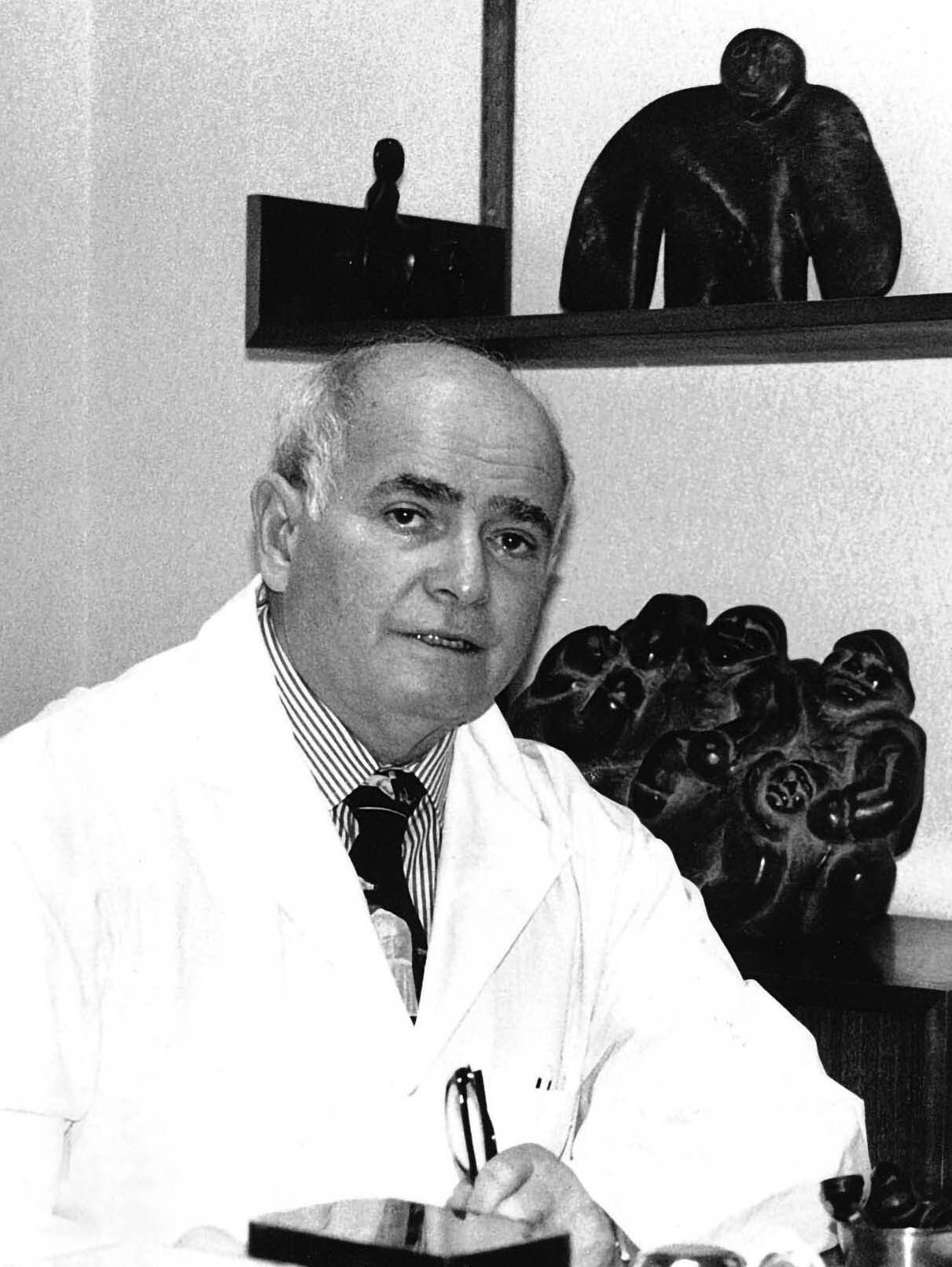
In interviews about his collection, Dr. Norman Epstein expressed a particular affinity with the animal. Bears are known for their fierceness and sovereign independence, but are also associated in many cultures with good luck, curiosity, and for the protectiveness that they exhibit toward their young.
Dr. Epstein displayed sculptures of bears in his office for his patients’ enjoyment. He affectionately noted: “children would come over and touch [the sculptures] but never do any damage”
The subject continued to drive his passion throughout his years of collecting. Dr. Epstein acquired numerous unique examples, both by lesser known artists, as well as by the great masters of the subject.
Why collect bears? Dr. Epstein had a simple answer, saying in a 1990 interview with Inuit Art Quarterly: “bears appealed to me because they are proud, and they are good luck.”
Eight examples of bears from Dr. Epstein’s collection are included in our Major Spring Auction: Inuit Art.

Lot 208
Tudlik is primarily remembered as a carver of owls, as is the artist’s son, Latcholassie Akesuk. While both artists favoured sculpting birds, they did work with other subjects. Latcholassie most notably carved seals, and Tudlik carved bears, such as the present example made from rugged stone of the type quarried in the years before Cape Dorset became synonymous with lustrous green serpentine.
As elsewhere in Tudlik’s carving, Striding Bear is defined by the artist’s signature sign-like reductive treatment of his subjects.

Lots 269, 249, and 221
The present auction includes three exceptional Pauta Saila bears from the collection of Dr. Norman Epstein. Speaking of the sculptor, Dr. Epstein said “Pauta is one of my favourite artists. I have one of his bears in my office. It makes me very happy; I look at it, and the patients look at it. It is very plain—majestic, simple, powerful, wonderful, happy, more bear than bear.”
The foremost carver of bears in his lifetime, Pauta was perhaps also the most dedicated and prolific in his exploration of the subject. Years of careful observation gave Pauta an intimate knowledge of the animal. His explorations evolved over his career, spanning early rugged, sometimes ferocious animals, to the refined and even winsome bears that have become icons of Canadian art.
Lot 269: A forceful and rugged mid-1960s bear carved in the light green stone used in 1960s and 70s era Kinngait (Cape Dorset) carving.
Lot 249: A graceful bear circa 1970 with a joyous and exultant posture carved in the hard green and bronze-brown stone of Markham Bay.
Lot 221: A skillfully polished and balanced bear in Pauta’s mid-late classic style. This bear was exhibited in the landmark 1988–1991 touring exhibition In the Shadow of the Sun: Perspectives on Contemporary Native Art, and is published in the accompanying 1988 text Im Schatten Der Sonne: Zeitgenossische Kunst der Indianer und Eskimos in Kanada.

Lot 349
Originally from the area around Igloolik, Henry Evaluardjuk carved some of his early sculpture while in residence at the Mountain Sanitorium in Hamilton, Ontario where he was treated for tuberculosis. At the beginning of the 1960s, Evaluardjuk and his family settled in Iqaluit (Frobisher Bay); it was there where he began to be known for his remarkably lifelike sculptures of bears. Attentive to posture and the anatomical detail of his subject, Evaluardjuk’s many iterations of the animal have prompted dedicated collectors to seek out numerous examples of his work.
Striding Bear, while unsigned, exhibits the distinctive posture and naturalistic anatomy diagnostic of Evaluardjuk’s style. Carved in dark green Iqaluit stone, the bear is notable for its open mouth, finely carved and delicately undercut teeth, a feature rare in all but the artist’s early bears.

Lots 270, 292, 315
Many small wonders of Inuit are made by artists whose identities are not presently known. Such works, sometimes unsigned, may predate the oral record and written history of the region. What we know about the makers of these often early artworks is what we can garner from the objects themselves. Three marvelous bears from Dr. Epstein’s collection are made by unknown artists.
Lot 270: Striding Bear dates to the 1950s. The bear has been carved with a sharpened tool rather than the abrasives which became ubiquitous in later years, and is characterized by a reductive depiction of the subject, and sensitive faceted treatment of the sculpture’s surface.
Lot 292: This work dates to the 1960s and exemplifies the first bears carved in Naujaat (Repulse Bay) in the 20th century–some bears in the style of the present work have been attributed to Nicholas Kringayark, born 1921, an artist about whom little is known.
Lot 315: This sculpture dates to the 19th century or earlier. The archaic and reductive form is carved from mineralized walrus ivory. Such sculptures are a challenge to accurately date, as while the material used considerably pre-dates Euro-American contact with peoples of the Bering Sea region, it is still carved by artists today. The salvaged material is sometimes referred to as “beach ivory” for its tendency to be exposed on the shoreline.
About the auction:
Featuring artworks from the pioneering collection of Dr. Norman Epstein alongside selections from the Lavrov-Costakis collection of historical art, highlights from our Major Spring Auction of Inuit Art include significant works by Karoo Ashevak, Pauta Saila, Augustin Anaittuq, Nuna Parr, Tudlik, Kenojuak Ashevak, David Ruben Piqtoukun, John Tiktak, Davie Atchealak, Pierre Karlik, and other notable artists, as well an important collection of ancient Arctic ivories.
Please contact us for more information.
Bidding is available May 14 – May 28, 2026.
On view at our Toronto gallery:
Wednesday, May 20 from 10:00 am to 5:00 pm
Thursday, May 21 from 10:00 am to 7:00 pm
Friday, May 22 from 10:00 am to 5:00 pm
Saturday, May 23 from 12:00 pm to 4:00 pm
Sunday, May 24 from 12:00 pm to 4:00 pm
Monday, May 25 from 10:00 am to 5:00 pm
Tuesday, May 26 from 10:00 am to 5:00 pm
Wednesday, May 27 from 10:00 am to 5:00 pm
Or by appointment.
Related News

August 23, 2026

June 10, 2026
May 6, 2026
May 6, 2026

May 6, 2026
May 5, 2026
May 5, 2026

May 5, 2026
Meet the Specialist
Palmer Jarvis
Senior Specialist