


Lot 20
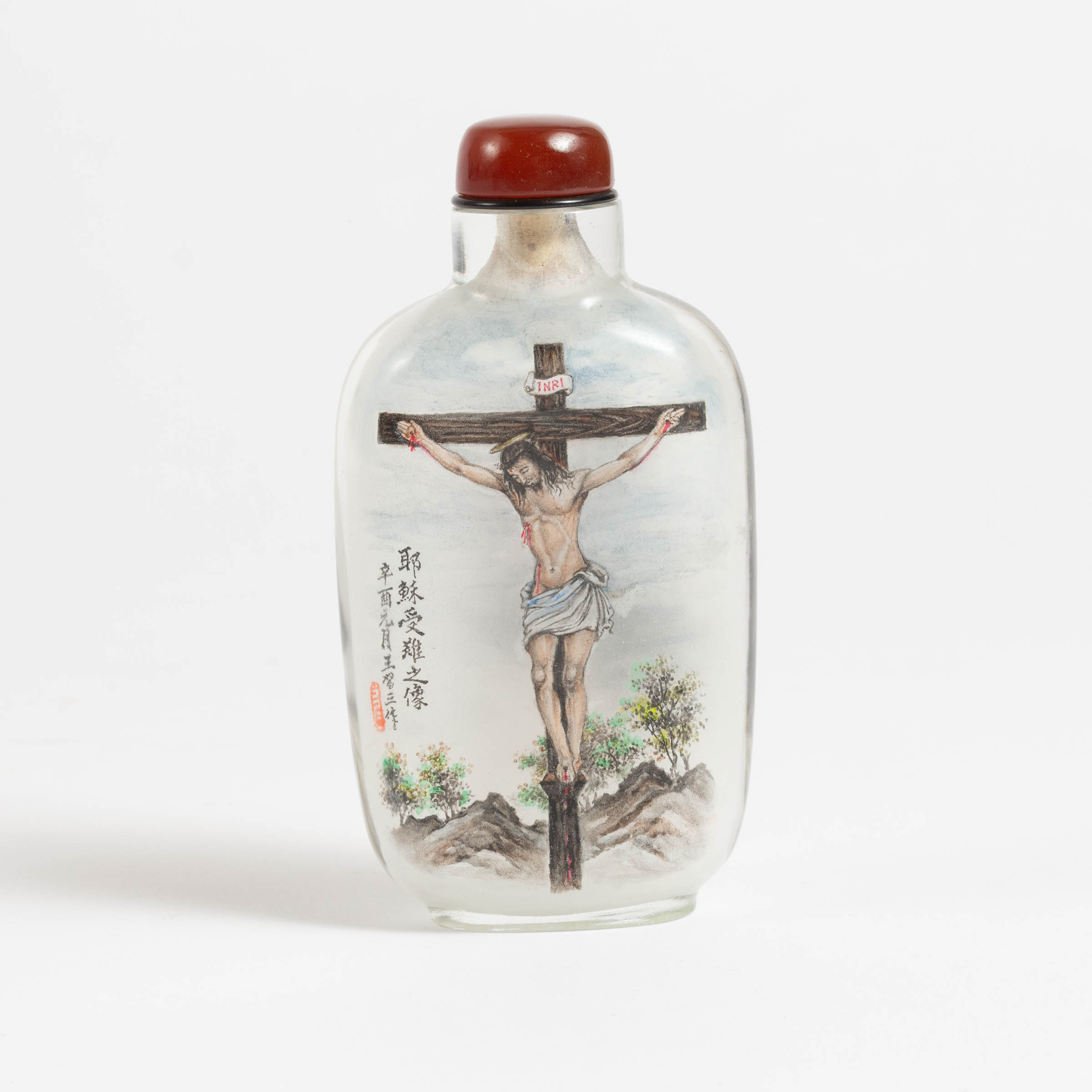
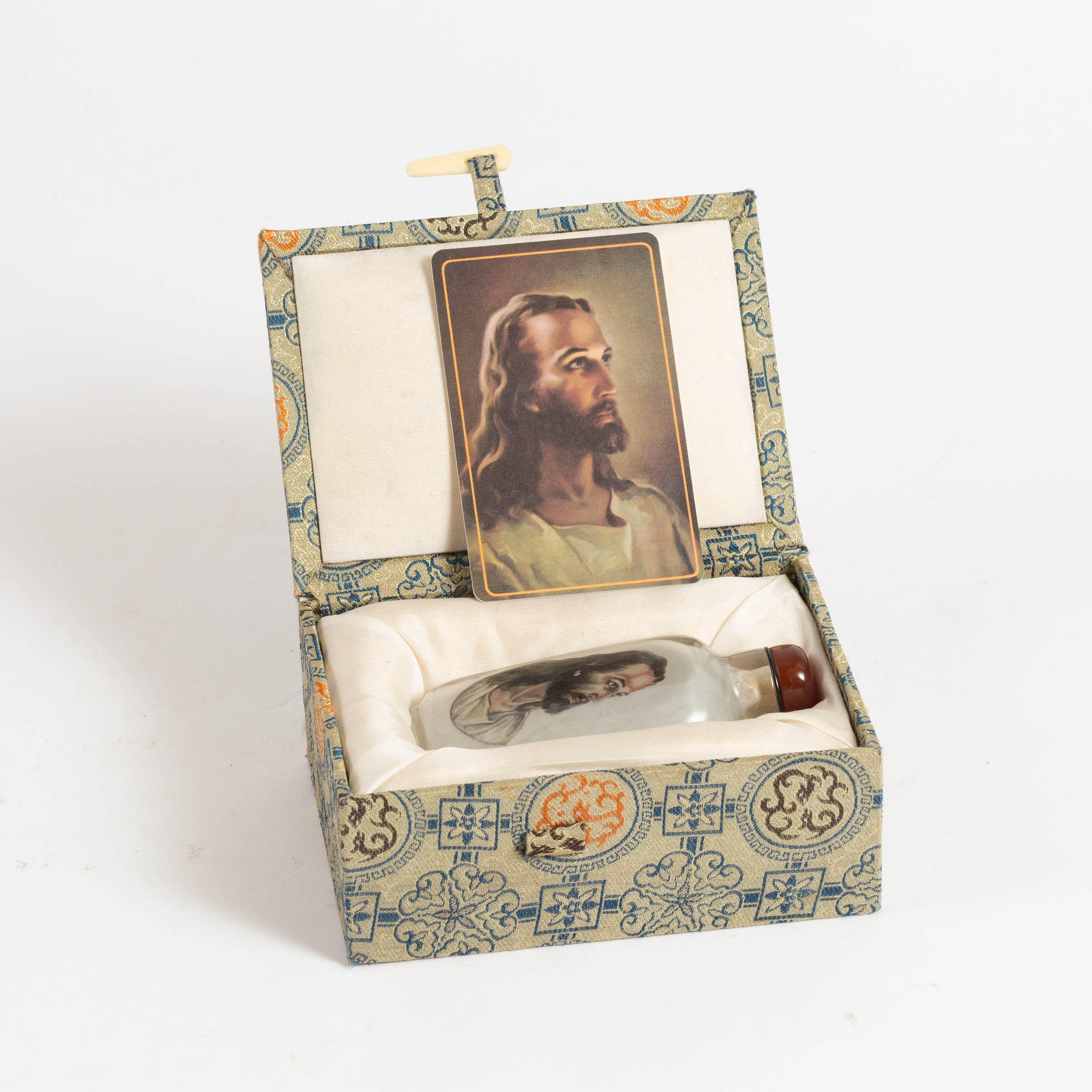
Wang Xisan (b. 1938), An Inside-Painted Glass Snuff Bottle Depicting Christ, Dated 1981
Lot 20 Details
Wang Xisan (b. 1938), An Inside-Painted Glass Snuff Bottle Depicting Christ, Dated 1981
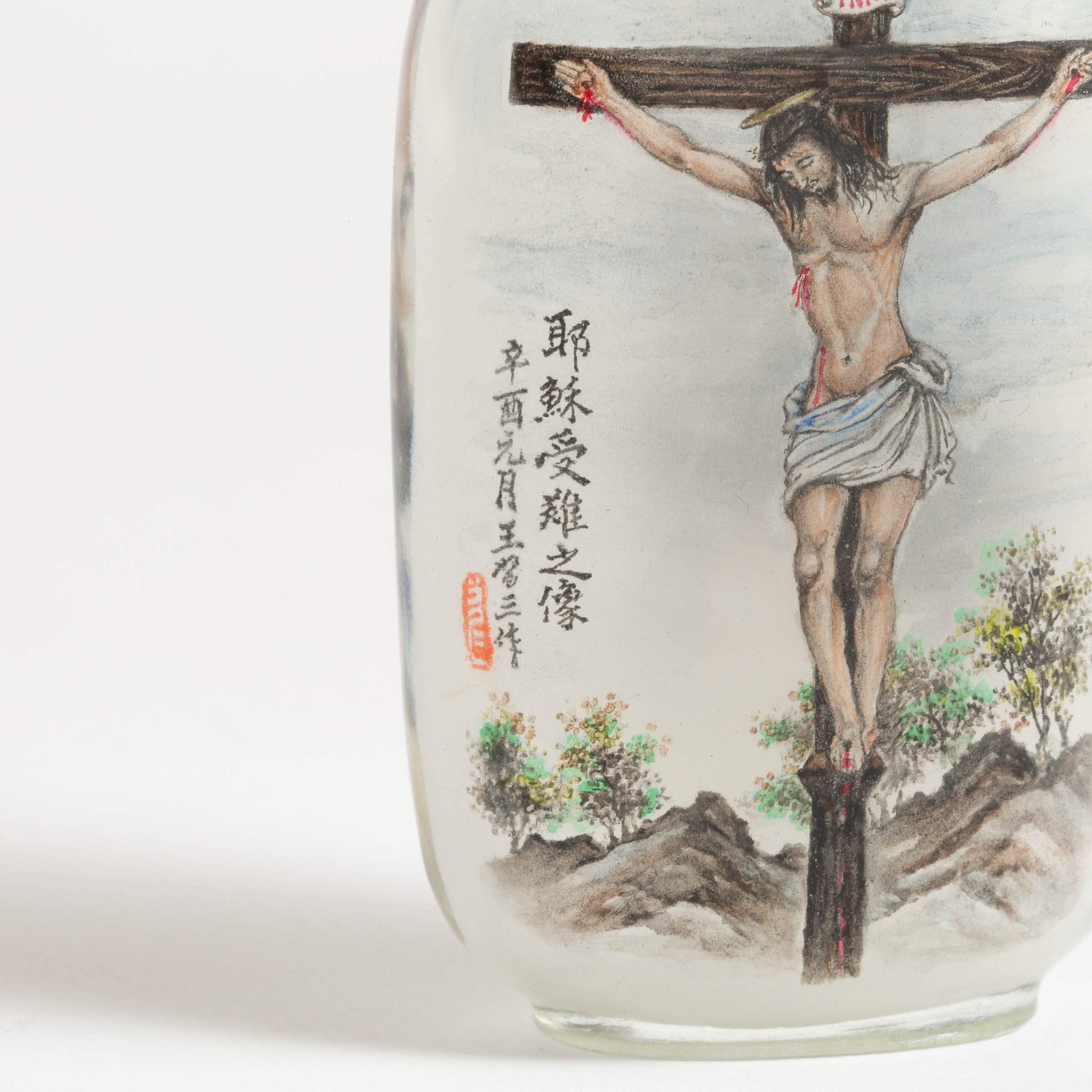
辛酉年(1981) 王习三(1938- ) 作玻璃内画耶稣受难像鼻烟壶
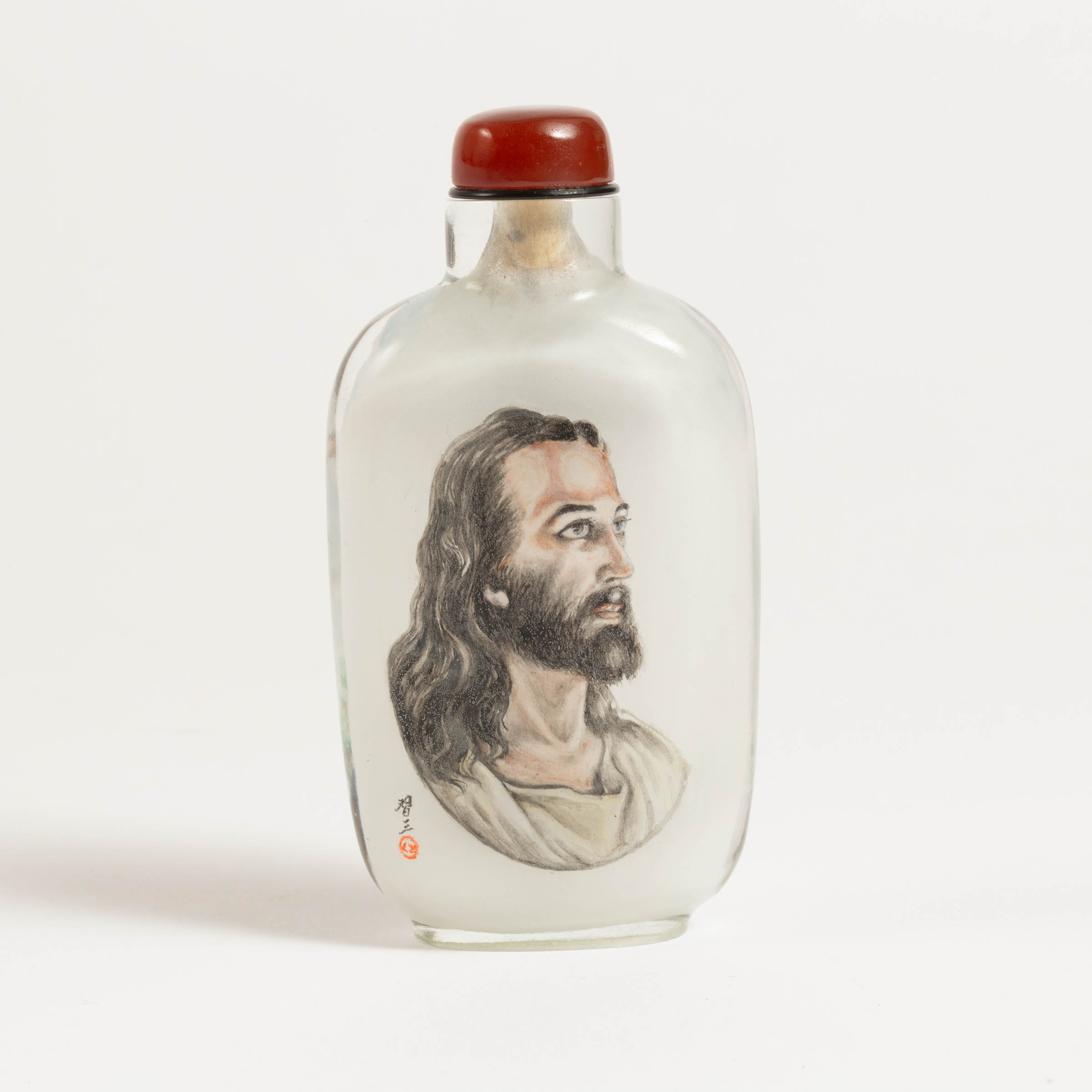
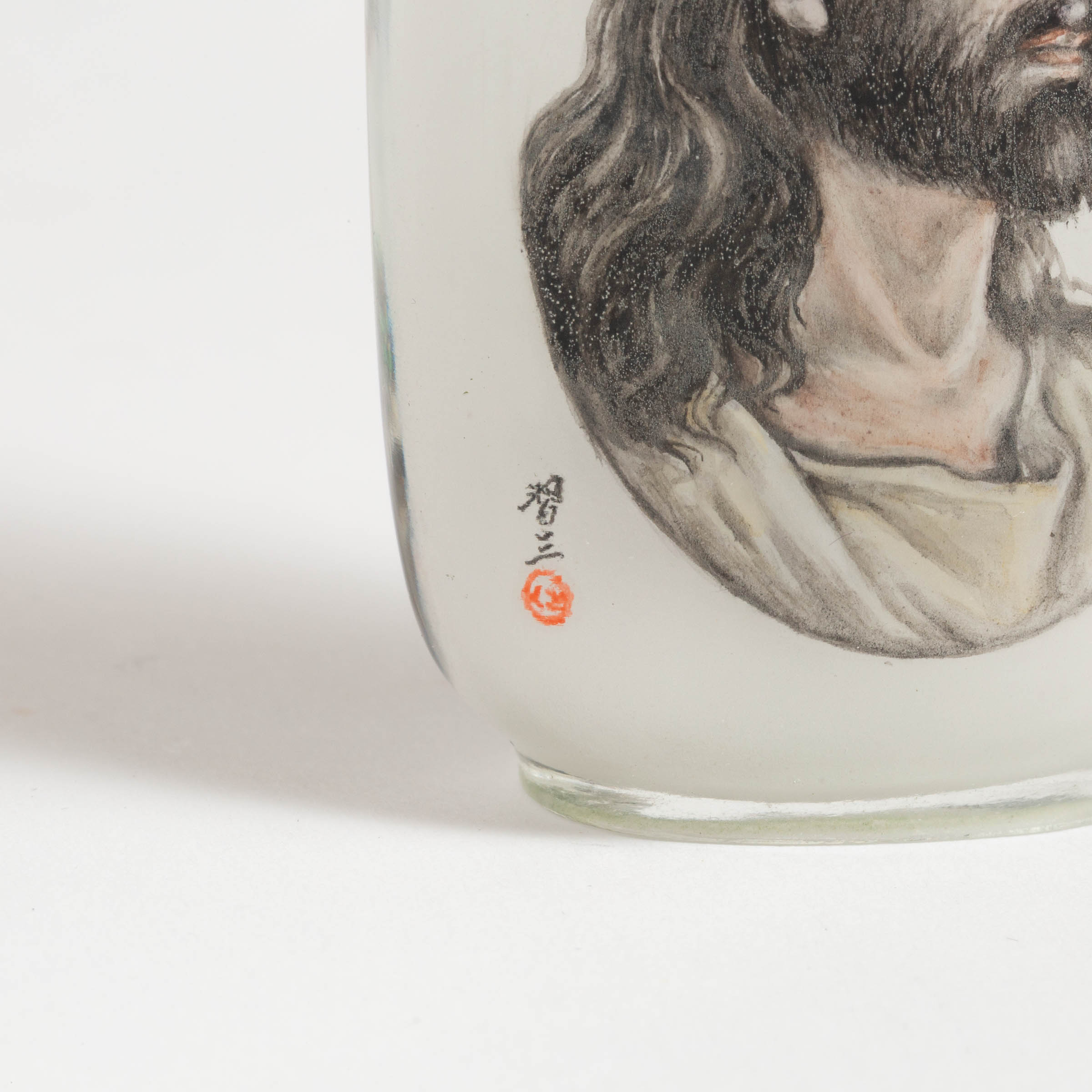
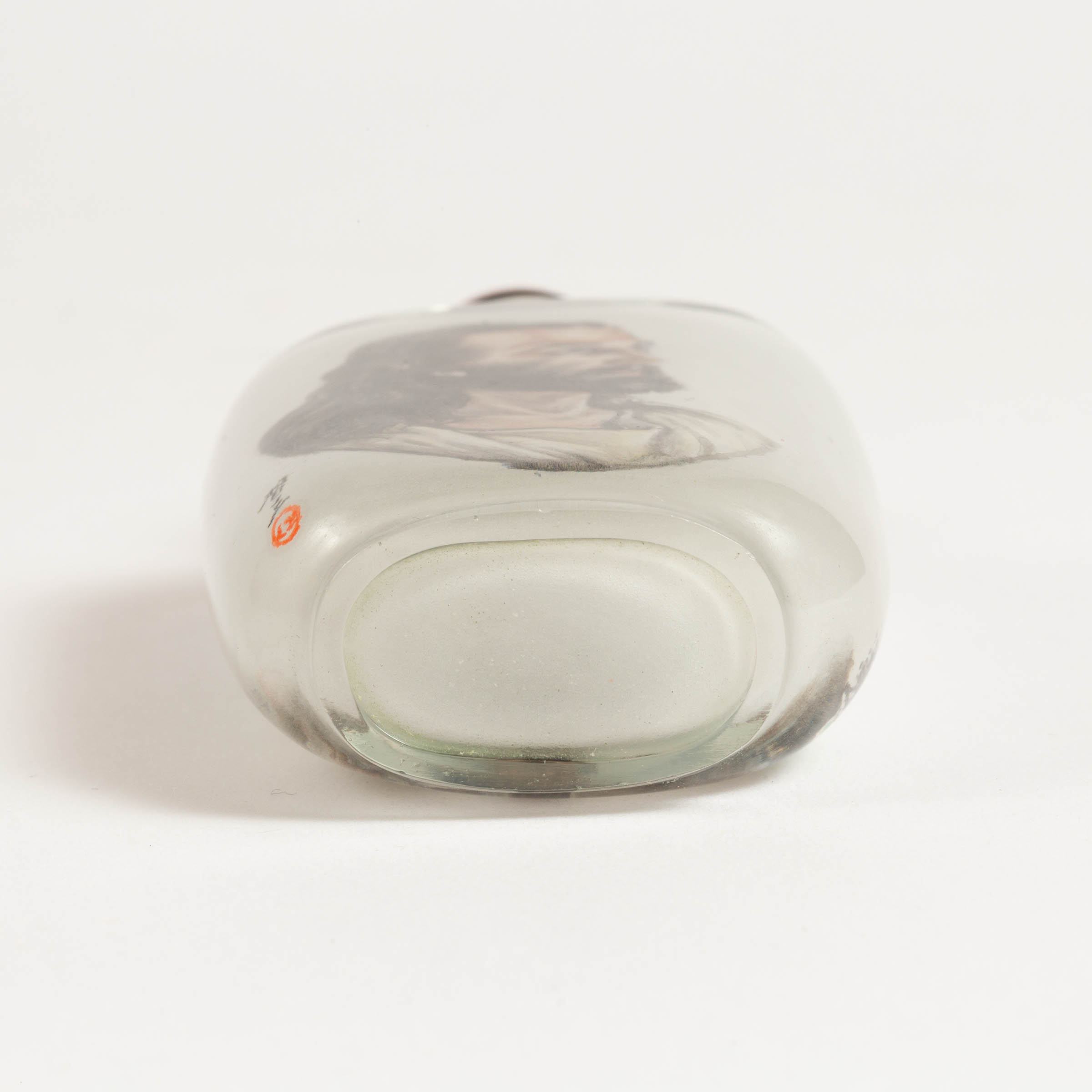
The glass bottle of compressed ovoid form, with straight neck, flat lip and sloping shoulders, all supported on an oval foot rim, one side illustrated a side-portrait of Jesus, with signature of the artist 'Xisan', and a painted seal of the artist's last name 'Wang', the reverse painted with the Crucifixion of Christ, with a calligraphic passage in script '耶稣受难之像 辛酉元月王习三作' (Image of the Crucifixion of Jesus, painted by Wang Xisan in the first month of the Xinyou year), topped with a carnelian stopper set into a black glass collar
overall height 3.6 in — 9.2 cm
Estimate $2,000-$3,000
Additional Images
Provenance:
Private West Coast Collection
Note:
Born Wang Ruicheng in Beijing in 1938, Wang Xisan is widely regarded as one of the most influential modern masters of Chinese inside-painted snuff bottles. In 1958 he was admitted to the Beijing Arts and Crafts Institute, where he began formal training in inside painting. At a time when the closely guarded techniques of the Ye family—renowned masters associated with the Guyue Xuan tradition—were typically passed only to descendants, Wang became the first outsider to be taught their methods. Under the guidance of Ye Xiaoteng and Ye Bengqi, his skill developed rapidly, and he soon distinguished himself for his technical mastery and artistic sensitivity.
Wang’s career unfolded amid the upheavals of mid-twentieth-century China. During the Cultural Revolution he was sent to rural Hebei, where he continued painting while working alongside farmers, signing works from his “Half Peasant Studio.” Despite these hardships, inside painting remained central to his life and livelihood. In the decades that followed, he resumed work in state workshops and later established the Hengshui Inside-Painting School, where he trained numerous students and helped formalize what is now recognized as the Hengshui school of inside painting.
Technically innovative, Wang introduced new subjects and methods to the art form. His naturalistic depictions of animals—particularly cats rendered with the delicate “tearing hair” technique—became among his most admired works. In the early 1980s he also pioneered the use of modified oil-colour techniques for portraiture inside glass bottles, achieving subtle tonal effects reminiscent of Western oil painting while maintaining the precision required by the medium.
Through his innovations, teaching, and prolific output, Wang Xisan played a pivotal role in elevating the inside-painted snuff bottle from a refined craft object to an internationally recognized art form.
Reference: ICSBS Journal, Winter 2018.