Asian Art

Auction begins to close:
April 16, 2026 at 2:00 pm ET

Online Auction
LOT 299

Lot 299

A Large Banded Sandstone Torso of an Attendant Bearing a Fly Whisk (Chauri), Probably Uttar Pradesh, India, 20th Century or Earlier
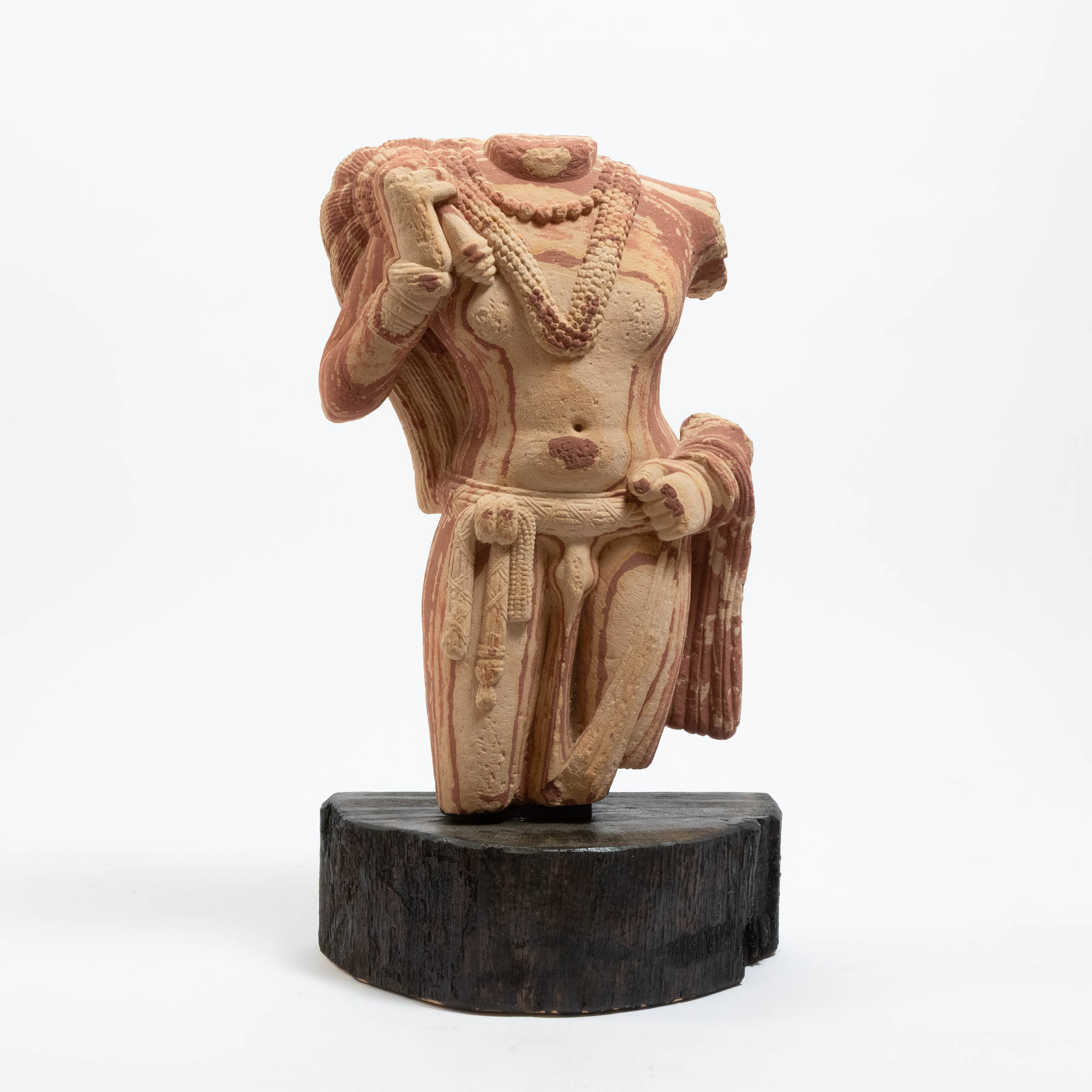
A Large Banded Sandstone Torso of an Attendant Bearing a Fly Whisk (Chauri), Probably Uttar Pradesh, India, 20th Century or Earlier
Lot 299 Details
A Large Banded Sandstone Torso of an Attendant Bearing a Fly Whisk (Chauri), Probably Uttar Pradesh, India, 20th Century or Earlier

二十世纪或更早 印度北方邦大型条纹砂岩侍者持拂尘半身像

stone torso height 70 cm
including stand height 34.3 in — 87 cm

Estimate $1,500-$2,000

Realised: $1,375
Price Includes Buyer's Premium ?

Lot Report

Additional Images
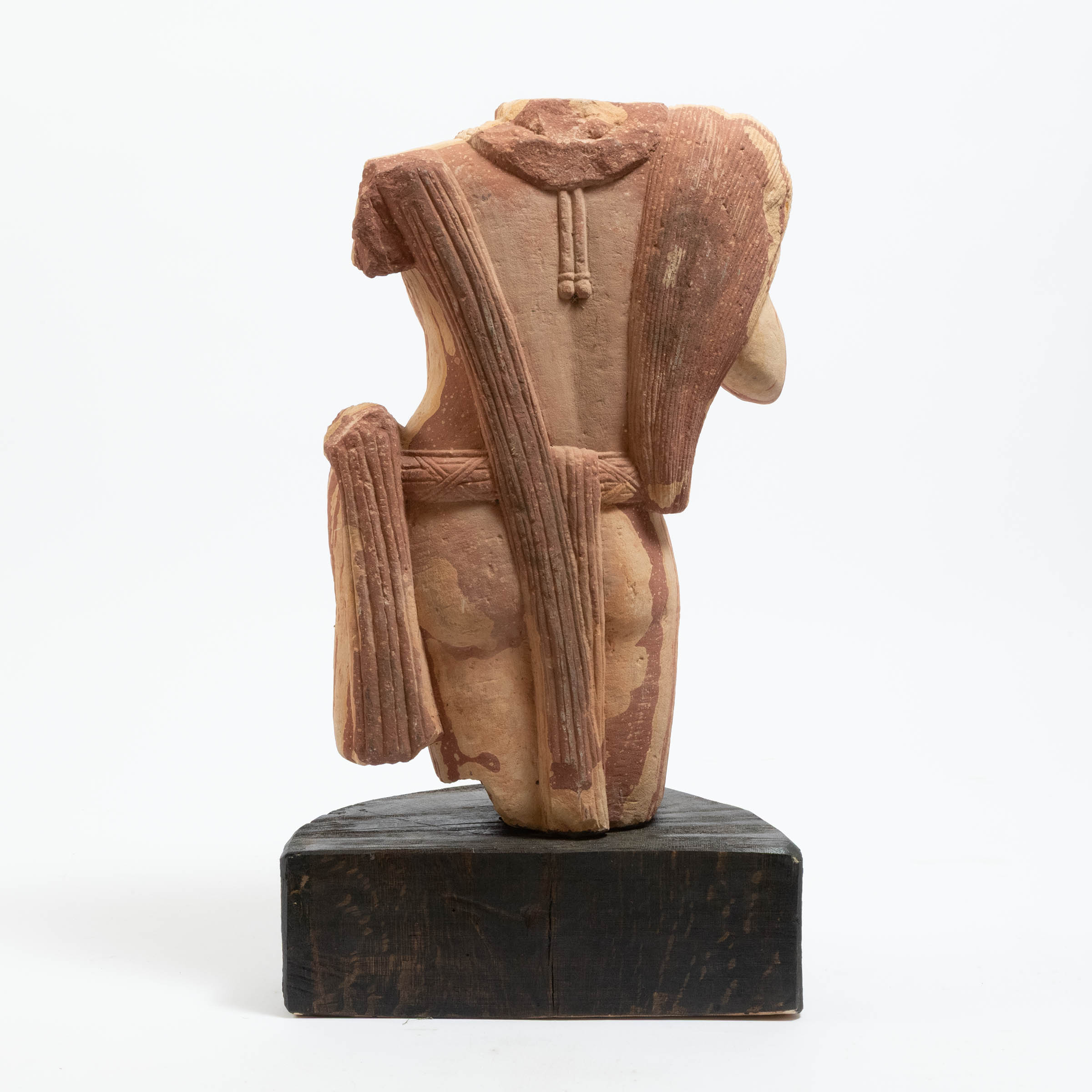
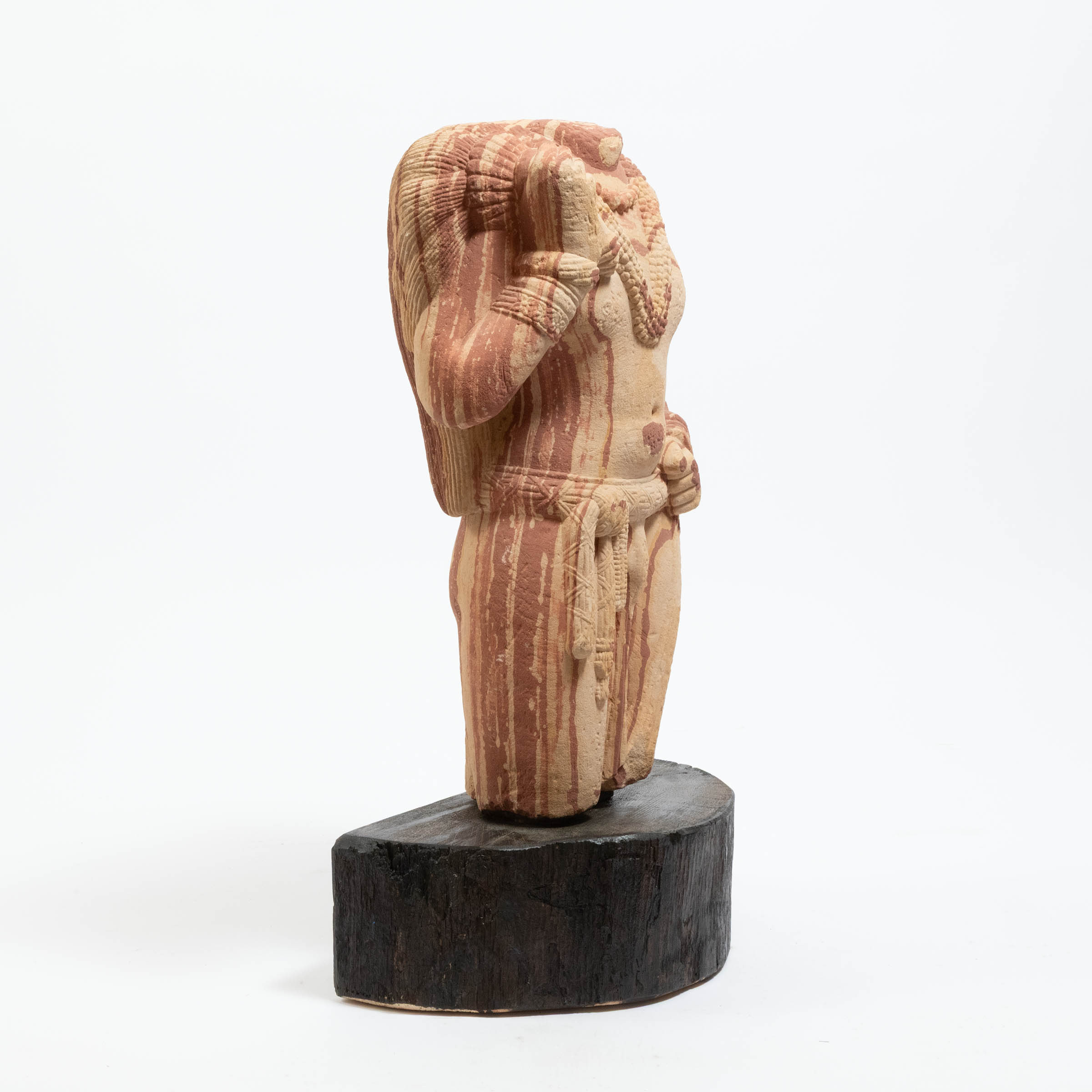
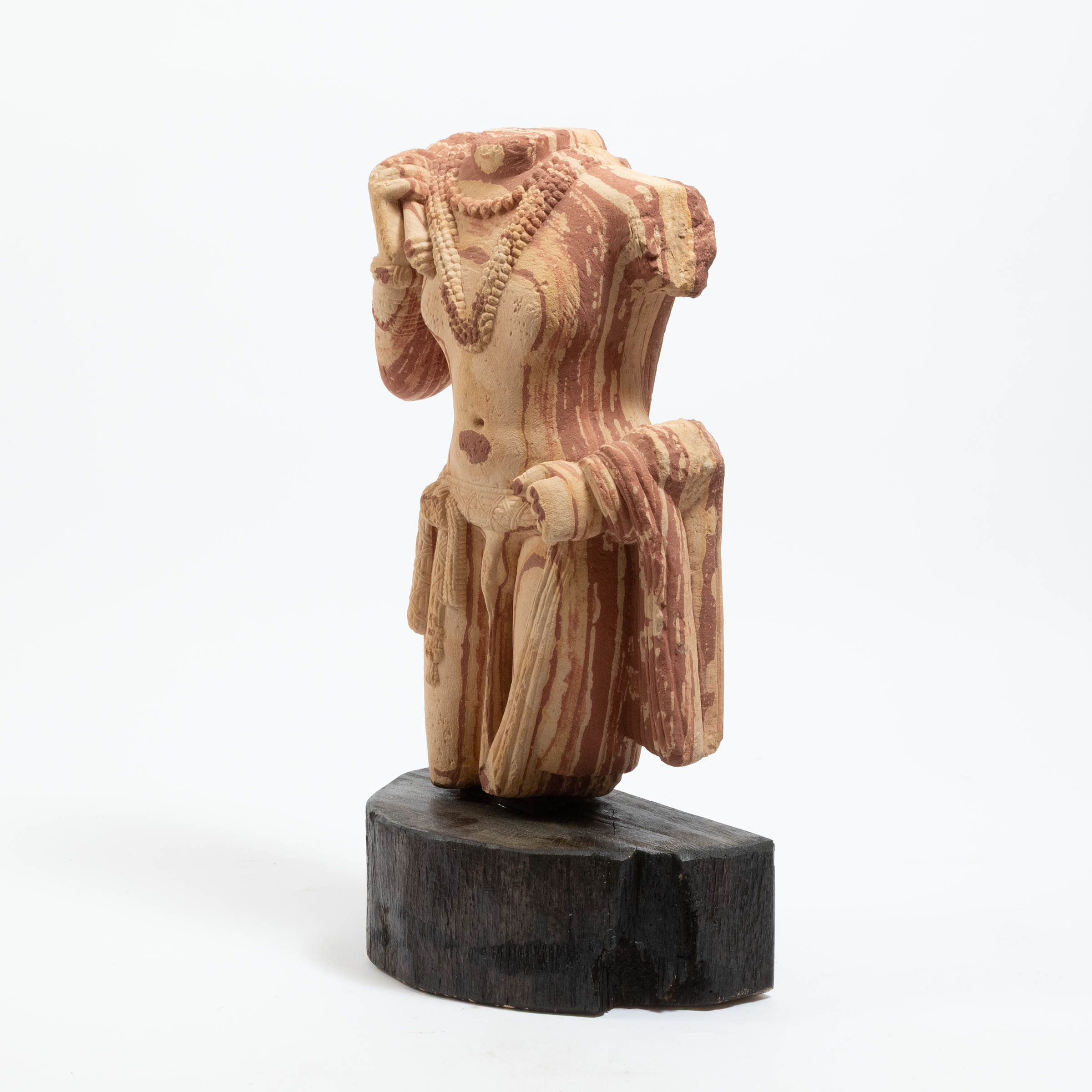
A Large Banded Sandstone Torso of an Attendant Bearing a Fly Whisk (Chauri), Probably Uttar Pradesh, India, 20th Century or Earlier
  • A Large Banded Sandstone Torso of an Attendant Bearing a Fly Whisk (Chauri), Probably Uttar Pradesh, India, 20th Century or Earlier
  • A Large Banded Sandstone Torso of an Attendant Bearing a Fly Whisk (Chauri), Probably Uttar Pradesh, India, 20th Century or Earlier
  • A Large Banded Sandstone Torso of an Attendant Bearing a Fly Whisk (Chauri), Probably Uttar Pradesh, India, 20th Century or Earlier
Provenance:

Freeman's Auctions, Philadelphia, early 2000s, by repute
来源:
弗里曼拍卖,费城,2000年初 (传)

Note:

This figure was likely conceived as one of a pair of attendants flanking a royal or sacred figure, such as a king or the Buddha. The strong physique, balanced by a relaxed tribhaṅga stance, indicates an attendant role rather than that of a central icon. In early Indian Buddhist sculpture, the Buddha is frequently shown accompanied by chauri-bearing figures on either side. During this early period, such attendants are identifiable as yakshas, or nature spirits, while in later periods they become recognisable as specific bodhisattvas through distinct attributes.

Compare with an example from the Cleveland Museum of Art, accession number 1965.472
https://www.clevelandart.org/art/1965.472

此像可能为成对侍者之一,用于陪侍国王或佛等尊像。其健硕体态与轻松的三曲式(tribhaṅga)站姿表明为侍者角色,而非中央尊像。早期印度佛教雕塑中,佛像常有持拂尘侍者相伴;早期可辨为夜叉,晚期则因特定标识而认定为菩萨。可参照克利夫兰艺术博物馆藏品,编号 1965.472

CONDITION DETAILS

For condition information please contact the specialist.

LOT 299
×

About Condition Ratings

  • 5 Stars: Excellent - No discernable damage, flaws or imperfections
  • 4 Stars: Very Good - Minor flaws or imperfections visible only under close inspection using specialised instruments or black light
  • 3 Stars: Good - Minor flaws visible upon inspection under standard lighting
  • 2 Stars: Fair - Exhibits flaws or damage that may draw the eye under standard lighting
  • 1 Star: Poor - Flaws or damage immediately apparent under standard lighting (examples: missing components, rips, broken glass, damaged surfaces, etc.)

Note: Condition ratings and condition details are the subjective opinions of our specialists and should be used as a guide only. Waddington’s uses due care when preparing condition details, however, our staff are not professional restorers or conservators. Condition details and reports are not warranties and each lot is sold “as is” in accordance with the buyer’s terms and conditions of sale. In all cases the prospective purchaser is responsible for inspecting the property themselves prior to placing a bid.