


Lot 181
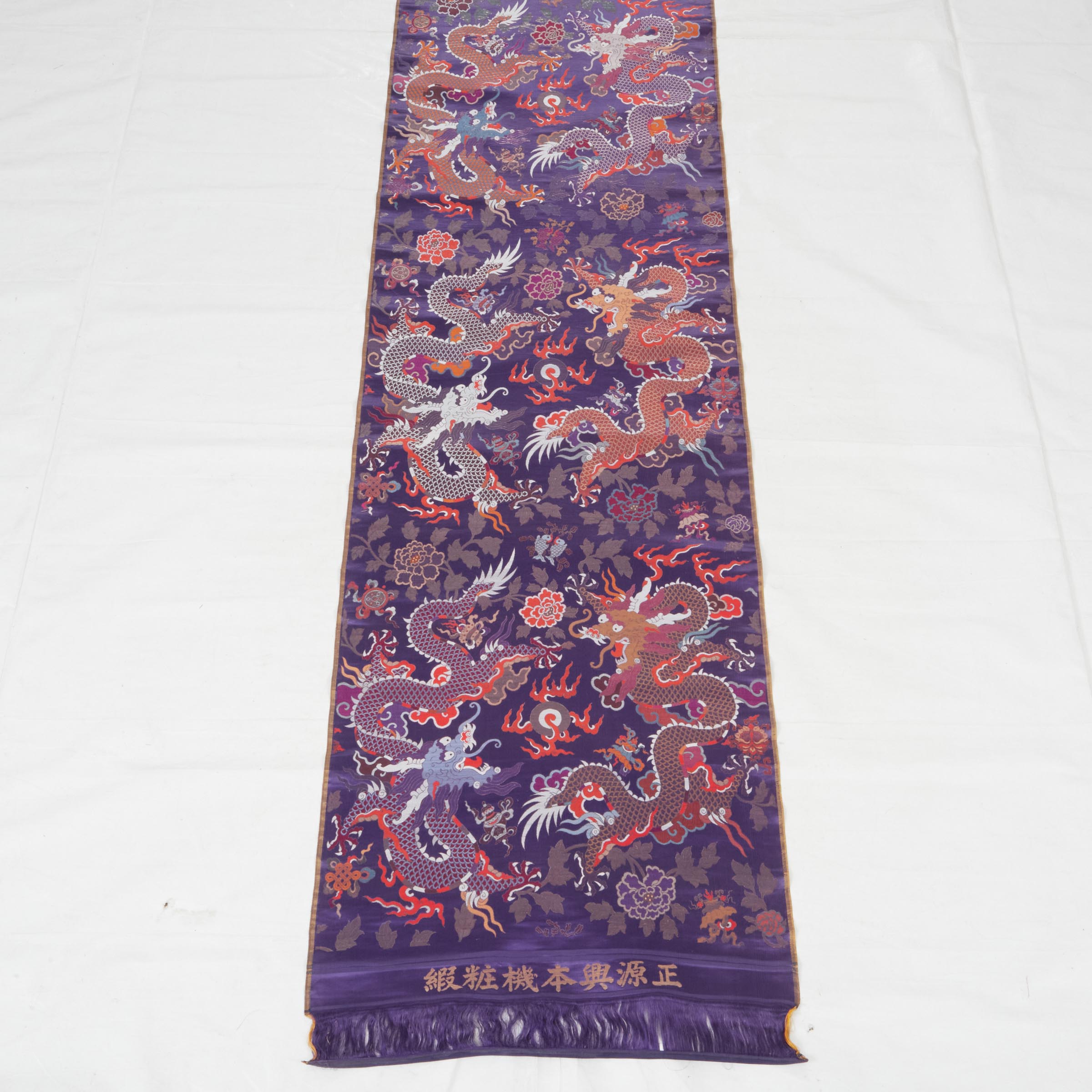
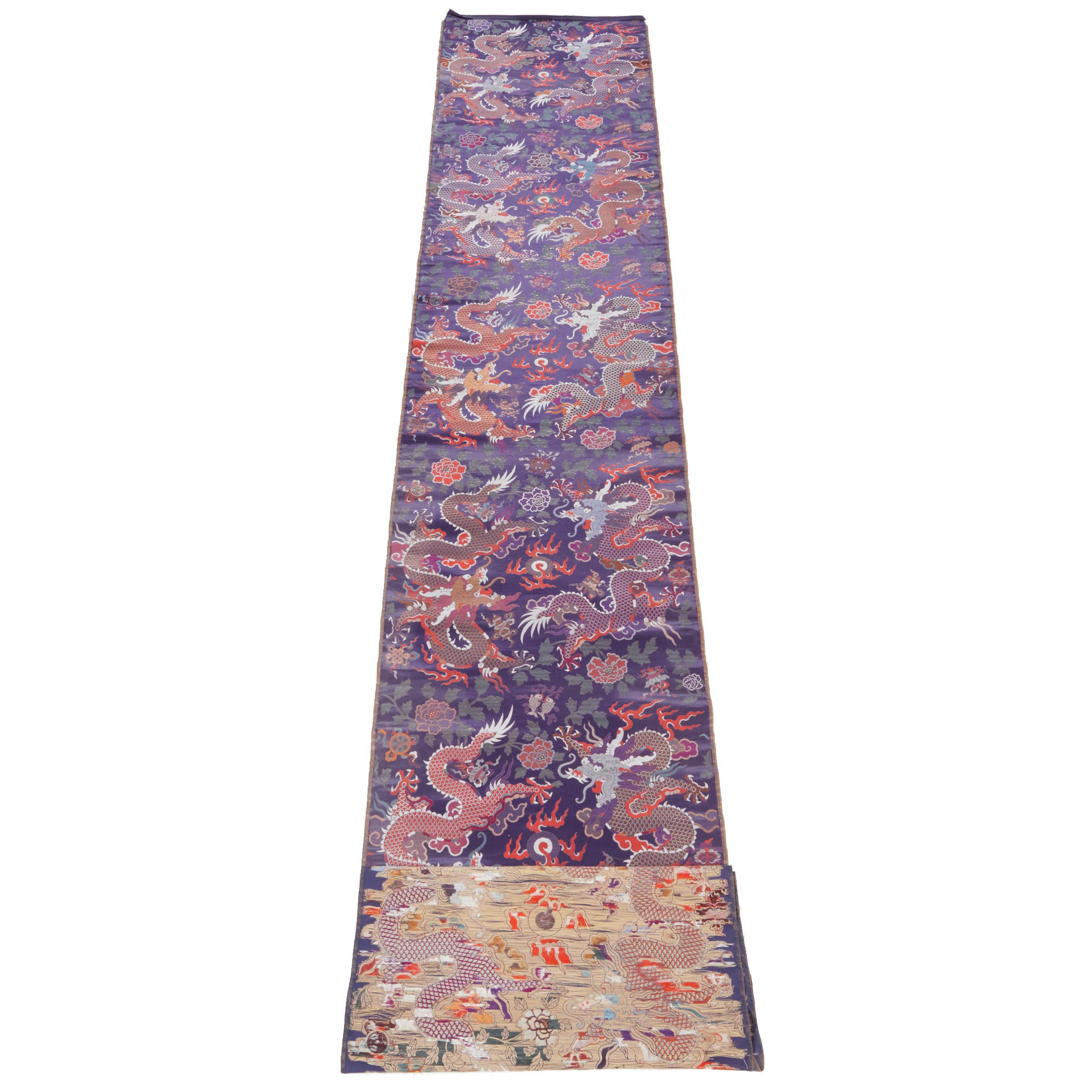
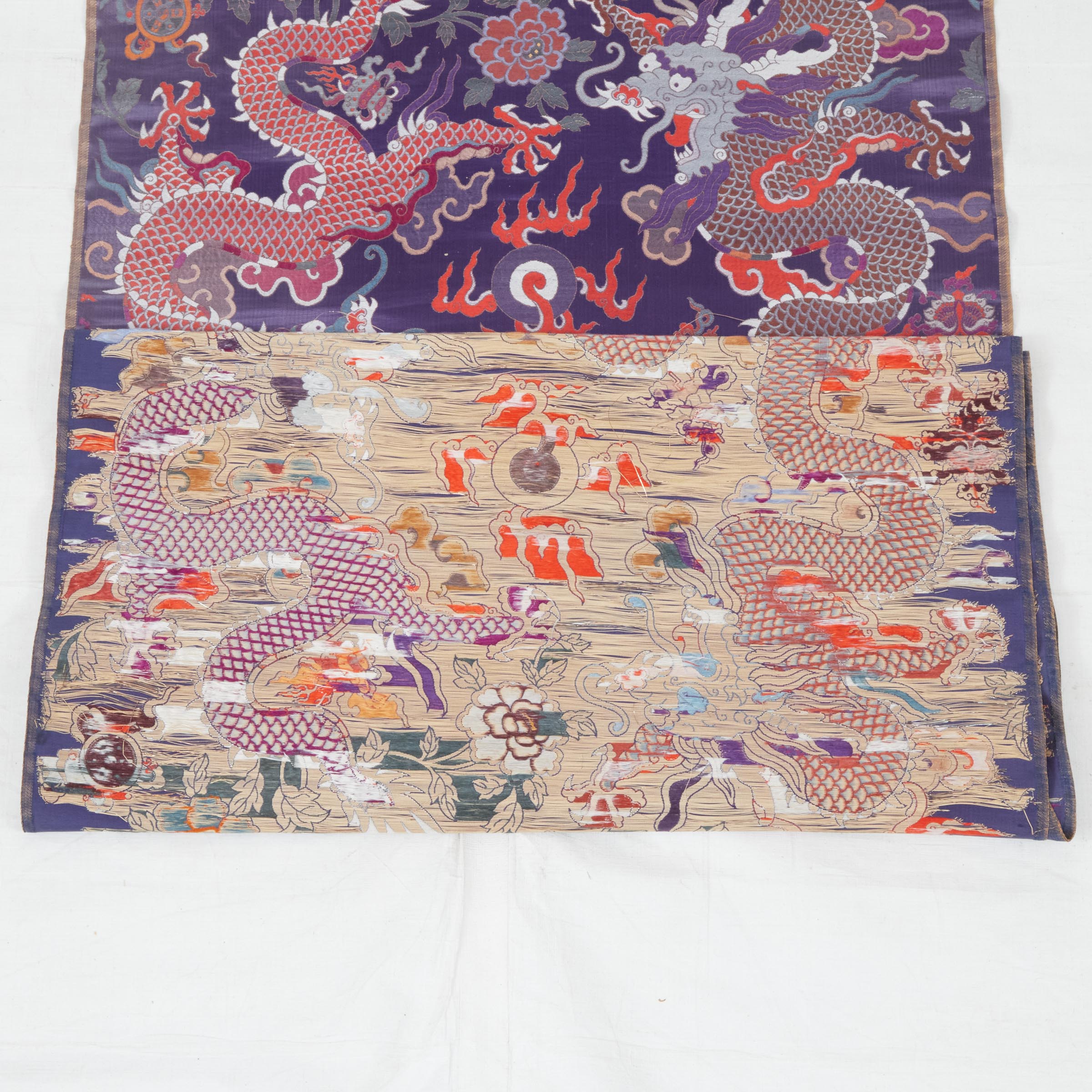
An Exceptionally Long Purple-Ground Silk Embroidered 'Dragon' Bolt, Yunjin, Late 19th Century
Additional Images
Note:
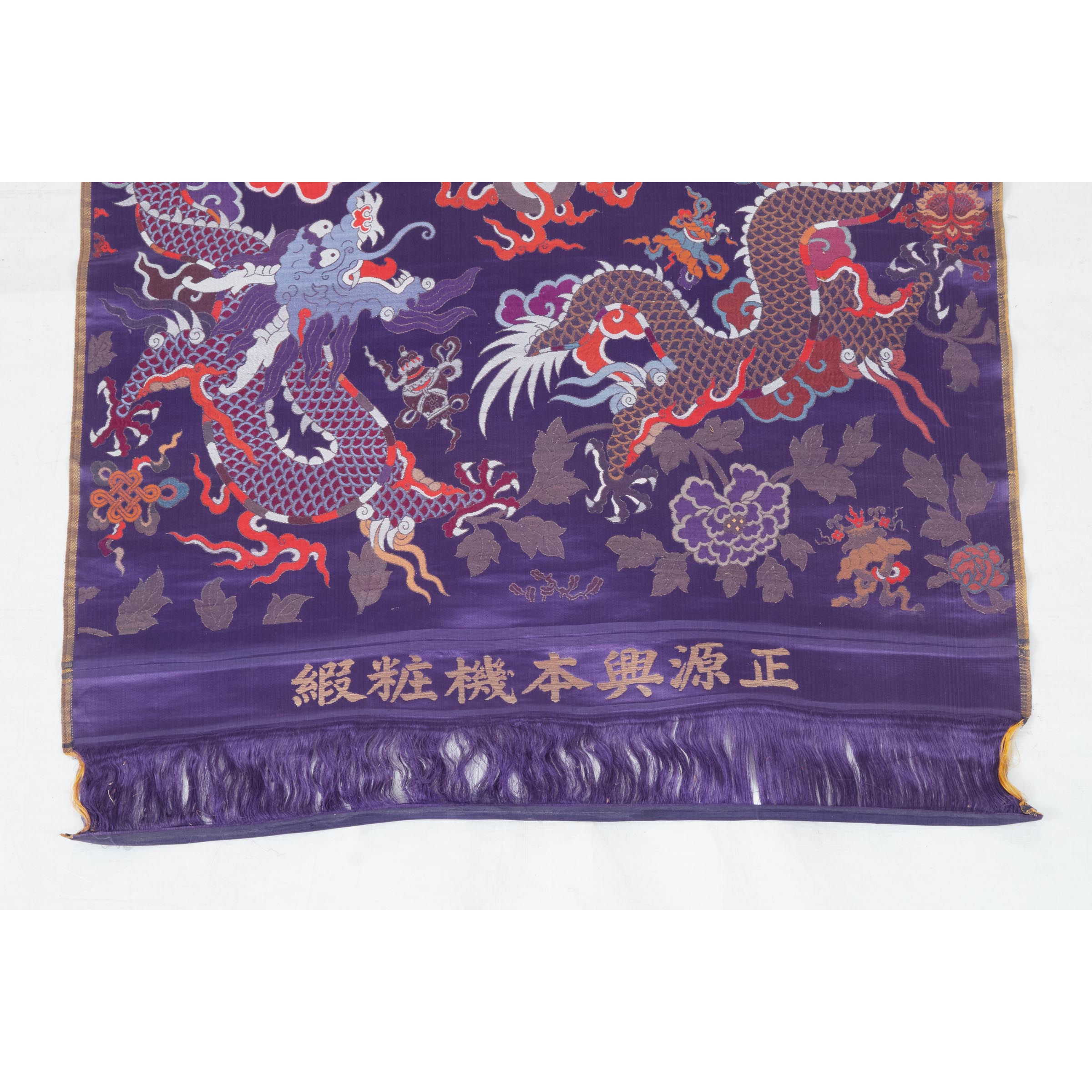
南京的“正源兴绸缎庄”正式创办于清同治十三年(1874年)十二月,地点位于江宁(南京)绒庄街63号。创办初期,正源兴长期帮助内务府销售多余贡品,如人参、绸缎等,得知江南三织造将停工,便抓住商机开设了绸缎庄。光绪元年(1875年)初,清廷下令停办江宁等三织造府,但内务府仍需丝绸材料,派专人赴南京采购,正源兴逐渐成为其主要供应商。其在金陵、苏州、杭州等地放料加工,采购苏杭等地的高档丝绸面料,如苏锦、杭绸、云锦等,因此,故宫博物院现藏的部分丝绸制品上可见“正源兴本机妆花”等标识。
辛亥革命后,绸缎不再是官吏专用服饰,云锦逐渐衰落。1921至1931年间,南京云锦为适应市场需求,试制出新款织锦,用于制作椅垫、钱包等日用品,并在西方市场流行一时,被称为“销洋庄”。但由于缺乏系统研究,过于追求利润而忽视质量,导致这一出口市场逐渐萎缩。
20世纪20年代后,正源兴在北京、天津、上海等地的16家分号实行集中采购和统一管理,因其工艺精湛、质量上乘,产品在海外市场广受欢迎。1931年,正源兴绸缎庄更名为“中兴源”。
The Zhengyuanxing Silk Store in Nanjing was officially established in December of the 13th year of the Tongzhi Emperor's reign (1874) on Rongzhuang Street, No. 63, in Jiangning (present-day Nanjing). In its early days, Zhengyuanxing had long been assisting the Imperial Household Department by selling surplus tribute items, such as ginseng and high-quality silk. Learning that the Jiangnan Imperial Silk Factories would cease operations, Zhengyuanxing seized the opportunity to open a silk store. In the first year of the Guangxu reign (1875), the imperial court ordered all Jiangnan Silk Factories, including Jiangning, to halt operations. However, the Imperial Household Department still required silk materials and dispatched personnel to Nanjing for procurement, with Zhengyuanxing becoming a primary supplier. Zhengyuanxing arranged fabric processing and procured high-grade silks like Suzhou brocade, Hangzhou silk, and Yun brocade in cities like Jinling, Suzhou, and Hangzhou. As a result, some of the silk items currently in the collection of the Palace Museum bear labels such as "Zhengyuanxing Original Weaving" and "Supervised by Zhengyuanxing."
After the Xinhai Revolution in 1911, silk ceased to be exclusively used in official attire, leading to a decline in Yun brocade. From 1921 to 1931, to adapt to market demand, Nanjing’s Yun brocade weavers developed a new type of brocade used for practical items like seat cushions, wallets, and handbags. This new type of fabric gained popularity in Western markets, and was referred to as "export brocade." However, due to a lack of systematic research and a focus on profit over quality, this new export market eventually diminished.
In the 1920s, Zhengyuanxing implemented centralized procurement and unified management across its sixteen branches in cities like Beijing, Tianjin, and Shanghai. Known for its exquisite craftsmanship and high-quality products, items labeled "Supervised by Zhengyuanxing" gained popularity overseas. In 1931, Zhengyuanxing Silk Store was renamed Zhongxingyuan.