


Lot 21
Sybil Andrews (1898-1992)

Lot 21 Details
Sybil Andrews (1898-1992), British/Canadian
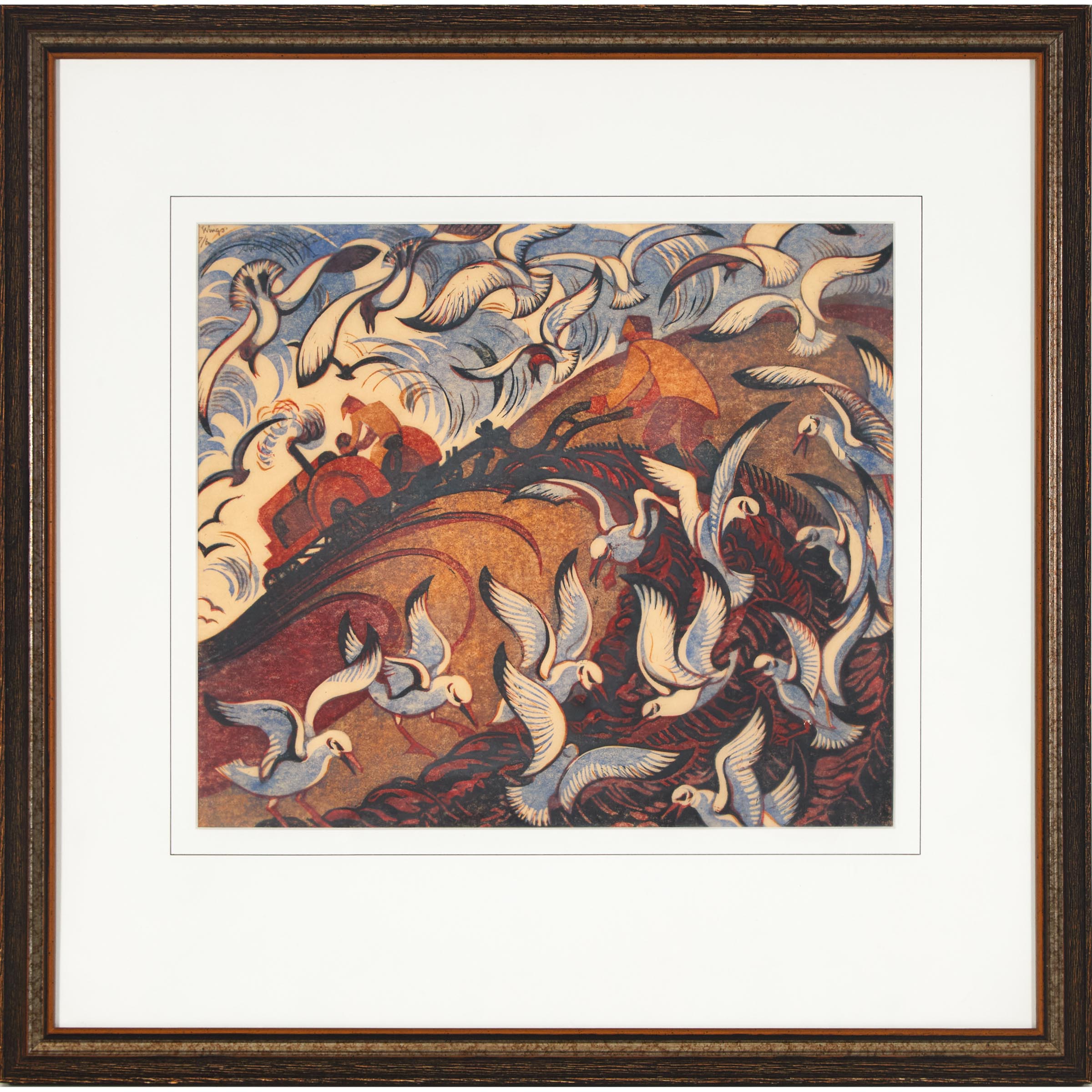
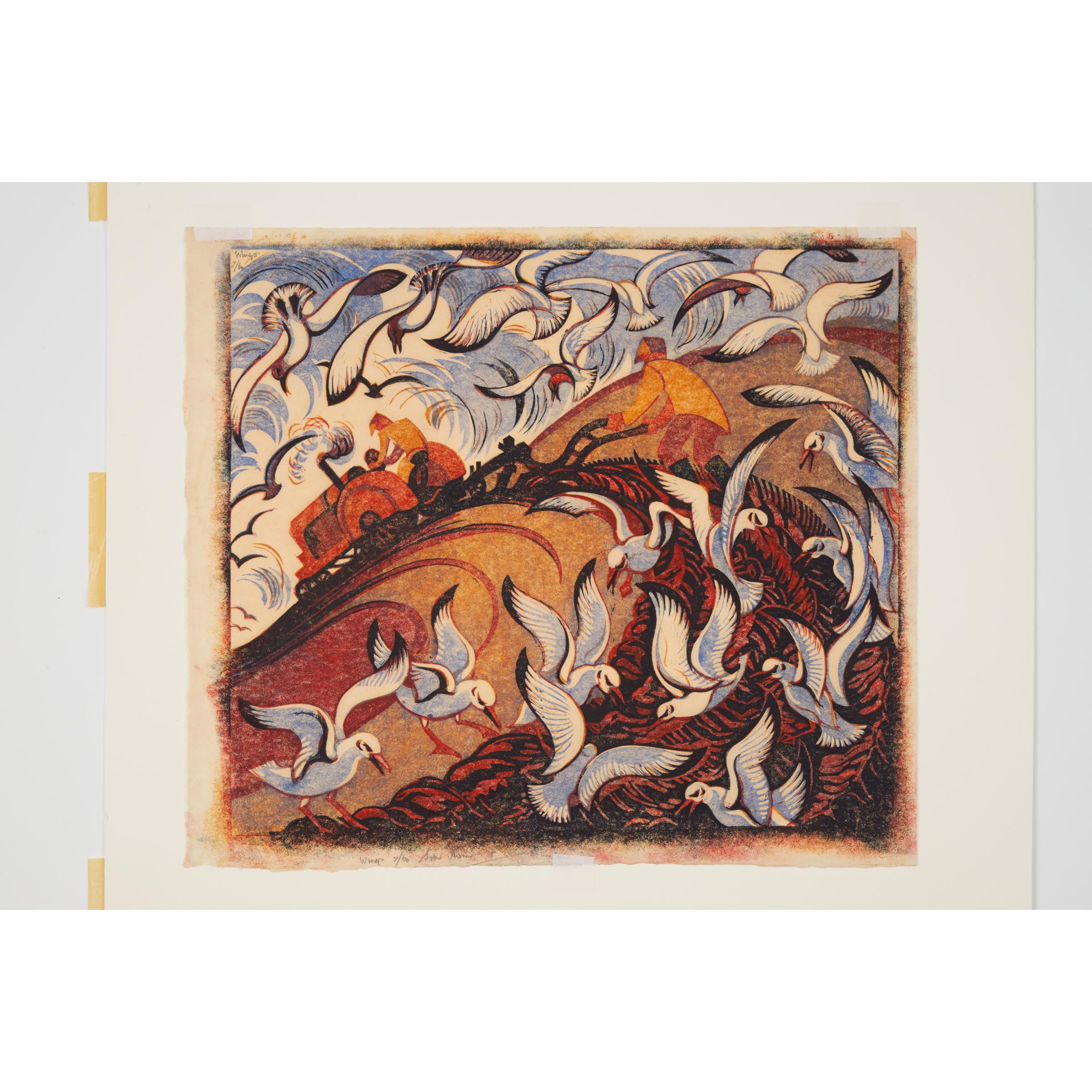
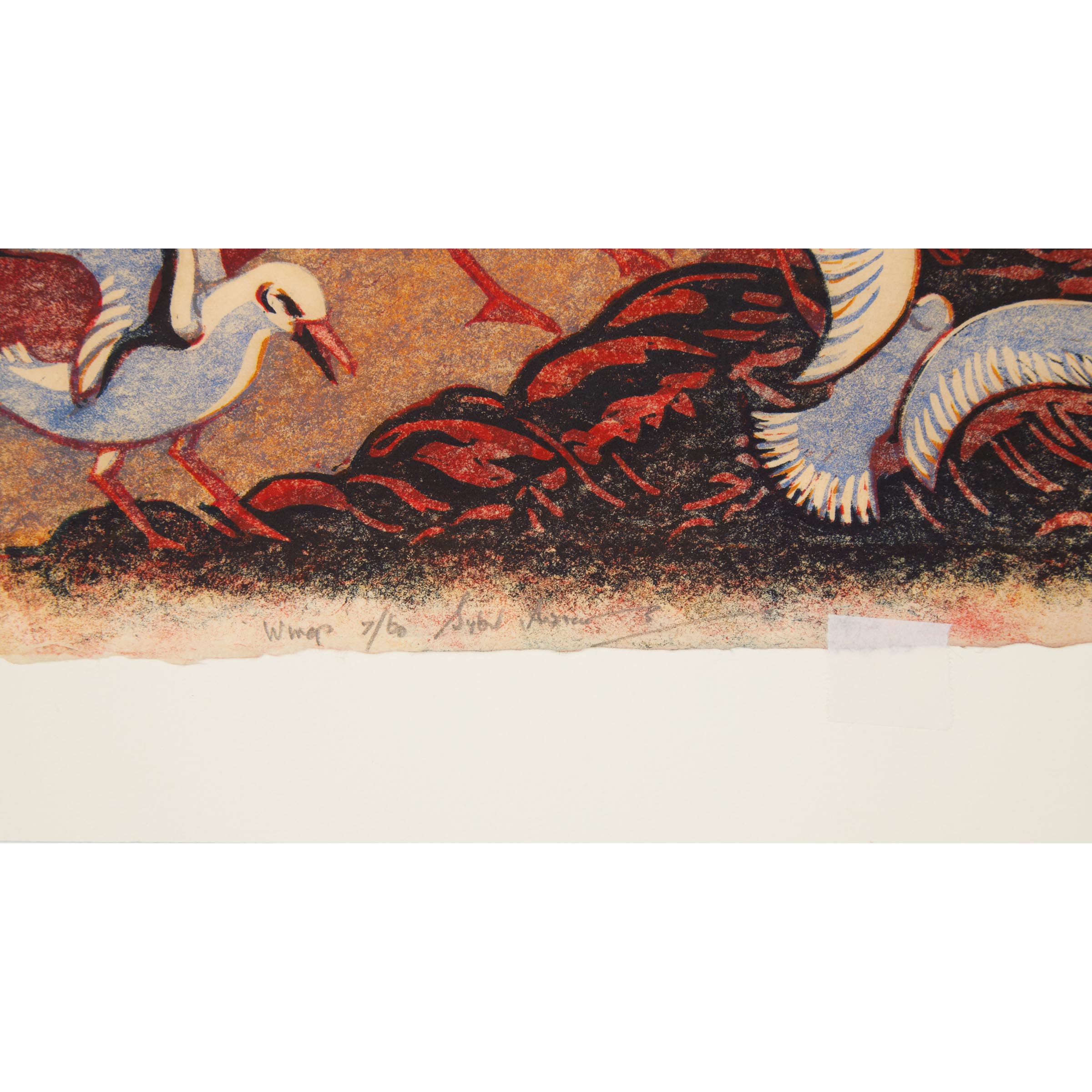
WINGS, 1979 [C. SA 74]
linocut in 4 colours on oriental laid paper
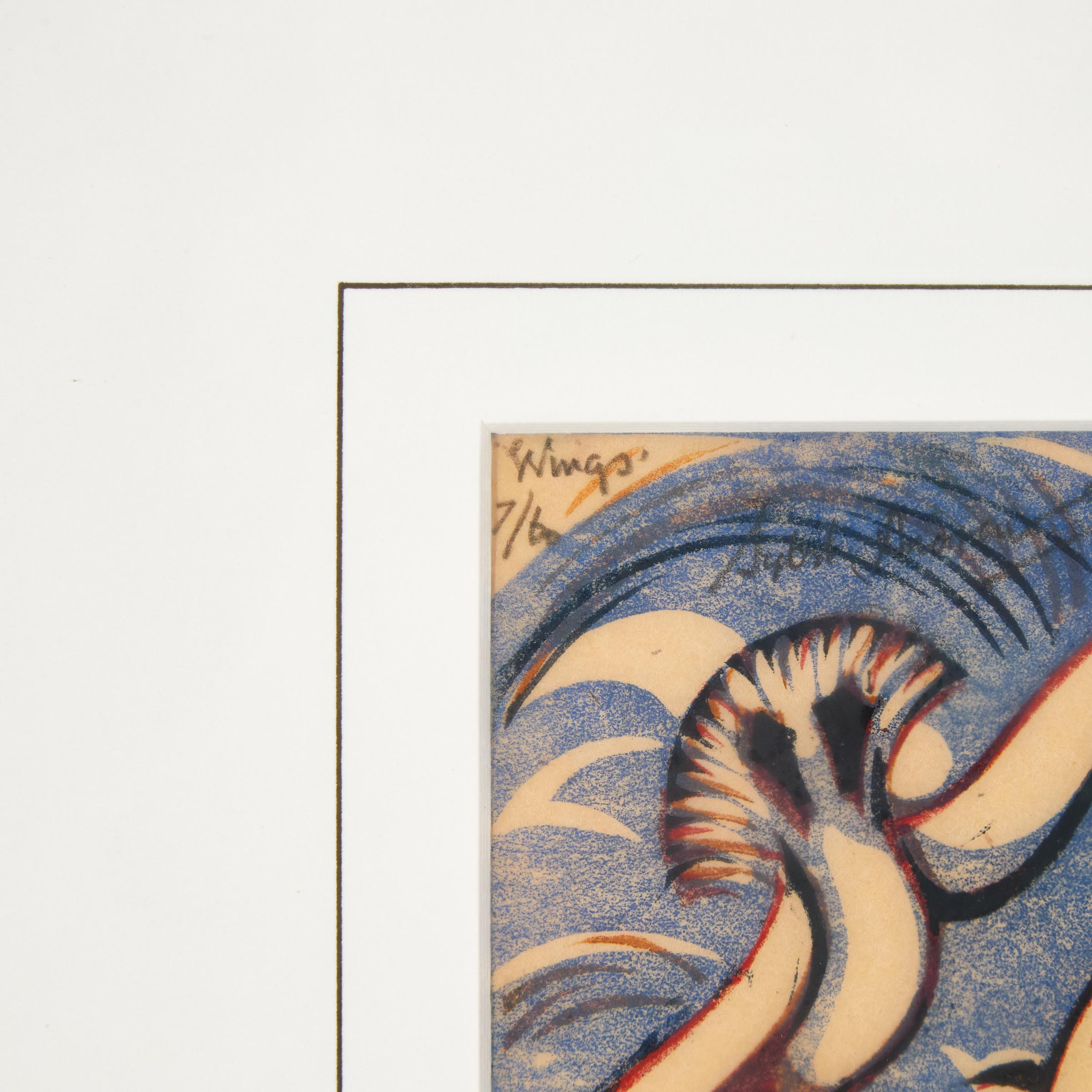
signed, titled, and numbered 7/60 upper left; also signed, titled, and numbered 7/60 lower left
14.75 x 12.25 in — 37.5 x 31.1 cm
Estimate $15,000-$20,000
Additional Images
Provenance:
Private Collection, Edmonton, AB
Literature:
Peter White, Sybil Andrews: Colour Linocuts (Calgary: Glenbow Museum, 1982), 46, plate 14 (col. repro.); 65, no. 64 (b/w repro.).
Stephen Coppel, Linocuts of the Machine Age, (London: Scholar Press, 1995), 124.
Exhibited:
Edition 5/60 was exhibited in the major retrospective Sybil Andrews: Colour Linocuts, a travelling exhibition organized by the Glenbow Museum in 1982 with the following stops:
Vancouver Art Gallery, Vancouver, BC, 16 Jan-28 Feb 1982.
Mount St. Vincent University, Halifax, NS, 19 Mar-18 Apr 1982.
Art Gallery of Ontario, Toronto ON, 28 May-25 Jul 1982.
Edmonton Art Gallery, Edmonton, AB, 6 Aug-5 Sep 1982
Glenbow Museum, Calgary, AB, 14 Sep-22 Oct 1982.
Norman MacKenzie Art Gallery, Regina, SK, 10 Nov-8 Dec 1982.
Art Gallery of Victoria, Victoria, BC, 14 Jan-28 Feb 1983.
Note:
Born in West Suffolk in 1898, Andrews studied linocutting at the progressive Grosvenor School of Modern Art in London after completing her formal art training. Andrews was influenced by the social context and artistic movements of her time while drawing on traditional themes. Peter White writes:
"...Andrews' linocuts reflect the shifting artistic climate in England between the two world wars, a period when modernism, even when it was embraced, most often was modified by that typically English 'belief in the existence of two sides.' Yet it is this very moderation, in which an ideal of visual excitement is coupled with a respect for the tradition, emotional, and personal value of art, that is a primary source of the adventurousness and vitality of these impressive prints."[1]
Wings, 1979 and Gypsies, 1939, while created 30 years apart in different countries, both draw inspiration from farming. In Gypsies, four workers carry large bushels of hay. Their machine-like legs, reminiscent of Boccioni's sculpture, draw a comparison between manual labour and industrialisation. In Wings, the farmers are secondary to the scene as they plow the land -- the focus is on the symmetry of the gulls divided by the horizon line between earth and sky as they descend on the newly planted seed. The commotion and din caused by the rapid flapping of the wings is captured in the mirroring design.
[1]Peter White, Sybil Andrews: Colour Linocuts (Calgary: Glenbow Museum, 1982), 9.