


Lot 10
Unidentified Nuu-Chah-Nulth Artist
Additional Images
Provenance:
Private Collection, Seattle, WA
Private Collection, Toronto, ON
Note:
For centuries, whale and seal hunting were the primary source of livelihood for the Nuu-chah-nulth. Even in the most seaworthy canoes, the dangers of the sea made surviving the hunt an unlikely endeavour. To help navigate the manifold dangers of their environment, whalers sought out the intervention of powerful spirits who could intercede on their behalf. Representations of these spirits are manifest in the forms of both their ceremonial, and their utilitarian objects.
Clubs made for fishing, and clubs made for war, were once commonplace tools among the Nuu-chah-nulth. While many were embellished with simple, subtle designs, some bore more elaborate figuration. A number of club-form objects bear embellishments elaborate to the extent that they would be ill-suited to the task of physically subduing persons, seals, or large fish. Little information is readily available about the use, and possibly varied significance of this class of objects, although a ceremonial, or possibly trade or commercial functions seems most probable.
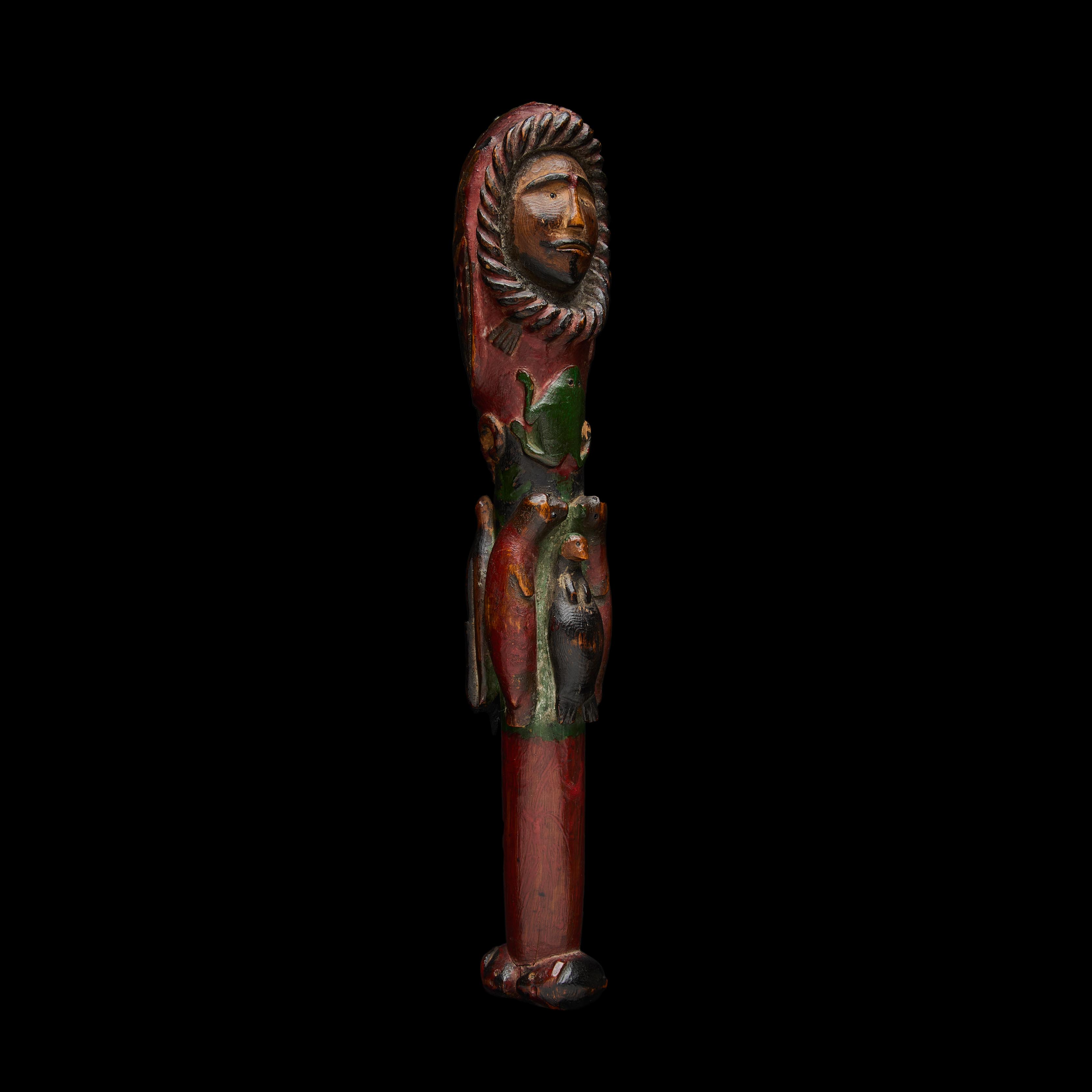
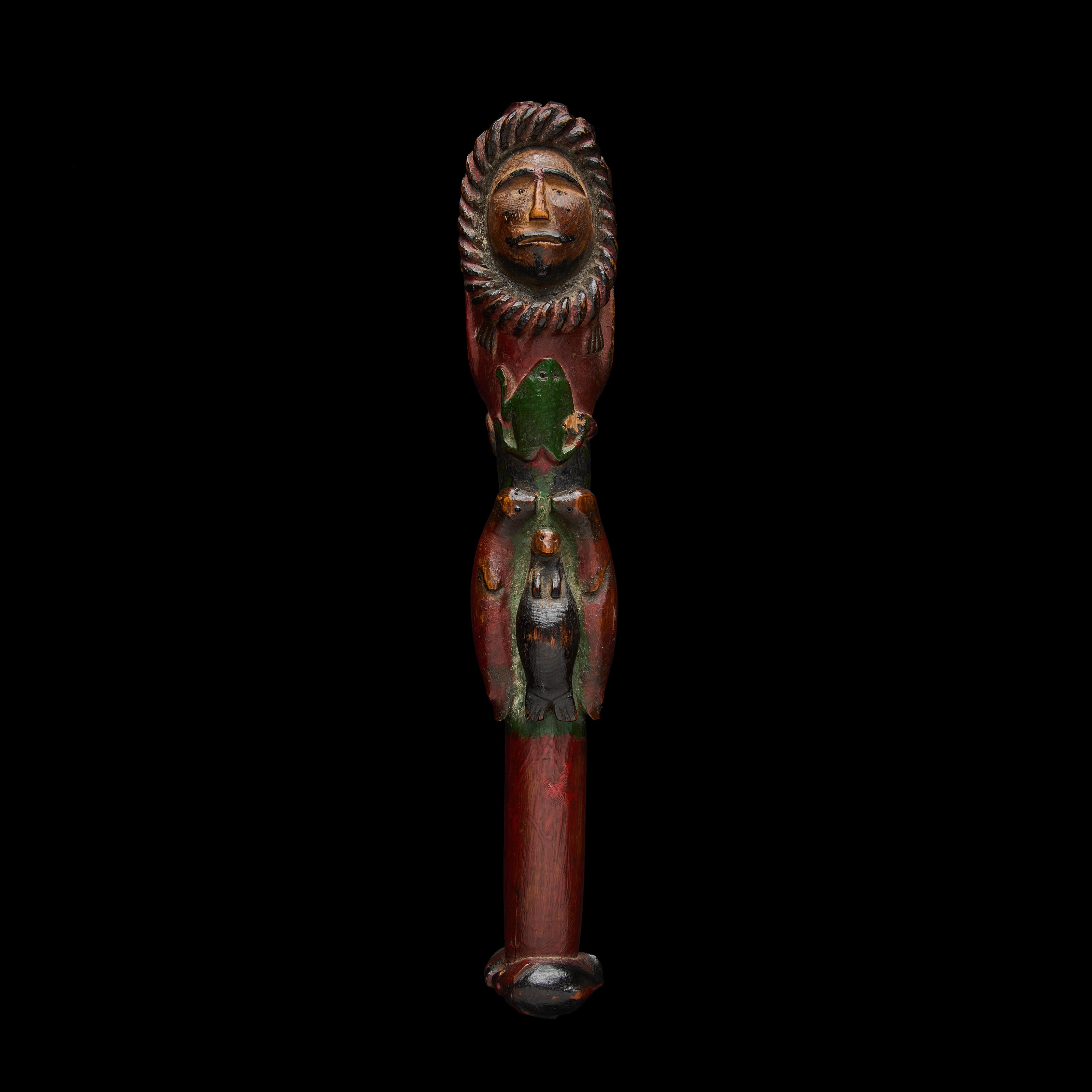
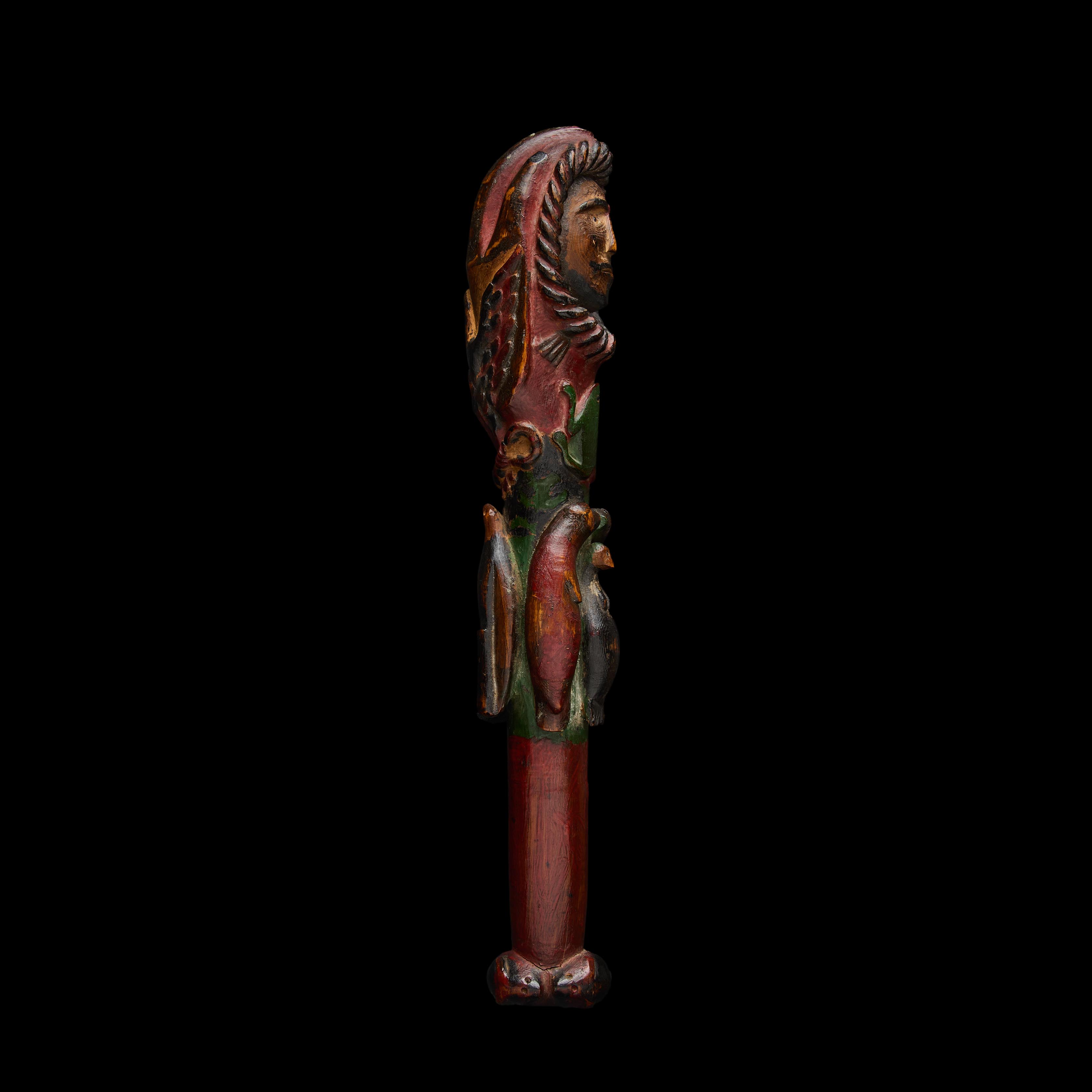
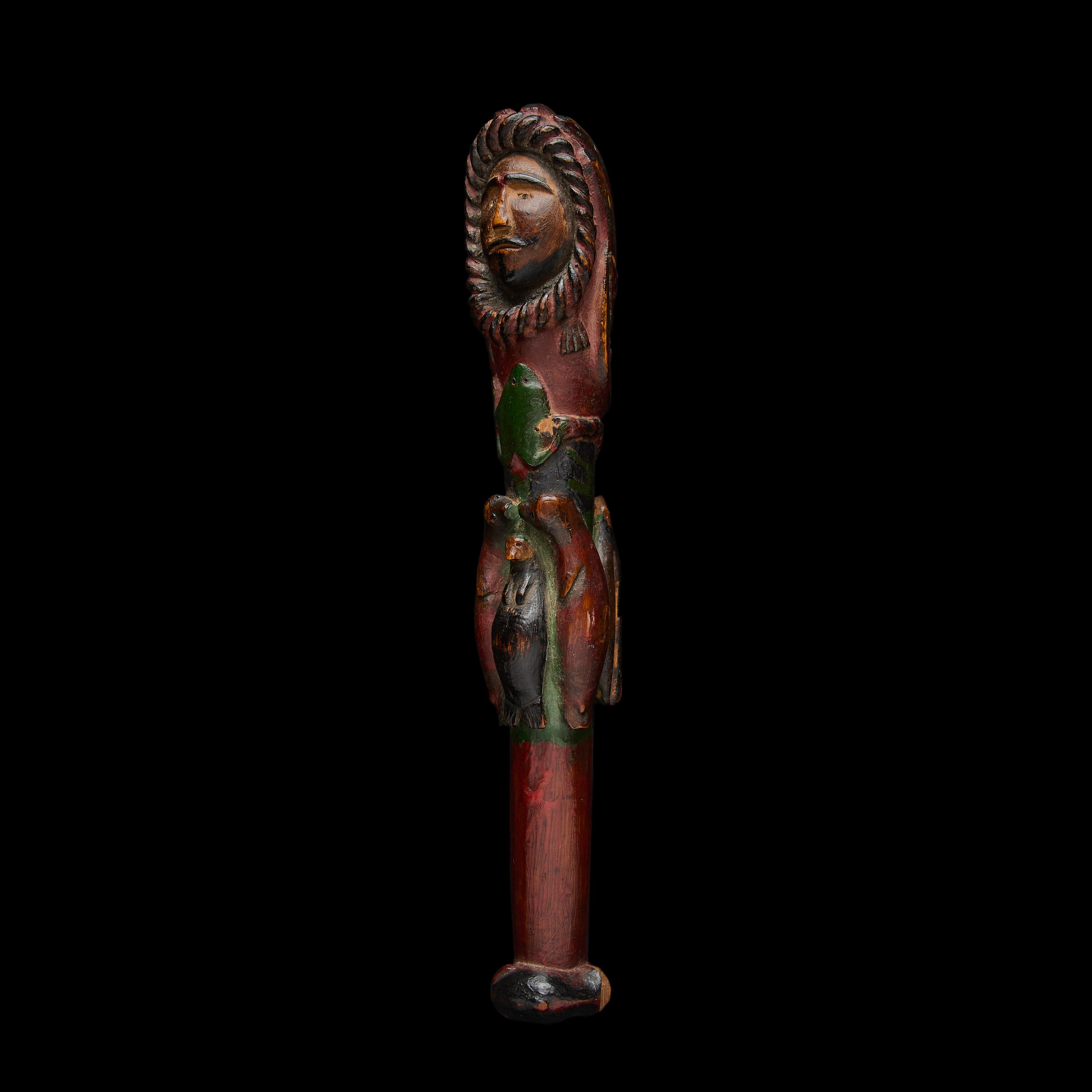
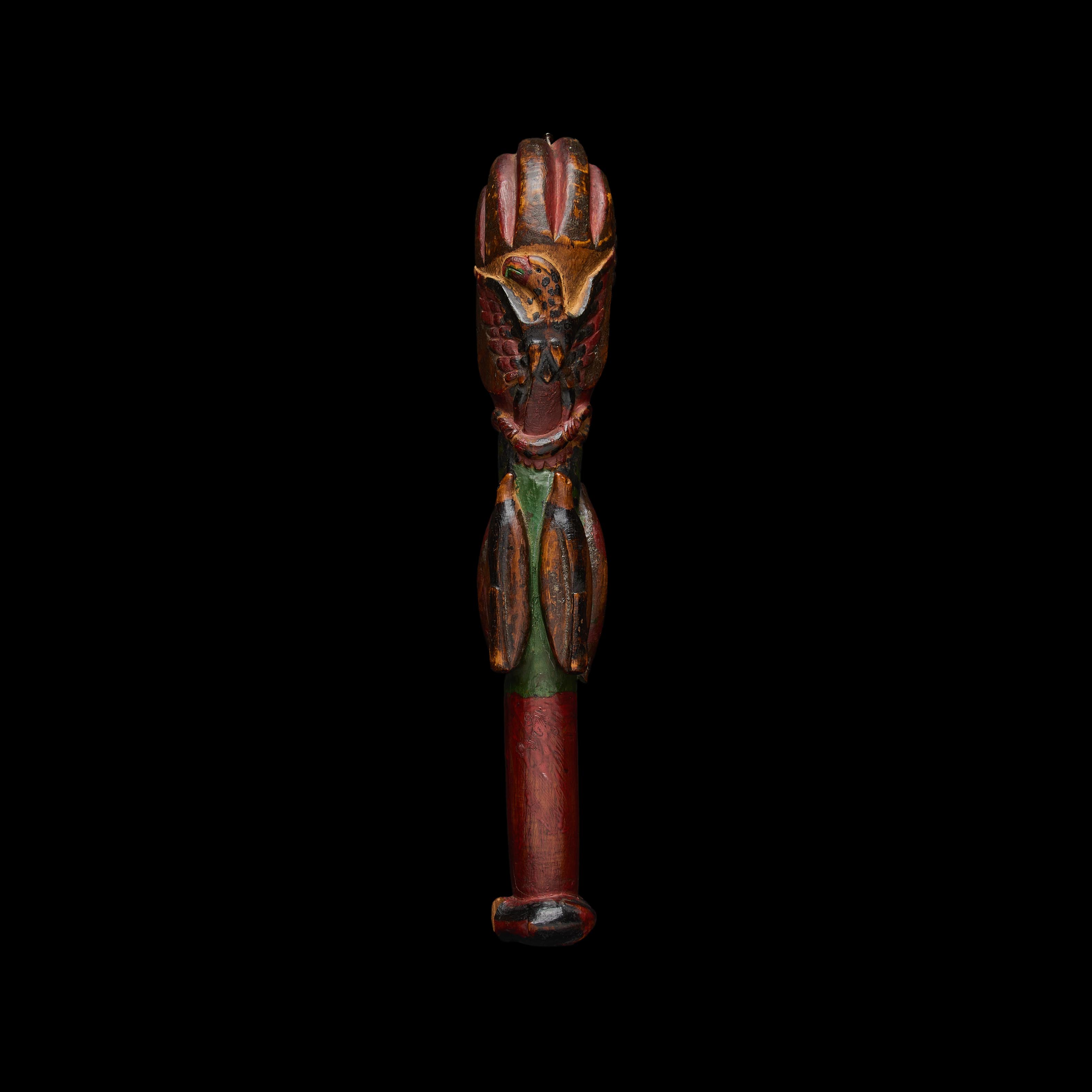
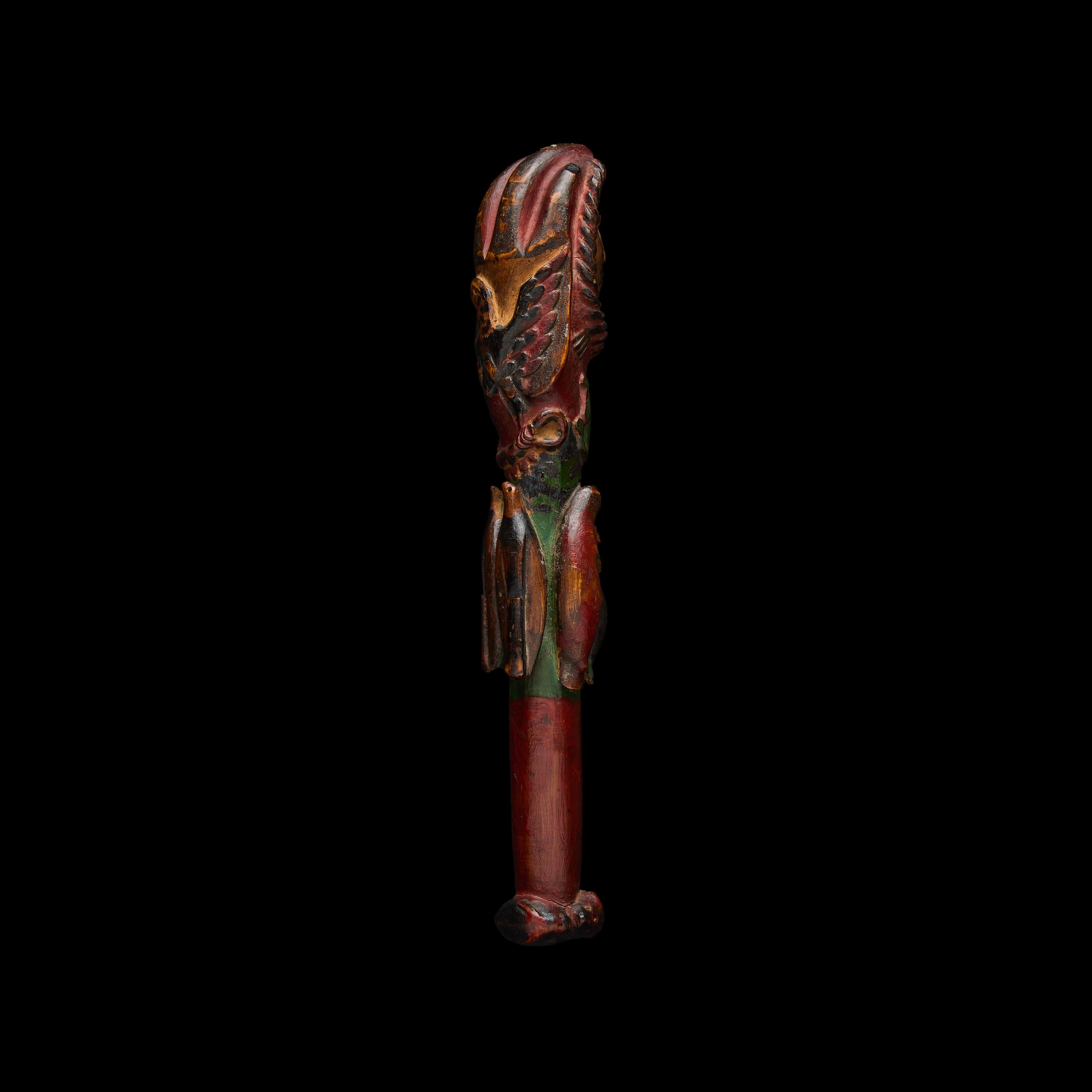
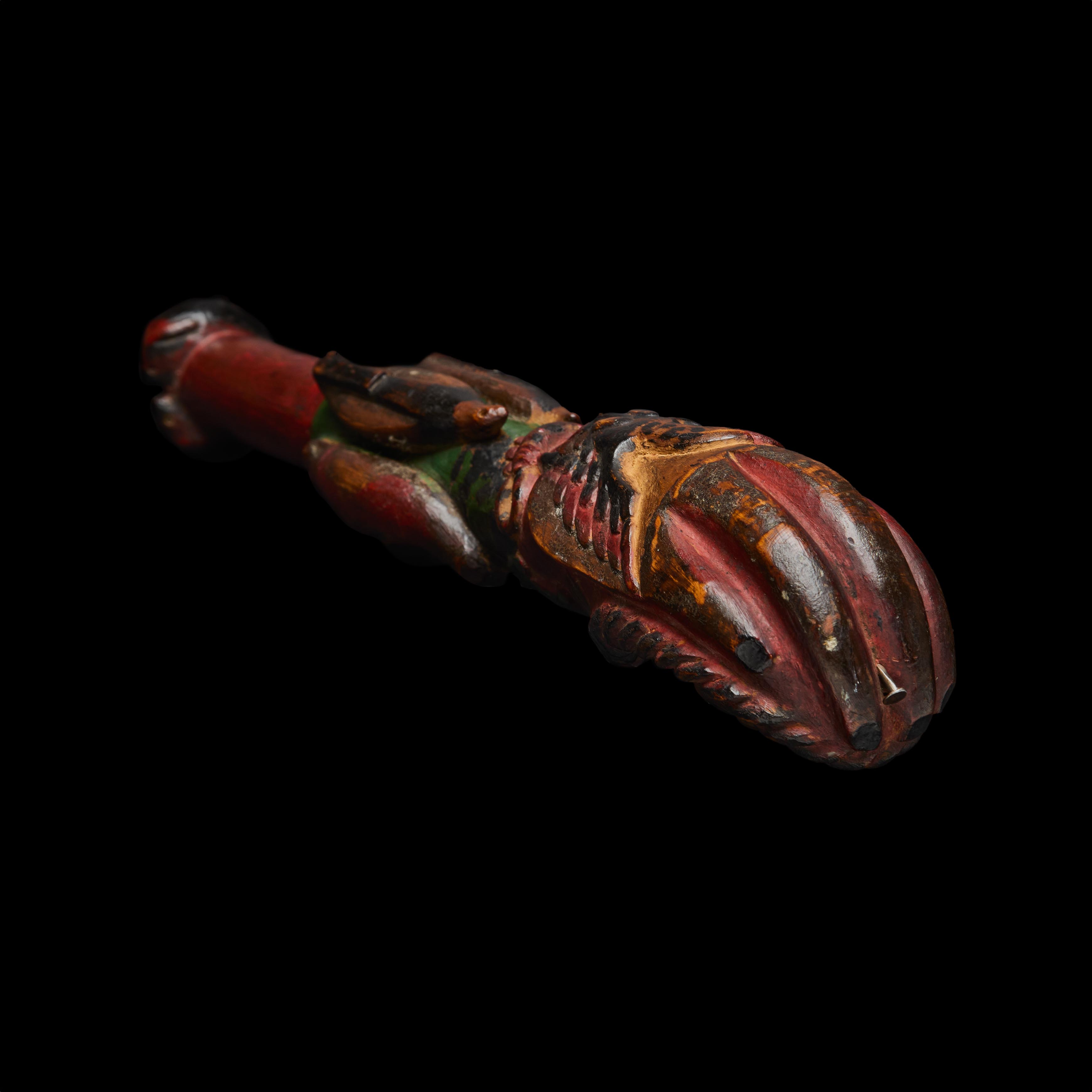
Likely dating to the latter portion of the 19th century, the present carving is among the most elaborately embellished Nuu-chah-nulth club-form carvings. It is notable for its painted and beaded designs, and for its inclusion of a mask-like face on the distal end of the carving.
Imagery on the club includes two circling orcas whose eyes and blow holes are defined by small inlaid seed beads (a characteristic present throughout the object), two seals encircling a central seal with its swollen abdomen exposed to the viewer, a pair of taxonomically ambiguous animals with tapering heads and central raised sections which likely depict fins folded along the centre of their bodies, a frog in the mouth of a snake, a Thunderbird, and a five-fingered hand clasping a mask-like head that is surrounded with a cedar bark braid. The latter likely represents a Nuu-chah-nulth ancestor. The snake depicted is grasped in the talons of the mythological whale-hunting Thunderbird, suggesting that the snake represents a Lightning Snake, used by the Thunderbird in its attacks on whales.
The depiction of a hand on club-form objects among the Nuu-chah-nulth is uncommon, but is documented in examples with varying degrees of abstraction, among some of the earliest collections made by outsiders to the Northwest Coast. Notable examples include an object with undocumented provenance dated circa 1790-1840, previously in the collection of George Terasaki, and a carving likely acquired by Captain James Cook at Yuquot (Friendly Cove) in 1778 which is currently in the collection of the University of British Columbia’s Museum of Anthropology.[1]
[1] Steven C. Brown, Transfigurations: North Pacific Coast Art. George Terasaki, Collector (Seattle: Marquand Books, 2006), unpaged, pl. 92; University of British Columbia Museum of Anthropology, ḥawʼiɬmis (Club), Online collections, http://collection-online.moa.ubc.ca/search/item?keywords=captain+cook&row=0
Related works:
Steven C. Brown, Transfigurations: North Pacific Coast Art. George Terasaki, Collector (Seattle: Marquand Books, 2006), unpaged, pl. 68.
Ibid, unpaged, pl. 92.
University of British Columbia Museum of Anthropology, Cat. No. MOA 2945/1. http://collection-online.moa.ubc.ca/search/item?keywords=captain+cook&row=0