


Lot 111
Unidentified Plains Artist
Additional Images
Provenance:
Private Collection, Brossard, QC
Private Collection, Quebec
Note:
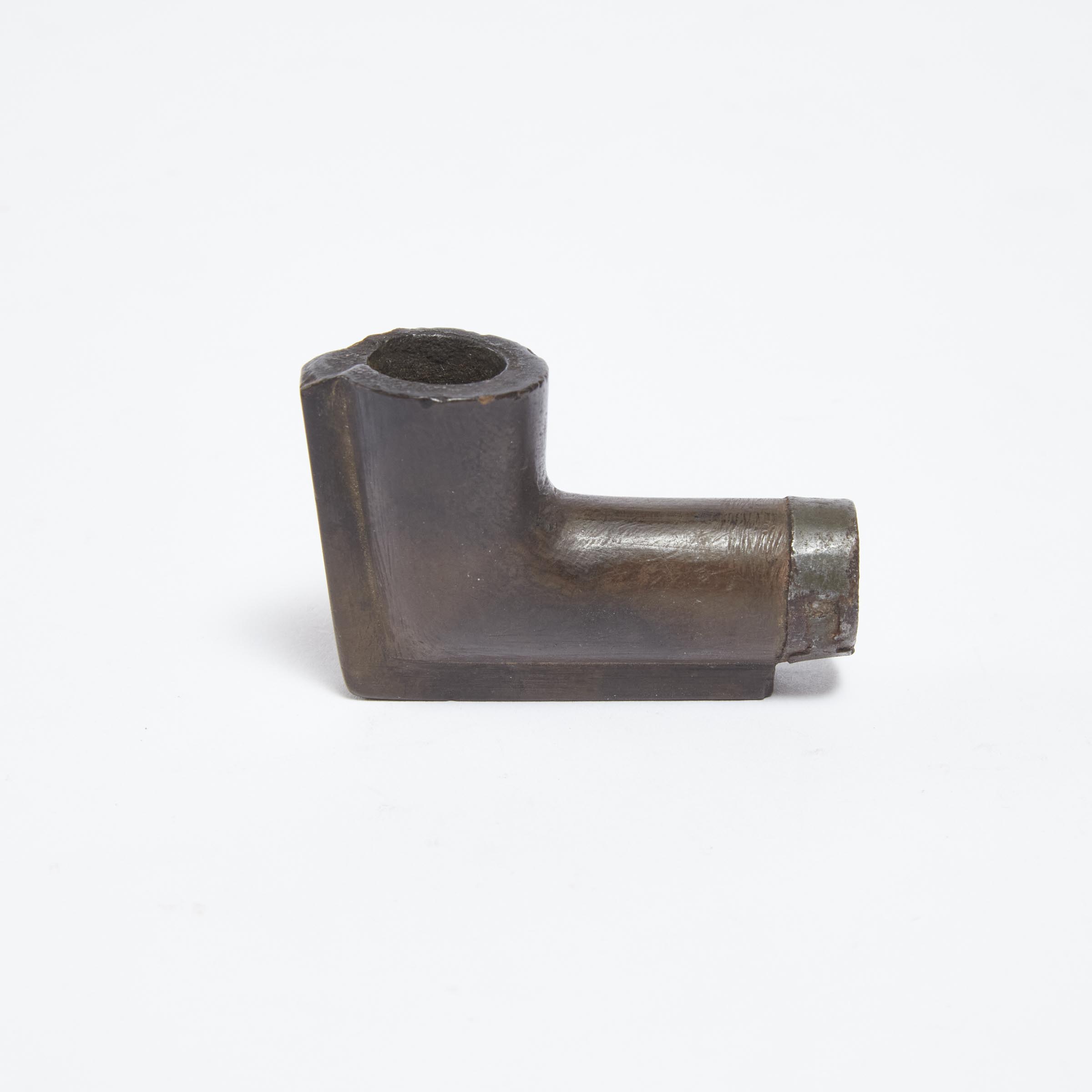
Objects of status and power, ritual and political ceremony, pipes were highly valued throughout much of historic North America. For many inhabitants of the Great Lakes and Plains regions, pipes could be made by their owners, commissioned for public or personal use, acquired through peaceful trade, and taken from enemies as trophies of war. However with the coming of Europeans, pipemaking as a commercial enterprise took on an increased significance. While pipes continued to change hands through both trade and conflict, a new First Nations-European market in pipes emerged which responded to European’s desire for touristic mementos, and later, objects of ethnographic record.
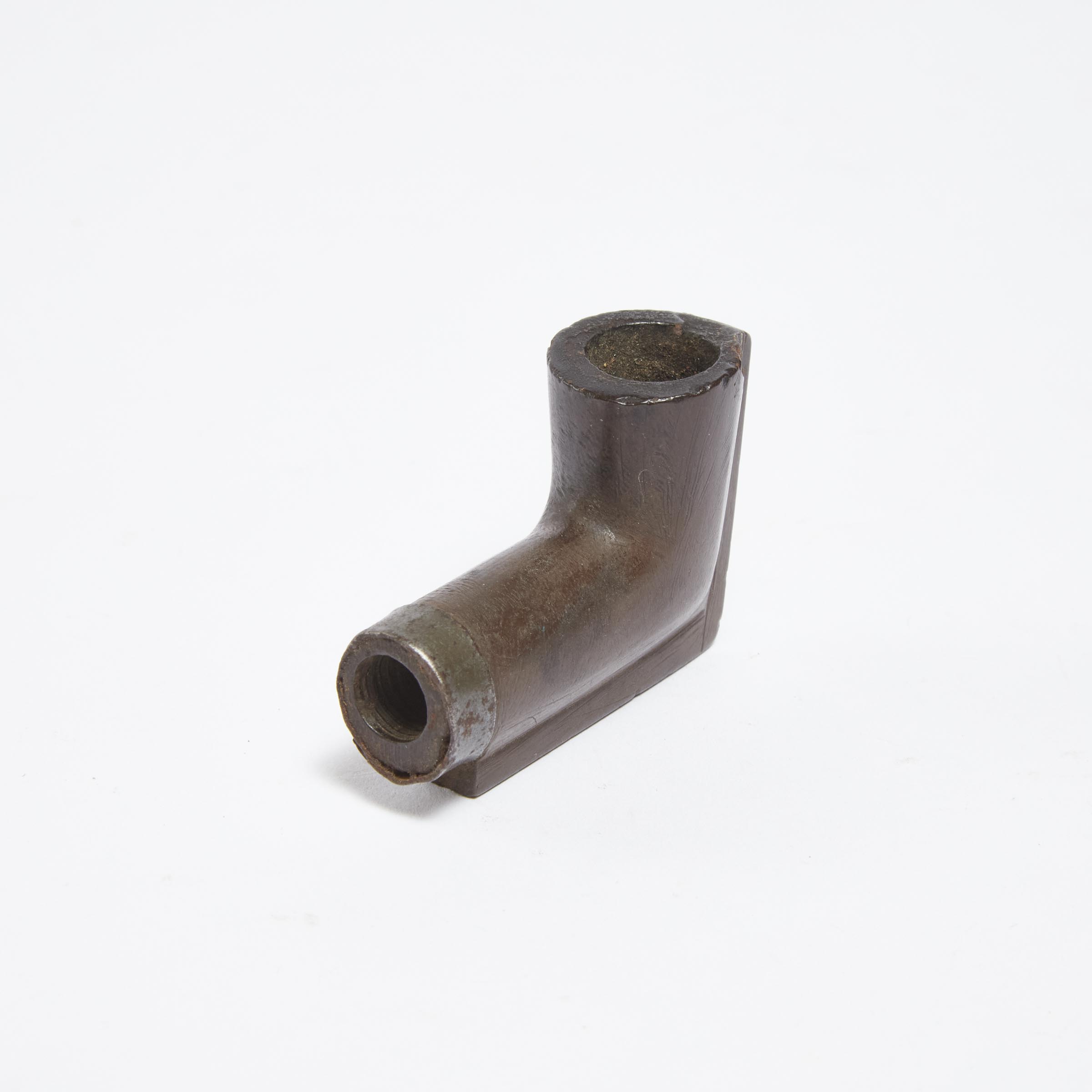
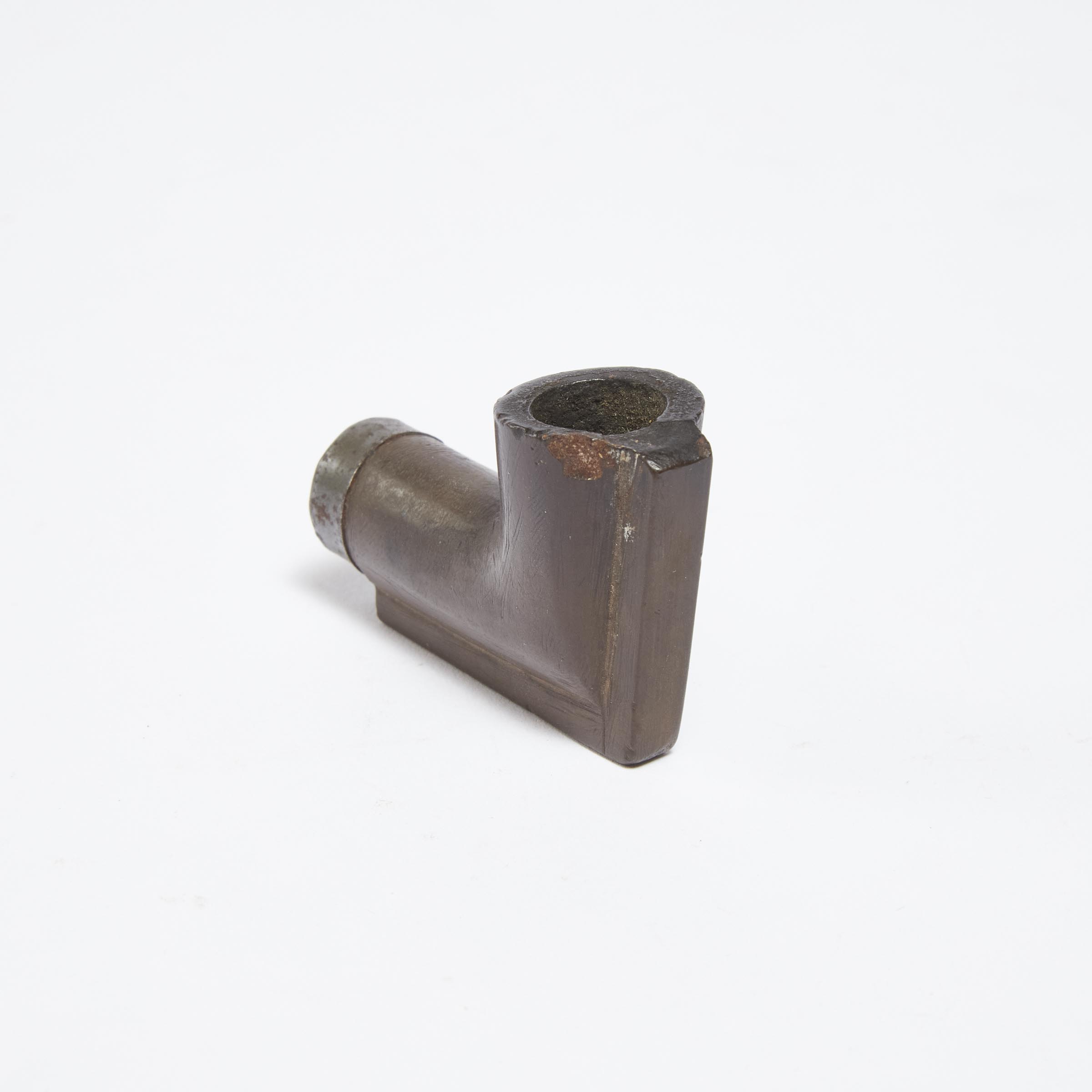
The majority of 19th century Plains and Great Lakes pipe bowls are made from red argillite, often referred to as Catlinite. Pipe bowls have alternatively been made from Steatite, chlorite, and other materials, typically fire-resistant stone. Since nearly all pipe stone is brittle, and subject to damage. In the 19th century it was common for soft metal inlay to be added to pipes in the form of pewter or lead. The inlay protected pipes from damage, repaired existing breaks and losses, and also provided an additional avenue for the expression of designs.
Great Lakes and Plains pipe stems in the 19th century were most often made from ash wood, although other woods were used. The smoke channel was carved out by first splitting the stem into two halves, or by driving a hot wire through the soft pith at the centre of an intact branch, which was carved to the desired shape. Stems could be embellished with elaborate carving, left plain, or decorated with materials of varied significance.
While many ancient, and some modern pipes have elaborate figural designs, pipes from the Great Lakes and Plains in the 19th century are mostly characterized by an aesthetic economy, often embodying a remarkable simplicity and purity of form. Little scholarship has addressed the aesthetic achievement of these important works of Great Lakes and Plains sculpture, although exceptional examples can be found in most books illustrating Great Lakes and Plains art.
[1] John C. Ewers, Indian Art in Pipestone: George Catlin’s Portfolio in the British Museum (London: British Museum Publications Ltd. 1979), 36.