


Lot 90
Unidentified Wendat (Lorette Huron) Artist
Additional Images
Provenance:
By repute purchased by the previous owner from an early home in Wendake, QC
Private Collection, Ontario
Note:
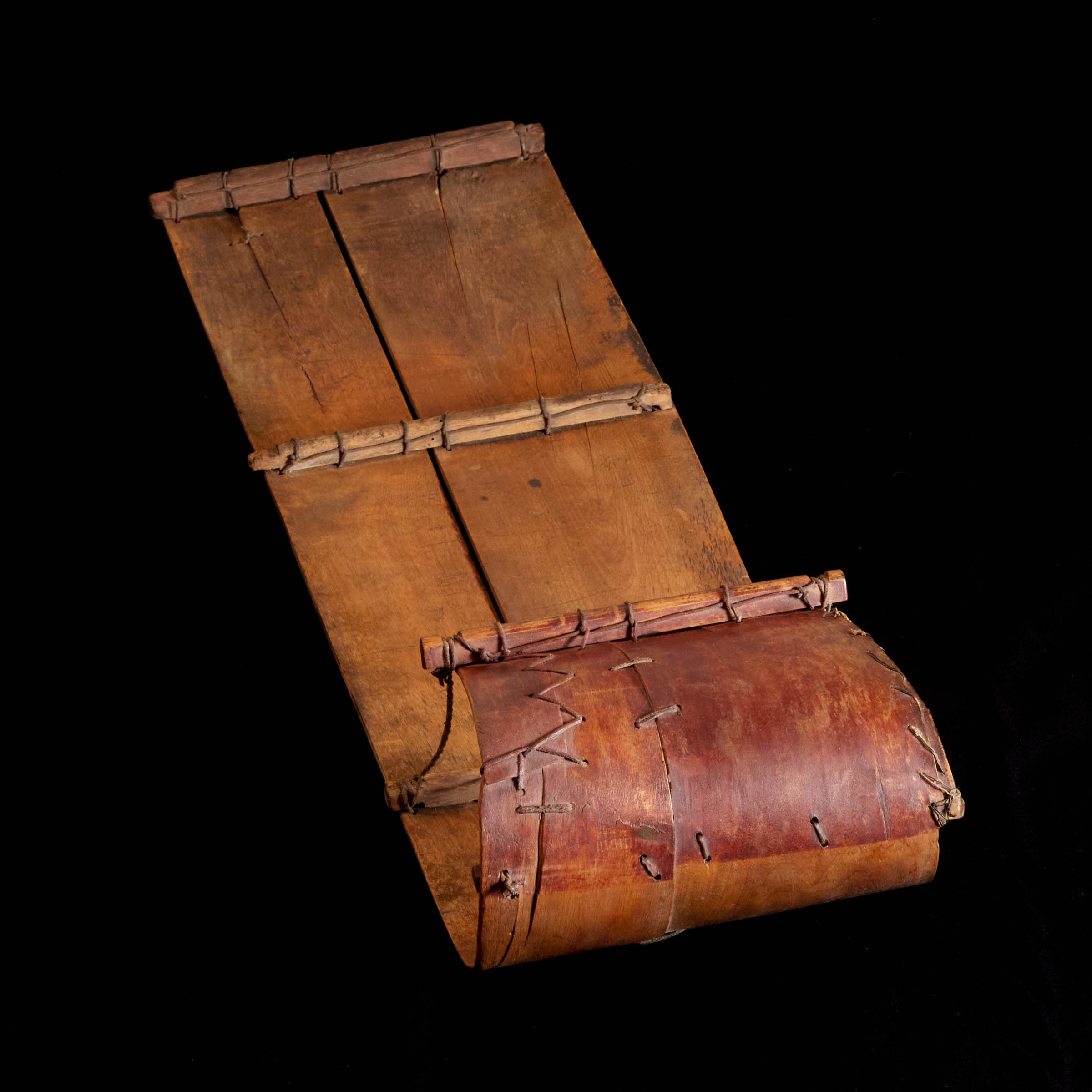
Although made in the later 19th century for sporting and recreational use by Euro-Canadians, the toboggan was long an essential vehicle for the transportation of food and other goods in winter snow. At times essential to survival, the treatment of toboggans amongst the historic peoples of the Eastern Woodlands was a subject of great seriousness, and often strict ritual convention. Anthropologist Frank Speck in his time amongst the Naskapi in Labrador and adjacent Northern Quebec noted that amongst the Naskapi, toboggans were conventionally stood against a tree while not in use, but always with the curved head of the toboggan facing south—or if by necessity—east. A toboggan facing the north wind risked offending Tci’wetinowi’nu “man-of-the-north spirit”, who might bring death through cold weather or the absence of game to the toboggan’s owner.
Speck notes the use of sometimes patterned red “vermillion” paint on the heads of toboggans found amongst the Naskapi, but also amongst neighbouring peoples. The pigment was applied to exert a “magic influence” or to favour Tci’wetinowi’nu.
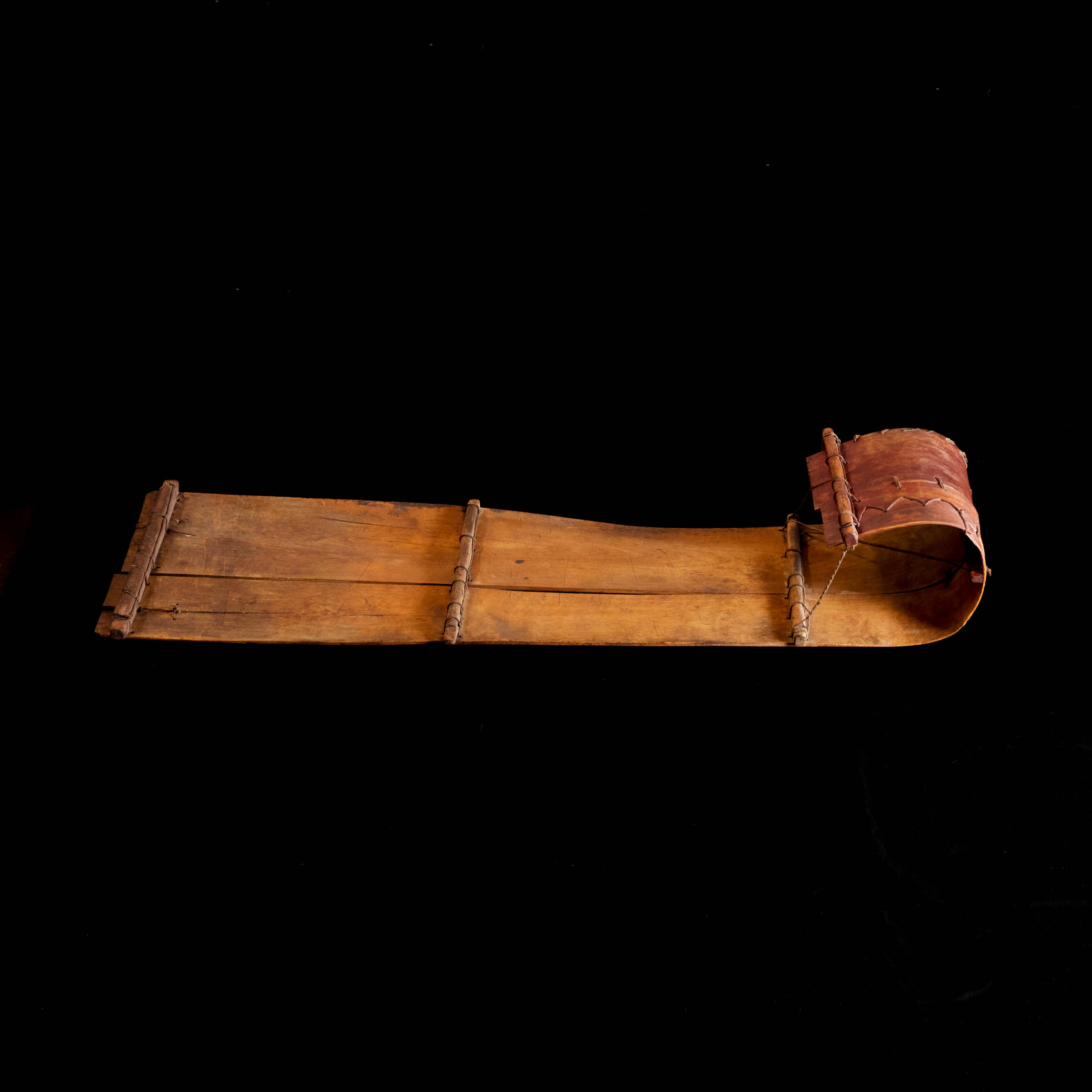
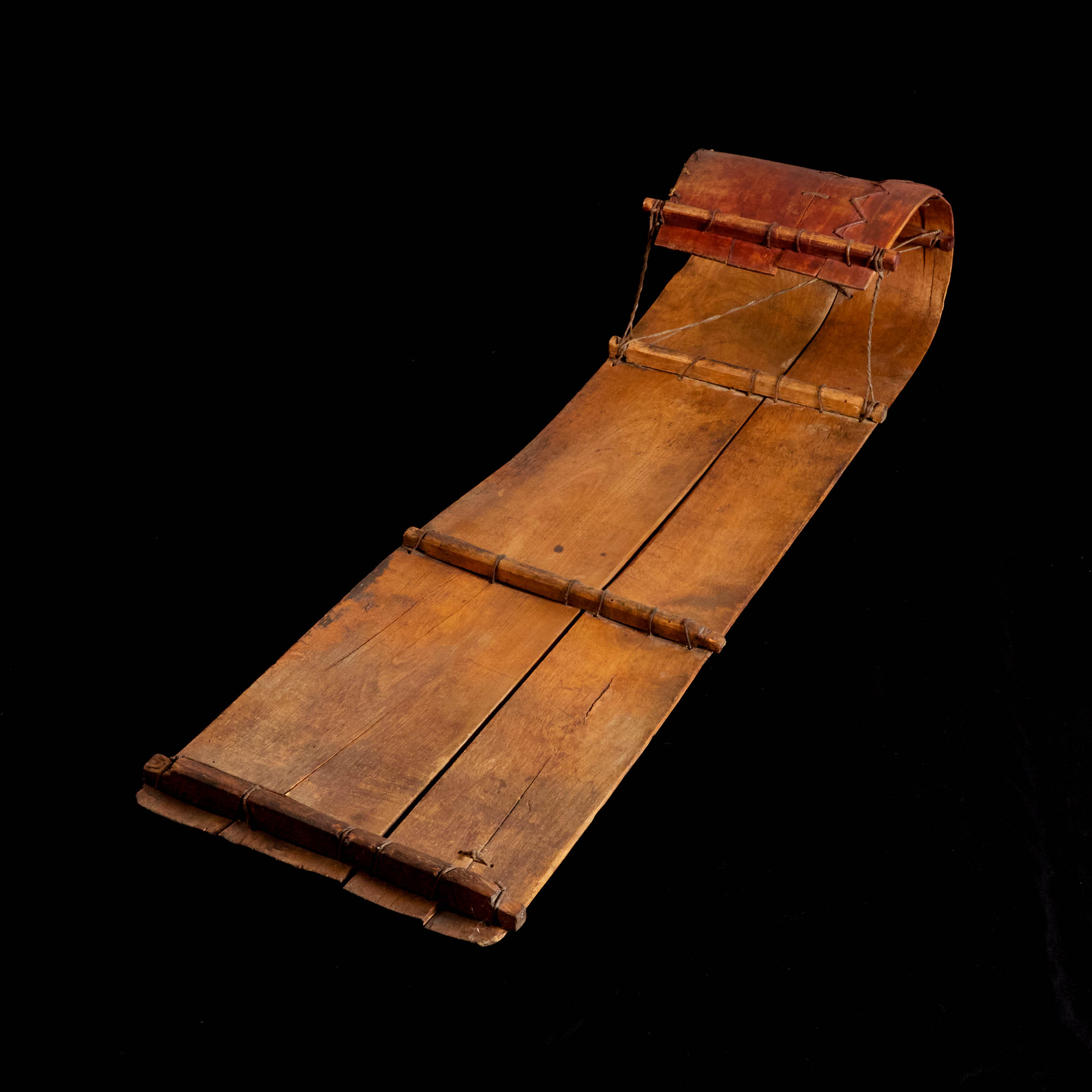
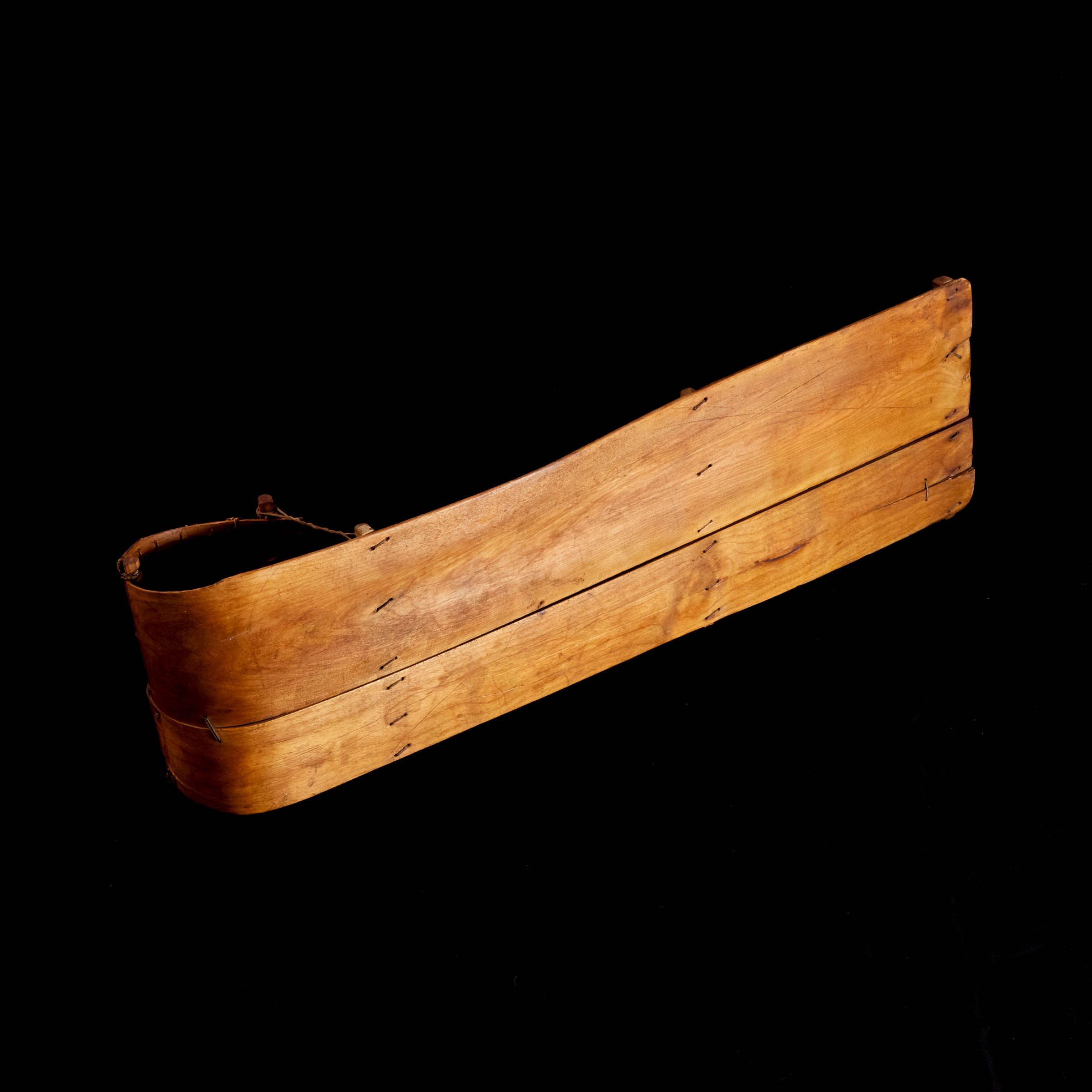
This rare example of a Laurette Wendat toboggan was purchased by the previous owner from an early home on the Wendake Reserve in Lorette, Quebec over 60 years ago. The toboggan is of typical Wendat construction, and the upper portion of the curved head is embellished with paint of a vermillion colour.
Closely related examples to the present toboggan may be found in the collections of the Canadian Museum of History, and also in the Smithsonian National Museum of the American Indian. The latter example was also collected on the Wendake Reserve and attributed to the Lorette Huron (Wendat).
F.G. Speck, Naskapi: The Savage Hunters of the Labrador Peninsula (Oklahoma: University of Oklahoma Press, 1977)
F. G. Speck, ”Notes on the Material Culture of the Huron”, American Anthropologist, Volume 13, 1911, https://archive.org/details/jstor-659644