


Lot 15
Unidentified Haida or Tlingit Artist
Lot 15 Details
Unidentified Haida or Tlingit Artist
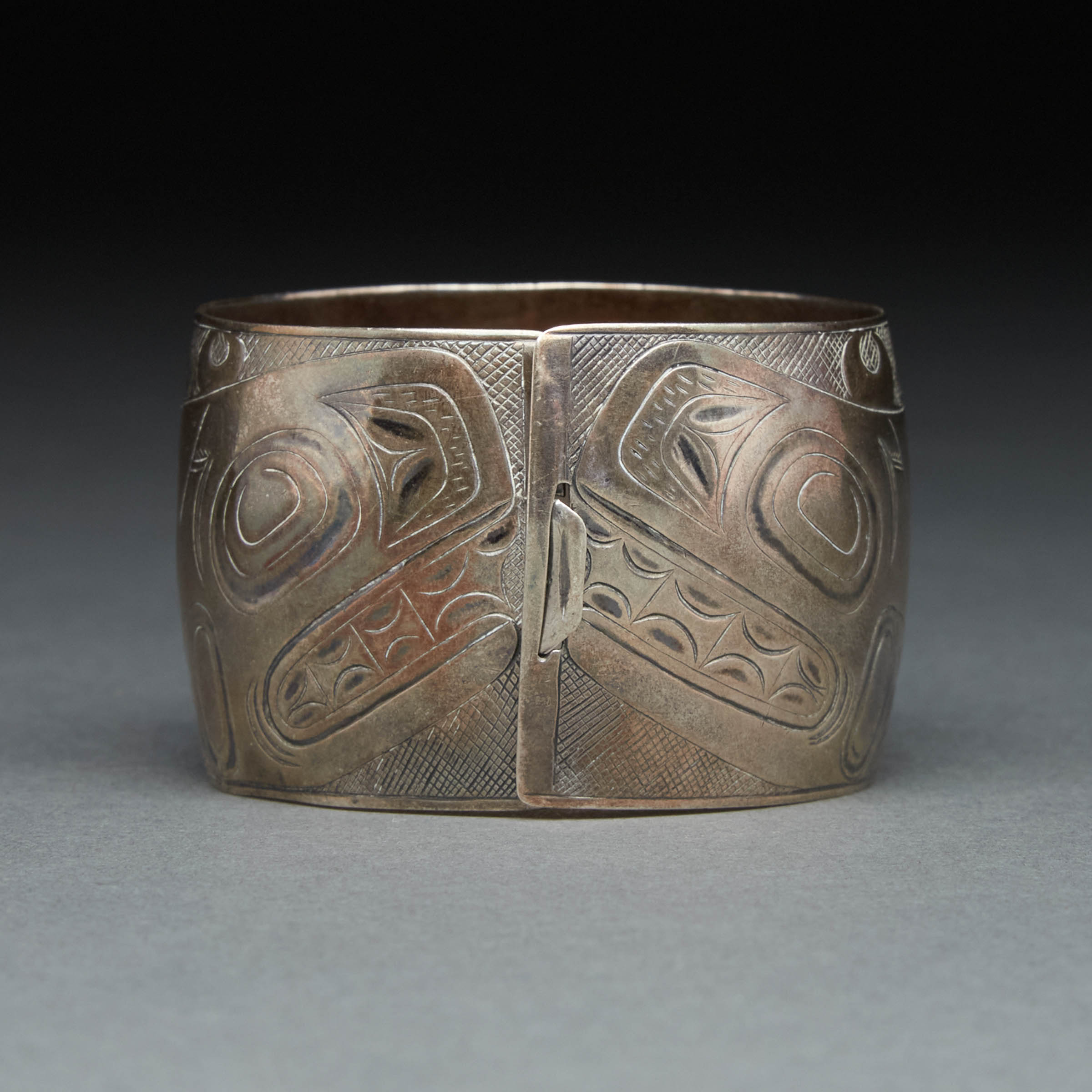
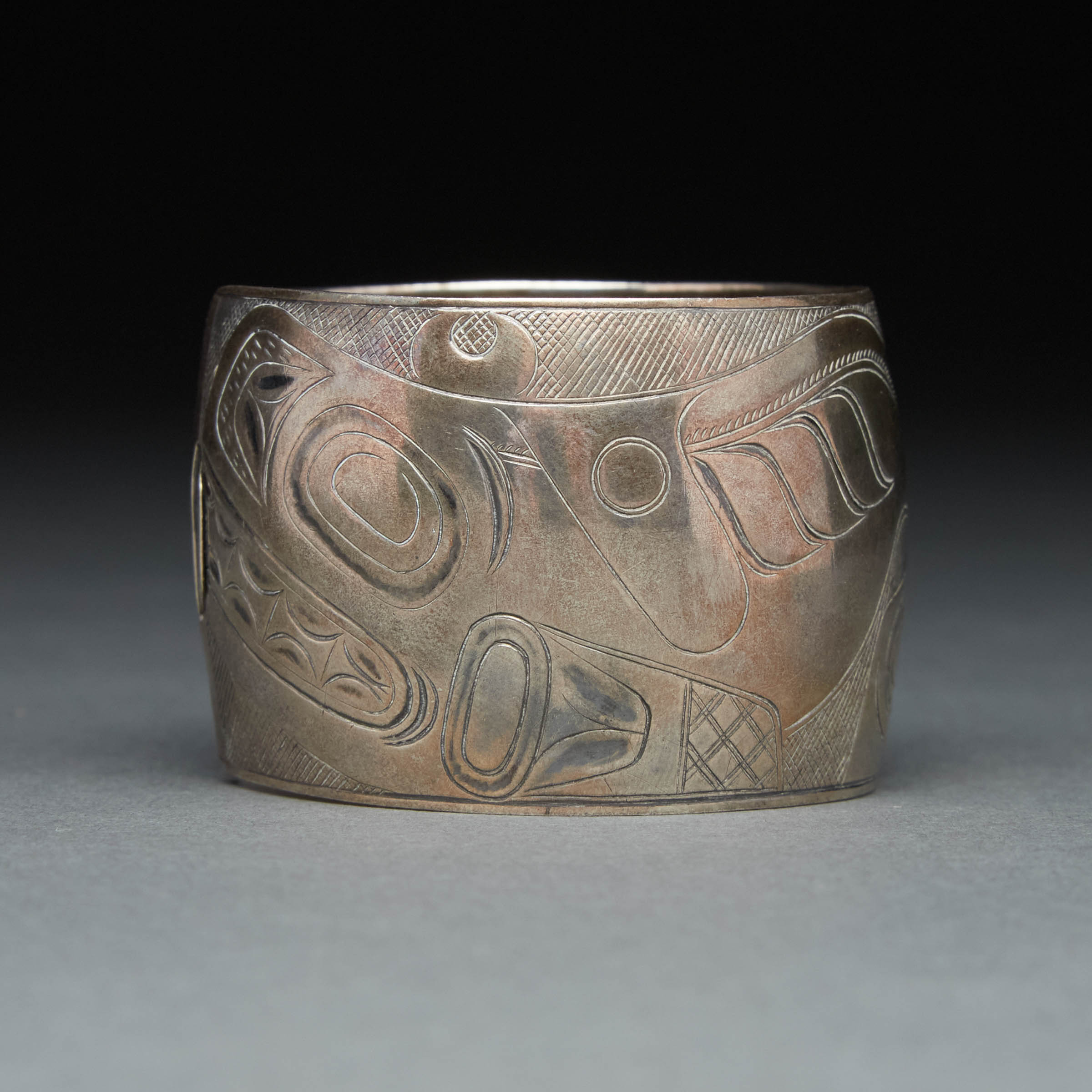
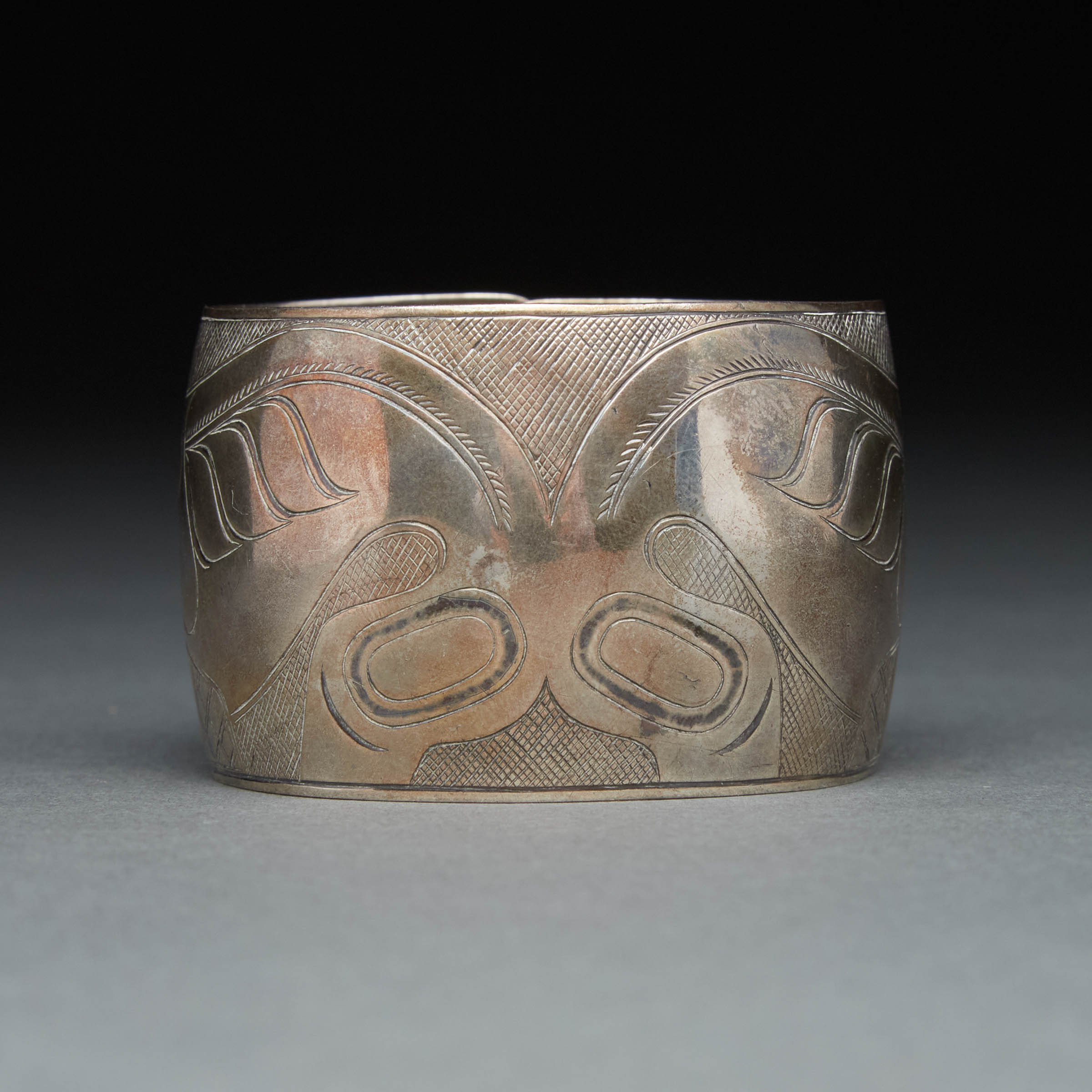
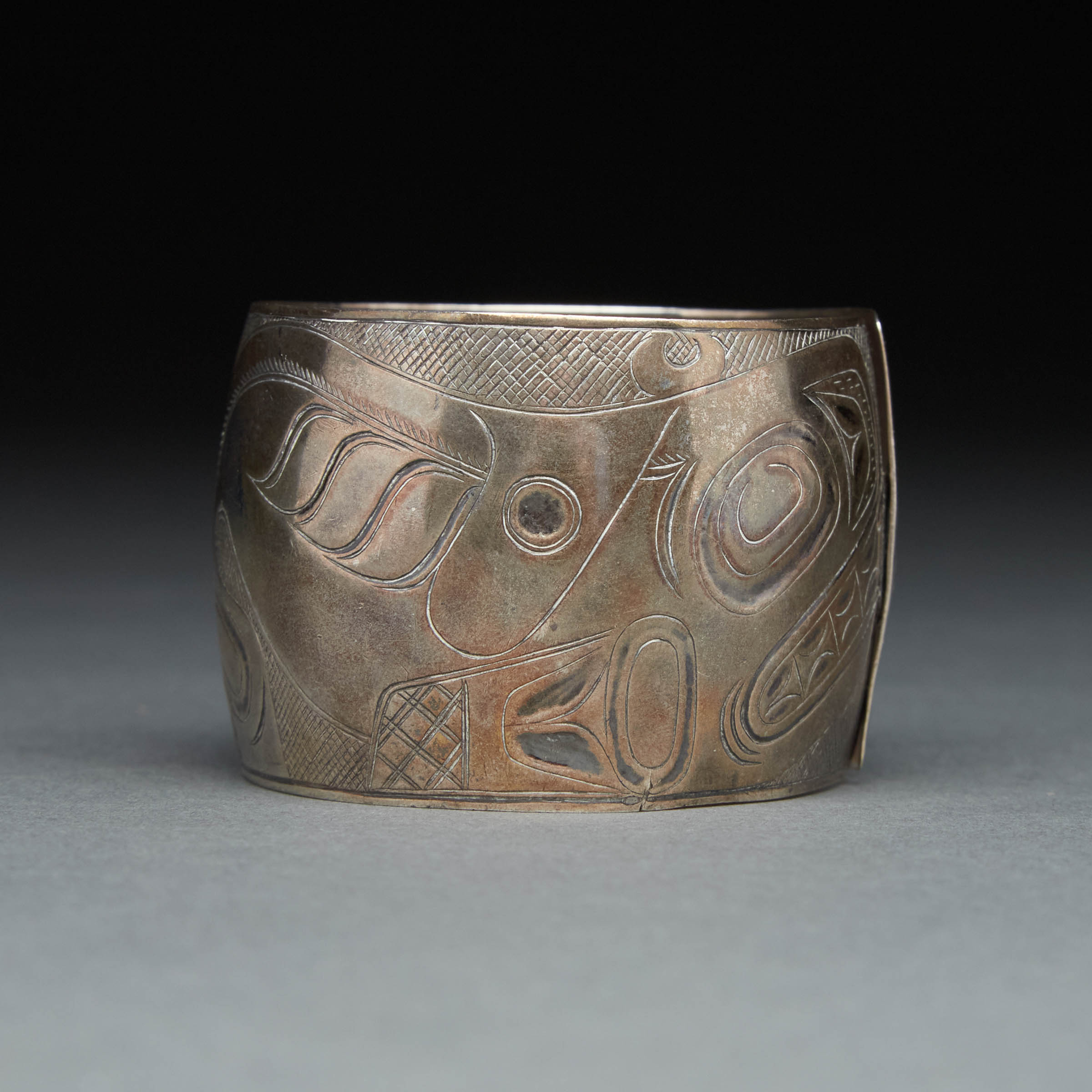
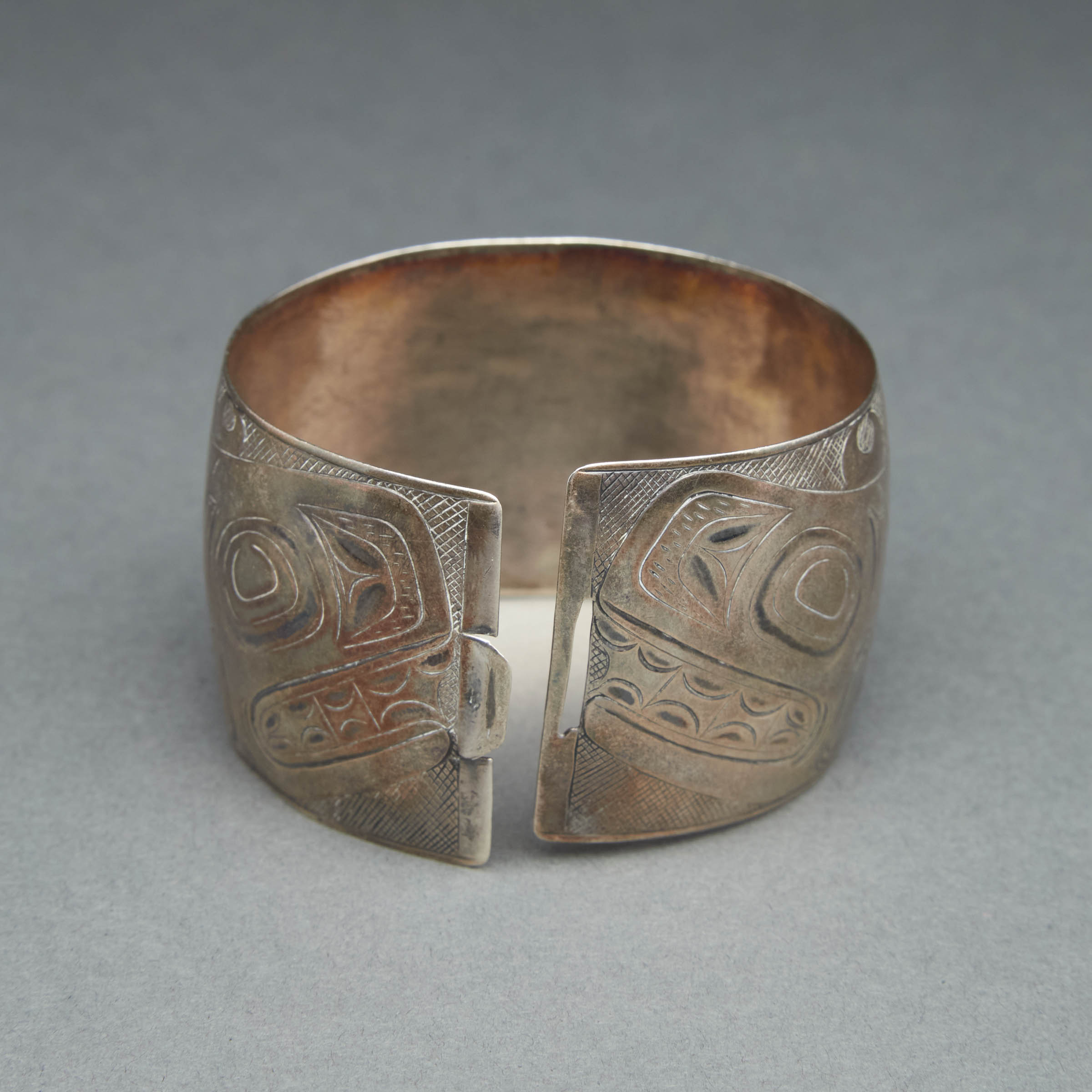
BRACELET WITH ENGRAVED KILLER WHALE DESIGNS, 1920 OR EARLIER
silver, 39 g
unsigned, approximate circumference 6.875 in — 3.8 cm
height 1.5 in — 3.8 cm, diameter 2.25 in — 5.7 cm
Estimate $1,000-$1,500
Additional Images
Provenance:
Collected in the Pacific Northwest by Marius Barbeau, ca. 1920s
Gifted by the above to his daughter Dalila Barbeau Price
By descent to the present Private Collection, Toronto, ON
Note:
Elaborate metal adornments were important markers of status among nobles on the Northwest Coast at the time of the earliest contact with Europeans. While such objects, typically executed in copper, could be embellished with virtuoso engraving, it was not until the 19th century that bracelets and other adornments were made in silver among the Tlingit and Haida. The great Charles Edenshaw (Daax’igang) is often cited as the first Haida artist to see the potential of this uniquely responsive and malleable material, although Tlingit artists in Yakutat Bay and elsewhere certainly preceded him in the craft.[1]
The present bracelet is a finely engraved and compositionally sophisticated work. The design integrates an image of two killer whales joined at the tail, whose opposing faces meet at the junction of the bracelet’s hooked clasp. Northwest Coast scholar Bill Holm noted the uncommon nature of the design, which was also found on a bracelet illustrated in his classic text for the 1983 exhibition The Box of Daylight. The present bracelet compares favourably with the bracelet illustrated by Holm, and was collected by the legendary anthropologist and polymath Charles Marius Barbeau, who gifted it to his daughter Dalila Barbeau Price.
A pioneering anthropologist and the founder of professional folklore studies in Canada, Marius Barbeau worked at the National Museum (now the Canadian Museum of History) from 1911 until the late 1960s. Over his career, Barbeau made numerous important acquisitions of First Nations art for the museum, along with preserving thousands of traditional songs, texts, art and artifacts, most notably from First Nations and French Canadian cultures. Many of Barbeau’s books, particularly those on the arts of the Northwest Coast remain the definitive texts on their subject. Of notable significance to the present lot, Barbeau authored the first art historical examination of Northwest Coast silversmiths, in the publication Alaska Beckons in 1947. For a second mid-20th century Haida bracelet also gifted by Barbeau to Dalila Barbeau Price, please see lot 39 of concurrent auction First Nations Art.
[1] Nancy Harris, “Reflections on Northwest Coast Silver” The box of Daylight: Northwest Coast Indian Art (Seattle & London: University of Washington Press, 1984), 132-135.