


Lot 20
Unidentified Kwakwaka'wakw Artist
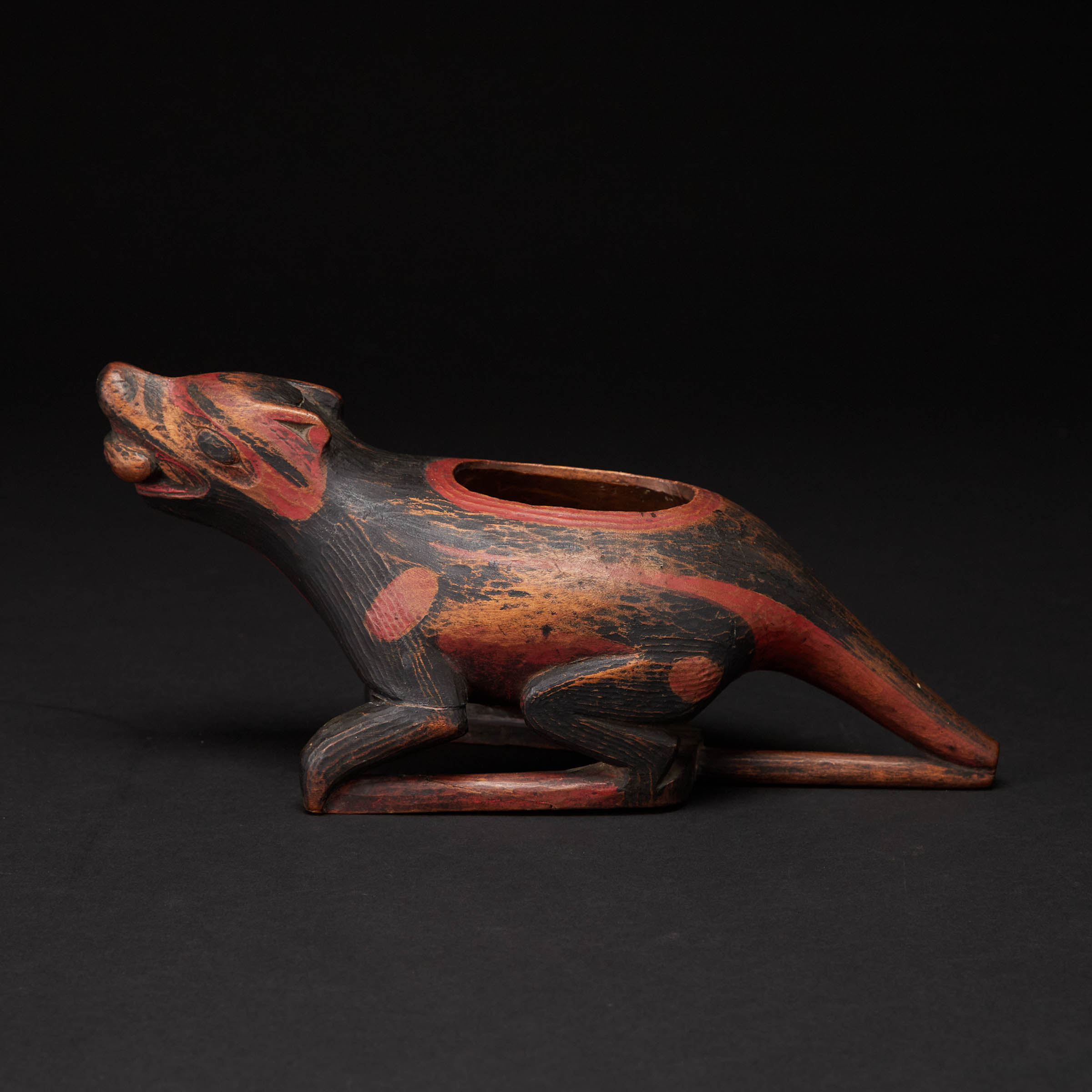
Lot 20 Details
Unidentified Kwakwaka'wakw Artist
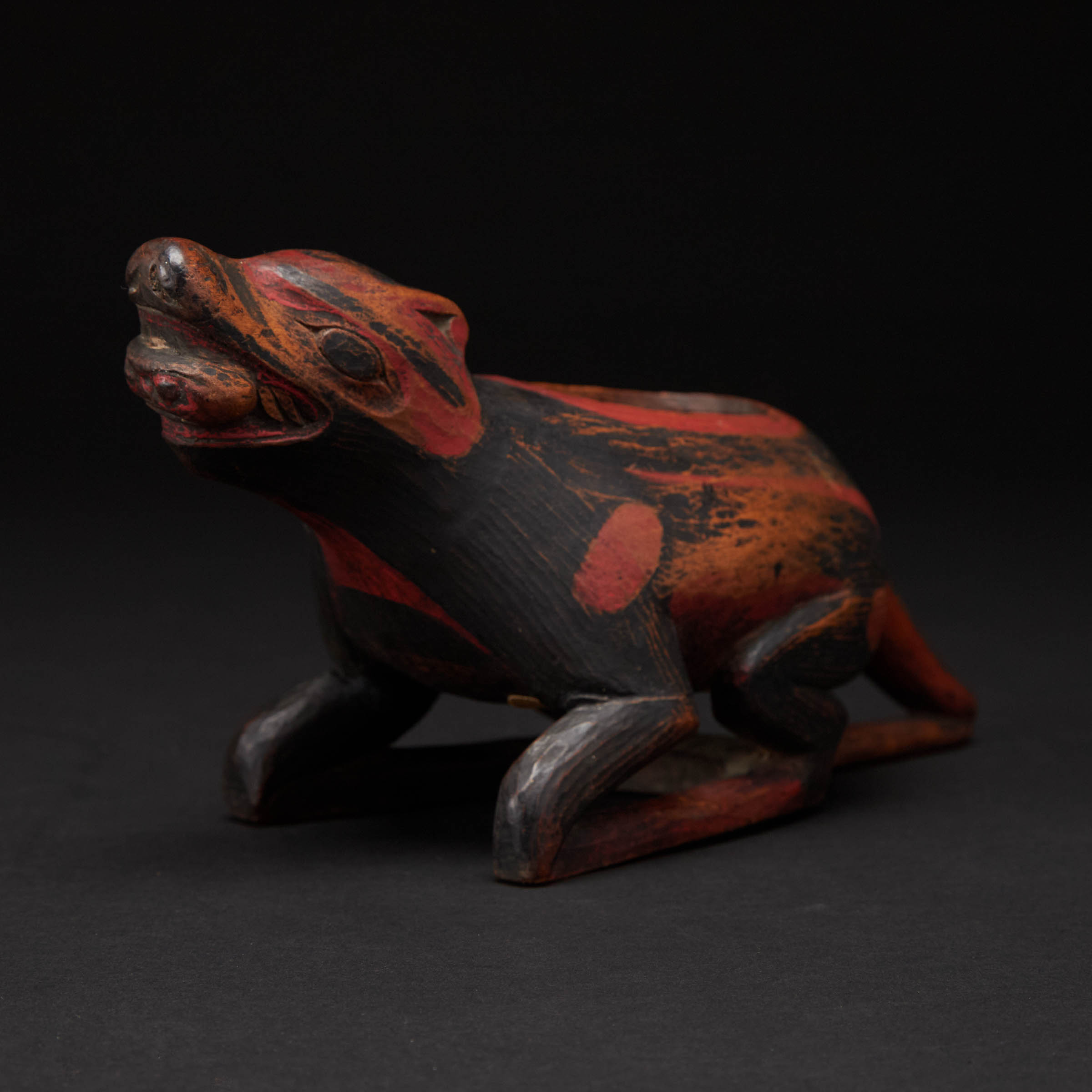
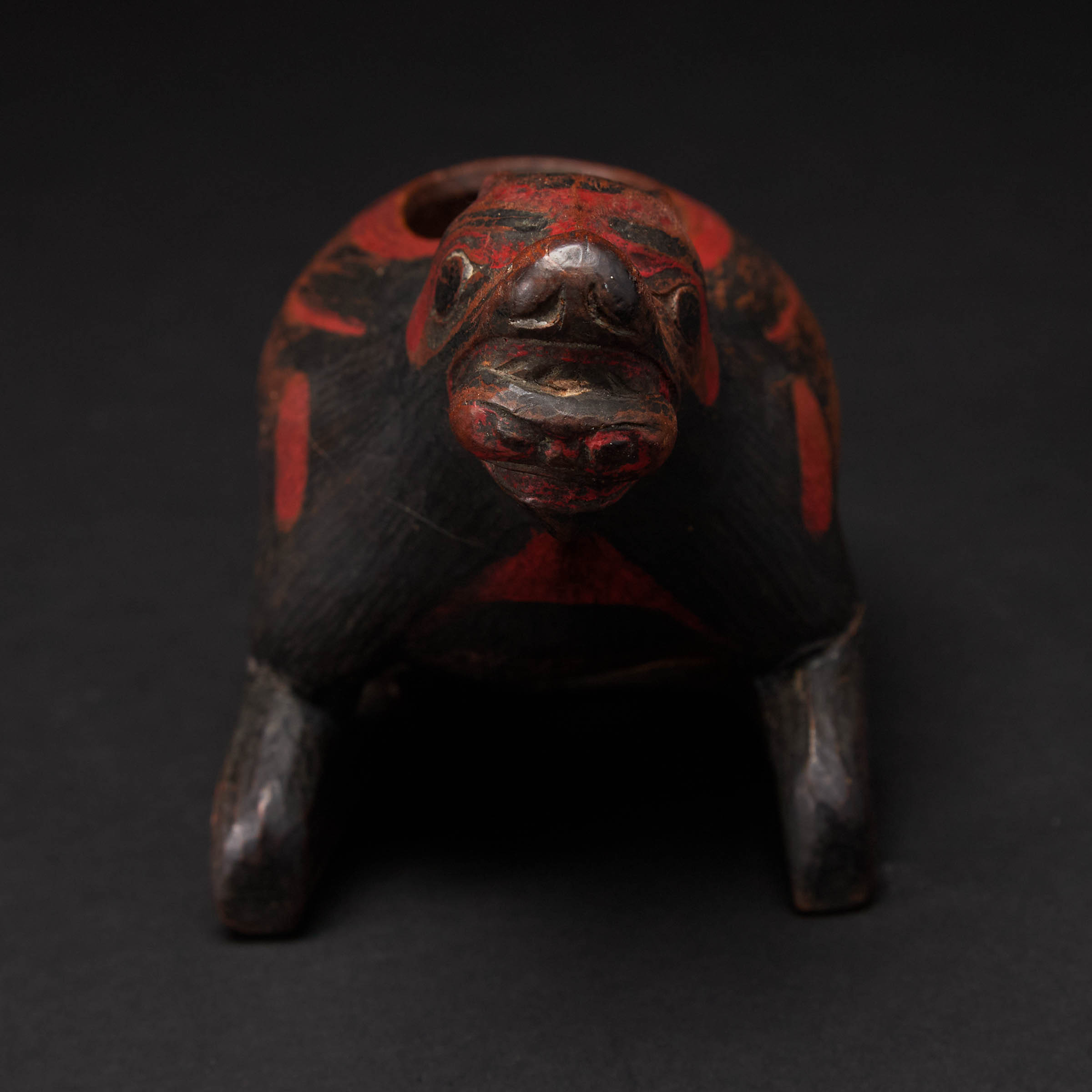
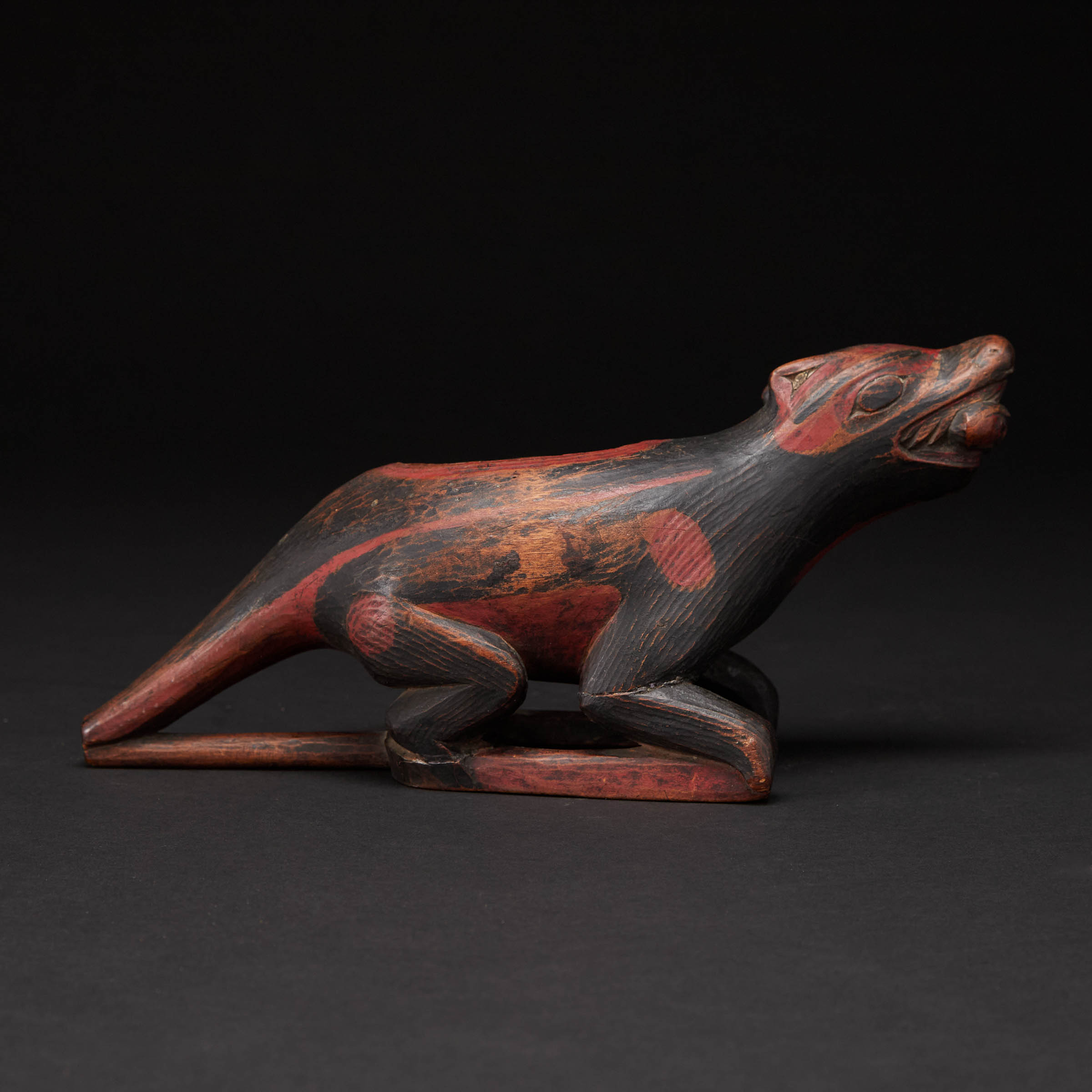
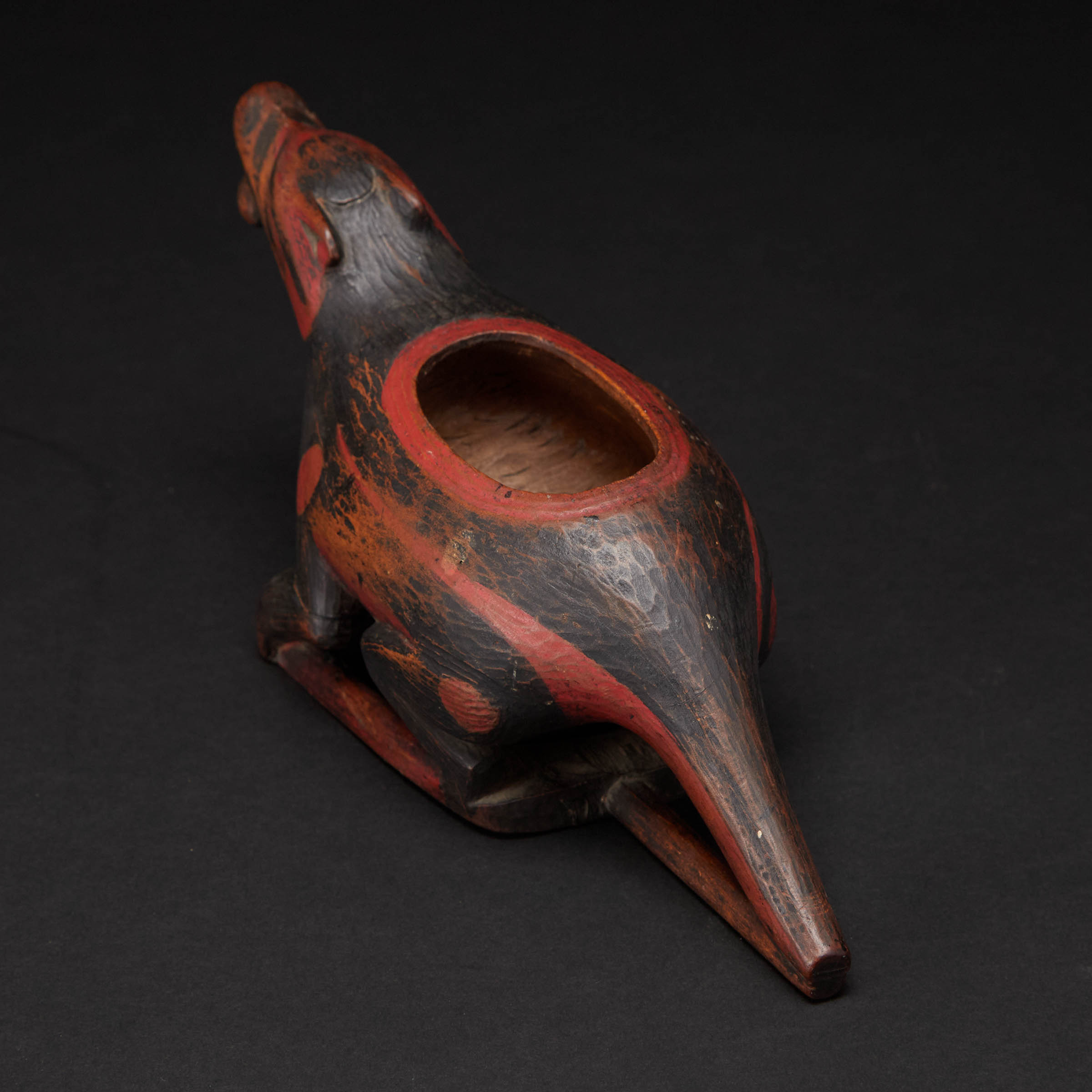
BEAR-FORM BOWL, FIRST HALF OF 19TH CENTURY
wood, paint
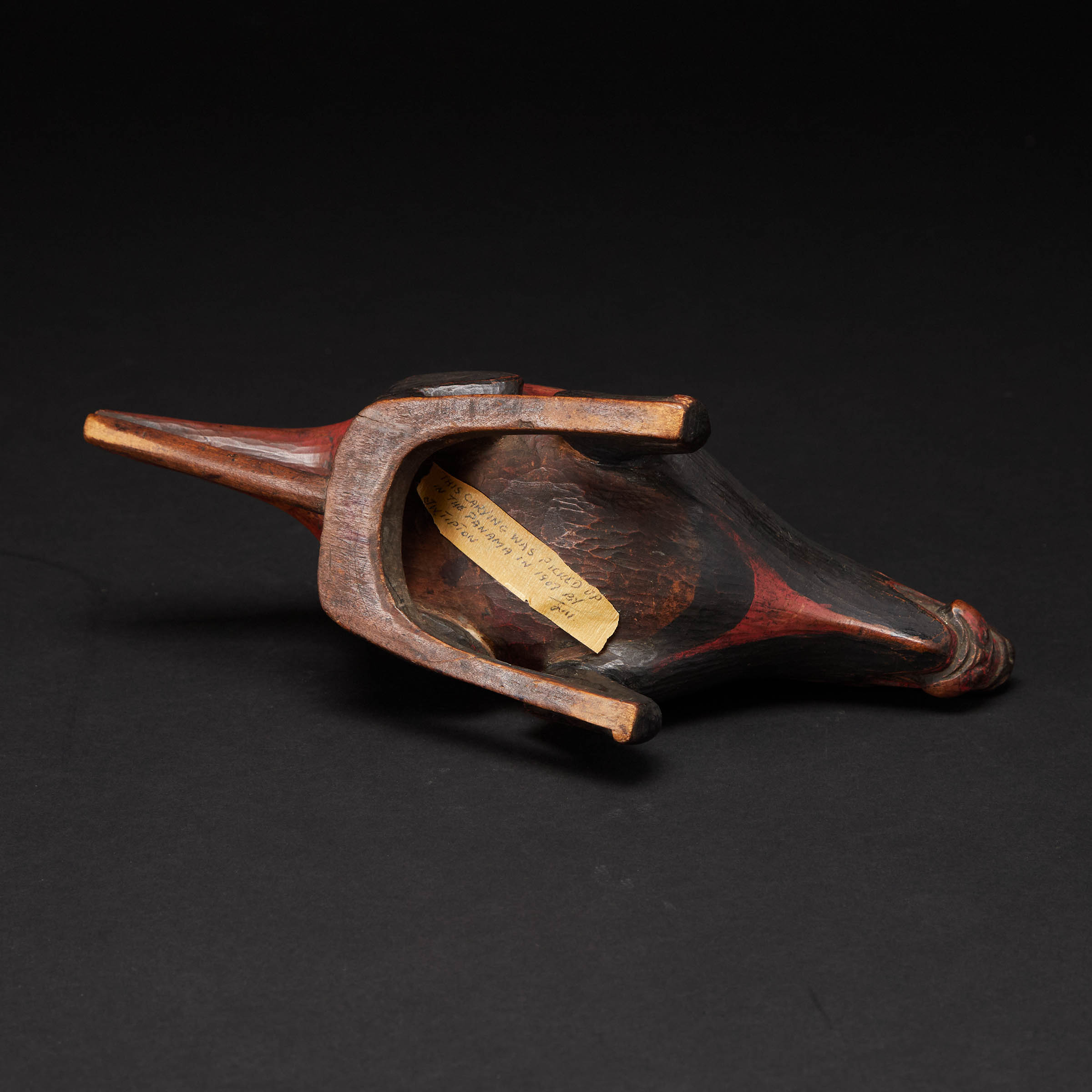
old label on underside with erroneous inscription reads "This carving was picked up in the Panama in 1907 by J.W. Tipton"
5.5 x 11 x 4 in — 14 x 27.9 x 10.2 cm
Estimate $10,000-$15,000
Additional Images
Provenance:
Collection of John Gaddis Tipton, Alberta
By descent to the present Private Collection, British Columbia
Note:
This small, early, and finely carved Kwakwaka'wakw figural bowl depicts a bear. The bulbous stomach of the subject is swollen with food, and a man’s head is held between its jaws. Small bowls of this size were commonly used to hold condiments, or as personal eating vessels, although Northwest Coast scholar Bill Holm has noted that some, as in the present example, show little to no signs of use and may have been manufactured as objects of trade.[1]
An elegant statement of Kwakwaka'wakw taste in the first half of the 19th century, the present bowl exhibits a texture of crisp parallel furrows, an old Kwakwaka'wakw surface treatment which in the earliest examples was achieved through the use of shell or beaver tooth tools. The undulating surface is ideally suited to use in an interior illuminated by firelight, the bowl’s visual effect achieved through an interplay of light and shadow.
The present bowl is closely related to a monumental example held in the Smithsonian Museum of the American Indian, collected between 1894 and 1907 by US Revenue Service Captain Dorr F. Tozier (Cat. No. NMAI 6/8742). The present example comes from the collection of 19th century adventurer, fur trader and Strathcona Alderman John Gadis Tipton.
[1] Bill Holm and Peter L. Corey, The Box of Daylight: Northwest Coast Indian Art (Seattle, WA: Seattle Art Museum, 1983), 80.
Relatively little information is readily available about the early life of John Gaddis Tipton. Born in Fairview, Illinois in 1849, he was admitted to the bar in 1874. Entrepreneurial and enterprising, family lore has it that Tipton was engaged in horse and fur trading. He moved north to Alberta in 1894 to pursue opportunities in the Territories, eventually establishing a homestead near Big Island. Like many early residents, Tipton dabbled in an array of professions, including mining, real estate, insurance, loans, and auctions. In 1904, Tipton was admitted to the Alberta bar, a year before Alberta became a province of Canada.
Taking an interest in municipal politics, Tipton was elected alderman of Strathcona, and served from 1908 to 1911, a key advocate for the amalgamation between Edmonton and Strathcona. A brief sketch of Tipton was included in the 1913 biographical dictionary Men and Makers of Edmonton.
Alex Mair, “Who Was Tipton”, News from Old Strathcona, (Edmonton: Old Strathcona Foundation, 2000), Vol 6, Issue 2.
Edmonton Public Library, Biographies of Mayors and Councillors: John Gaddis Tipton, accessed 18 August, 2026, https://web.archive.org/web/20110705052643/http://www.epl.ca/edmonton-history/edmonton-elections/biographies-mayors-and-councillors?id=T
Men and makers of Edmonton, Alberta, (Alberta: University of Alberta Press, 1913)