


Lot 24
Unidentified Artist, possibly Heiltsuk (Bella Bella) or Nuxalk (Bella Coola)
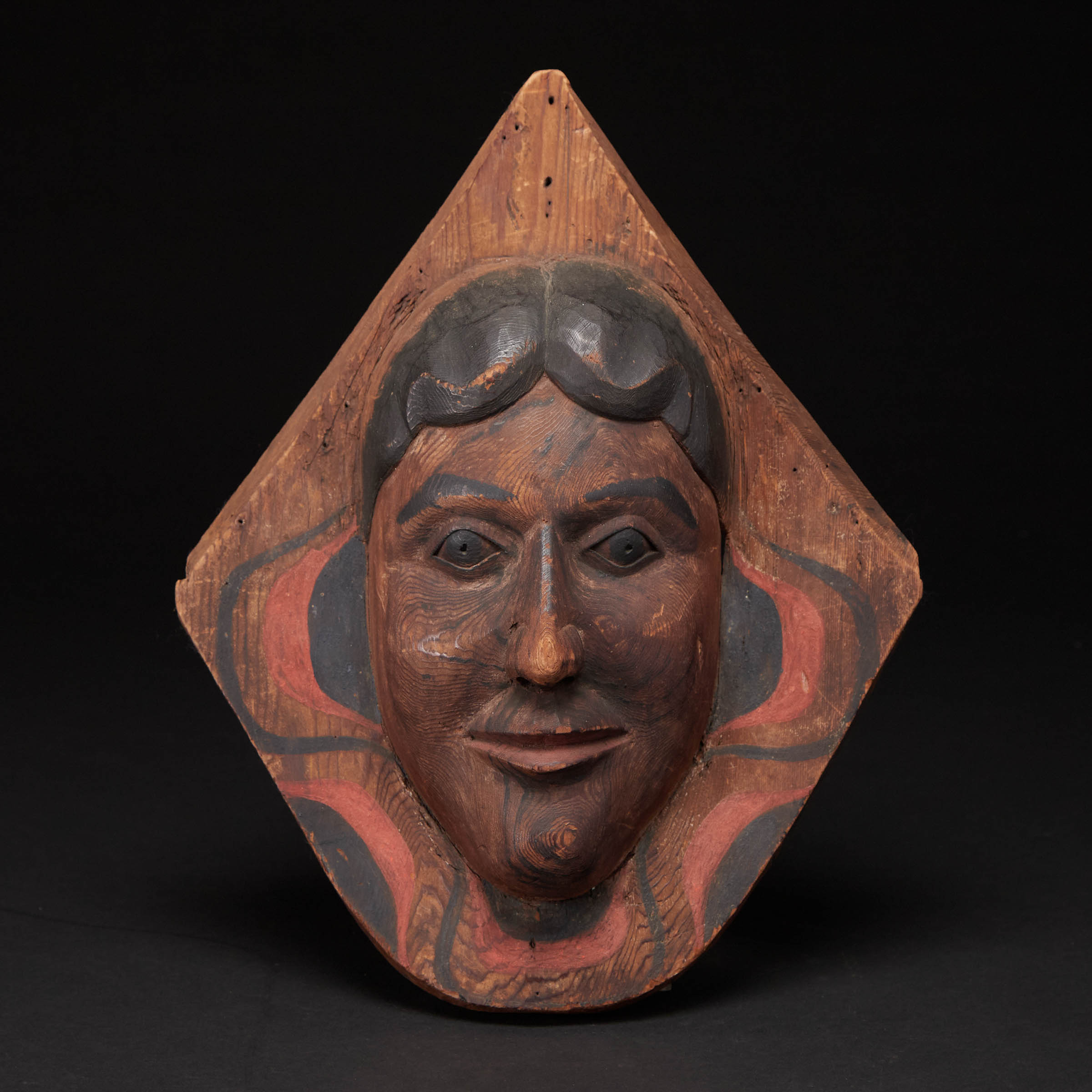
Lot 24 Details
Unidentified Artist, possibly Heiltsuk (Bella Bella) or Nuxalk (Bella Coola)
PORTRAIT MASK, LATE 19TH OR EARLY 20TH CENTURY
wood, paint
inscribed in pencil verso "Klinkett"
15 x 11.75 x 4 in — 38.1 x 29.8 x 10.2 cm
Estimate $4,000-$6,000
Additional Images
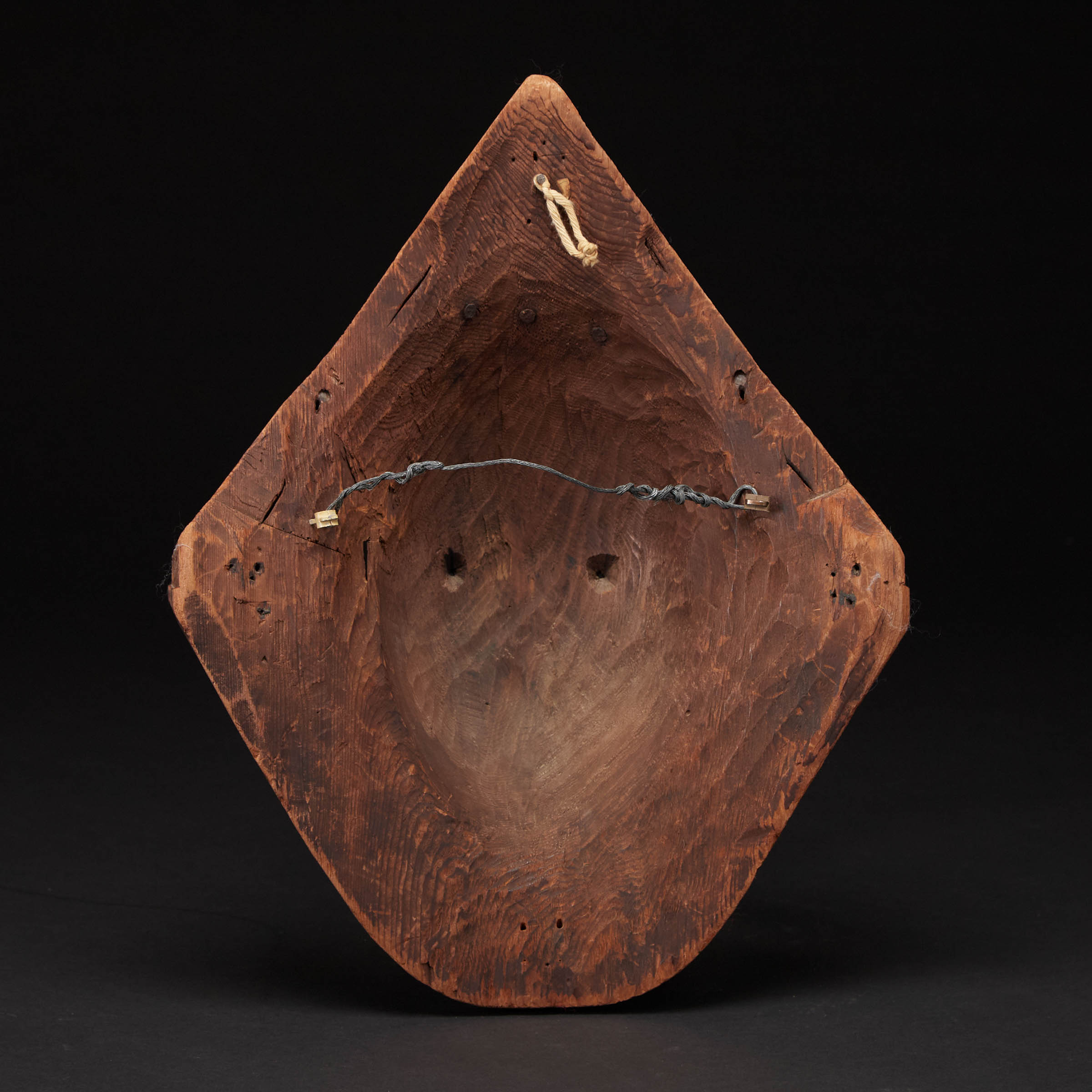
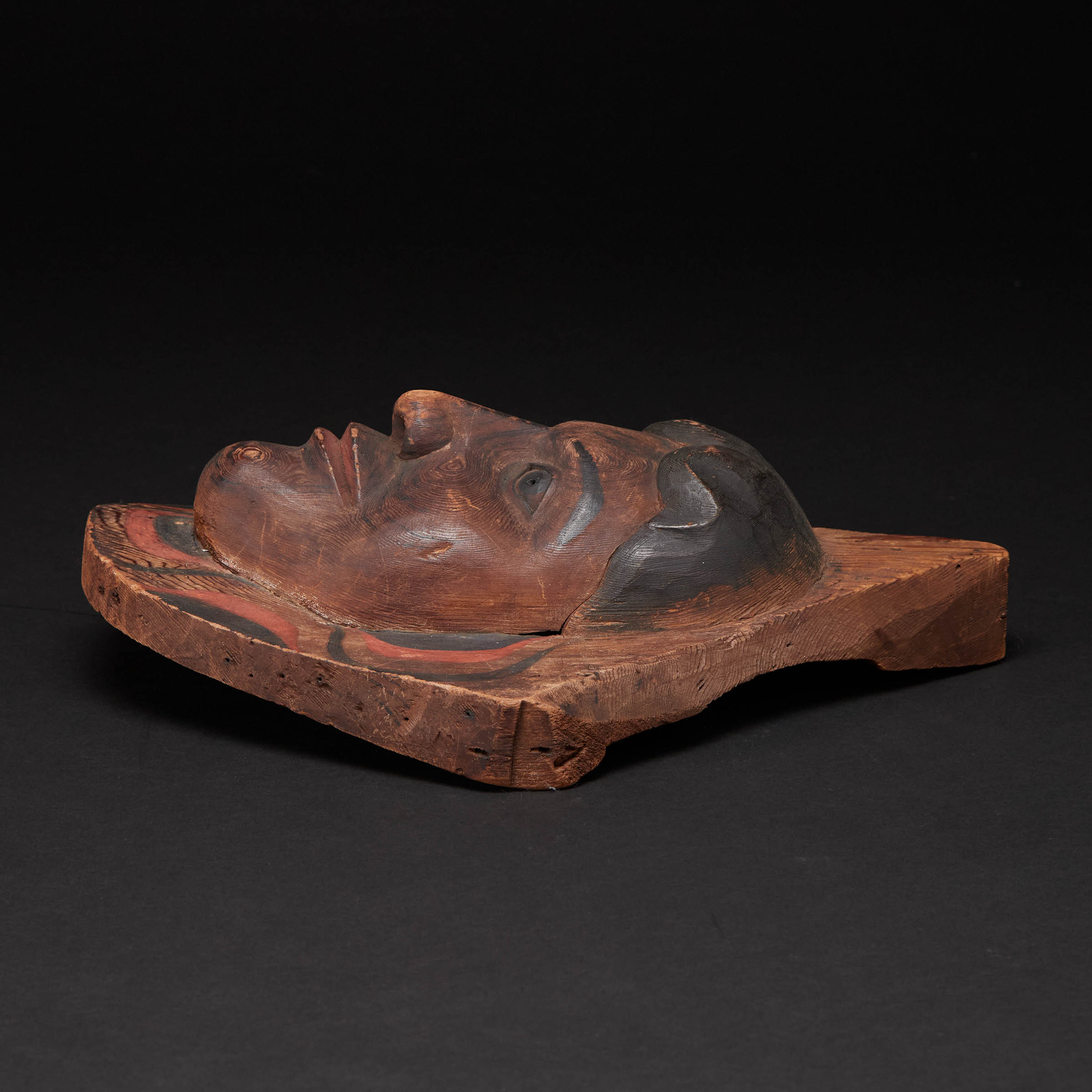
Provenance:
Private Collection, Tennessee, USA
Private Collection, Toronto, ON
Note:
The vast majority of surviving historical Northwest Coast masks date to the 19th century, a period in which European and American collecting occurred in ever-increasing intensity, however the tradition of ritual and ceremonial mask making was well established by the time of Europeans’ first arrival on the Coast in the 18th century.
Historical Northwest Coast carving was remarkably expansive and inclusive in its subject matter, and innovative artists produced unique masks for trade with Europeans. Carvers integrated the foreign objects and imagery which had newly arrived on the Coast. Perhaps most jarring to modern expectations are works such as a sculpture of an Egyptian Sphinx made by the Haida artist Simeon Silthda, circa 1870s, now held in the British Museum.[1] Silthda and others also created a handful of portrait masks which integrated European characteristics with Coastal traditions.
The present mask features the flattened wooden surround, and irregular painted decoration found on some masks from the central Northwest Coast region. Although the profile of the surround was likely once round and has been trimmed to a peak early in its history, but subsequent to its original manufacture. The face of the mask in this listing however is evocative of Northern portrait masks, which sometimes included elaborate and highly stylized European-like coiffures, and bulbous protruding chins. The slender European aspect of the face is unusual in Coastal art, and reinforces the possibility that it is a European portrait.
Masks with a combination of Northern or Middle and Southern Northwest Coast features were sometimes manufactured by carvers working for curio shops in the 19th and early 20th century, perhaps most notably Ye Olde Curiosity Shop, Seattle, WA, founded in 1899 by Joseph Edward Standley, and still in operation today. A related example, likely of this family of masks sold at Bonhams, Los Angeles in June of 2007, lot 4108 of the Phillip Brown Collection of Northwest Art.
The present mask is reputed to have been collected circa 1940s in the Pacific Northwest by U.S. Navy serviceman and world traveller Charles Reeder.
[1] British Museum, Cat. No. BM Am1896,-.1202. https://www.britishmuseum.org/collection/object/E_Am1896-1202