


Lot 5
Unidentified, possibly Wabanaki Artist
Additional Images
Provenance:
Collection of Ivan Tolkien Wotherspoon (1845-1908), Quebec
by descent to present Private Collection, Ontario
Note:
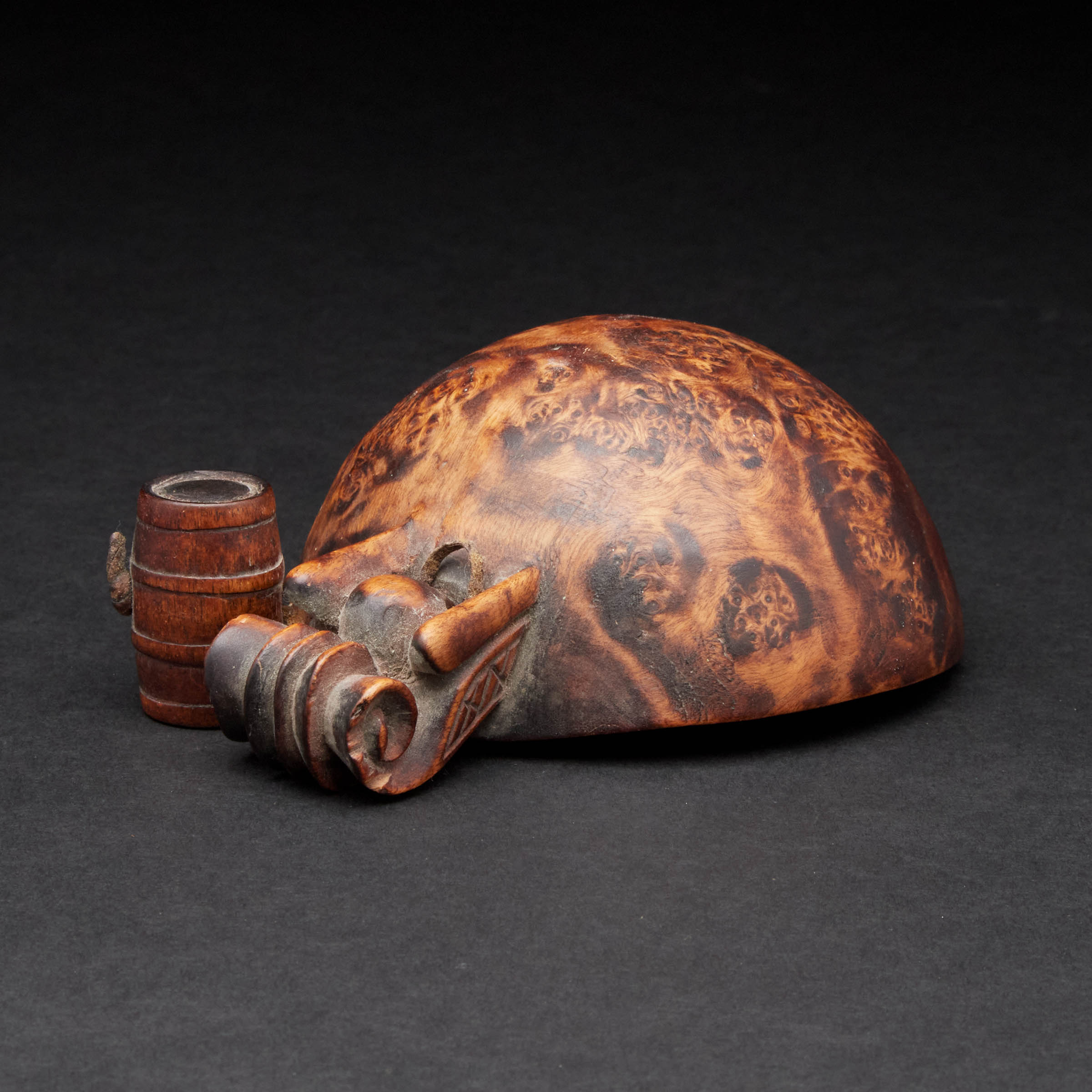
Small belt cups or so called “canoe cups” are perhaps the most iconic North American drinking vessel. Tied or cleated to a sash worn around the waist, they were used in the 19th century by First Nations, as well as by Métis, French Canadian and Scottish fur traders to drink from the abundant fresh water on which they traveled.
Few if any surviving belt cups are as elaborately carved and decorated as a class of cup associated with Northern Maine and Quebec. They are variously attributed to the peoples of the Wabanaki (Abenaki, Maliseet, Mi'kmaq, Passamaquoddy, and Penobscot), to the Anishnaabe–particularly the Ottawa or Ojibwa–and by some even to the Huron-Wendat.
Two exceptional and important cups in this auction dating to the latter half of the 19th century (lots 4 and 5) exhibit several of the characteristics of the Northern Maine/Quebec-associated cups. Both belonged to Quebec resident, King’s Counsel Ivan Tolkien Wotherspoon (1845-1908) and are believed to have been first acquired in Quebec.
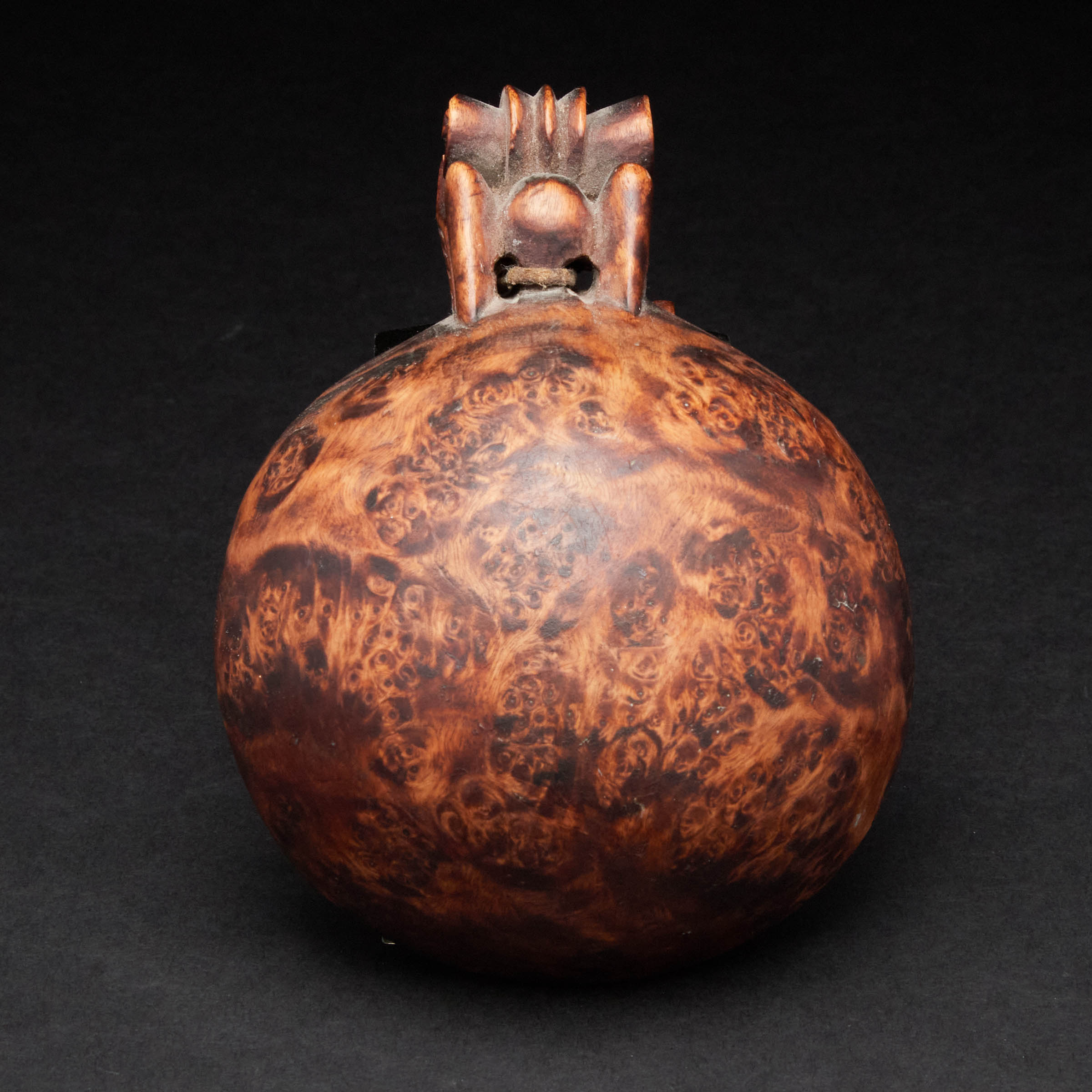
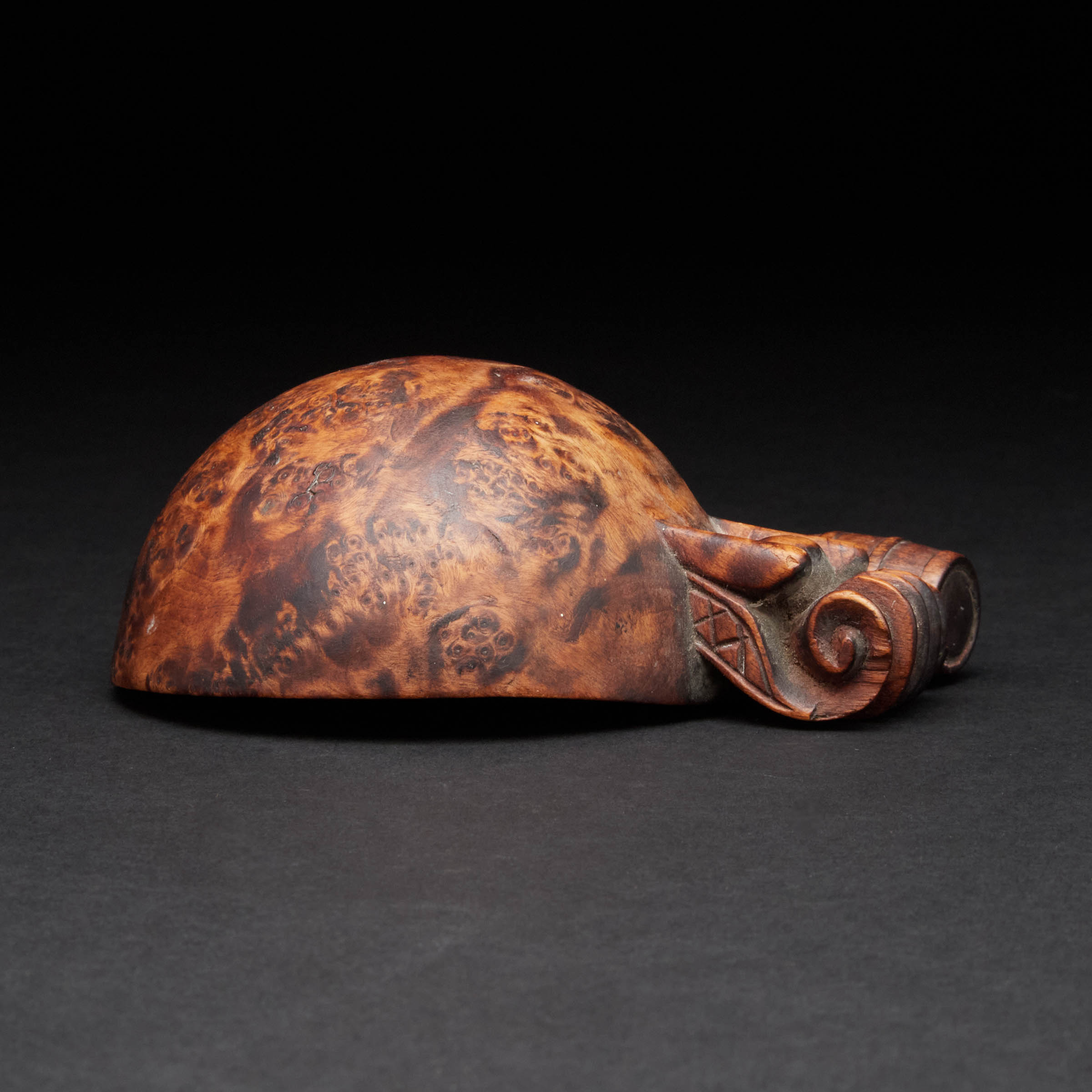
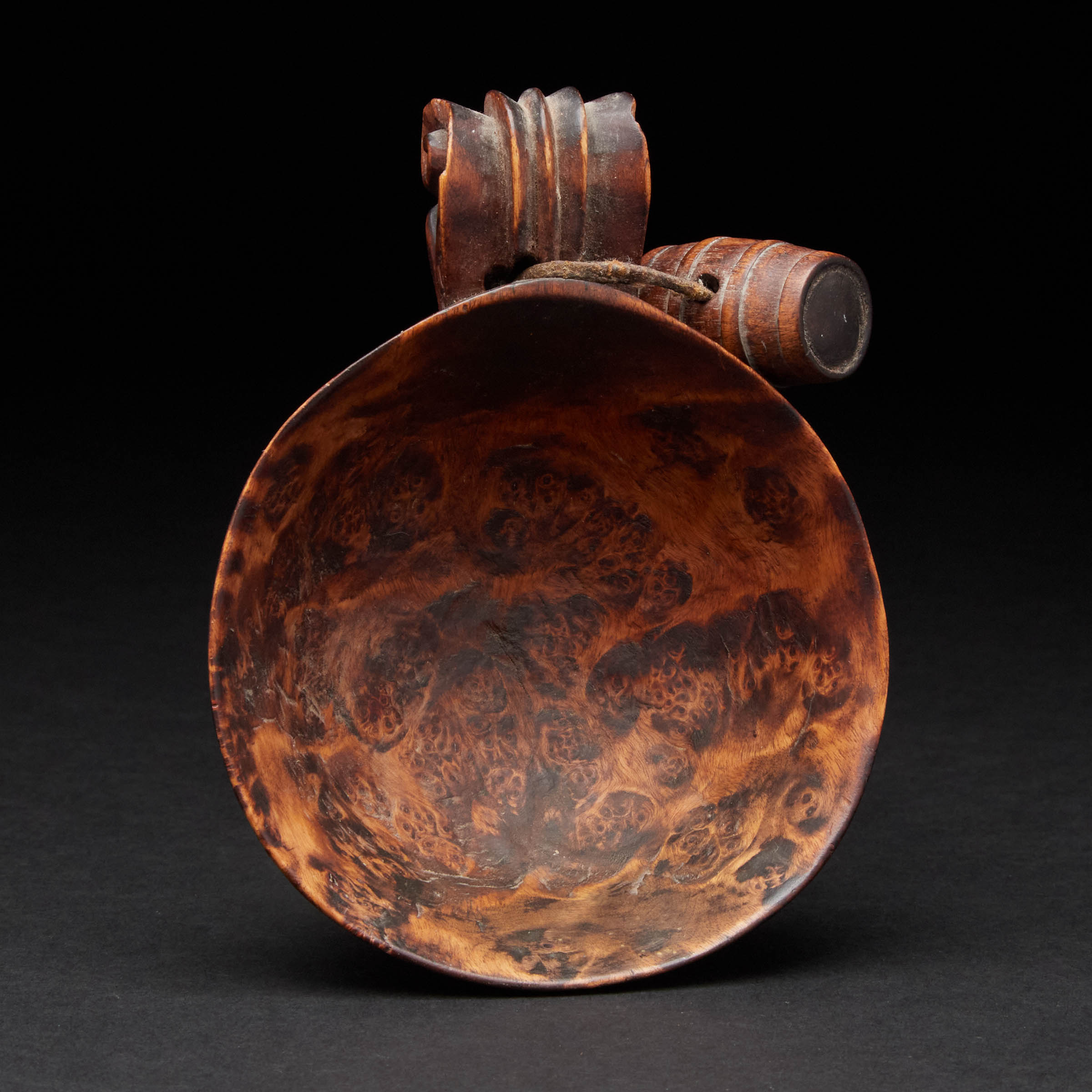
Notable characteristics of the Wotherspoon cups are, for the present example, the use of maple burl, crosshatching, a volute-form handle, and a cask-form toggle. Characteristics of the second Wotherspoon cup are the use of ash burl, a handle composed of a flat projection off of one edge of the central concavity, a chipped-carved edge design, crosshatching, a low relief carved image of two beavers and their dam, a high relief carved image of a grazing mother beaver and her two kits, and a bi-conical toggle–possibly replacing an earlier cask-form toggle.
While the meaning of imagery on the Wotherspoon cups as intended by the carver or carvers is not known, the representation of casks, as occurs on the present example, and possibly once present on the other, appears in other works of Woodlands art, particularly pipes and ladles. It has been suggested that images of casks relate to the consumption of alcohol, and its role in trade and ritual.[1]
Provenance
Both belt cups, (lots 4 and 5) of this auction, are reputed to have been collected in Quebec, and have been in the possession of the consignor’s family from the time of their first known owner, Canadian King’s Counsel, Ivan Tolkien Wotherspoon (1845-1908). Wotherspoon’s family history is a colourful one, and includes the mysterious disappearance and possible murder of his father on a wagon train West ca. 1840s, as well a connection Mary Kent, an alleged witch of Salem Massachusetts, tried in 1634, and a possible connection to Robert Giffard de Moncel, a Perche-based surgeon, apothecary, and New France's first seigneur under Samuel de Champlain.[2]
While an elaborated history of Wotherspoon's life and career will require further research, he was evidently an important and active legal practitioner in Quebec. Notably Wotherspoon maintained a correspondence with important contemporaries including former Federal Army officer, lawyer, United States Secretary of War, and son of Abraham Lincoln, Robert Todd Lincoln.[3] Family oral record suggests that Wotherspoon may have sometimes volunteered legal services on behalf of First Nations clients in Quebec. While it is not known how Wotherspoon came to own the two belt cups, his interactions with Quebec First Nations taken in combination with the association of such objects as presentation gifts or presentation purchases, suggests a possible context for the acquisition of these remarkable objects.
[1] Carpenter, Edmund. “Alcohol in the Iroquois Dream Quest.” RES: Anthropology and Aesthetics, no. 1 (Illinois: University of Chicago Press, 1981), 84–87.
[2] Unpublished Wotherspoon family historical and genealogical archive
[3] Unpublished letters of correspondence from the Wotherspoon family archive