


Lot 79
Elizabeth "Lizzie" Ogle (Toniya Wakanwin) (1885-1984)
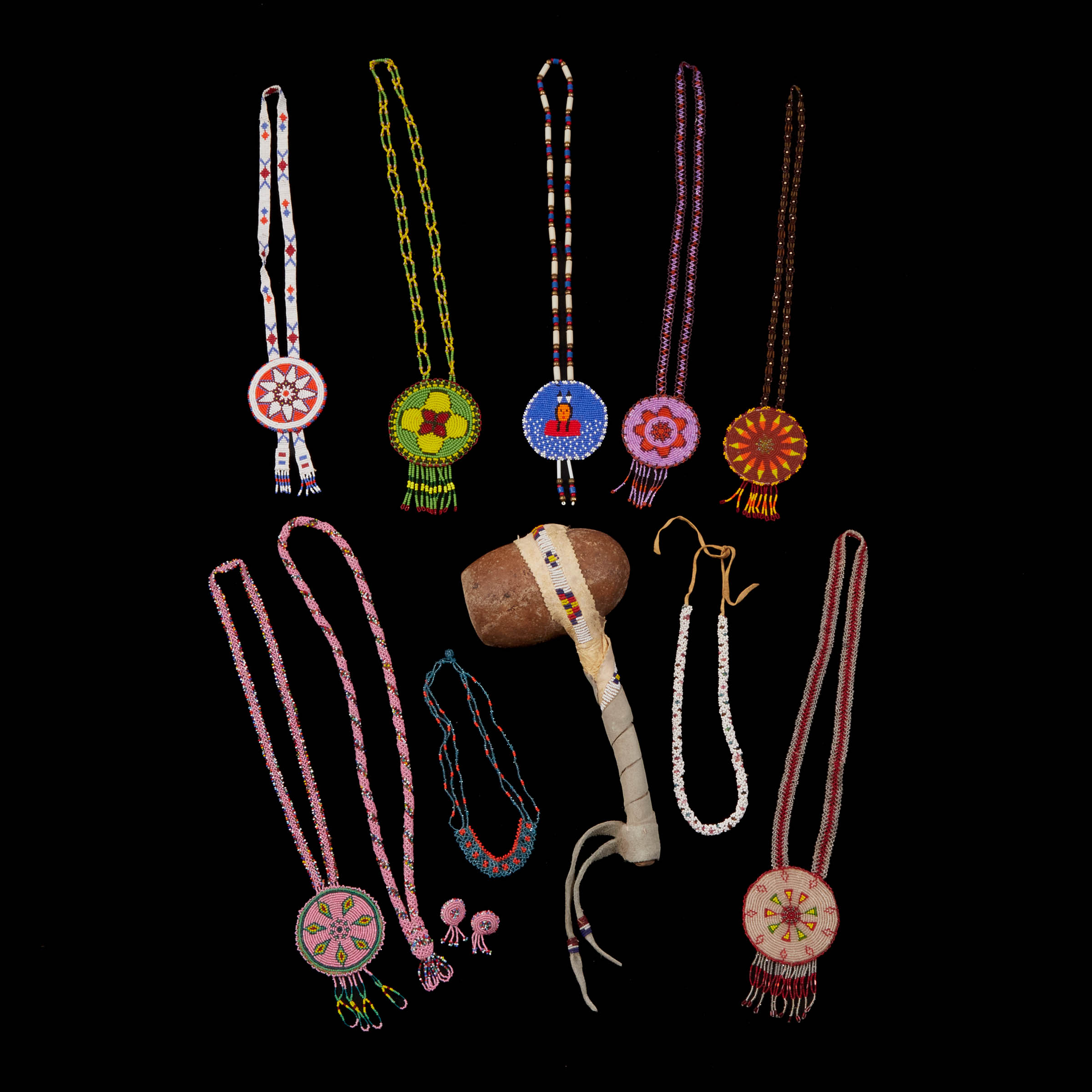
Lot 79 Details
Elizabeth "Lizzie" Ogle (Toniya Wakanwin) (1885-1984), Oglala Lakota (Sioux)
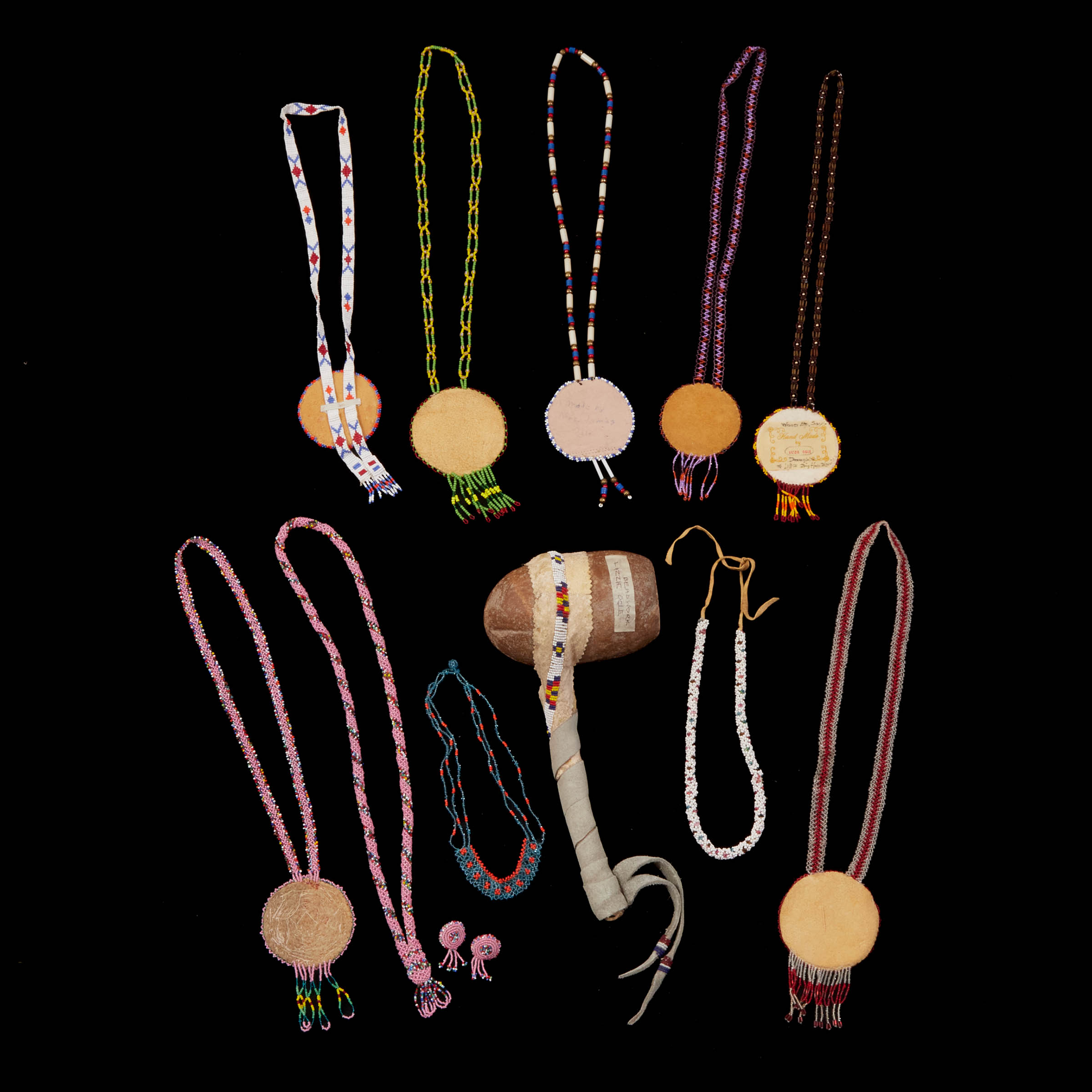
A COLLECTION OF TEN BEADWORK NECKLACES, AND MAUL WITH BEADED HAFT, CA. 1970S
glass and metal beads, cotton thread, stone, hide
largest 5.5 x 7 x 3.25 in — 14 x 17.8 x 8.3 cm
Estimate $500-$700
Additional Images
Provenance:
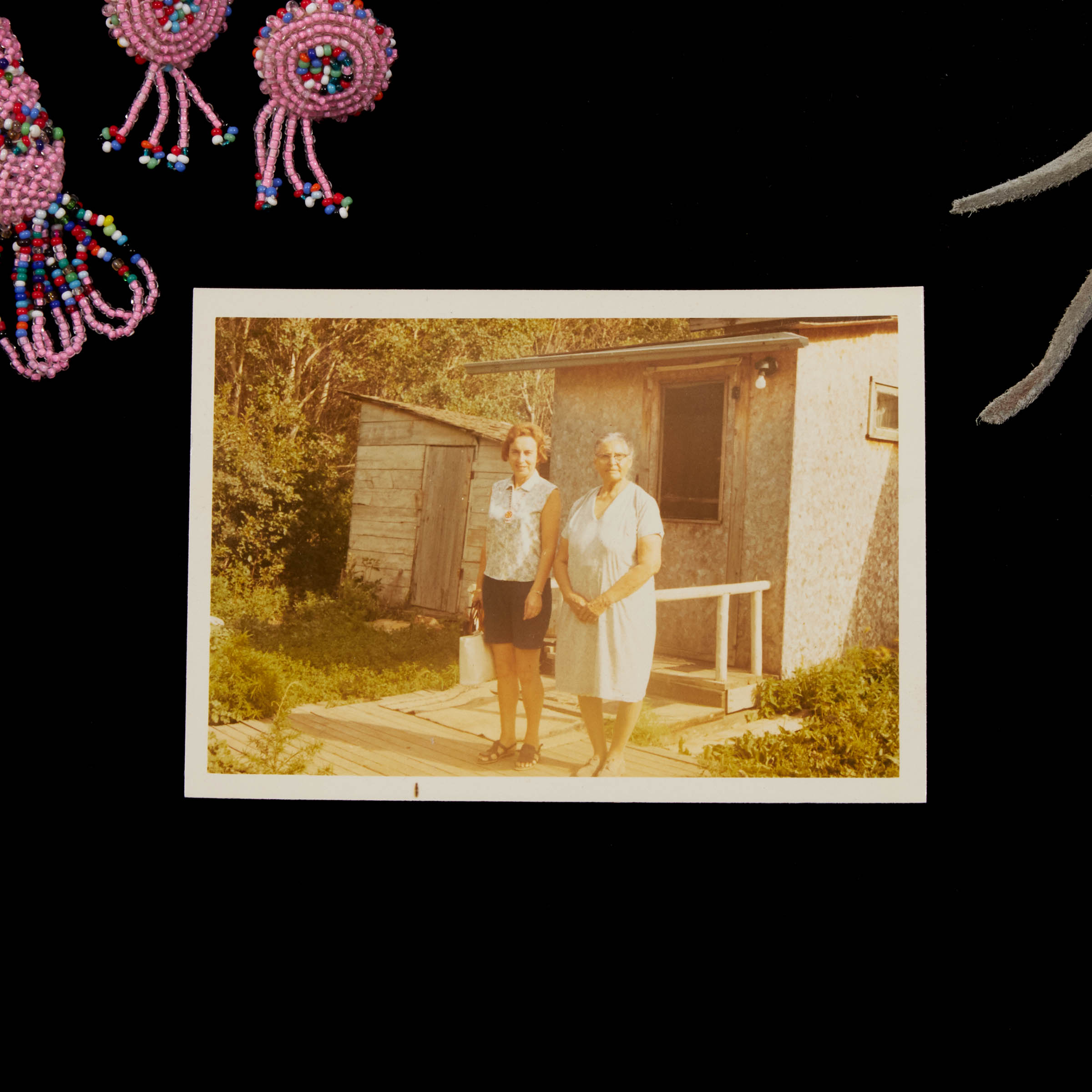
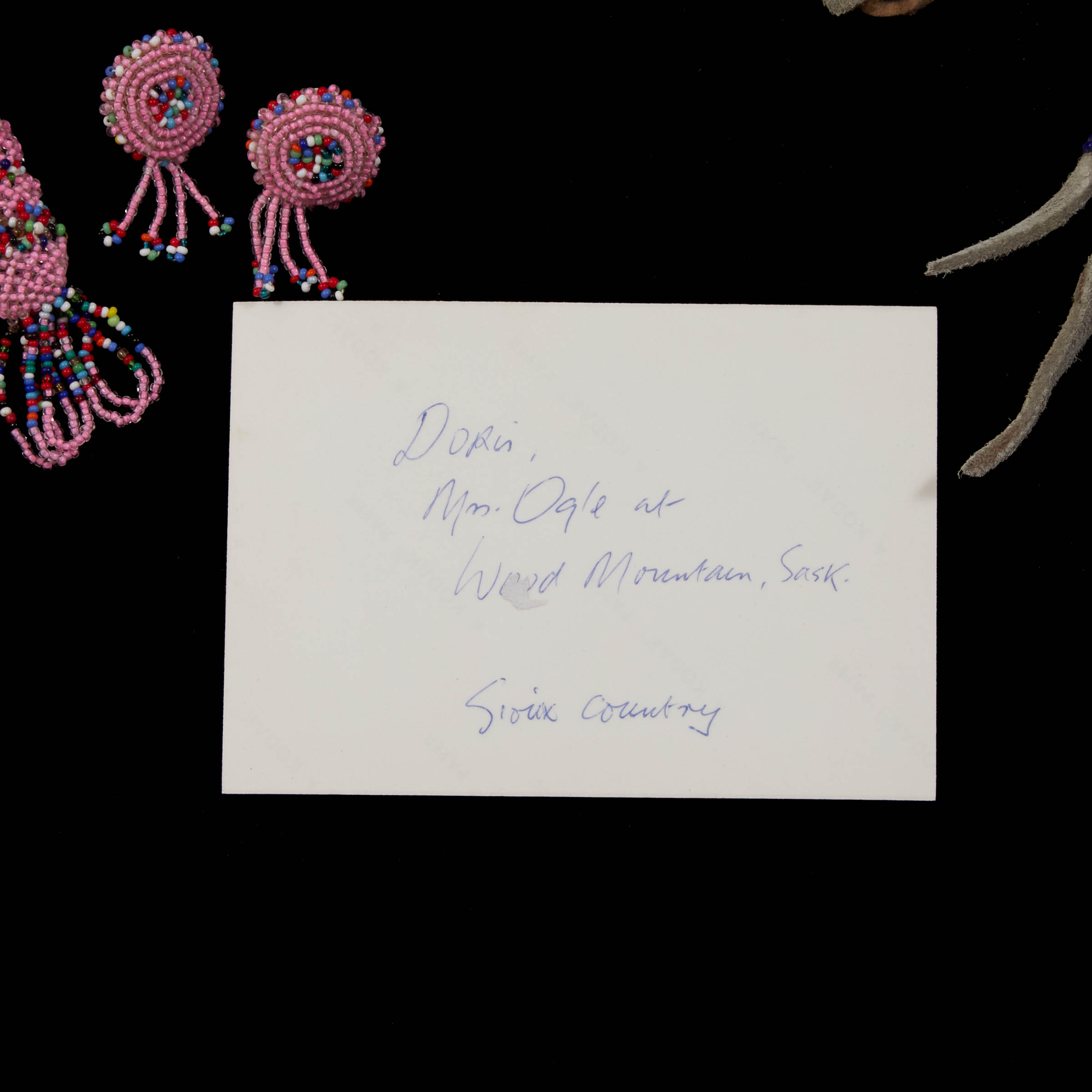
Elizabeth "Lizzie" Ogle (Toniya Wakanwin), Wood Mountain, SK
Acquired from the above by Susan Turner, Toronto, ON
By descent to the present Private Collection, Toronto, ON
Note:
A collection of beadwork by respected Oglala Lakota elder Elizabeth "Lizzie" Ogle (Taniya Wakanwin) or Holly Breath (1885-1984) of Wood Mountain, Saskatchewan. Comprised of ten beadwork necklaces, one pair of earrings, and a historical stone club with haft wrapped and beaded by Elizabeth Ogle.
Elizabeth Ogle was born in Wood Mountain during the Moon of Ripening Berries (July) of 1885, and is said to have been a relation to Sitting Bull, famed Hunkpapa Lakota leader who led his people through years of resistance against United States government, and during their quest for safety in Canada.
Ogle had knowledge of Lakota traditions and language from her family, and eagerly shared stories and legends passed on to her by members of her Lakota culture with locals and many people from across Canada and the world. In 1913 she married a rancher named James Ogle and settled down in the Wood Mountain area, raising five children. Well respected in her community she received many local honours, and in 1973 was invited to attend a banquet held for the Queen and Duke of Edinburgh, at which time she presented the Queen with a beaded bag.
The beadwork in this lot was made for Susan Turner, wife of Cyril Francis (C. Frank) Turner, author of the 1973 book Across the Medicine Line: The Epic Confrontation Between Sitting Bull and the North-West Mounted Police.
An adventurer with a hands-on approach to the study of history, Turner assembled a collection of historical First Nations objects, and traveled to many of the far flung, and at times dangerous locations covered in his book, interviewing first-hand, and keeping correspondence with descendants of participants in the events. Speaking in 1973 of the urgency of preserving stories, Turner expressed, “The land is still there. So are the descendants, Indians and Whites. It is the heritage that is fading away.”