


Lot 8
Unidentified Kuskokwim Delta Yup'ik Artist
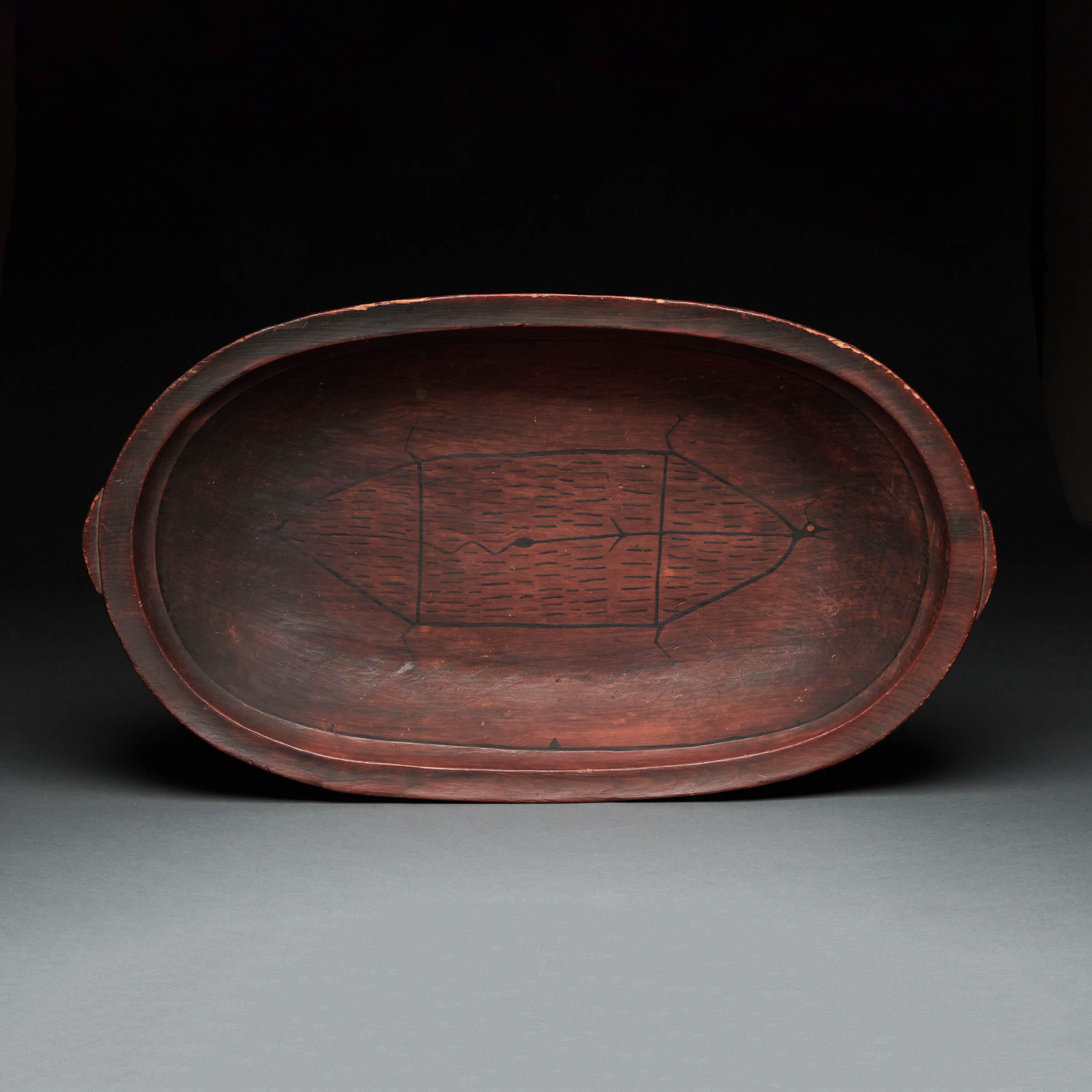
Lot 8 Details
Unidentified Kuskokwim Delta Yup'ik Artist, Bethel or Quinhagak, AK
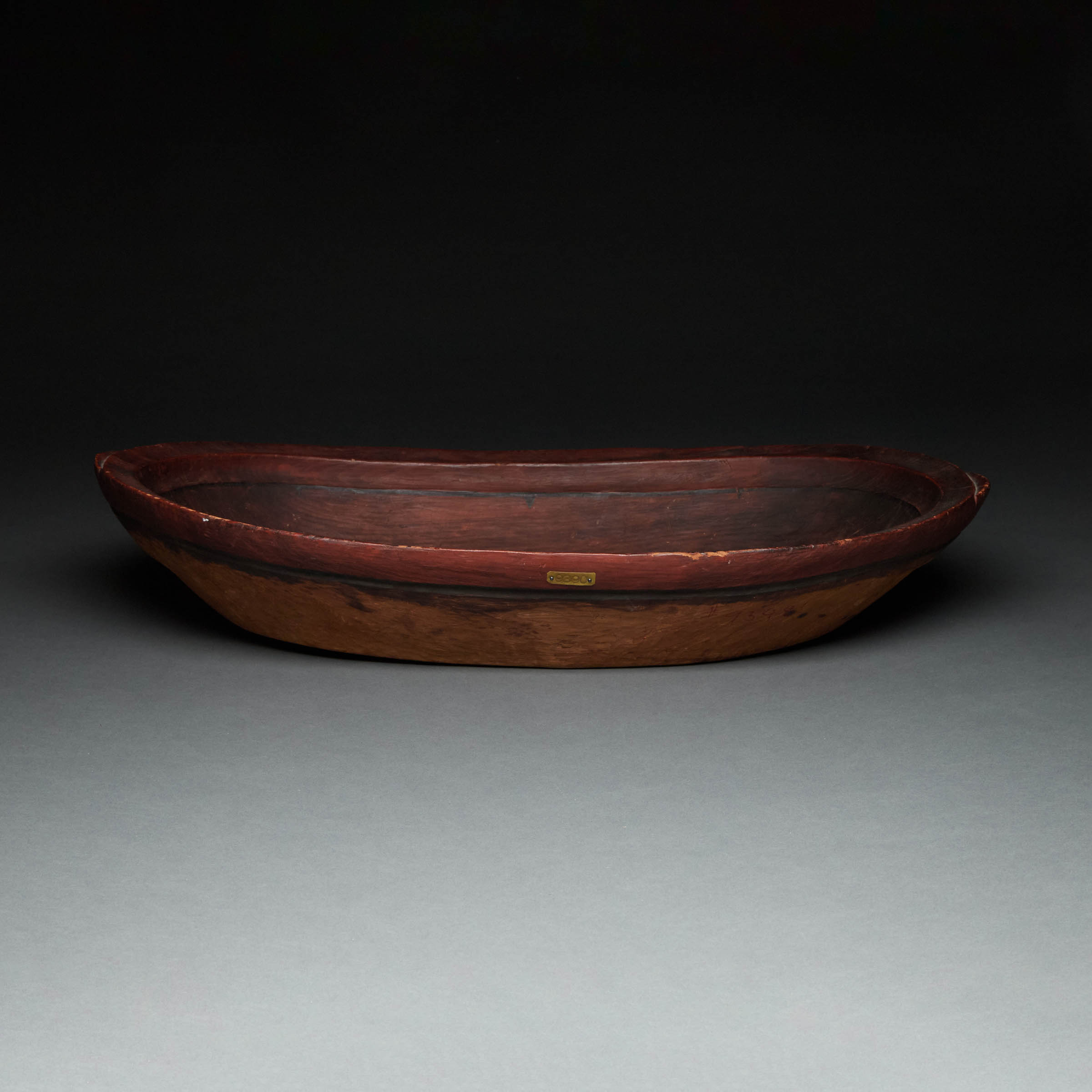
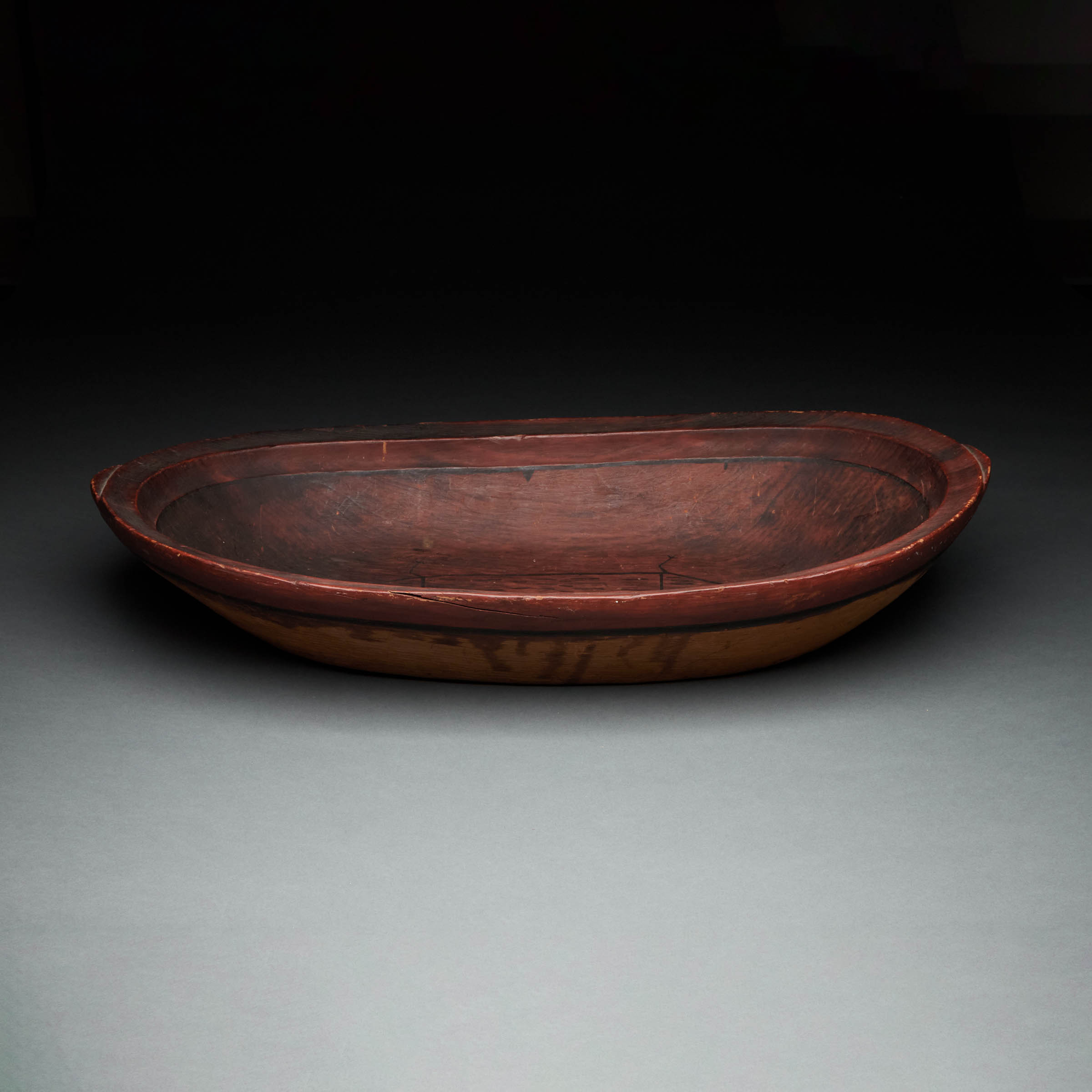
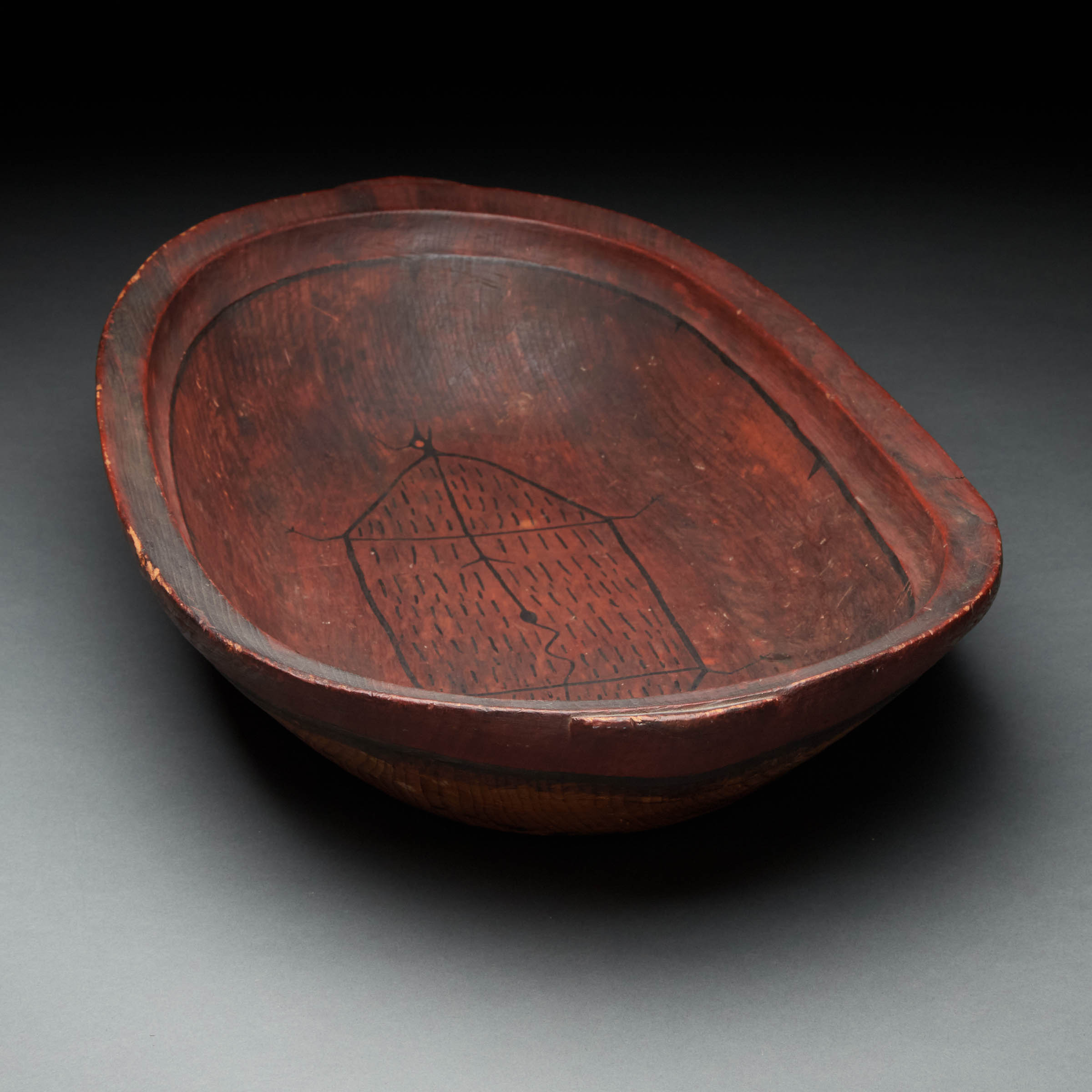
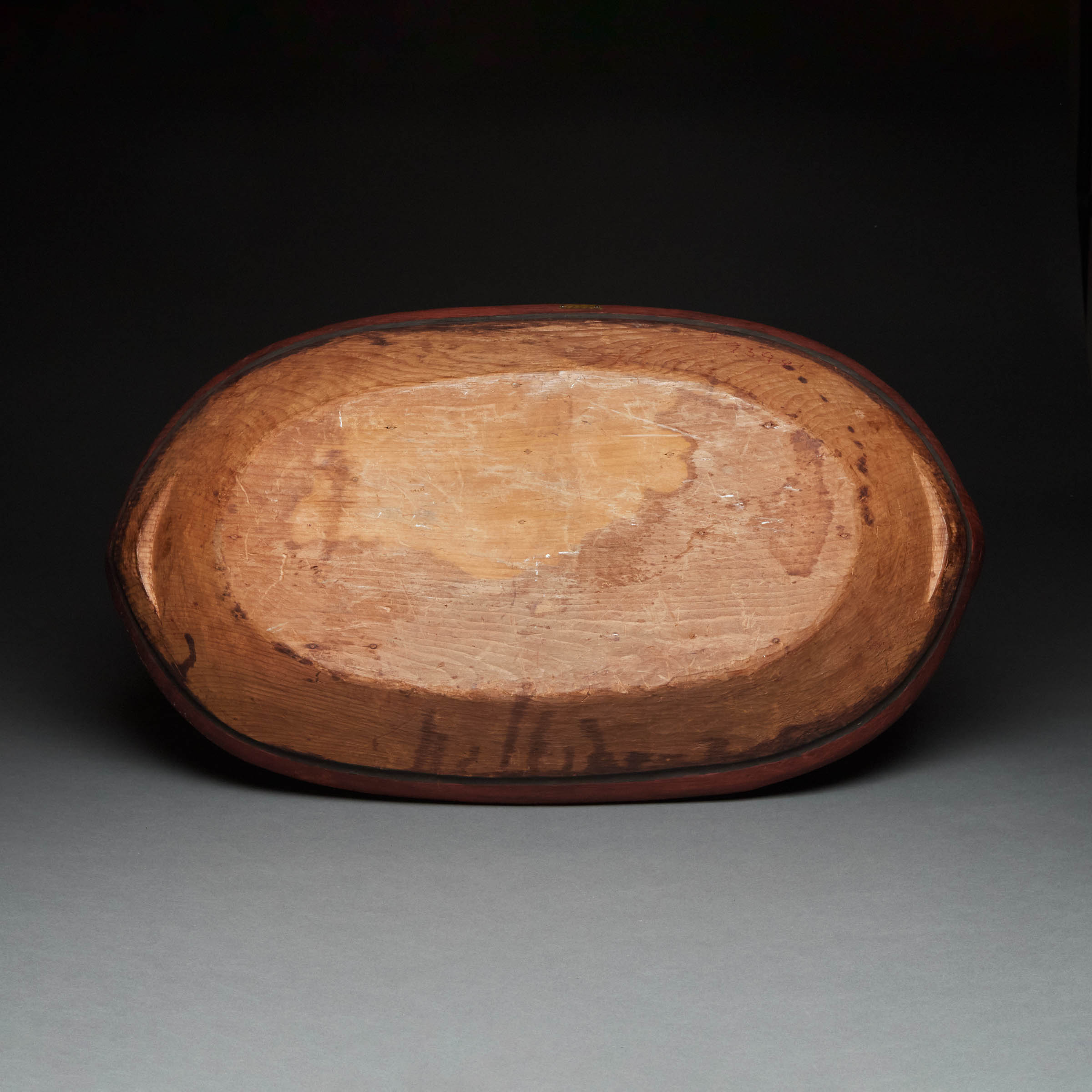
MONUMENTAL MEN'S PICTORIAL FEAST BOWL, 1907-1917 OR EARLIER
wood, seal blood, natural pigments
old grease pencil inscription and Carver County Historical Society tag affixed to bowl by the society's founder O.D. Sell reads "9390"
5.25 x 26 x 14.75 in — 13.3 x 66 x 37.5 cm
Estimate $4,000-$6,000
Additional Images
Provenance:
Collected by Moravian Missionaries Herman and Elizabeth Holtmeier, Bethel and Quinhagak, AK, 1907-1917
Donated by the Holtmeier family to the Carver County Historical Society, Waconia, MN, 1952
Deaccessioned by the above, 1 February 1990
Sotheby's, New York, NY, 26 May 1999, lot 384
Private Collection, Toronto, ON
Note:
Although historical sculpture from the Arctic is often associated with the medium of ivory, and in later times stone and bone, it is the creations in wood that are perhaps the most recognizable and widely influential artistic achievements of the Yu’pik of the Kuskokwim Delta. Wooden masks in particular were part of many early missionary and ethnographic collections from the region. Subsequently, they became an influence on, and collecting passion of, important European artists of the 20th century Surrealist avant-garde, including André Breton, Max Ernst, Enrico Donati and others.
Graphic arts of the Yu’pik are less commonly celebrated than sculpture, the former medium more closely associated with the drawing and printmaking initiated by James Houston in the Central Arctic in the late 1950s. The graphic tradition among the Yu’pik however was a rich one, which often saw both everyday and ceremonial objects embellished with the sometimes strikingly discordant and otherworldly imagery which so impressed the Surrealists.
Notably it is in the feasting bowls of the Yu’pik where the sculpting and graphics traditions of the Western Arctic come together in objects made of wood. Both men’s and women’s bowls were subtle and sophisticated forms embellished with distinctive drawn and painted embellishment. As personal possessions, they were unique to their owner, and bore markers of their gender. Men’s bowls such as the present example were carved from a single piece of wood, as opposed to women's bowls which were composed of multiple pieces. The latter were typically plain, but the former commonly displayed imagery of mythological and supernatural creatures, such as is present in this example.
On the topic of Yu’pik feasting bowls elder Alex Bird of Emmonak, AK said:
“Back in those days they taught us things about the bowl and how to use it. The bowl was directly connected to hunting. When we used the bowl, we thought about the food that would be placed inside it in the future. We'd ask that it be filled with food that we wanted to eat; we'd continue to fill it and feed others.”[1]
The present monumental feast bowl is an exceptionally large and well-formed example. The bowl was collected by Moravian missionaries Herman and Elizabeth Holtmeier who served in Bethel and Quinhagak, Alaska between 1907-1917 and is closely related to a documented example in the collection of Anchorage Museum (Cat. No. 2004.059.001) which was acquired by fellow Bethel based Moravian missionary Edith Kilbuck in the 1890s. The Holtmeier bowl was gifted to the Carver County Historical Society (CCHS) in Waconia, Minnesota in 1952, and although a number of other important Holtmeier objects in the collection of the CCHS were acquired by the Sheldon Jackson Museum in Sitka, Alaska, the present bowl was sold by the CCHS before the time of the Sheldon Jackson’s acquisition.[2]
[1] Yuungnaqpiallerput, The Way We Genuinely Live: Masterworks of Yupik Science and Survival, accessed 18 August, 2026, https://www.yupikscience.org/10wintervillage/10-1a.html
[2] Personal correspondence with Carver County Historical Society, 16-18 August, 2026; Personal correspondence with The Sheldon Jackson Museum, 16-17 August, 2026