


Lot 83
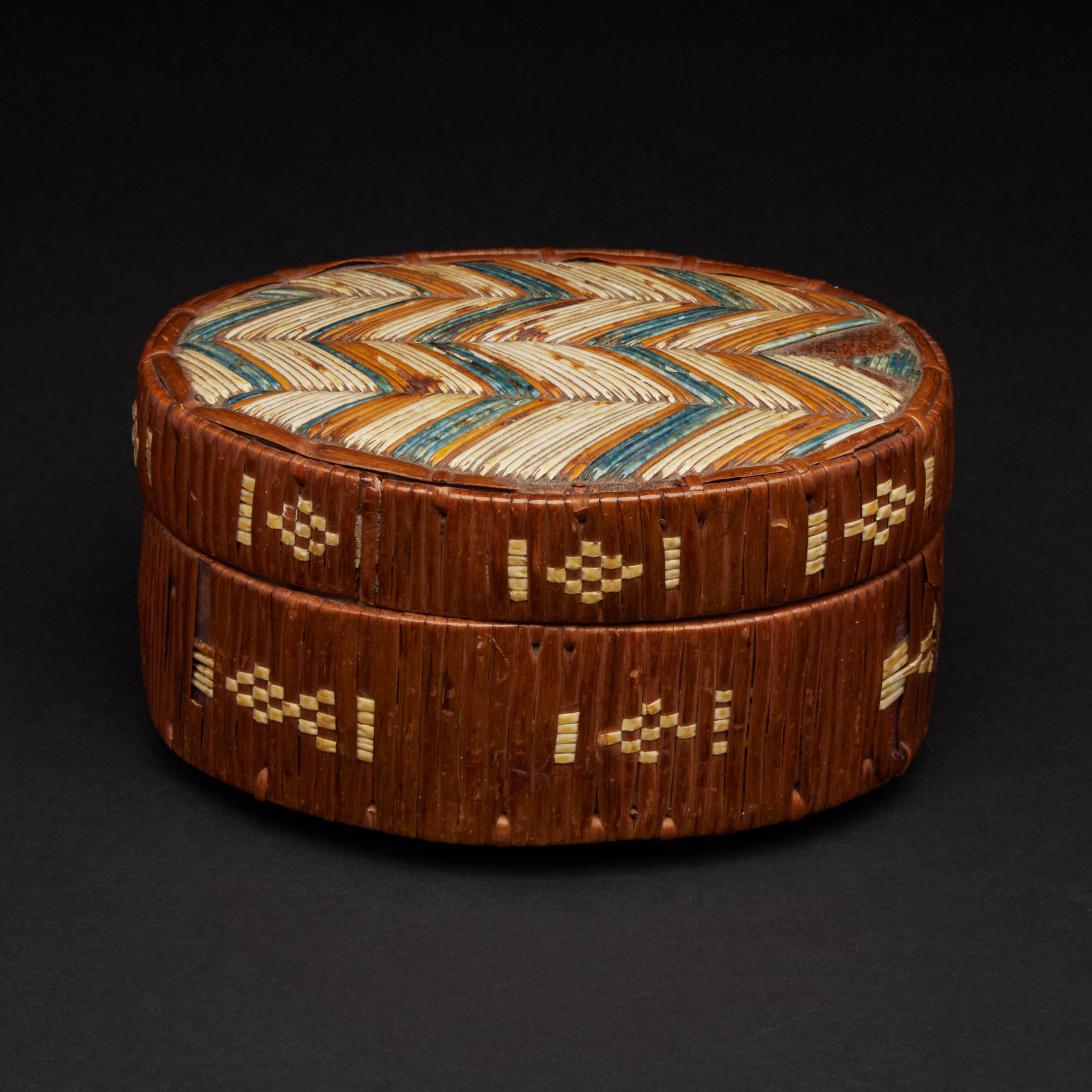
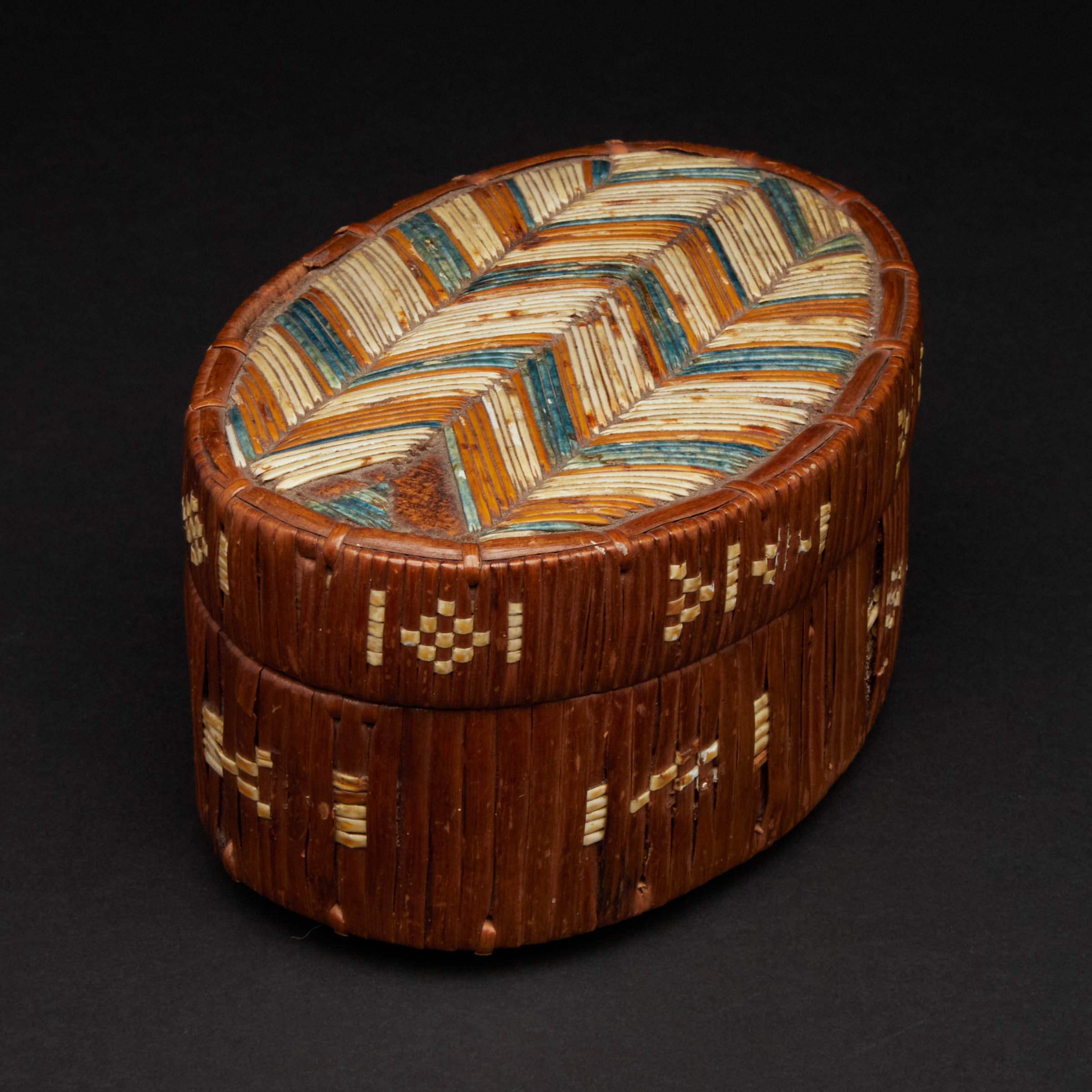
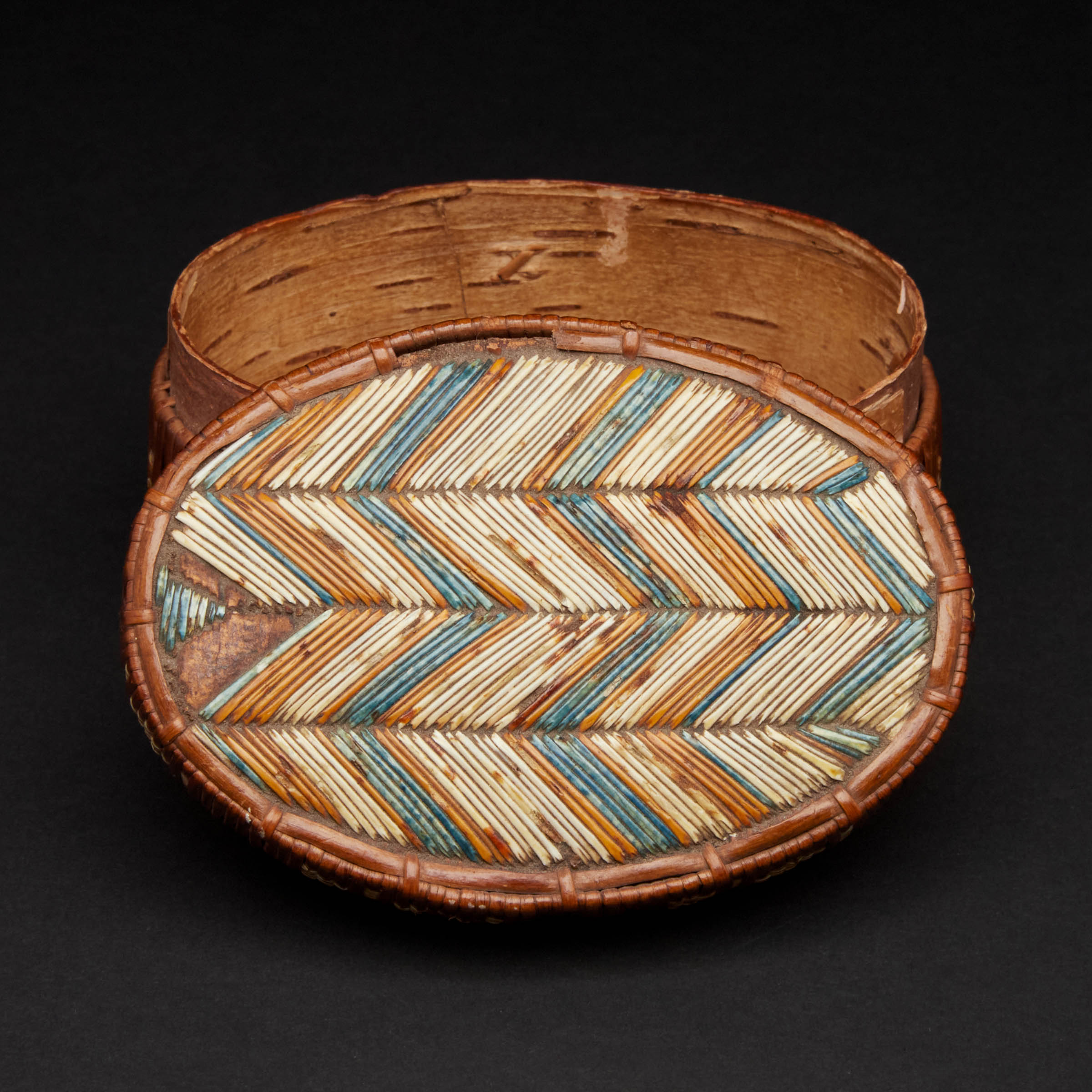
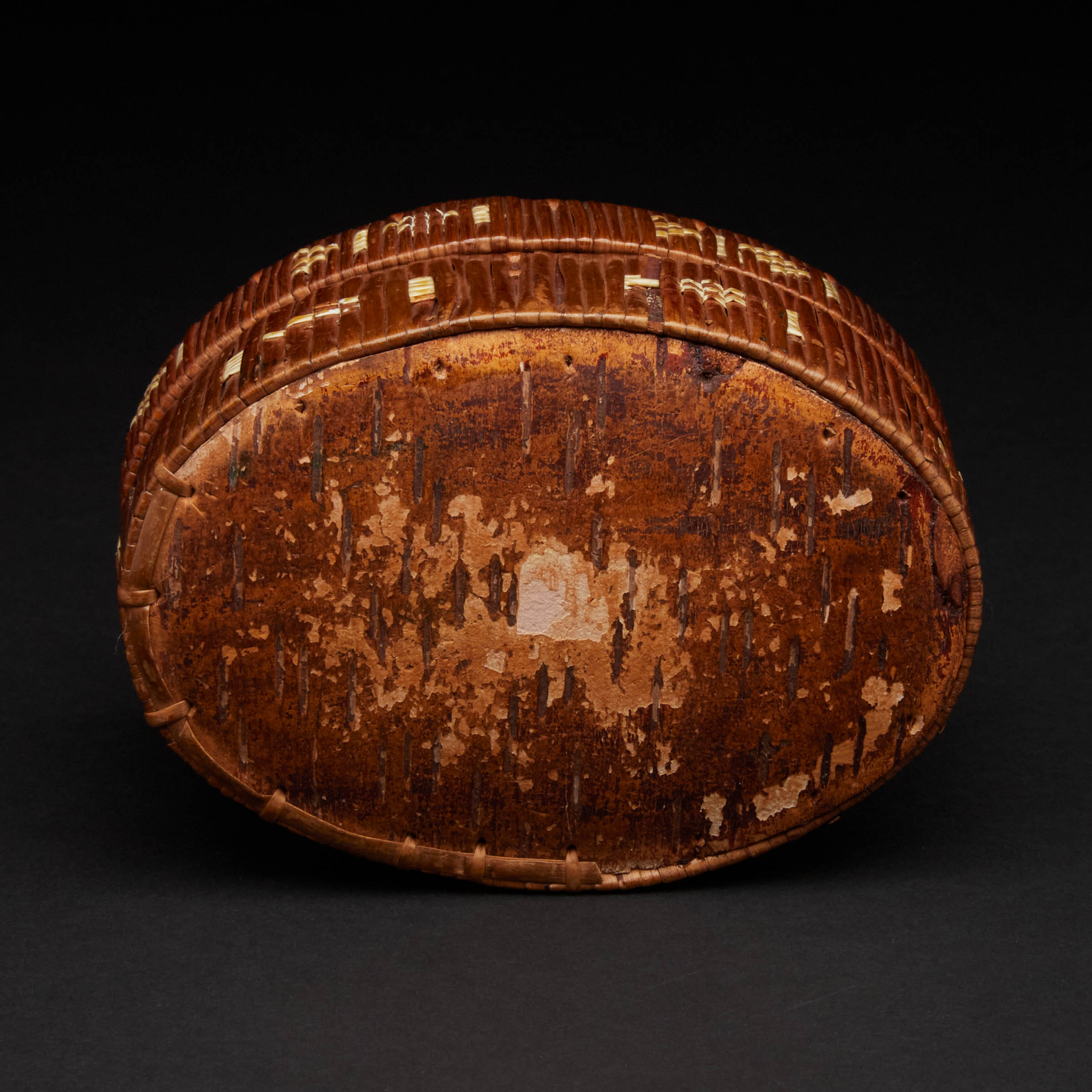
Unidentified Mi'kmaq Artist
Additional Images
Provenance:
Private Collection, New York, USA
Note:
Some of the first items manufactured for trade with European travellers, quillwork could be found in early homes of settlers in the Maritimes, as well as in collectors’ cabinets, and on fireplace mantels of soldiers, sailors who visited North America from England and France.
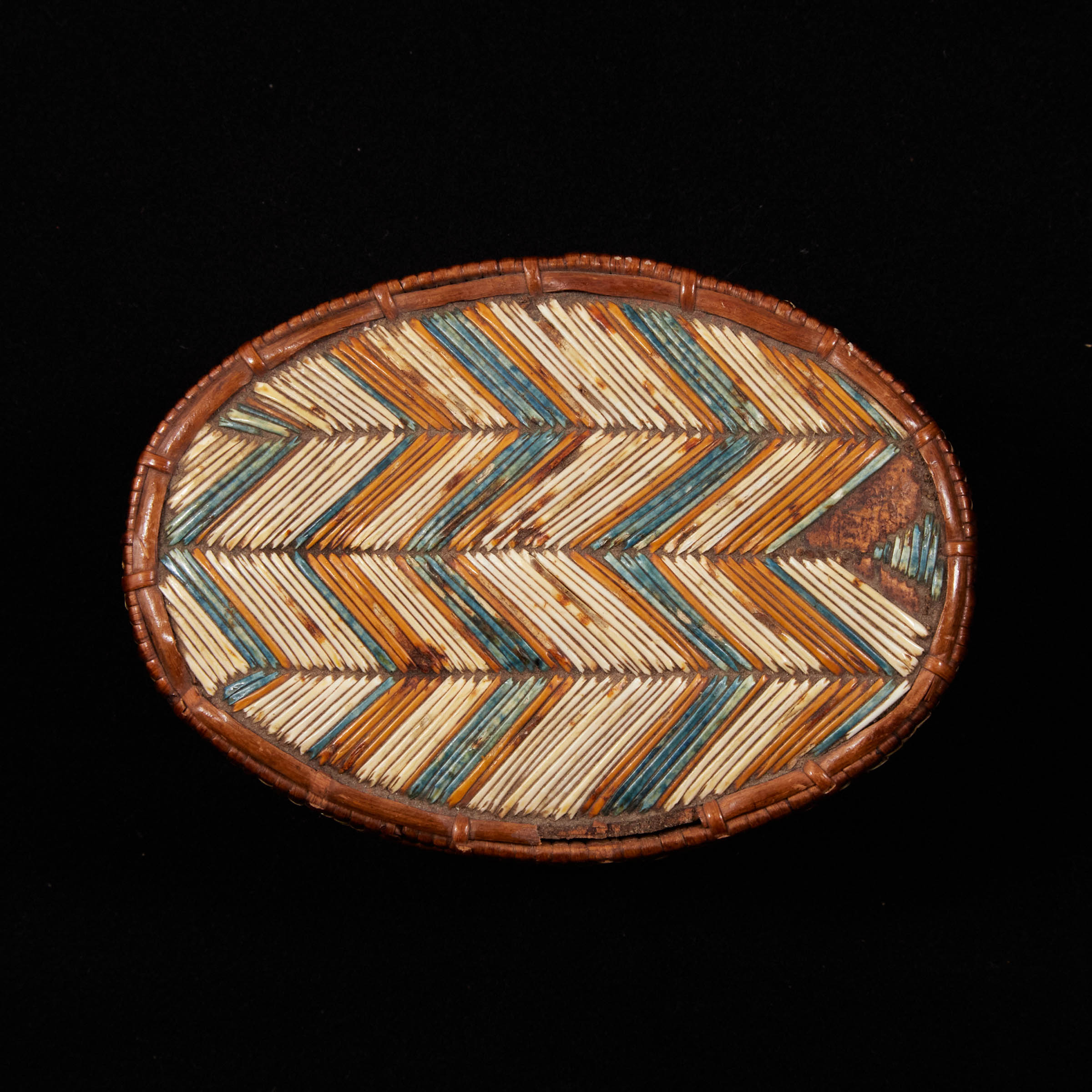
Numerous quilling techniques pre-dated sustained European settlement in the region, including plaiting, wrapping, and weaving, however it was so called bark-insertion techniques used to make semi-ridged goods such as boxes, which outlasted other methods of quillwork among the Mi’kmaq. The need for large quantities of trade goods to barter with Europeans and the gradual decline in the profitability of the fur trade were primary factors in a period of florescence in Mi’kmaq quillwork beginning in the 18th century.
Quills, collected from porcupines, were conducive to retained dyes, and offered a flexible and resilient canvas for exploring complex compositions and interplay between colours. Versatile and abundant birch bark, cut and peeled away from the trunks of trees, had long been bent and stitched into pliable wares for cooking, storage, and transportation in the form of watercraft. The material lent itself well to the insertion of quills, and provided Europeans with an exotic substitute for the leather and fabric construction already familiar to them.
While the overall form of quillwork items made by the Mi’kmaq for trade were often derived from European goods, such as travel chests, fancy boxes, and purses, the elaborate quilled motifs on the objects are rich with traditional Mi’kmaq designs. While their designs may appear to the novice viewer as pure abstraction, many elements were drawn from a body of pre-contact symbolic devices, markers of meaning legible to Mi’kmaq makers. The symbolic aspect of the designs seems to have been largely unknown, or at the very least undocumented by most historical European purchasers. However, a study of the few early sources discussing the designs reveals a richness and depth of meaning in historical Mi’kmaq quillwork imagery.
Ruth Holmes Whitehead, Micmac Quillwork: Micmac Indian Techniques of Porcupine Quill Decoration: 1600-1950 (Halifax: The Nova Scotia Museum, 1982)