


Lot 363
Kazuo Nakamura, RCA (1926-2002)
Additional Images
Provenance:
Private Collection, Toronto, ON
Note:
A founding member of the Toronto-based collective Painters Eleven, Kazuo Nakamura played a pivotal role in the emergence of abstraction in Canada during the 1950s. While his peers gravitated toward the gestural energy of Abstract Expressionism, Nakamura’s approach was quieter, more meditative. The group was united not by a single style but by a shared commitment to artistic freedom—a principle that allowed Nakamura to pursue his own visual language rooted in science, mathematics, and the natural world. His methodical compositions, often constructed through repetition and limited palettes, reflect a search for what he described as “a fundamental universal pattern in all art and nature.”[1]
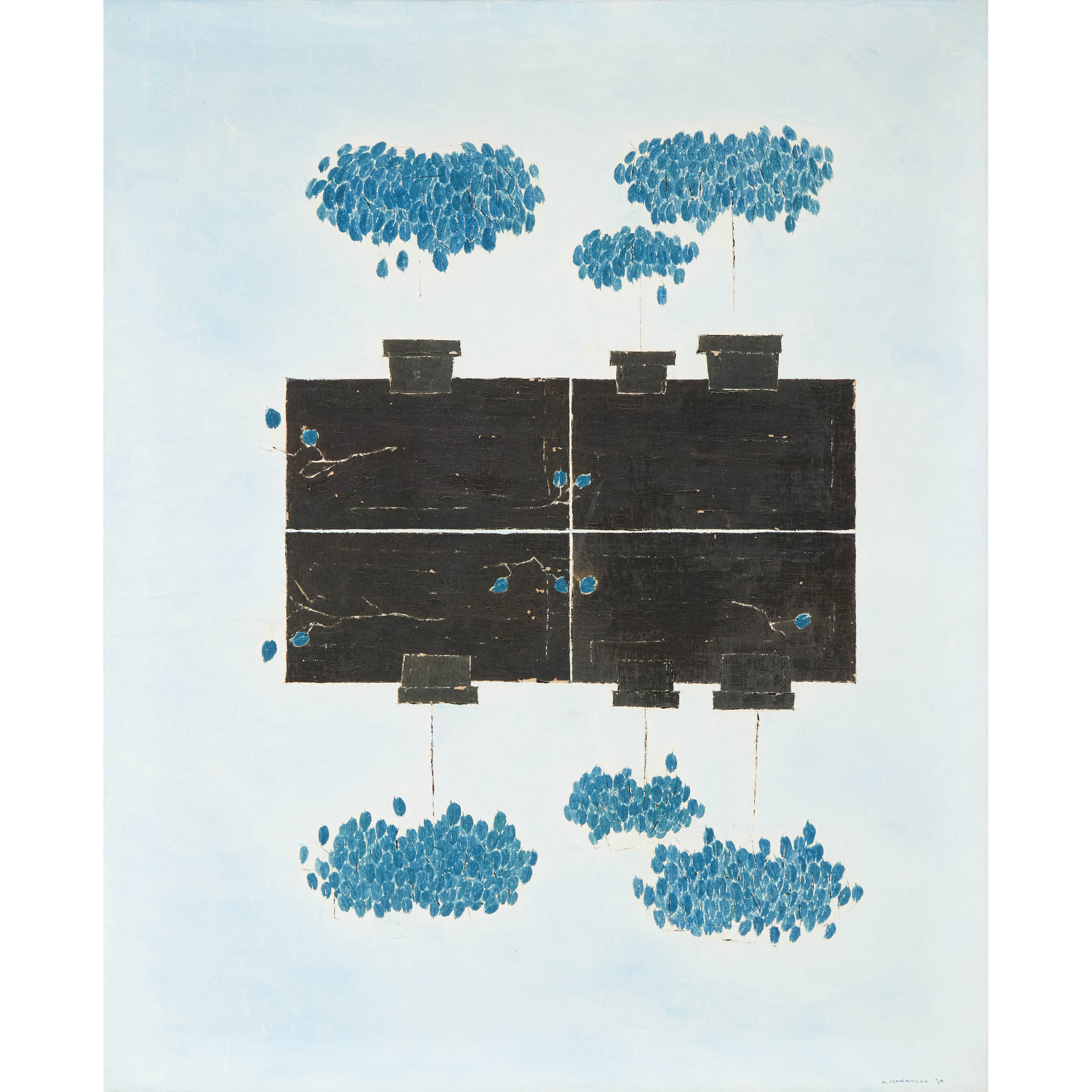
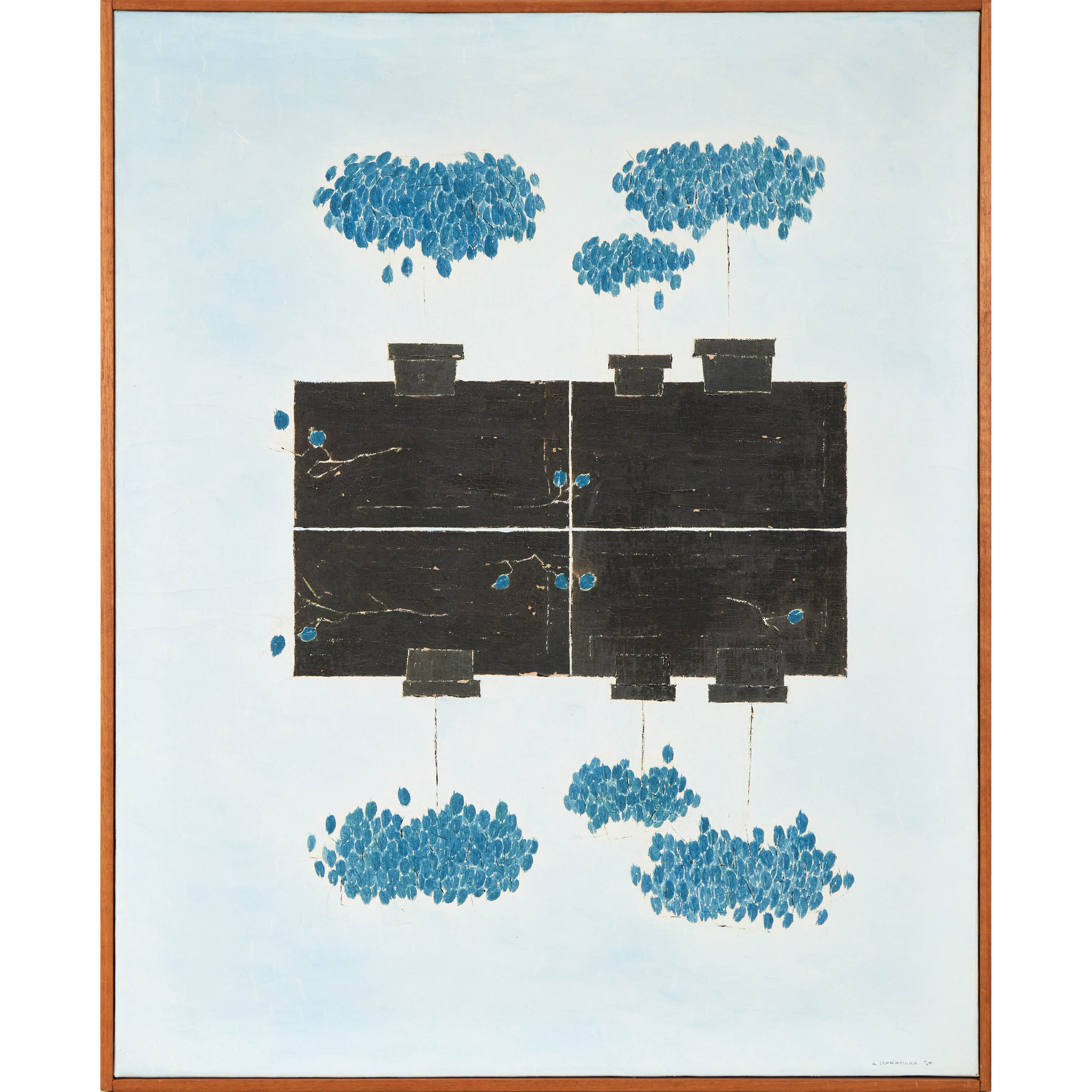
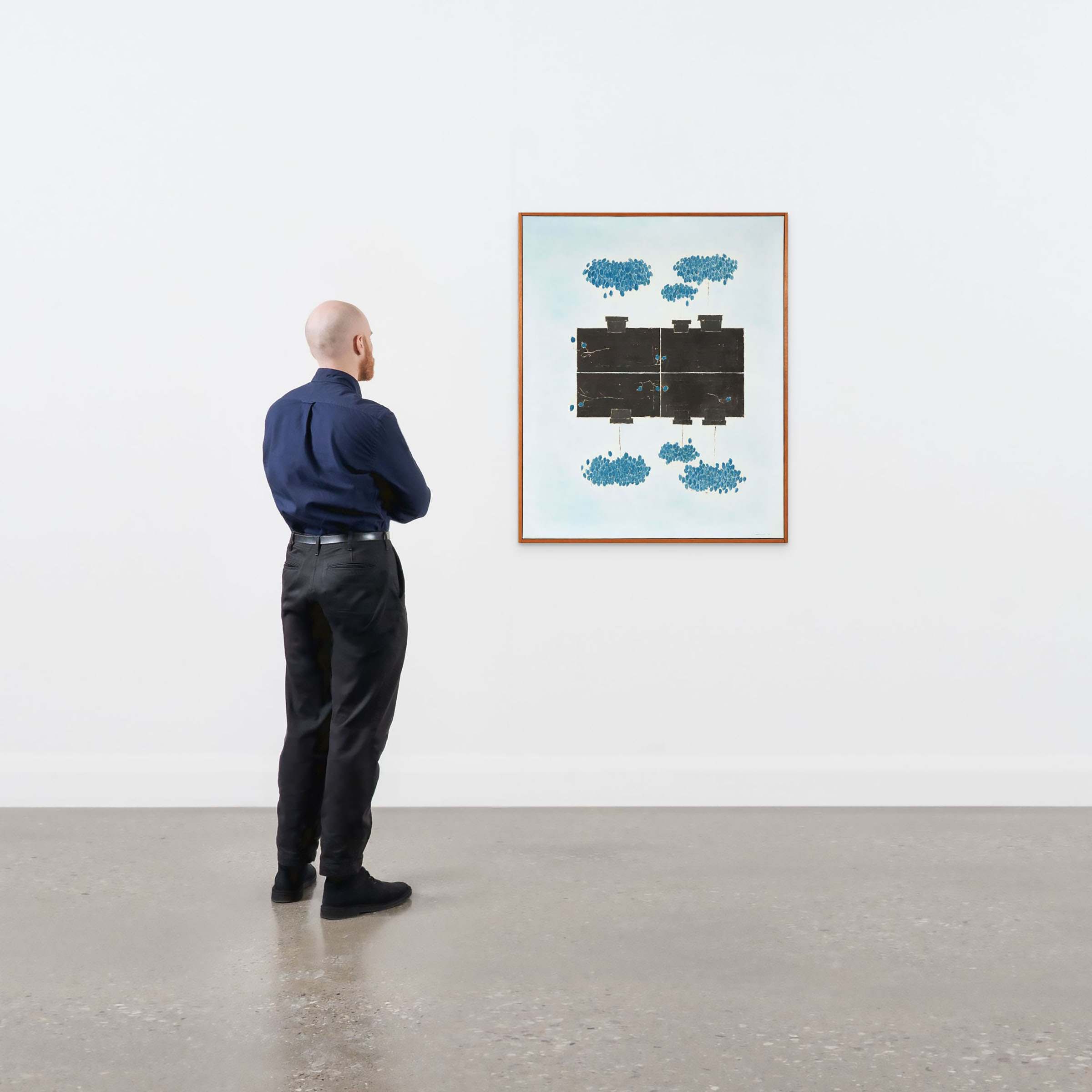
Waddington’s is pleased to offer Untitled (Three Plants Reflected), 1964, an exemplary canvas from the 1960s, a period of artistic maturation for Nakamura. Produced shortly after the dissolution of Painters Eleven, as Nakamura embarked on a solo path defined by rigorous formal investigation and quiet spiritual depth.
Untitled (Three Plants Reflected), 1964 offers a quiet still life that echoes Nakamura’s interest in reflection and spatial ambiguity. Three potted plants float in an undefined space, tethered neither to interior nor exterior. The repetition of form and subtle distortions suggest both artificiality and organic growth—another meditation on the delicate boundary between nature and abstraction.
[1] Robert Fulford, “The New World of Pattern”, Mayfair Magazine (February 1956), 46.