


Lot 19
Molly Lamb Bobak, RCA (1920-2014)
Additional Images
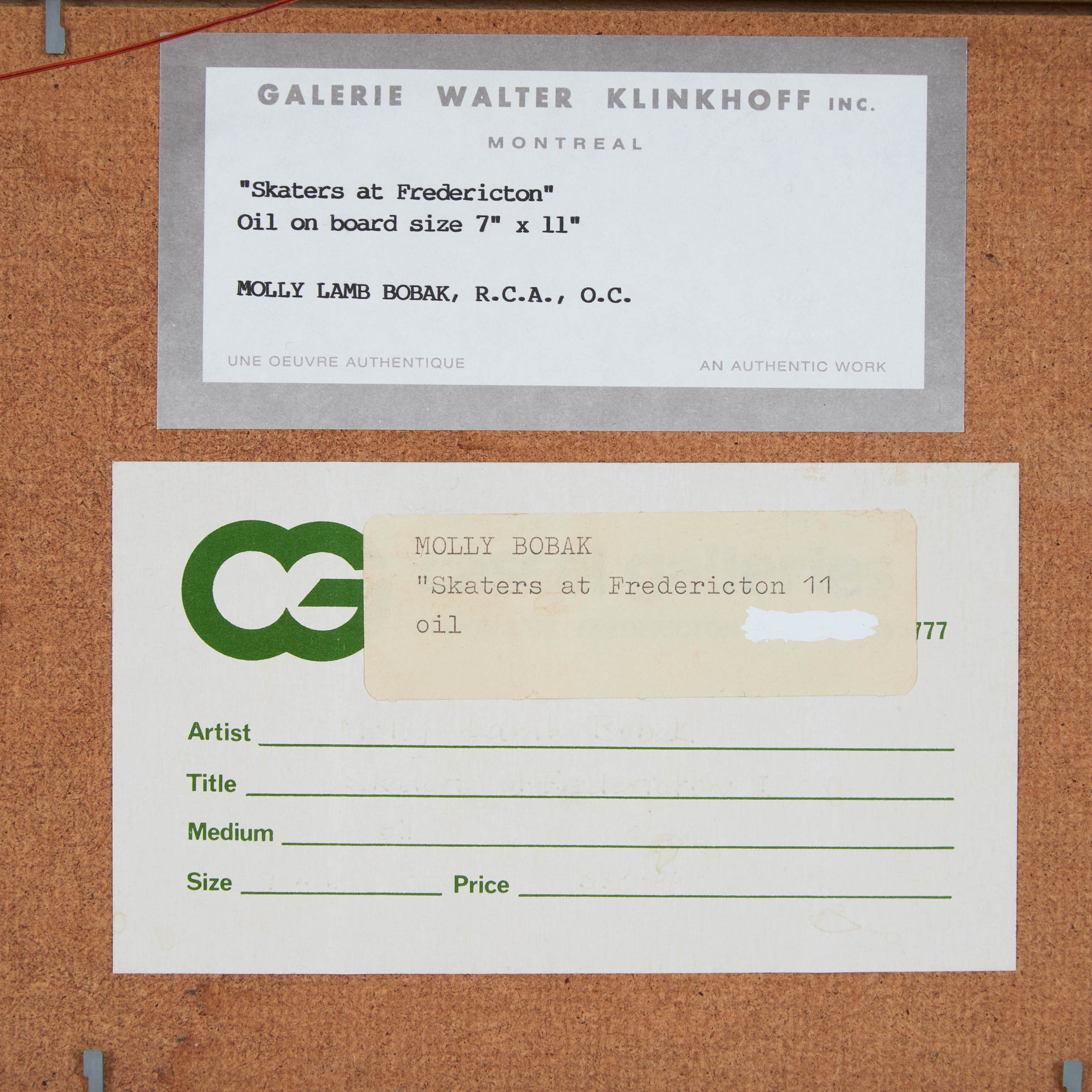
Provenance:
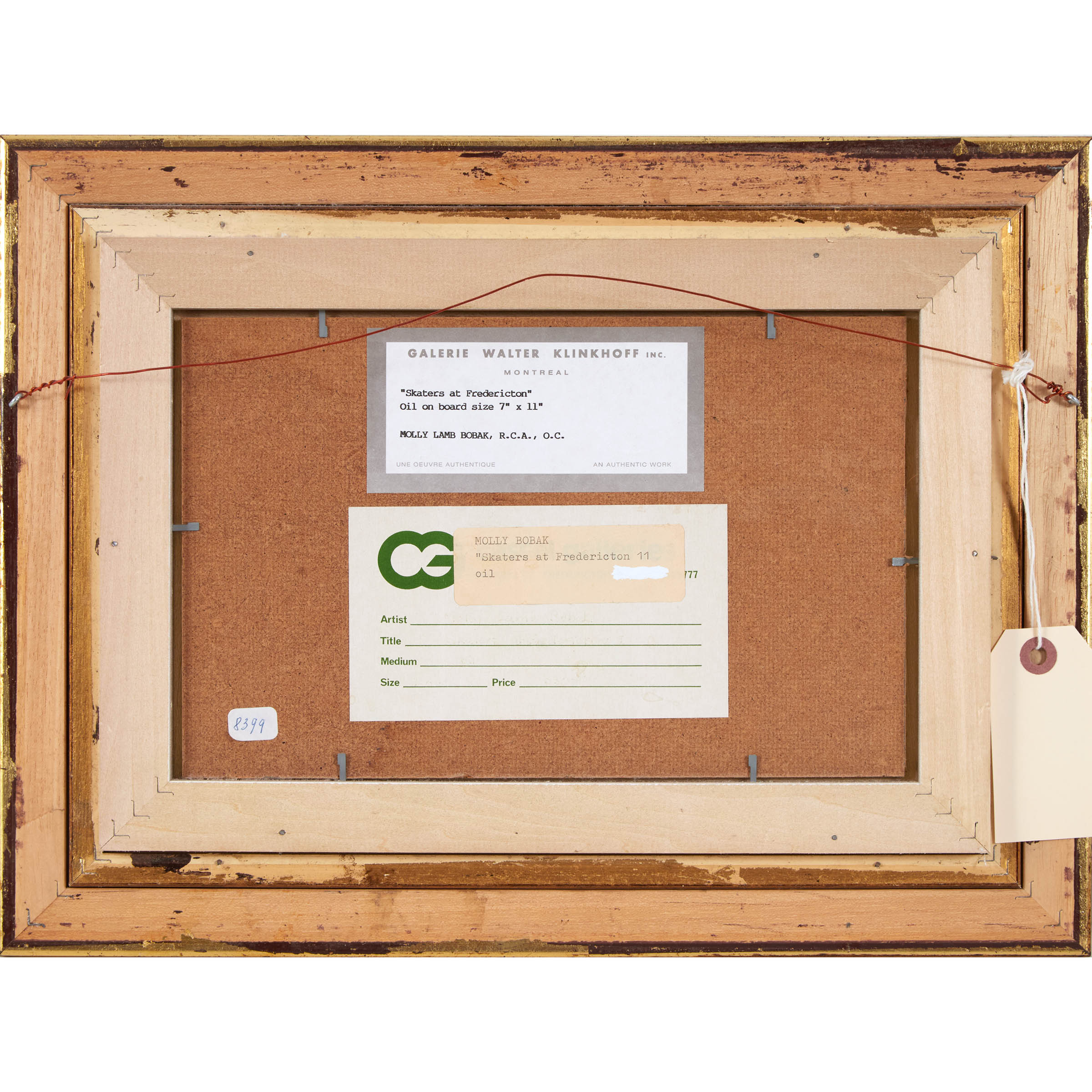
Cassel Galleries, Fredericton, NB
Galerie Walter Klinkhoff, Montreal, QC
Private Collection, Toronto, ON
Note:
Molly Lamb Bobak loved painting groupings of people in both intimate and vast settings. Instead of detailed faces, her skill lay in the suggestion of figures, depicted with a few lively brushstrokes, allowing her to turn groups into flowing patterns of colour and movement. In her words, "I simply love gatherings, mingling.... It's like little ants crawling, the sort of insignificance and yet the beauty of people all getting together."[1]
The first official Canadian female war artist sent overseas, Lamb Bobak’s time spent in the Second World War and observing women’s experiences of military life would shape her subsequent artistic output. Her time as a war artist taught her to watch how people move in unison: marching, lining up, standing in formation. Those wartime scenes of women soldiers practising drills evolved to become peacetime crowds at civic events, protests, and community gatherings.
Molly and her husband Bruno Bobak travelled to Europe with their two young children in 1950. They lived in Paris, where Lamb Bobak was exposed to the work of modernist painters, including Paul Cézanne, Henri Matisse, and Pablo Picasso. She also spent time with Canadian artist Joseph Plaskett, who was living in Paris at the time. Several other grants allowed the Bobaks to live in Europe from 1957-1961. Lamb Bobak made it a practice to sketch on paper every day, and “wherever they travelled, Lamb Bobak was influenced by the changing scenes around her.”
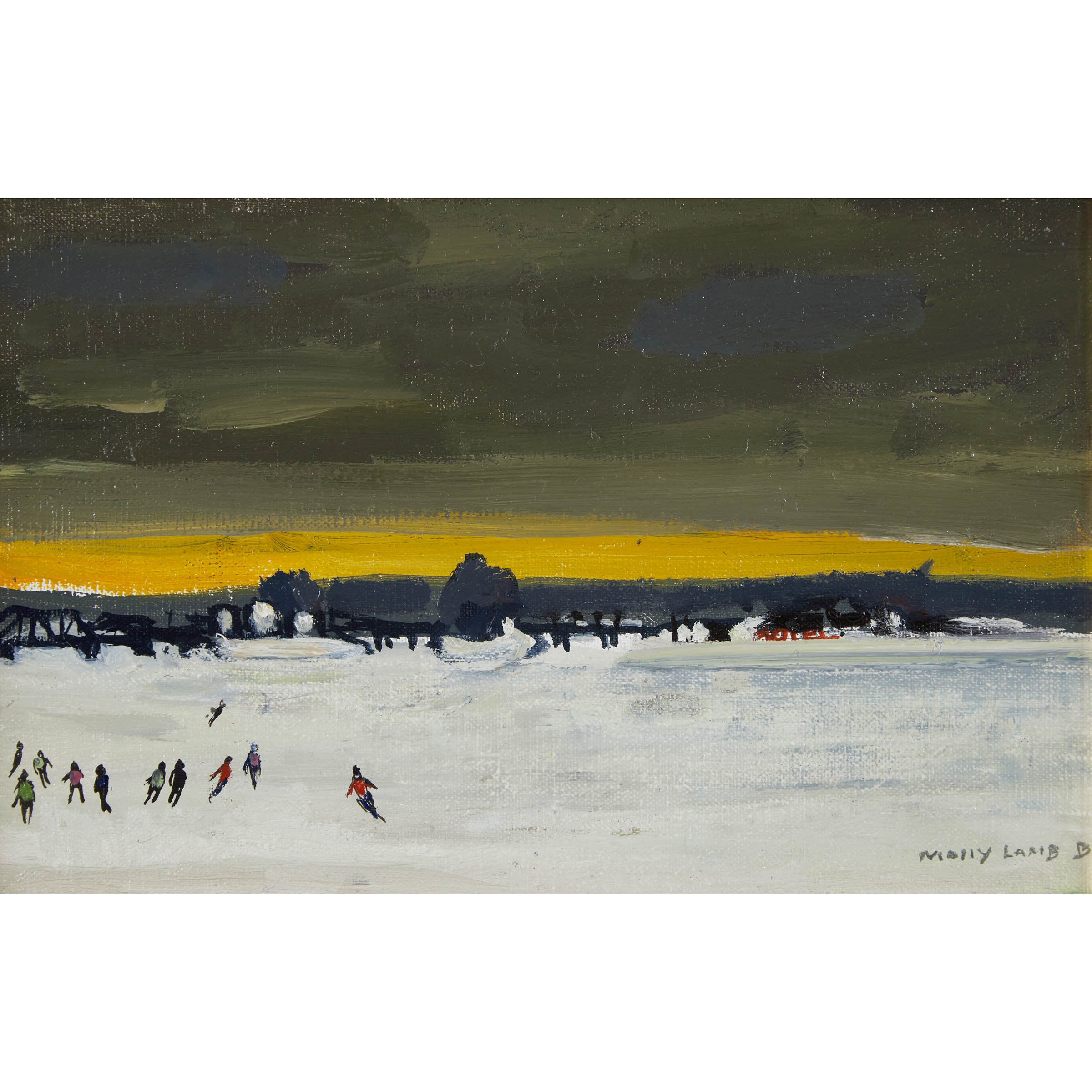
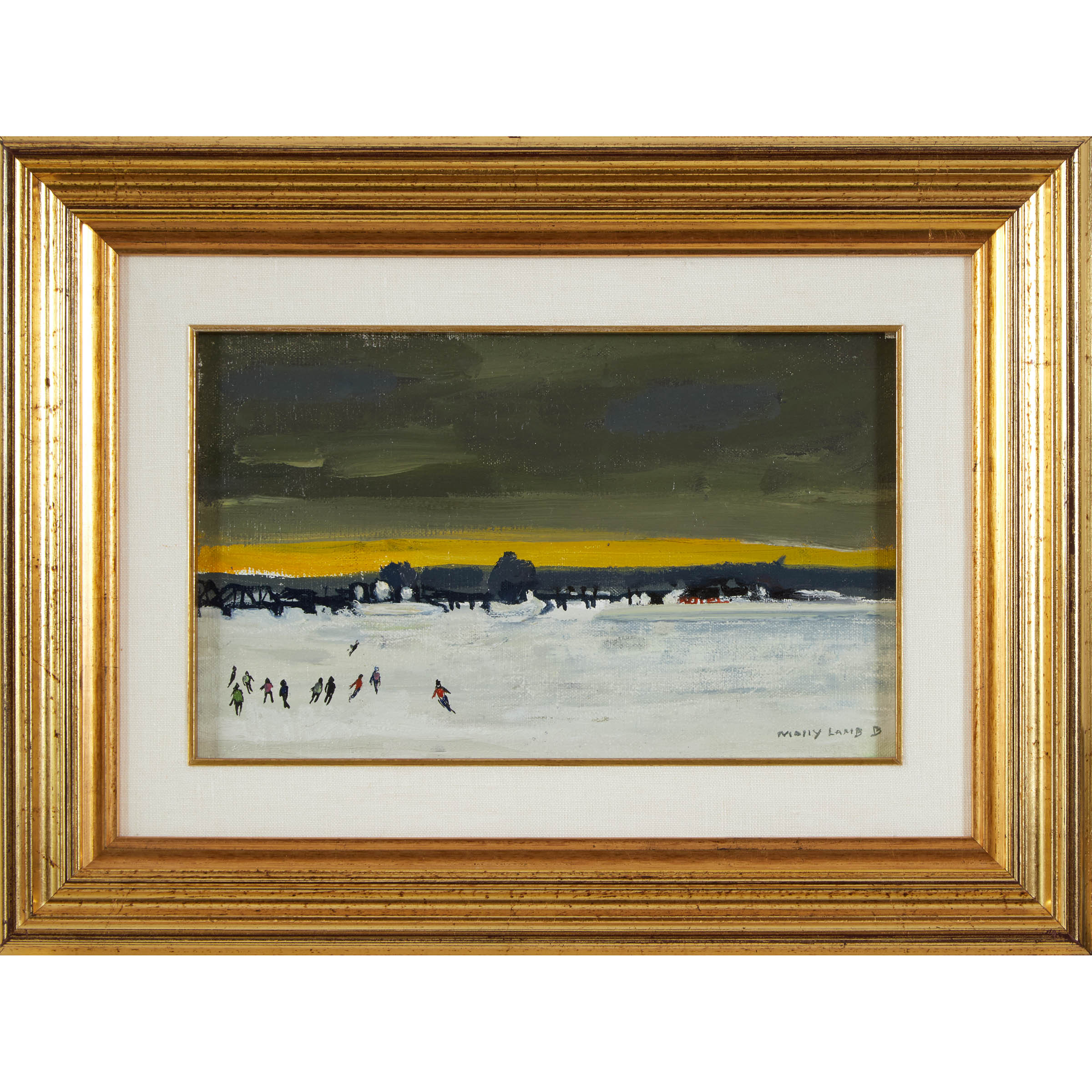
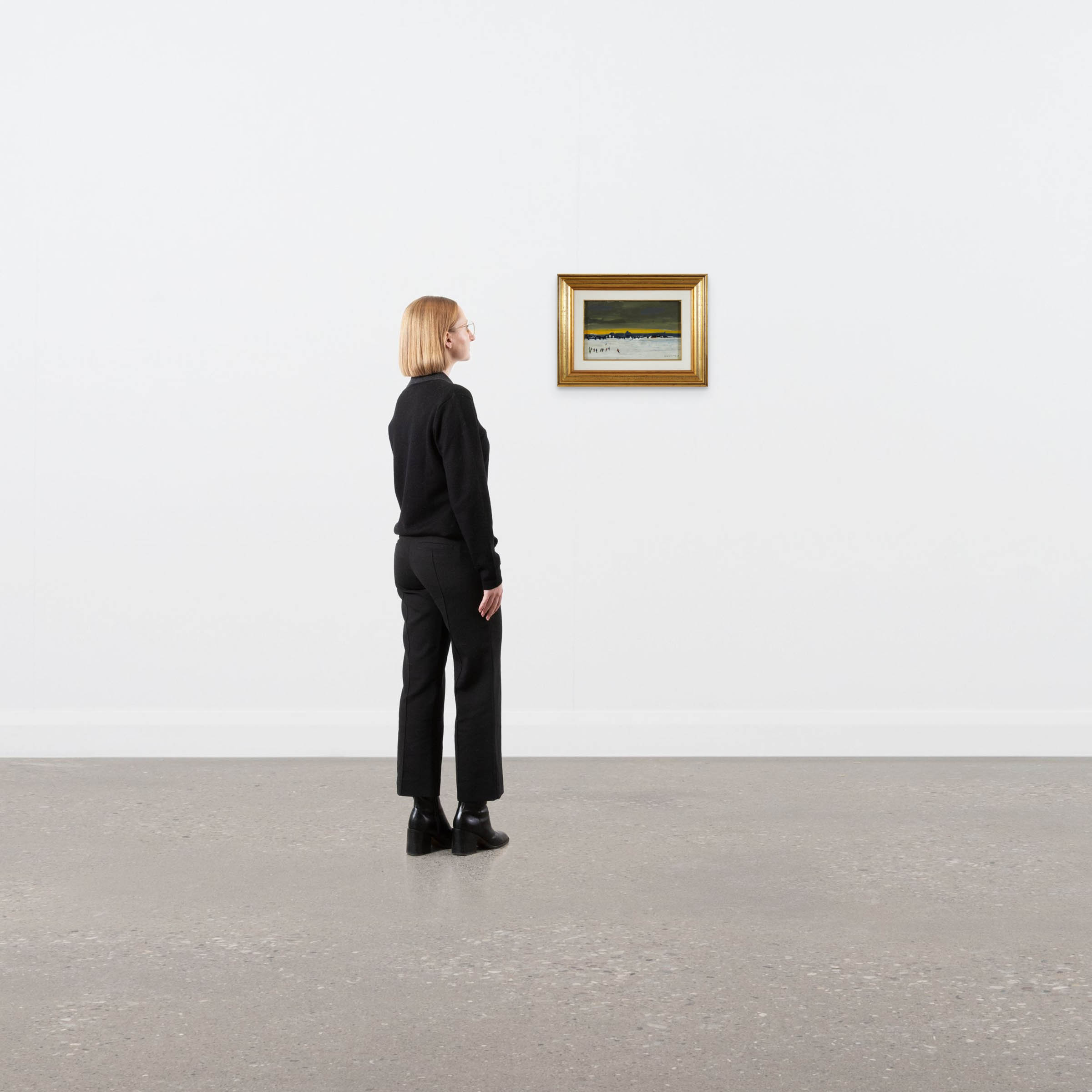
The couple eventually settled in Fredericton, New Brunswick in 1960. The city became central to both her daily life and her art. Both artists taught at the University Art Centre and exhibited frequently at the Beaverbrook Art Gallery, which had opened to the public in 1959. The region gave her constant access to the kinds of everyday scenes she loved to paint. Skaters at Fredericton and Strollers on the Beach are both works produced in Fredericton, most likely painted during the late 60s or early 70s. Lamb Bobak uses a slightly elevated viewpoint in both of these works, accentuating the perspective and a sense of rhythm with her active figures.
[1] Michelle Gewurtz, Molly Lamb Bobak: Life & Work Life & Work, accessed Jan. 6, 2026, https://www.aci-iac.ca/art-books/molly-lamb-bobak/biography/