


Lot 3
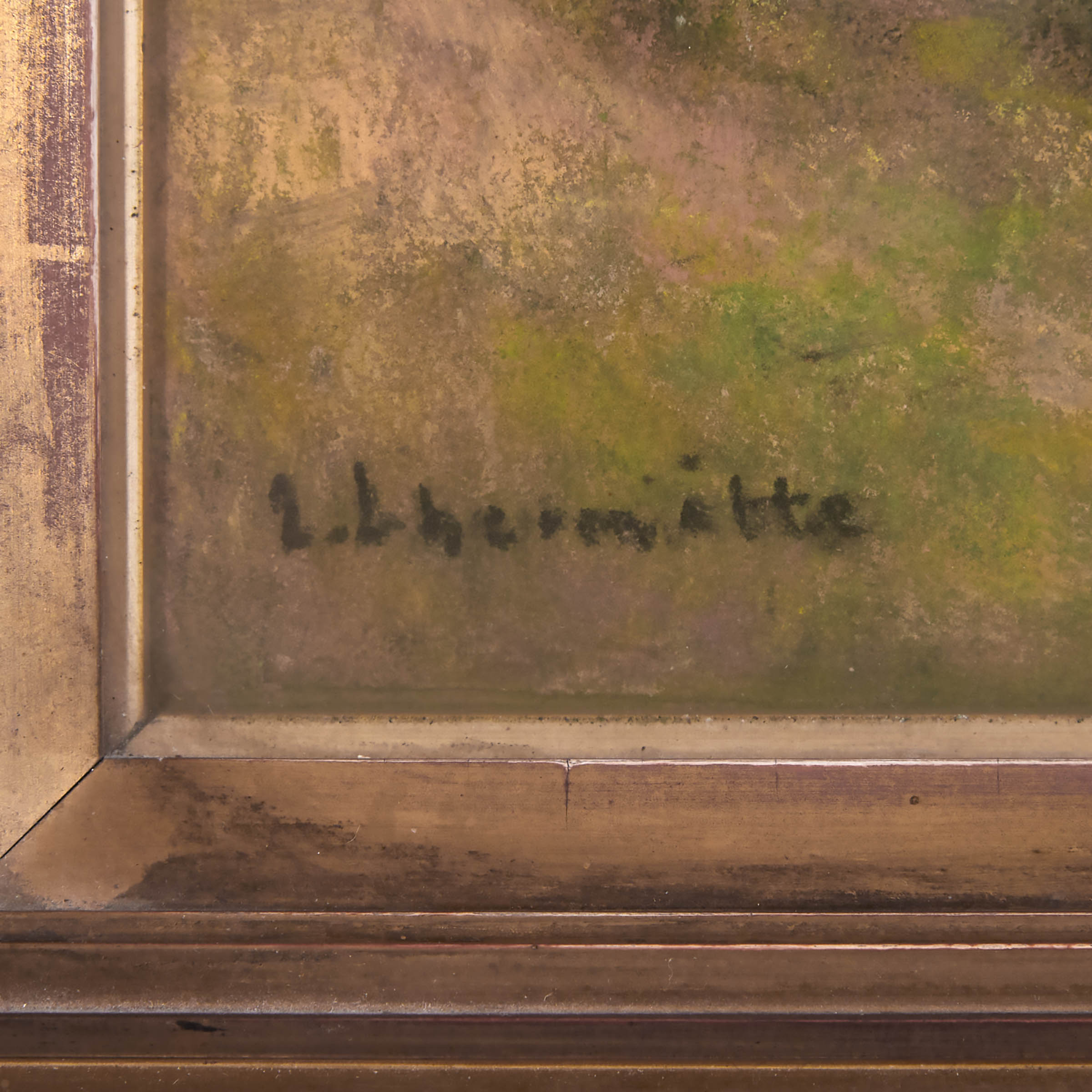
Léon Augustin Lhermitte (1844-1925)
Additional Images
Provenance:
Collection of Sir Byron Edmund Walker, Toronto, ON
By descent to the current Private Collection, Toronto, ON
Note:
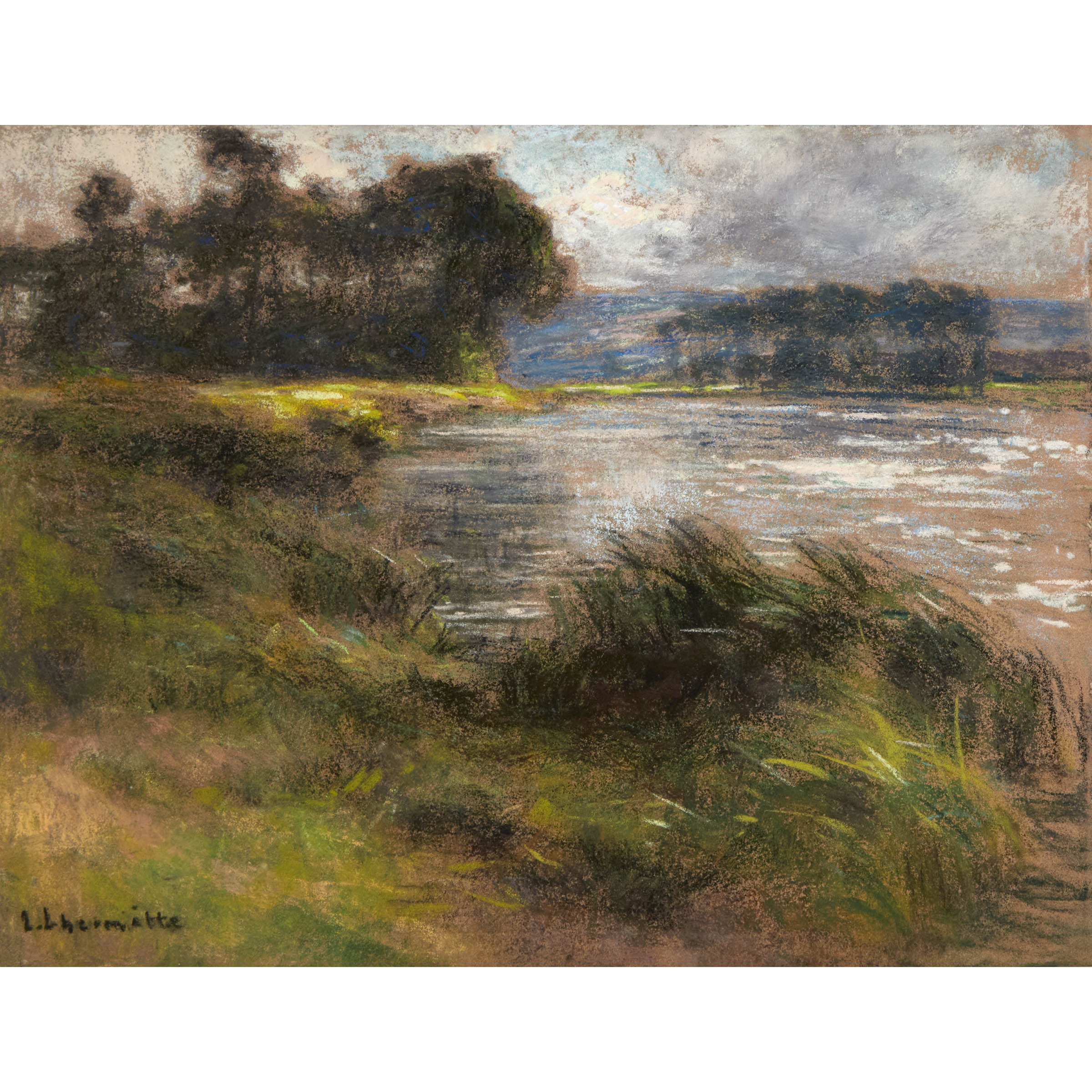
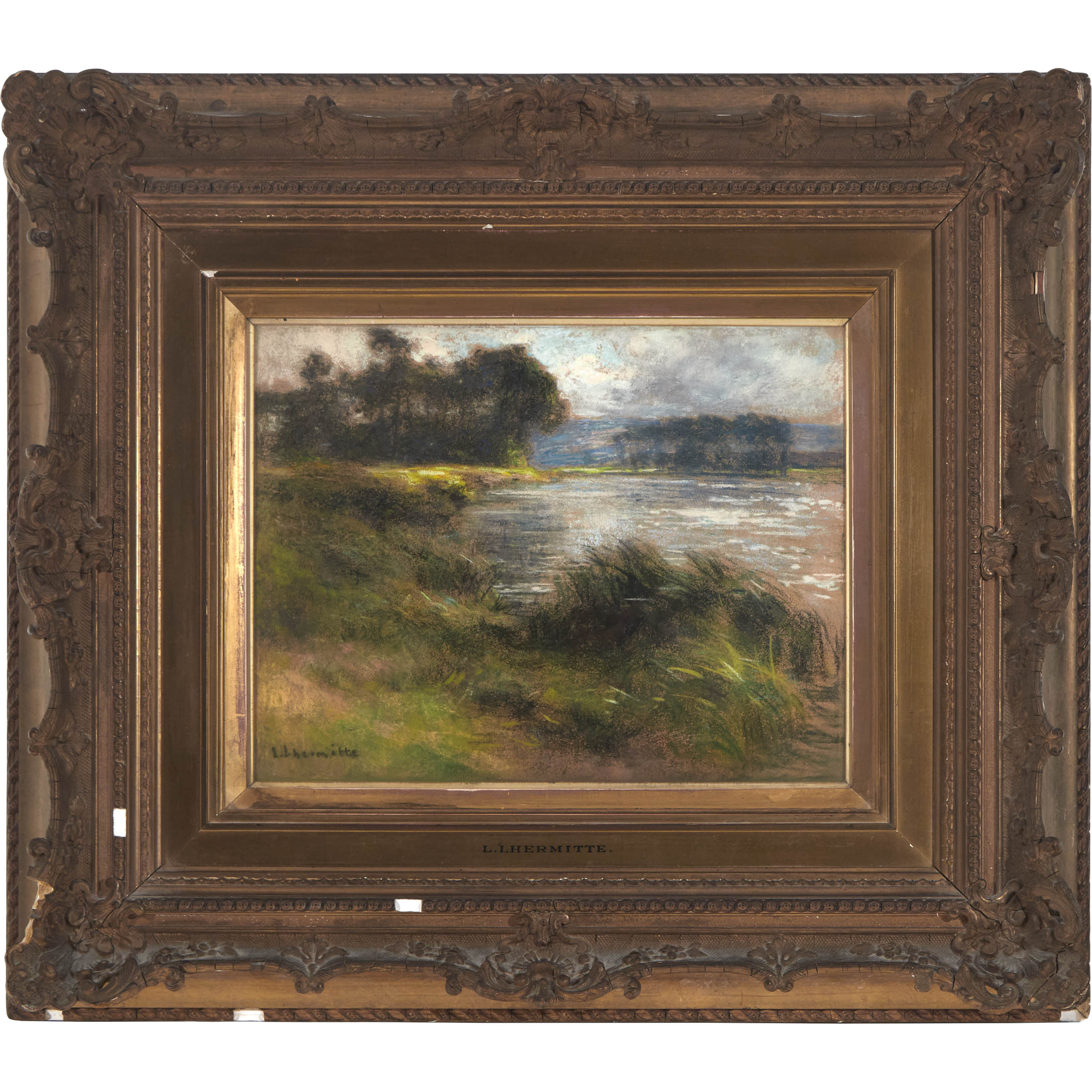
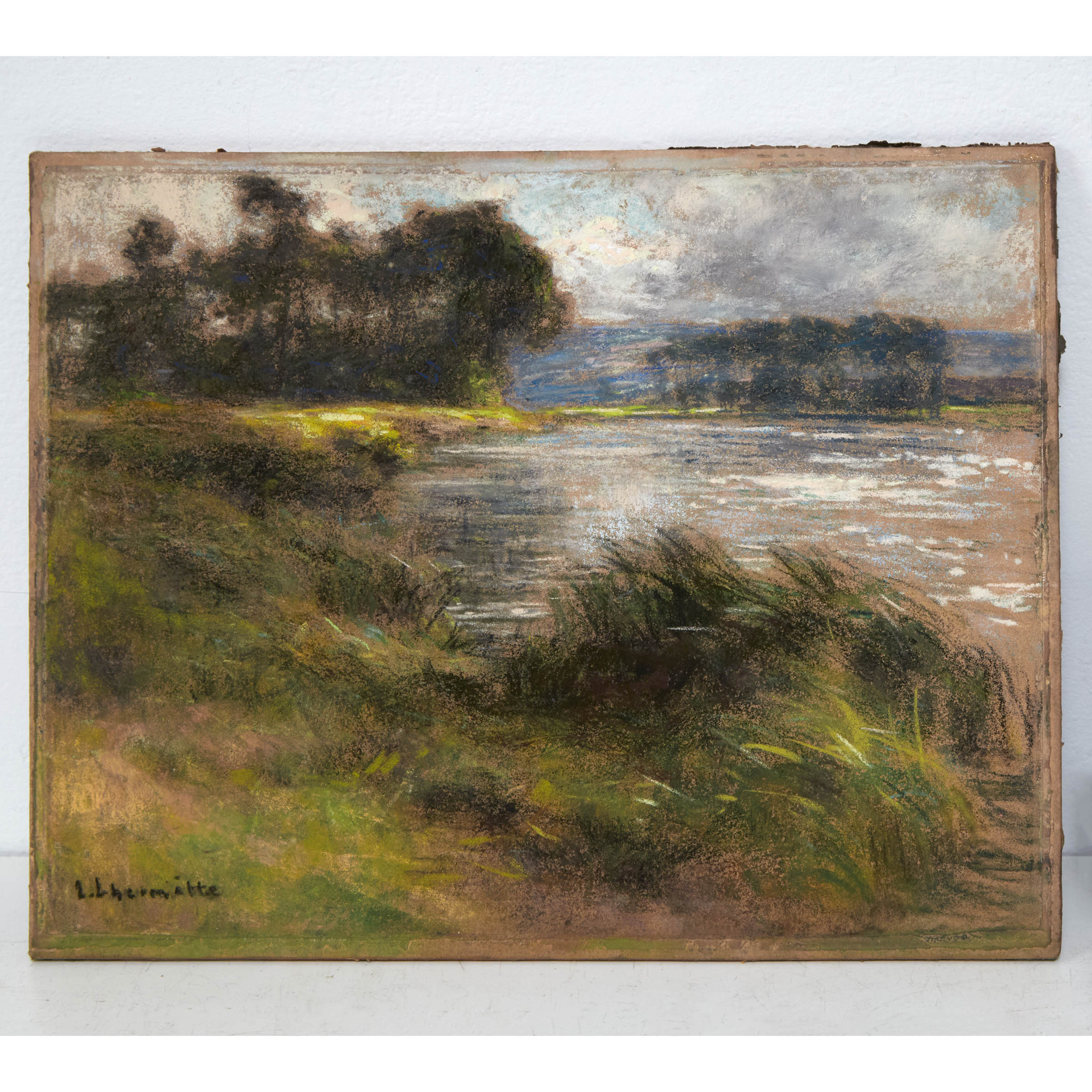
Wind, Water, and Rushes presents a rare moment of rest and tranquillity in Lhermitte’s body of work, otherwise known for poignant displays of labour and life before the effects of the industrial revolution. In this pastel on paper, Lhermitte highlights the serenity of the French countryside, seemingly untouched by human intervention.
In 1874, at the age of 30, Léon-Augustin Lhermitte obtained his first medal at the Salon in Paris. His reputation was cemented with the oil on canvas La Paye des Moissonneurs (Paying the Harvesters) presented at the Salon in 1882 and purchased by the French government for the Musée du Luxembourg in Paris. In opposition to Romanticism, the Naturalist movement—to which Lhermitte belonged—emerged in France during the 1870s, building on the Realist wave shaped by Gustave Courbet and Jean-François Millet.
With the second industrial revolution beginning in 1870, there was a great push towards a new way of life in the French capital with the arrival of electricity, gas, and abundant fuel. This race towards progress was largely limited to Paris and other large cities, eluding the French countryside until the beginning of the 20th century. In search of pristine landscapes and views, Lhermitte preferred to depict the rural parts of France he viewed as unsullied.[1]
Lhermitte’s depictions of modernization in repose caught the attention of prominent Canadian financier and patron of the arts, Sir Byron Edmund Walker (1848-1924), who purchased Wind, Water, and Rushes at the turn of the twentieth century. Walker, inspired by his business trips and subsequent visits to the museums and galleries of New York, London, and Paris, was largely responsible for the creation of the Royal Ontario Museum and an early patron to the Art Gallery of Toronto (now Art Gallery of Ontario).[2] By collecting international works by renowned artists such as Lhermitte, Walker aimed to share a world-class sensibility with the city of Toronto.
[1] Gabriel Weisberg, Léon Lhermitte: Creativity in Context, in Léon Lhermitte, ex. cat. Galerie Michael, 1989.
[2] Fern Bayer, Sir Byron Edmund Walker, C.V.O., LL.D., D.C.L. 1848-1924, Ontario Heritage Trust, accessed March 20, 2026.