


Lot 33
Ted Harrison, RCA (1926-2015)
Additional Images
Provenance:
Private Collection, Mount Royal, QC
Note:
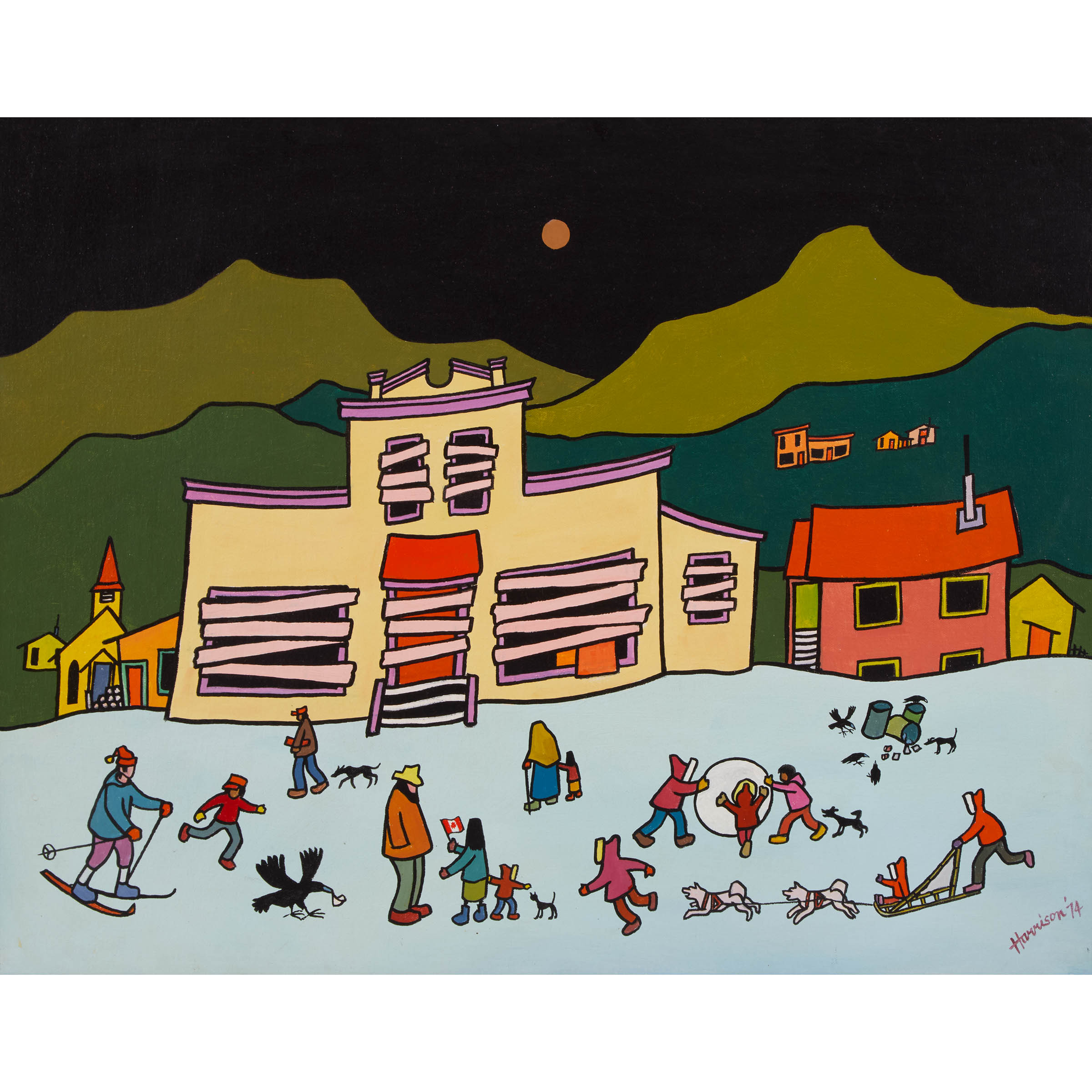
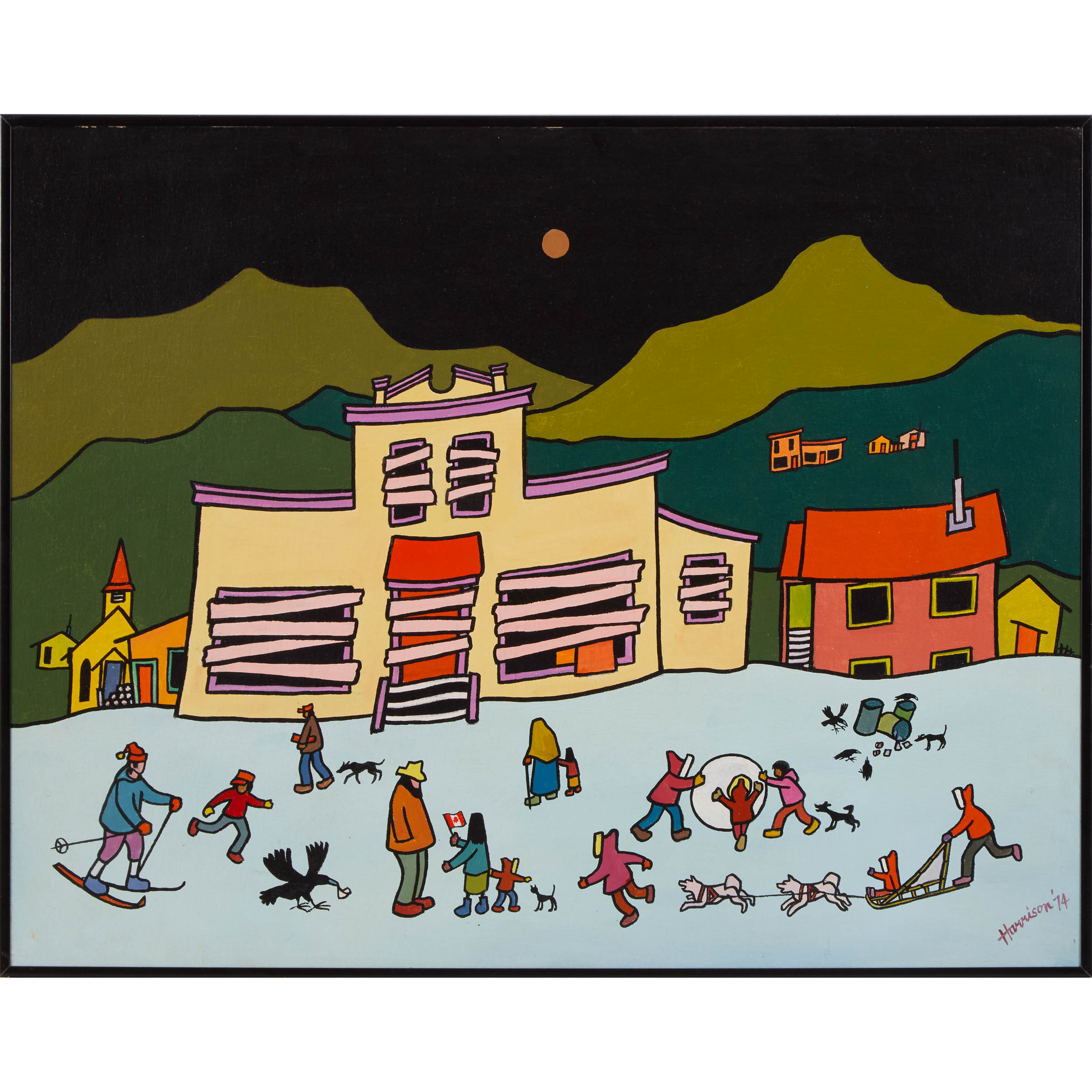
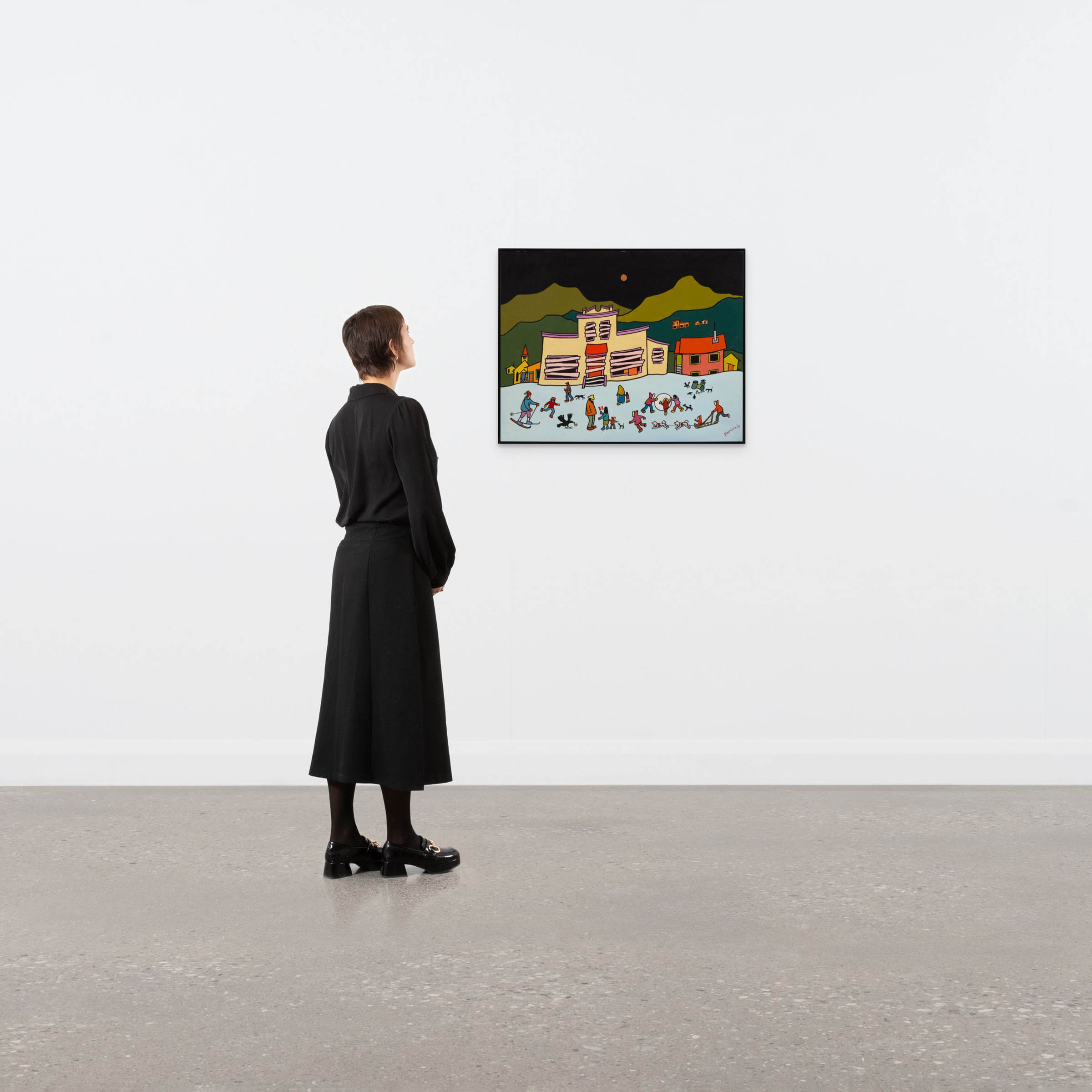
Painted in 1974, Yukon Snowball exemplifies Ted Harrison’s mature style, one typified by a highly simplified visual language of bold contour lines, flattened forms, and a hyper-saturated and often dissonant palette. Abandoning the academic realism learned in his earlier life in England, he began to amplify colour and pattern. Per Harrison, “I thought I’d simplify everything, because when I tried to paint the Yukon as is, it was too complicated and fiddly. So I said, ‘I’ll simplify it down – I’ll leave out the doorknobs.’”[1]
Yukon Snowball reflects Harrison’s interest in representing everyday life in northern communities. In his work, the artist intentionally emphasizes the human element amidst the mighty landscape, in direct contrast to the empty wildernesses of the Group of Seven. Scenes of play and shared activities were important to Harrison, particularly their communal nature. Multiple vignettes exist in this painting’s tight composition.
Although the work is named for the giant snowball being rolled by three children, Yukon Snowball is ultimately a distributed narrative – a series of small, interrelated moments, reinforced by Harrison’s technique of compressing spatial depth to create a single, shared plane. Humans, animals, architecture and landscape all hold equal weight in his work. Rather than presenting winter life in the Yukon as cold and isolating, Harrison asks the viewer to see joy and social cohesion.
[1] Genesee Keevil, “Ted Harrison: Loved and Snubbed,” Yukon News, August 26, 2009, https://www.yukon-news.com/2009/08/26/ted-harrison-loved-and-snubbed/