


Lot 52
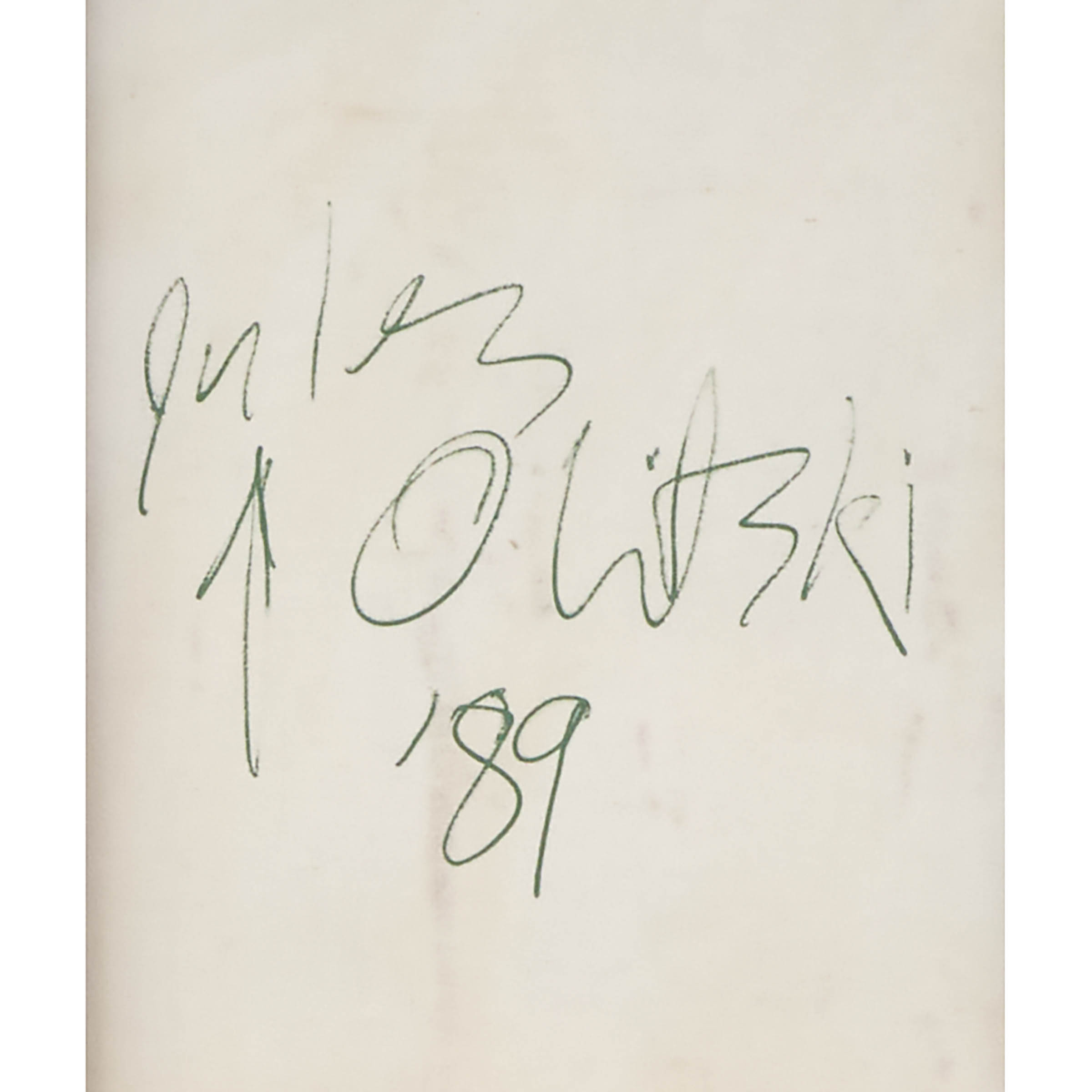
Jules Olitski (1922-2007)
Additional Images
Provenance:
Gallery One, Toronto, ON
Private Collection, Toronto, ON
Note:
The Color Field movement, which emerged in the 1940s and 1950s, was a major development within Abstract Expressionism, emphasizing large, flat areas of colour as the primary means of artistic expression. Artists associated with Color Field, such as Mark Rothko, Barnett Newman, and Helen Frankenthaler, sought to evoke emotion and transcendence through the pure use of colour, often creating monumental canvases that invited deep contemplation. Prominent art critic Clement Greenberg played a pivotal role in the movement’s rise, championing these artists, as well as Olitski, in his writings. Qualified by Greenberg as the greatest painter alive[1], Olitski investigated light, surface and colours in their relationship to the canvas across his whole career, making him one of Color Field painting’s most rigorous practitioners. His monochrome canvas from the 70s, with colours spread with a cloth or scraper or laid on with a roller to create thickly structured surfaces, led the artist to another major achievement: the Mitt paintings.
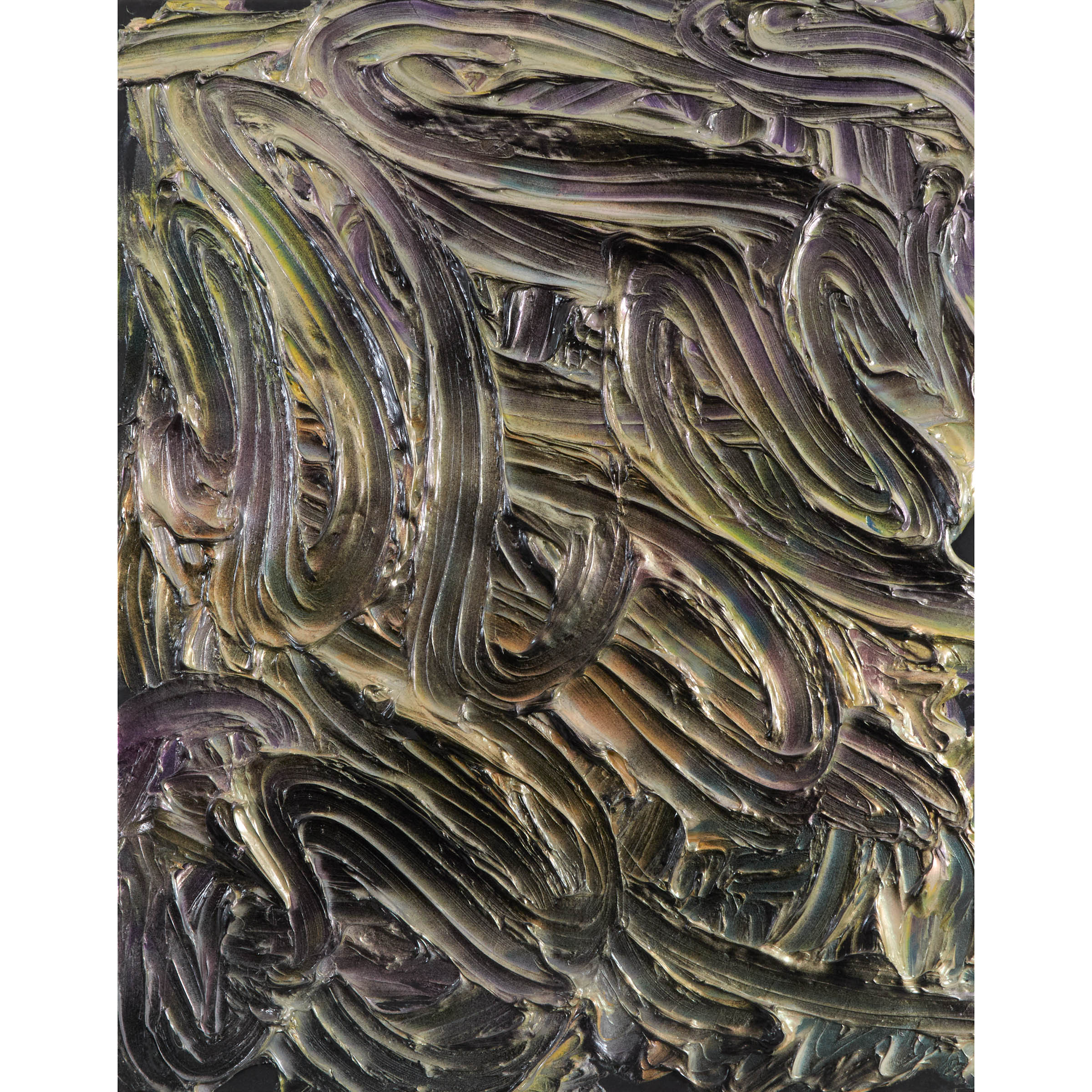
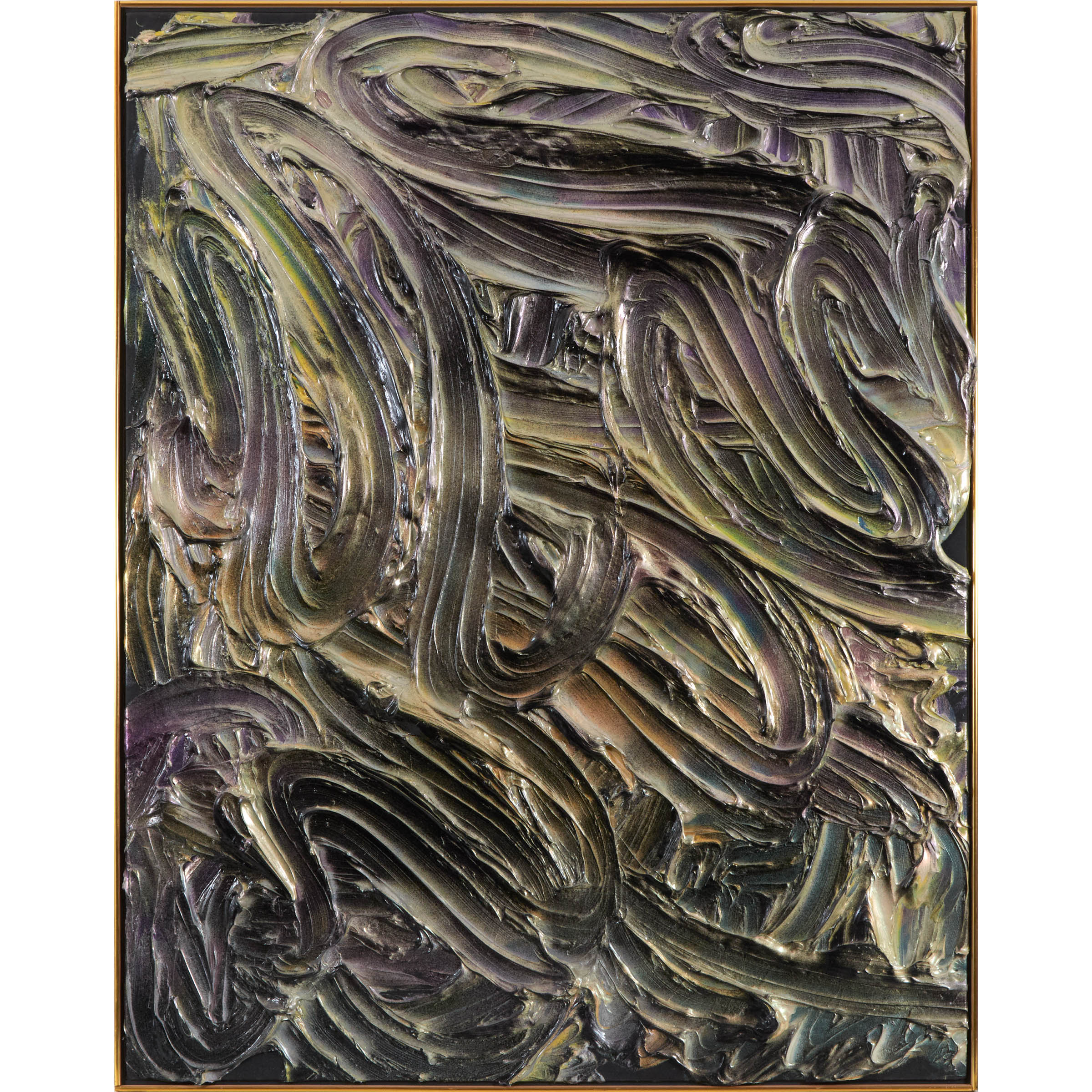
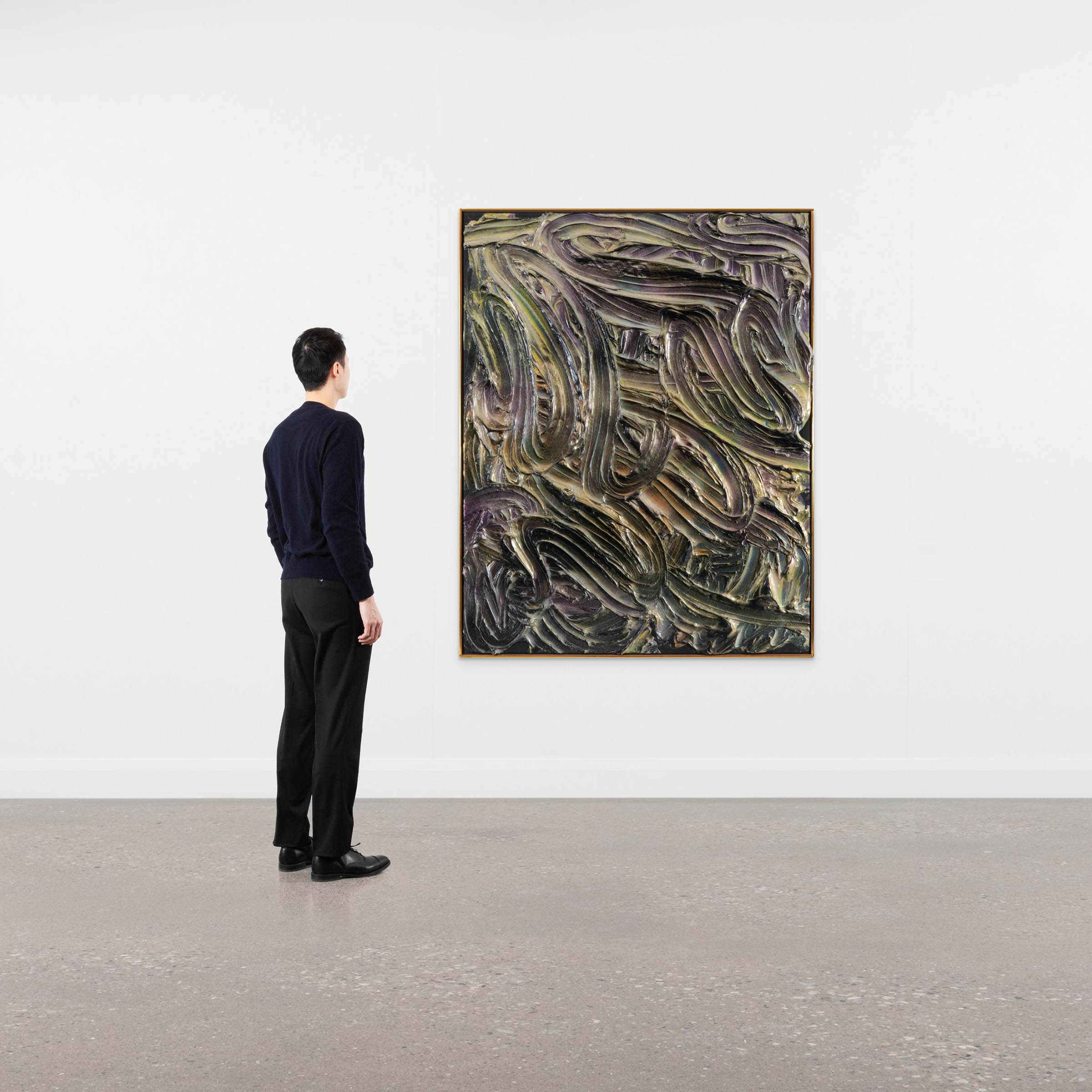
Created between 1988 and 1993, Olitski’s Mitt paintings were not often exhibited during the artist’s lifetime. The first large-scale exhibitions focusing on this era were held in 2024 by the Templon Galerie, Paris, and Yares Gallery, New York. Art historian Alex Grimley describes these works as “opulent and luxurious”. “[...] the Mitt paintings (so named for the housepainter’s mittens used to create them) are works of baroque exuberance, with inches-thick acrylic crests and troughs that belie their unique illusionistic effects. Olitski finished many of the paintings with fine mists of sprayed color applied at an oblique angle so that his scalloping gesture appears to materialize from within the surface. [...] The play of light and shade is fundamental to these paintings. The interference pigments Olitski employed in the works, translucent when viewed head-on, capture light and reflect color when viewed at different angles. Color quite literally invisible from one perspective appears radiant from another.”[2]
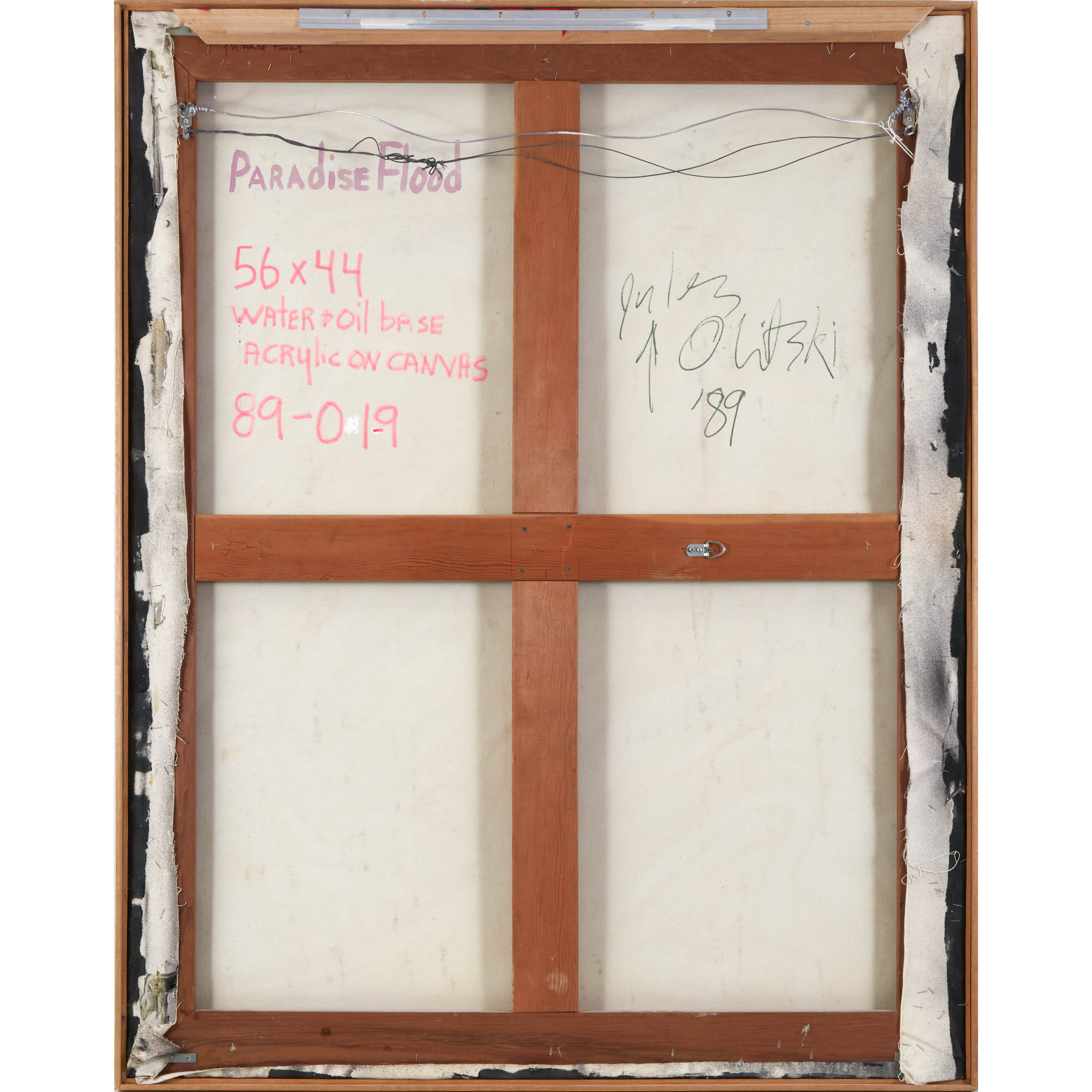
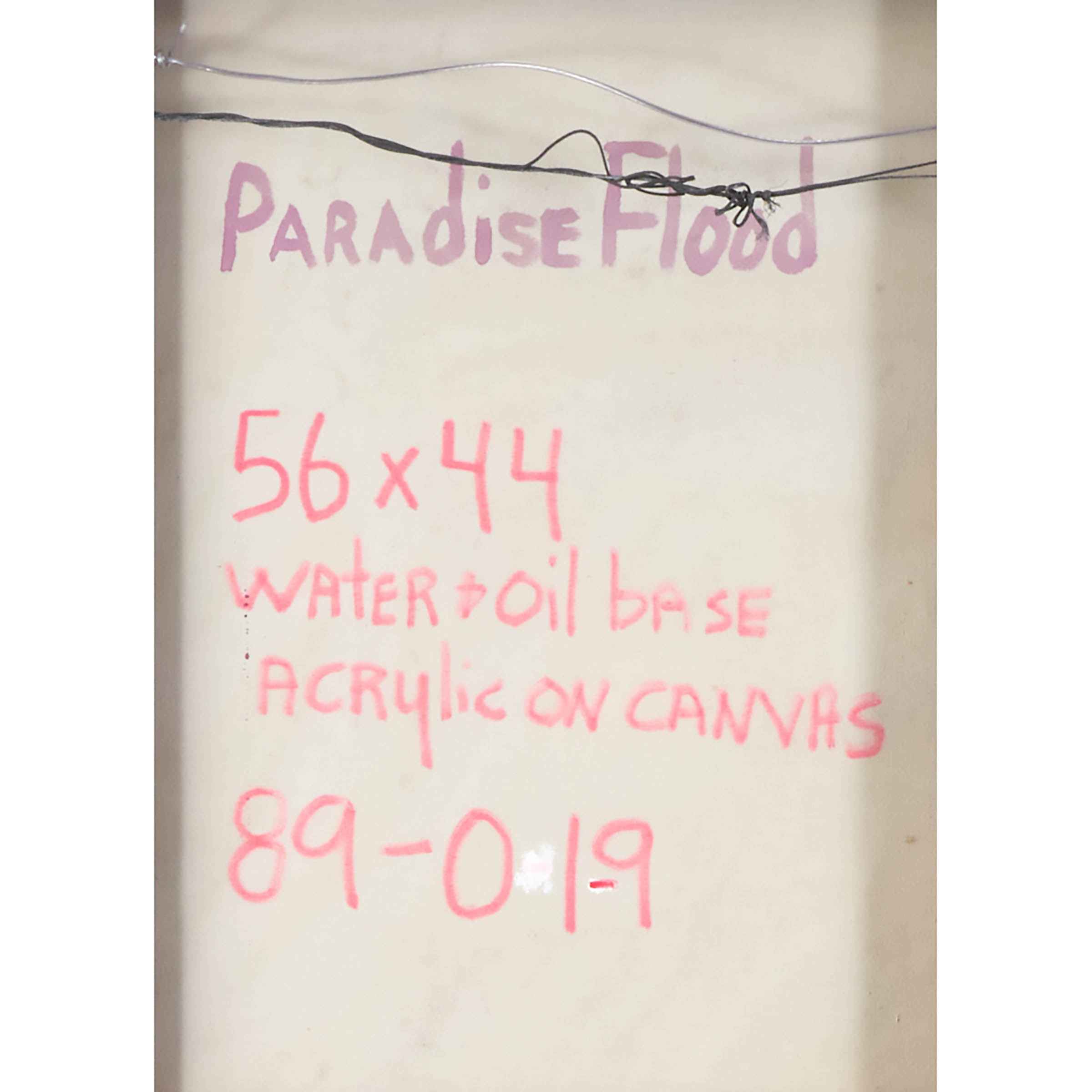
The 80s were indeed an era of experimentation with new media, with many of their discoveries pertaining to the artistic world, such as newly developed media, like the iridescent acrylic paint invented by Golden Artists Colors Inc., used by Olitski in this artwork. Paradise Flood, 1989, is part of this first wave of Mitt creations. After applying a large amount of material to the canvas, Olitski manipulated the paint using a rippling movement guided by the mitt's gesture. He finished Paradise Flood with a dark enamel spray, creating an additional layer of movement and shine atop the jewel tones which lay beneath. The light lingers upon the surface from the crest to the hollow parts of the composition, revealing new colours on some parts while welcoming shadows in others.
[1] Roberta Smith, The Great Beginning of Jules Olitski (Published 2021), New York Times, January 28, 2021, https://www.nytimes.com/2021/01/28/arts/design/jules-olitski-color-field-painter-yares-art.html
[2] Alex Grimley, Jules Olitski: The Mitt Paintings 1988–1993, Brooklyn Rail, October 24, 2024, https://www.yaresart.com/news/jules-olitski-the-mitt-paintings-1988-1993