


Lot 214
Thomassie Kudluk ᑐᒪᓯ ᑲᓚ (1910-1989)
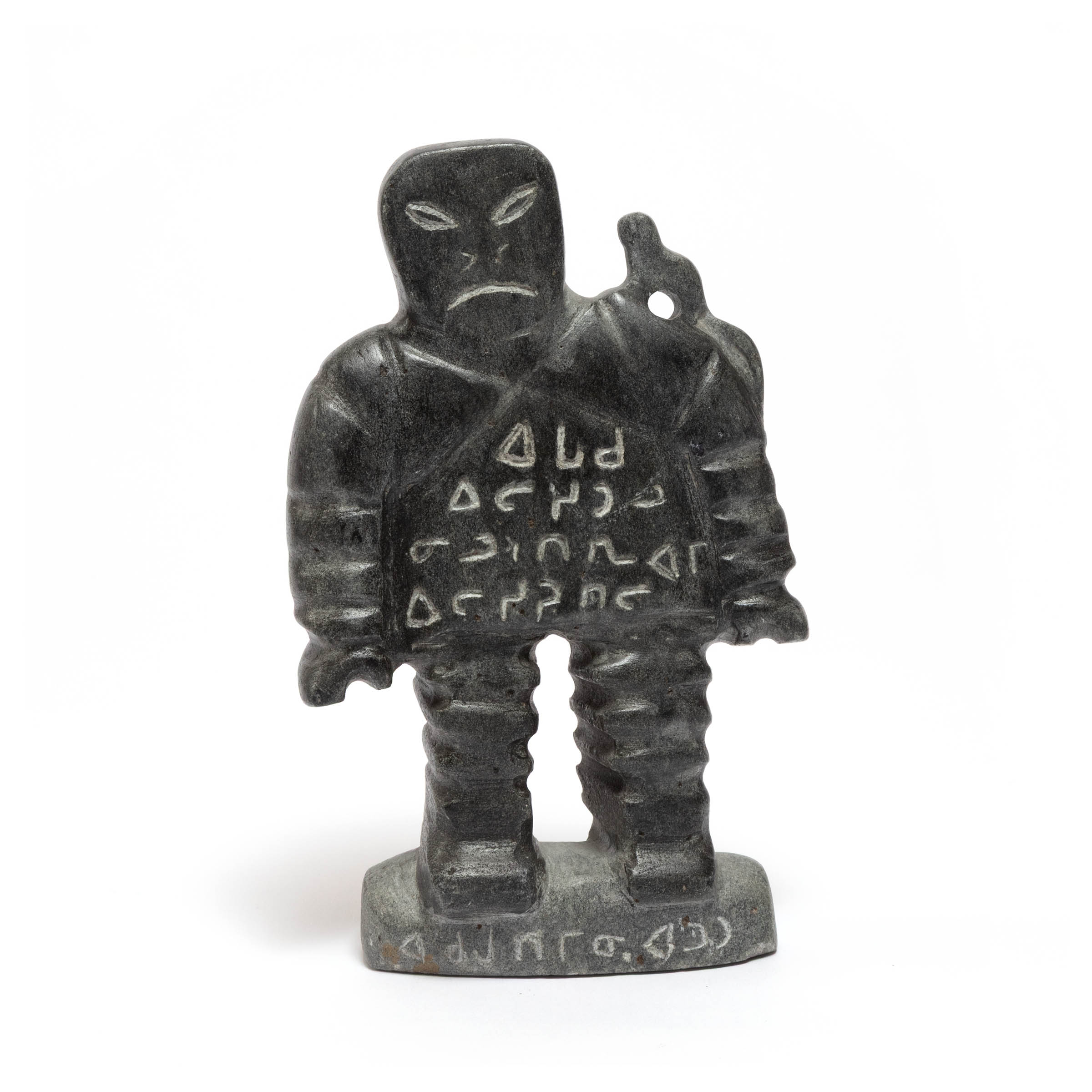
Lot 214 Details
Thomassie Kudluk ᑐᒪᓯ ᑲᓚ (1910-1989), Kangirsuk (Payne Bay)
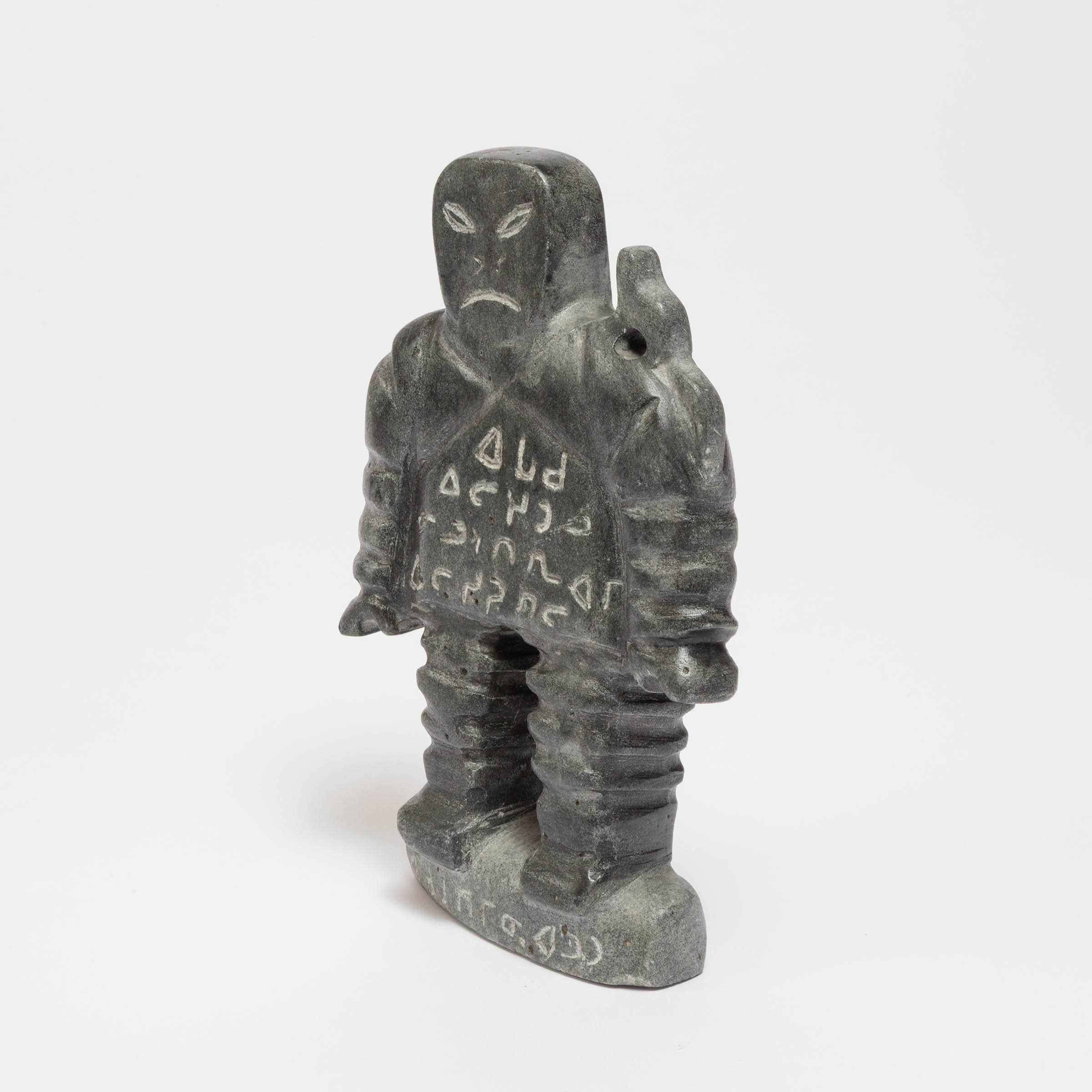
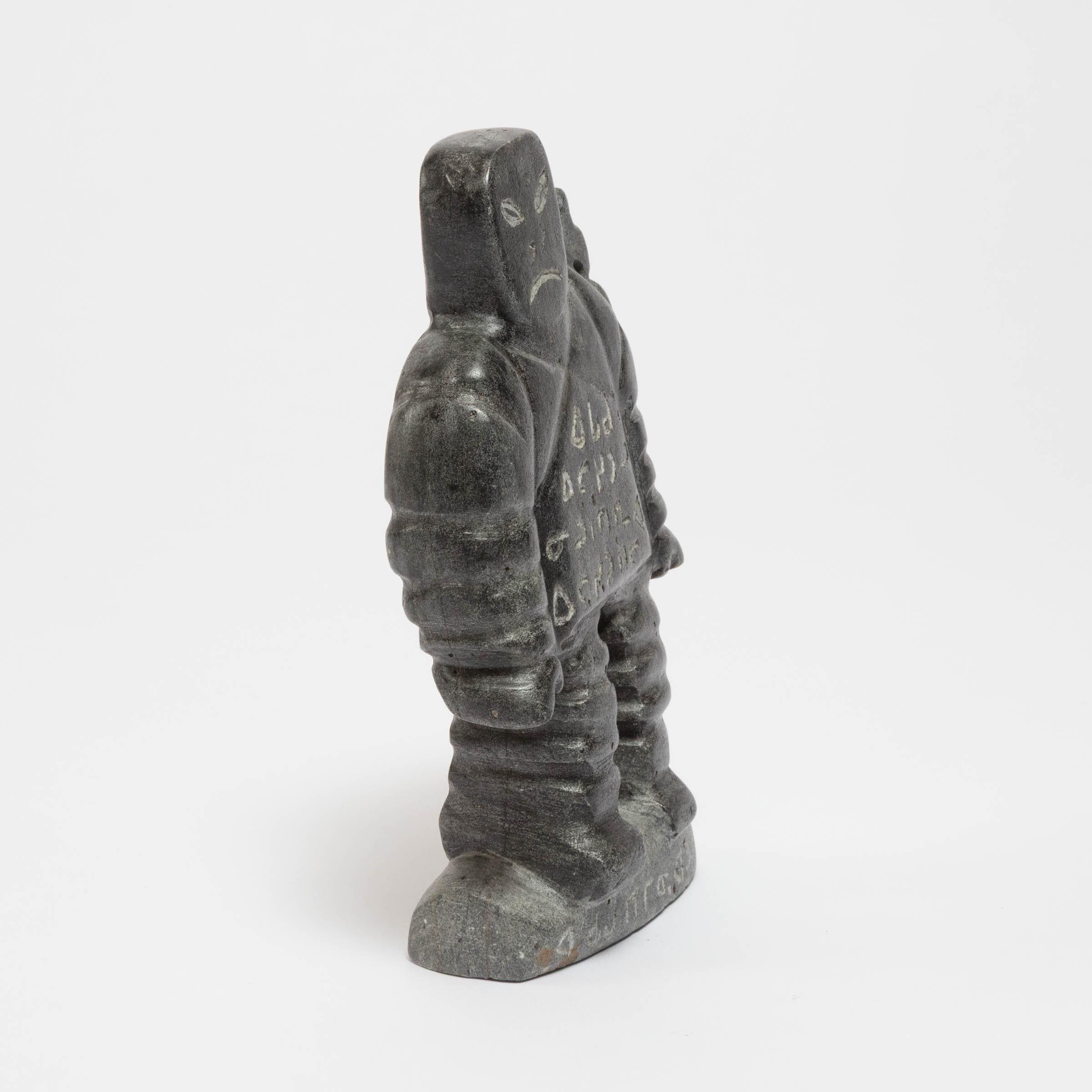
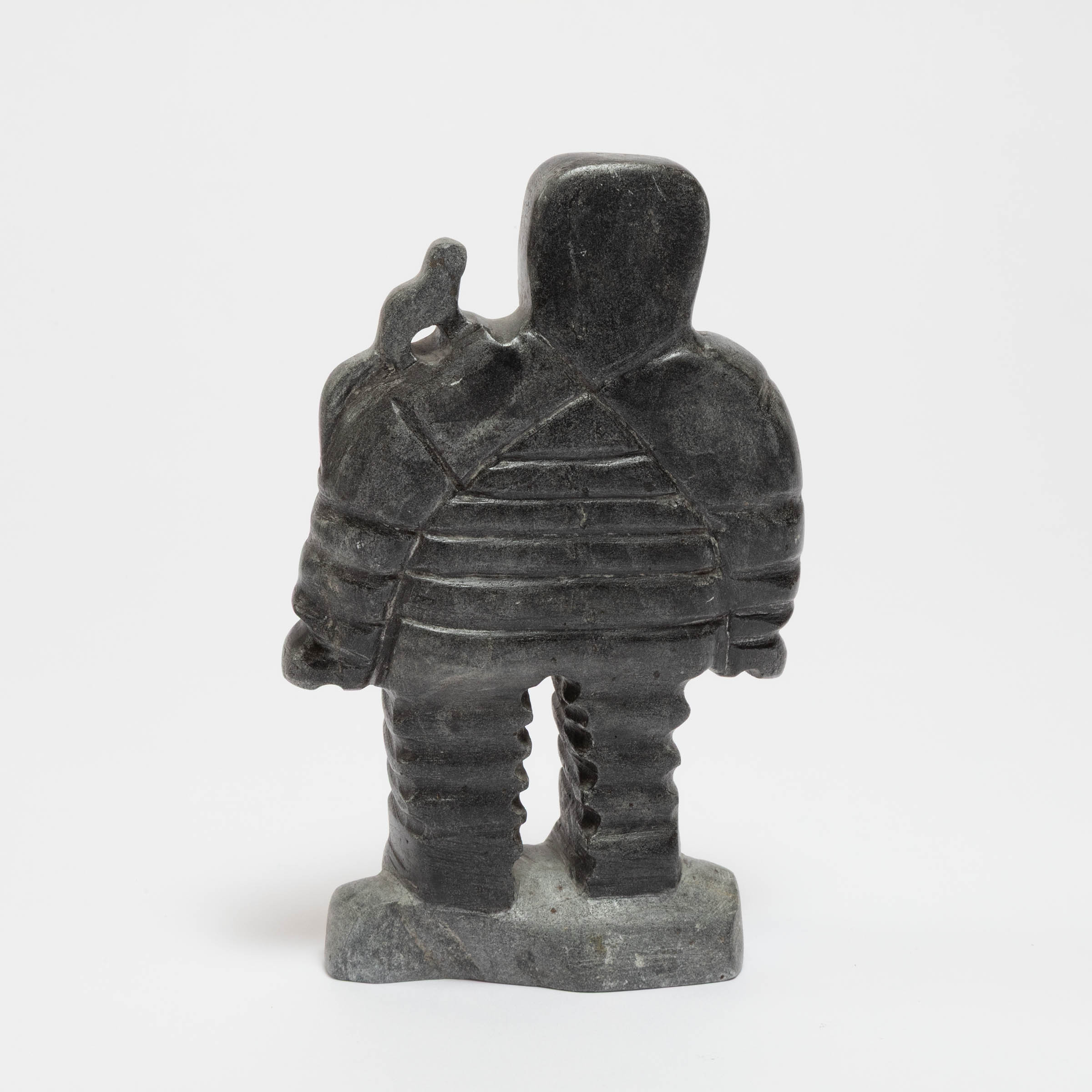
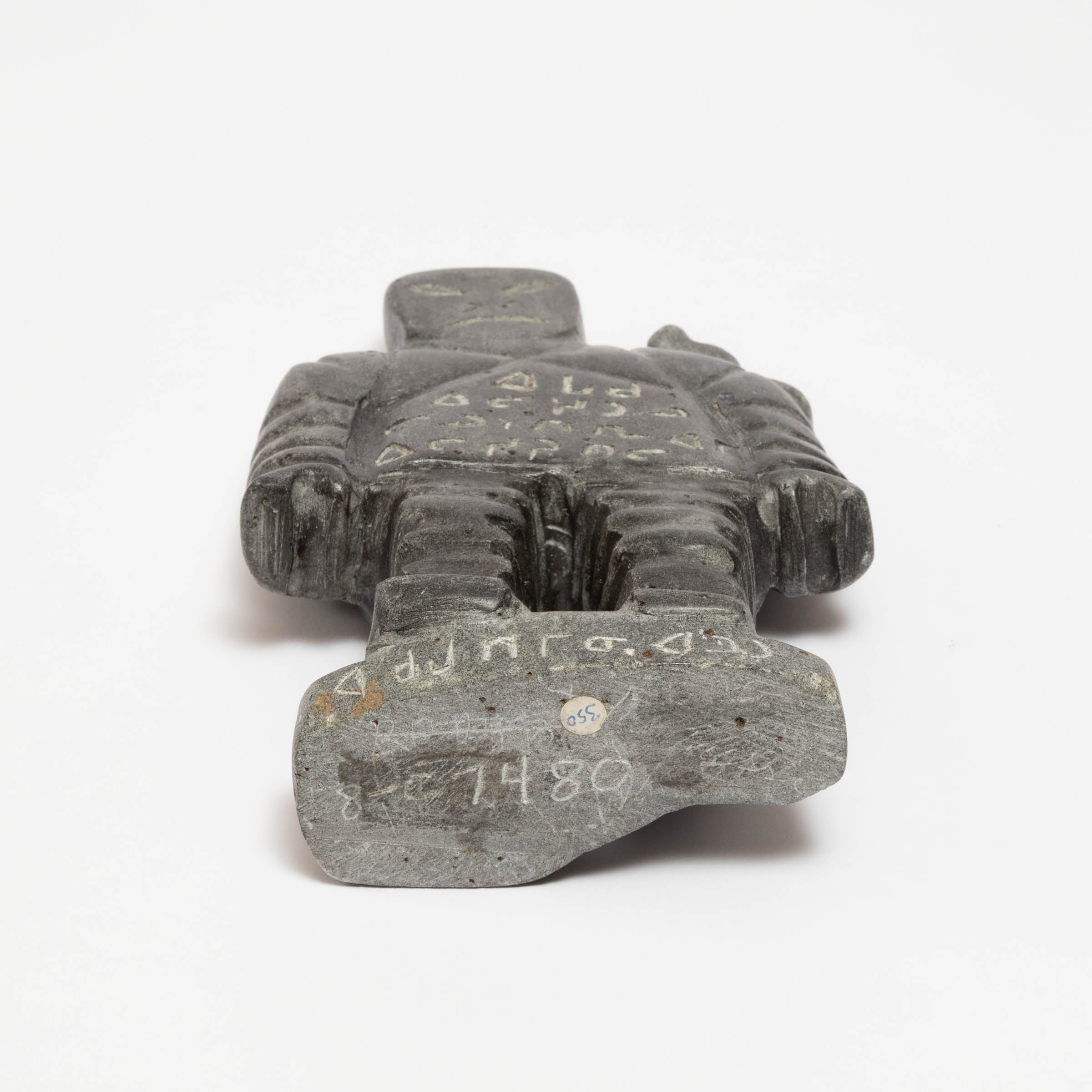
SHAMAN DOING BAD MAGIC WITH A WEASEL, WEARING SHAMAN CLOTHING, 1976
stone
signed indistinctly in Roman; accompanied by the original invoice from The Innuit Gallery of Eskimo Art
7.5 x 4.75 x 2 in — 19.1 x 12.1 x 5.1 cm
Estimate $700-$900
Additional Images
Provenance:
The Innuit Gallery of Eskimo Art, Toronto, ON, 23 Oct 1981
Collection of Dr. Norman Epstein, Toronto, ON
Exhibited:
Uumajut: Animal Imagery In Inuit Art, The Winnipeg Art Gallery, Winnipeg, MB, 24 Mar-22 May 1985
Note:
About the Collector
Shaman Doing Bad Magic with Weasel is one of over fifty exceptional works in the present auction from the lifetime collection of dedicated collector and influential advocate of Inuit art, Dr. Norman Epstein.
Among the first generation of passionate Canadian collectors of Inuit sculpture, Dr. Epstein acquired his first artwork from the Canadian Guild of Crafts Shop in Montreal in 1956. He would go on to purchase important Inuit artwork guided by pioneering figures in the Canadian art scene including Avrom Isaacs, Harold Seidelman, and M.F. (Budd) Feheley. Dr. Epstein however remained true to his own sensibilities and personal preferences, building a varied collection around themes such as mothers and children, miniature ivories, and depictions of bears. Notably his collection was almost solely composed of sculpture, preferring the medium's “tactility” and “spiritual warmth” over Inuit graphics.
Exhibiting artworks at his offices for the enjoyment of his patients, Dr. Epstein also actively lent to several provincial and national exhibitions. Part of a firm conviction for Dr. Epstein about the cultural value of his chosen collecting field, he stated plainly in a 1990 interview with Inuit Art Quarterly, “Inuit art is a Canadian heritage”.
By the 1990s, Dr. Epstein was making fewer changes to his collection. While often shared with the public, the collection was also deeply personal for him, treasured through its many iterations over 60 years. Dr. Epstein notes of his sculptures at the close of the article, “I love them so much, which may be a sickness for which there is no cure”.