


Lot 311
Unidentified Punuk Artist
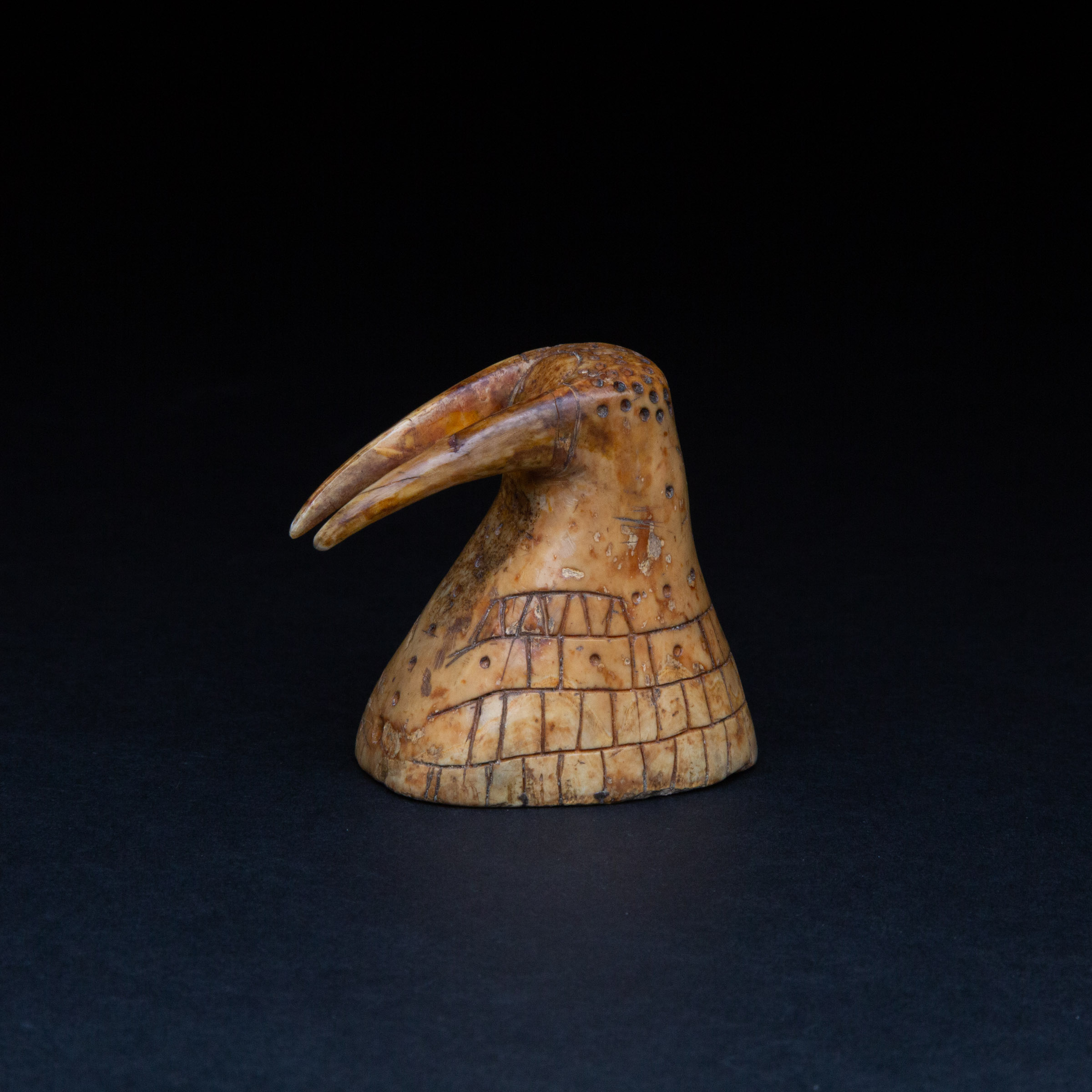
Lot 311 Details
Unidentified Punuk Artist, Ivetok (St. Lawrence Island)
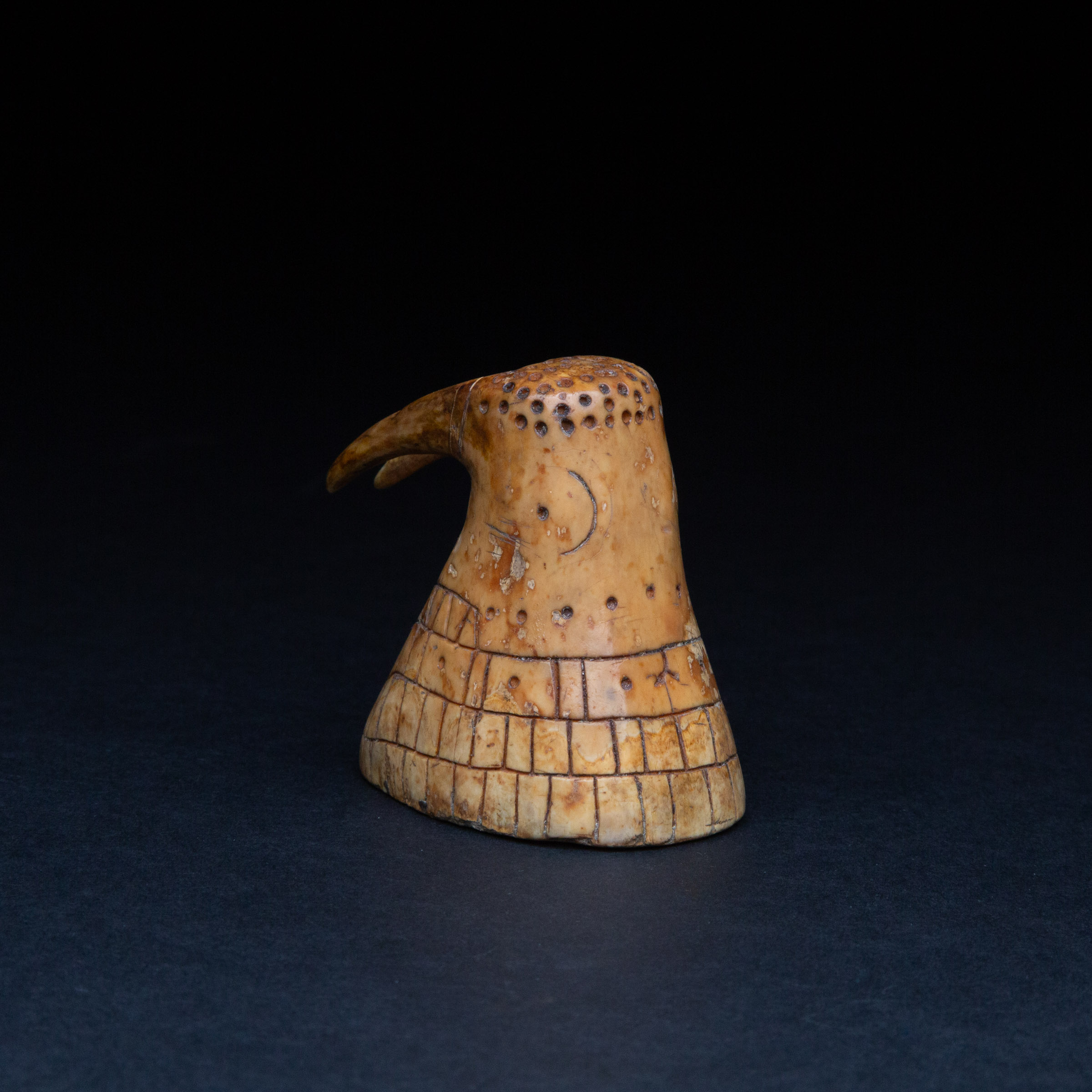
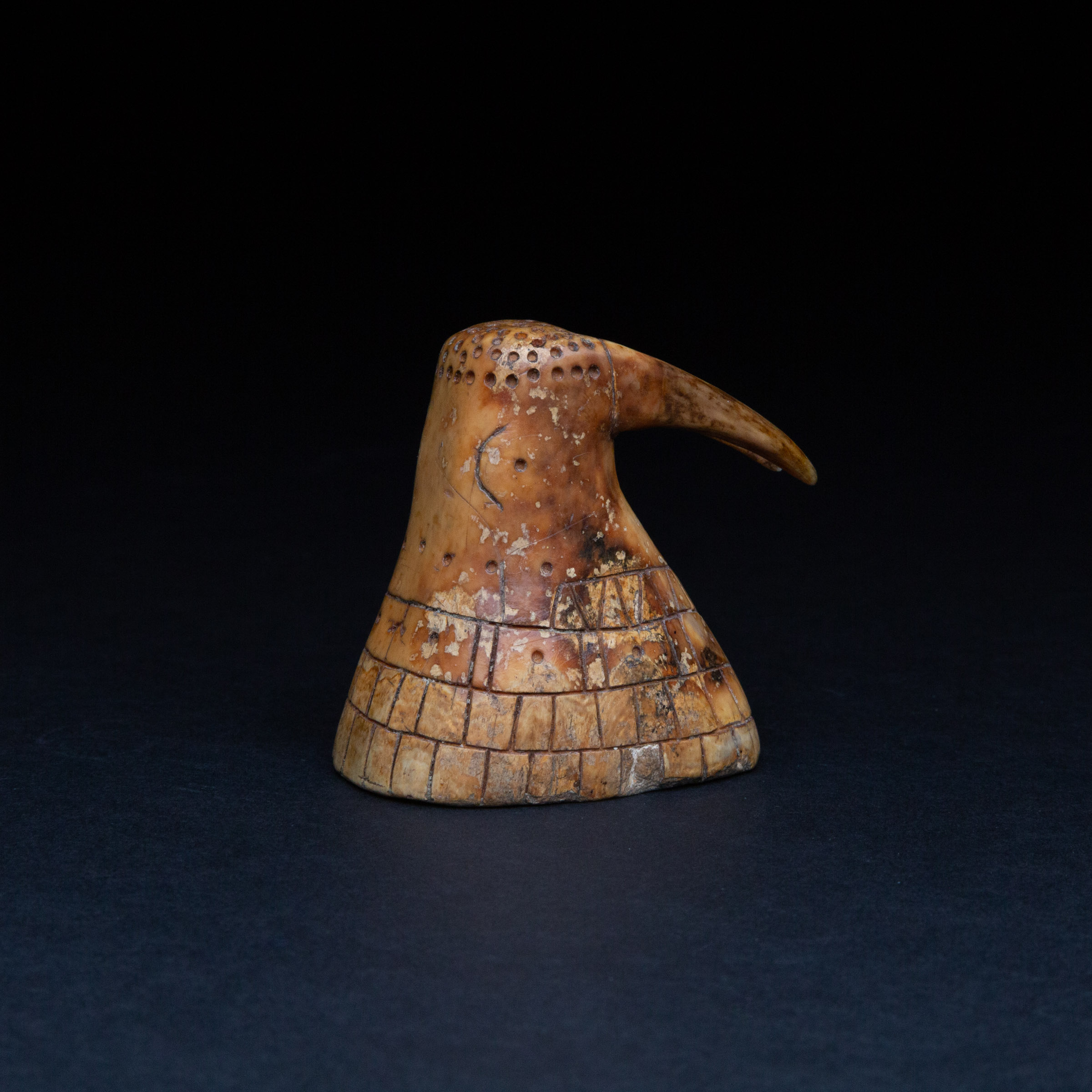
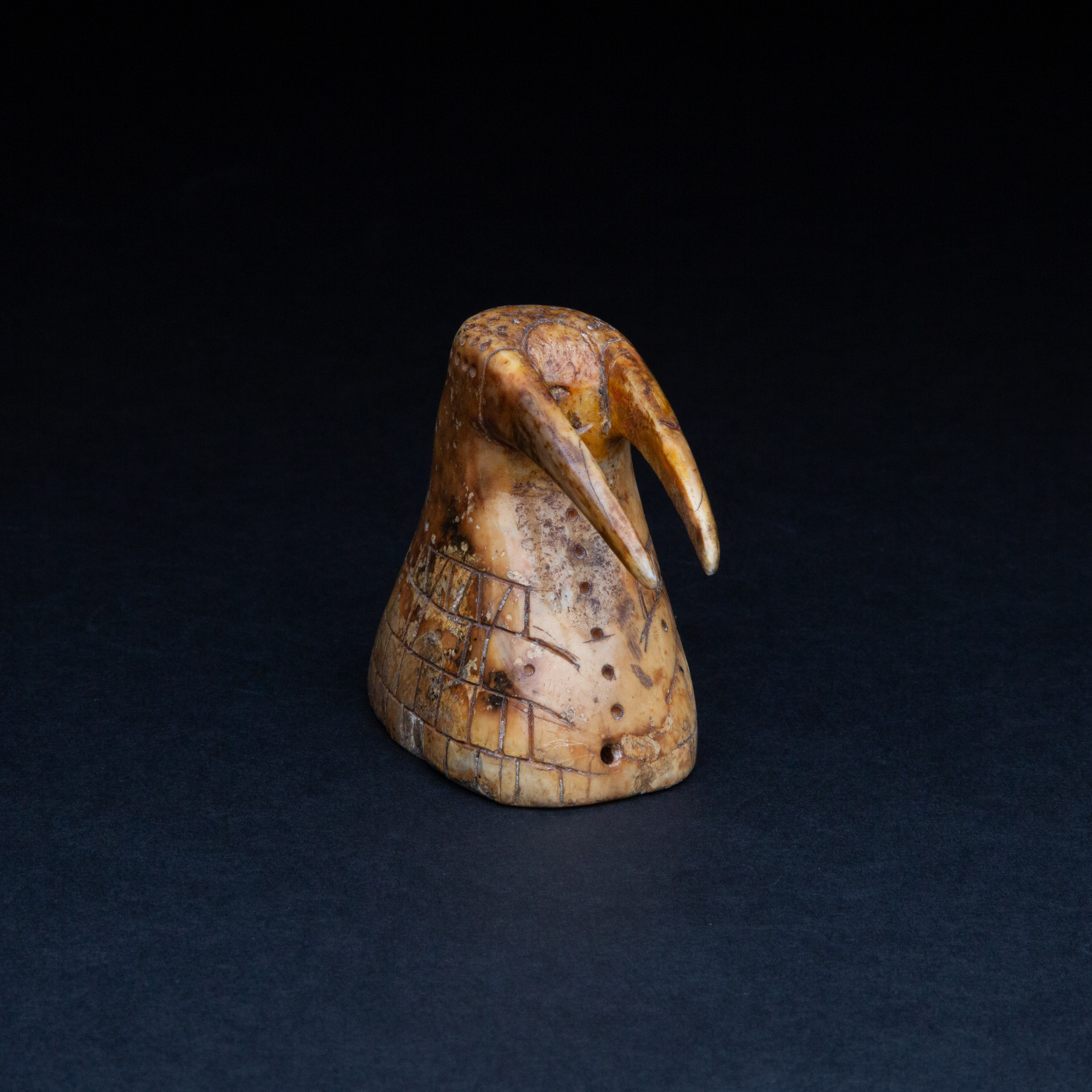
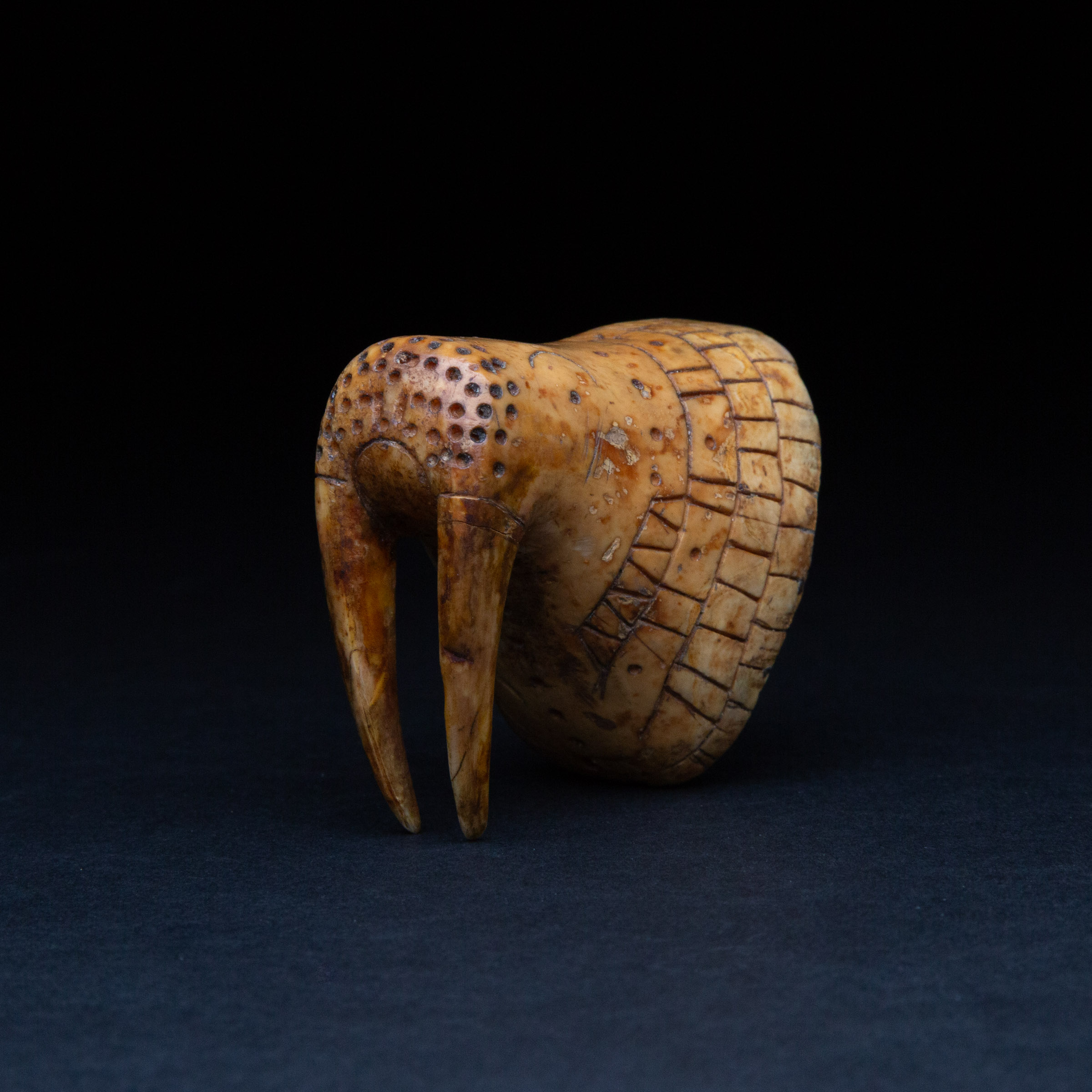
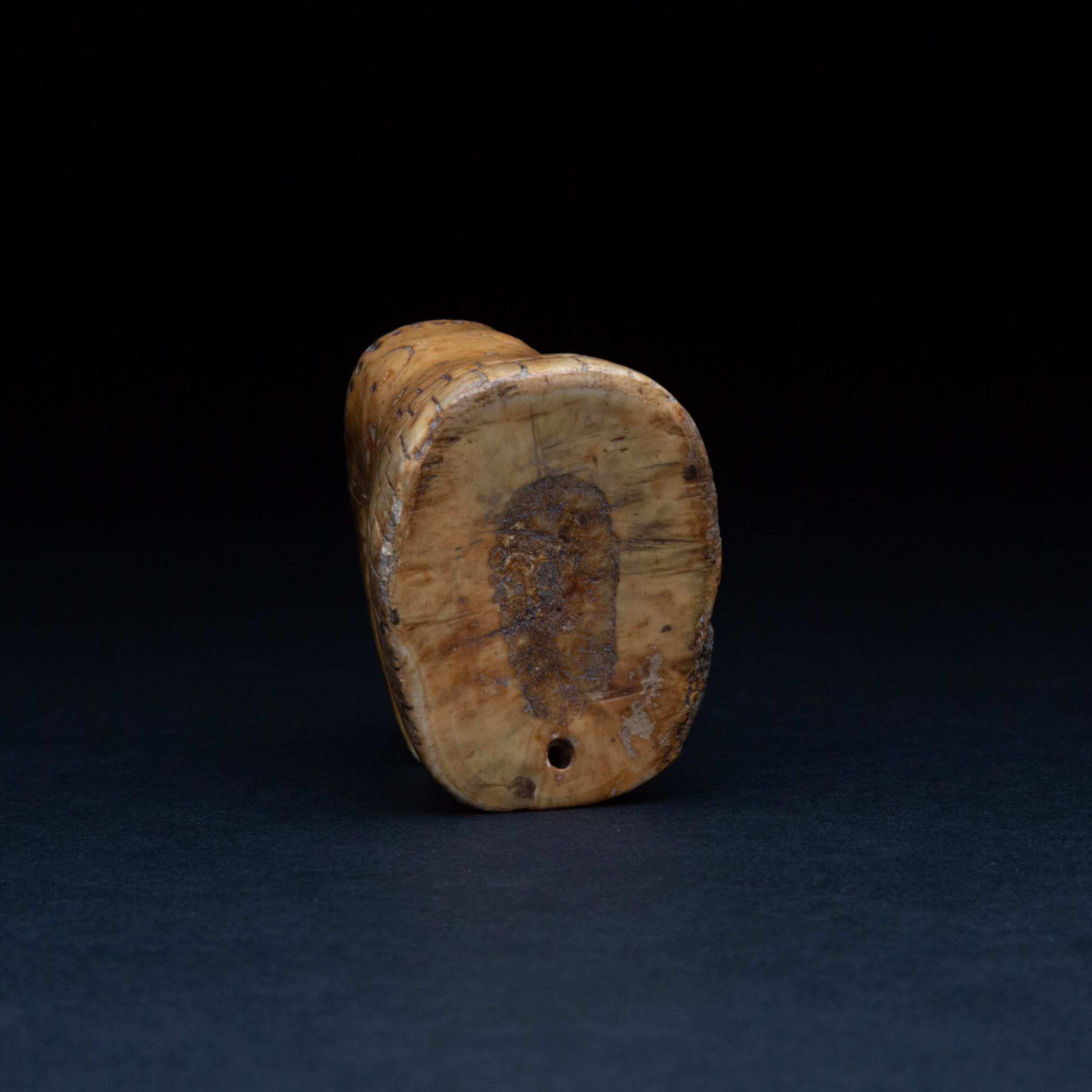
WALRUS HEAD, LATE PUNUK, CA. 1000 CE
ivory
accompanied by the original handwritten invoice from Jeffrey R. Myers Primitive Arts
2.5 x 2.75 x 1.75 in — 6.4 x 7 x 4.4 cm
Estimate $2,000-$3,000
Additional Images
Provenance:
Jeffrey R. Myers Primitive Arts, New York City, NY, 24 Mar 1988
Collection of Dr. Norman Epstein, Toronto, ON
Note:
The present carving likely dates to the Late Punuk period (approximately 1026 years ago). The Jeffrey R. Meyers invoice accompanying the present lot includes the following note:
An Eskimo carving of a walrus. This walrus effigy hunters amulet was executed in the Punuk period (1000 AD). It was excavated at the old village site of Ivetok, St. Lawrence Island, Alaska at a depth of approximately 8 feet.
In eleven years of observing digs, I’ve only seen five large carvings of walrus amulets, and this is one of the two best. It was probably used in a hunting boat by the striker to ensure a fine hunt.
The engraving is transitional Punuk, although the size of the object is more characteristic of the earlier OBS period. As a point of interest 90% of all St. Lawrence Island animal carvings are of seals and polar bears, with walrus the rarest form.
About the Collector
The present carving is one of over fifty exceptional works in this auction from the lifetime collection of dedicated collector and influential advocate of Inuit art, Dr. Norman Epstein.
Among the first generation of passionate Canadian collectors of Inuit sculpture, Dr. Epstein acquired his first artwork from the Canadian Guild of Crafts Shop in Montreal in 1956. He would go on to purchase important Inuit artwork guided by pioneering figures in the Canadian art scene including Avrom Isaacs, Harold Seidelman, and M.F. (Budd) Feheley. Dr. Epstein however remained true to his own sensibilities and personal preferences, building a varied collection around themes such as mothers and children, miniature ivories, and depictions of bears. Notably his collection was almost solely composed of sculpture, preferring the medium's “tactility” and “spiritual warmth” over Inuit graphics.
Exhibiting artworks at his offices for the enjoyment of his patients, Dr. Epstein also actively lent to several provincial and national exhibitions. Part of a firm conviction for Dr. Epstein about the cultural value of his chosen collecting field, he stated plainly in a 1990 interview with Inuit Art Quarterly, “Inuit art is a Canadian heritage”.
By the 1990s, Dr. Epstein was making fewer changes to his collection. While often shared with the public, the collection was also deeply personal for him, treasured through its many iterations over 60 years. Dr. Epstein notes of his sculptures at the close of the article, “I love them so much, which may be a sickness for which there is no cure”.