


Lot 1
Mark Spence (Kwin Kwoyah) (1878-1945), Haida
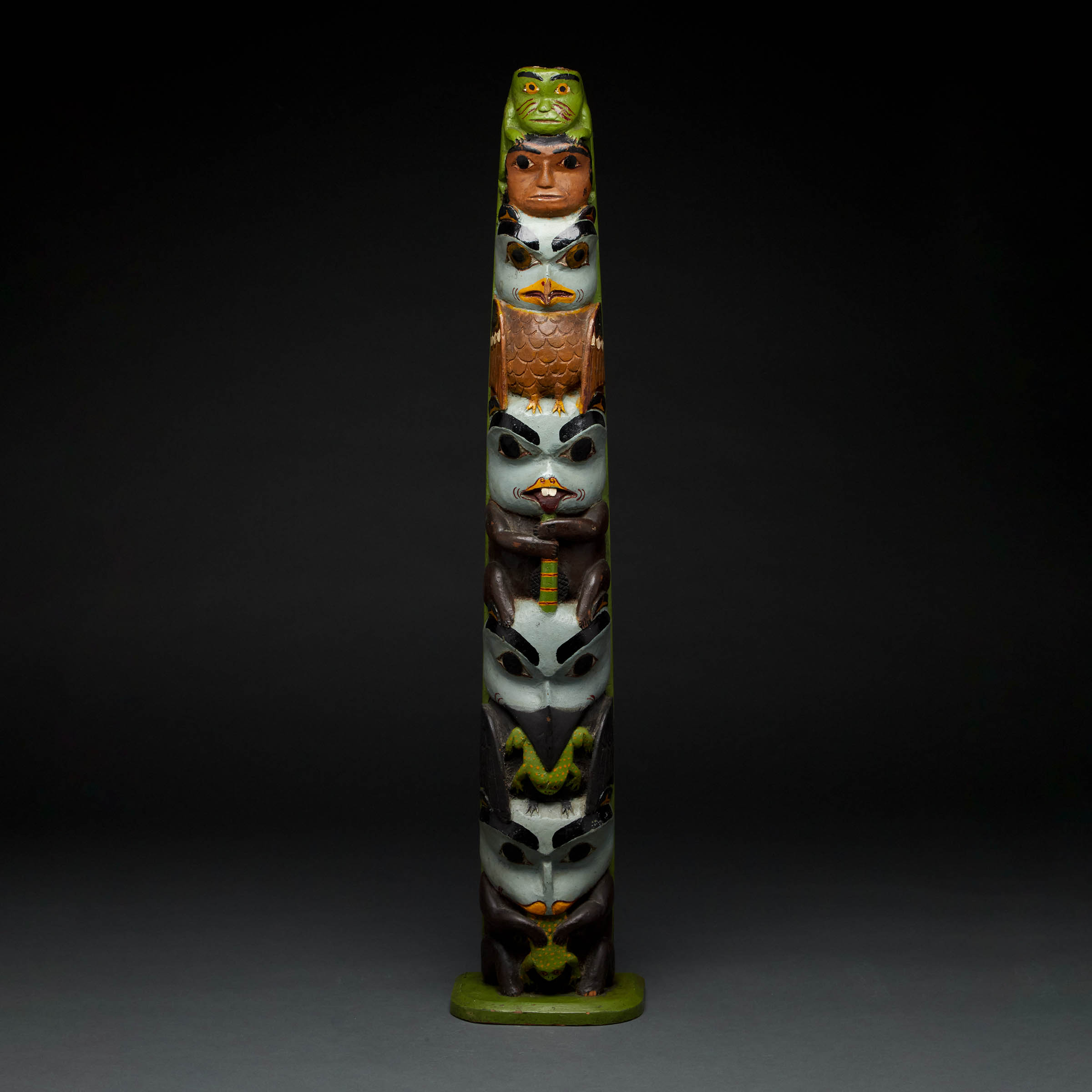
Lot 1 Details
Mark Spence (Kwin Kwoyah) (1878-1945), Haida
MODEL TOTEM POLE
wood, paint
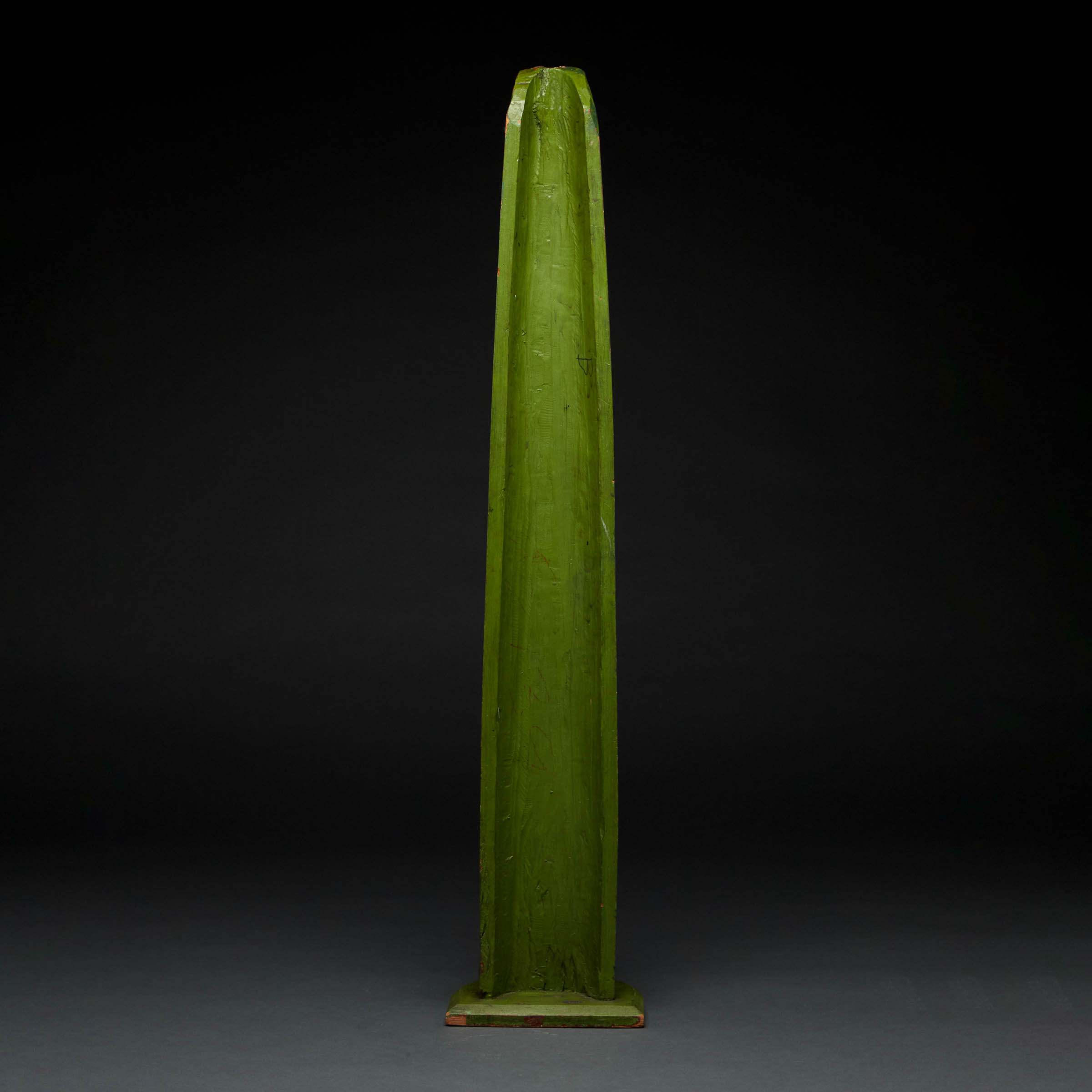
unsigned; indistinct grease pencil inscription verso, including the letter "B"; "B1898 / #70" inscribed in grease pencil to underside
34.25 x 7.25 x 5.5 in — 87 x 18.4 x 14 cm
Estimate $10,000-$15,000
Additional Images
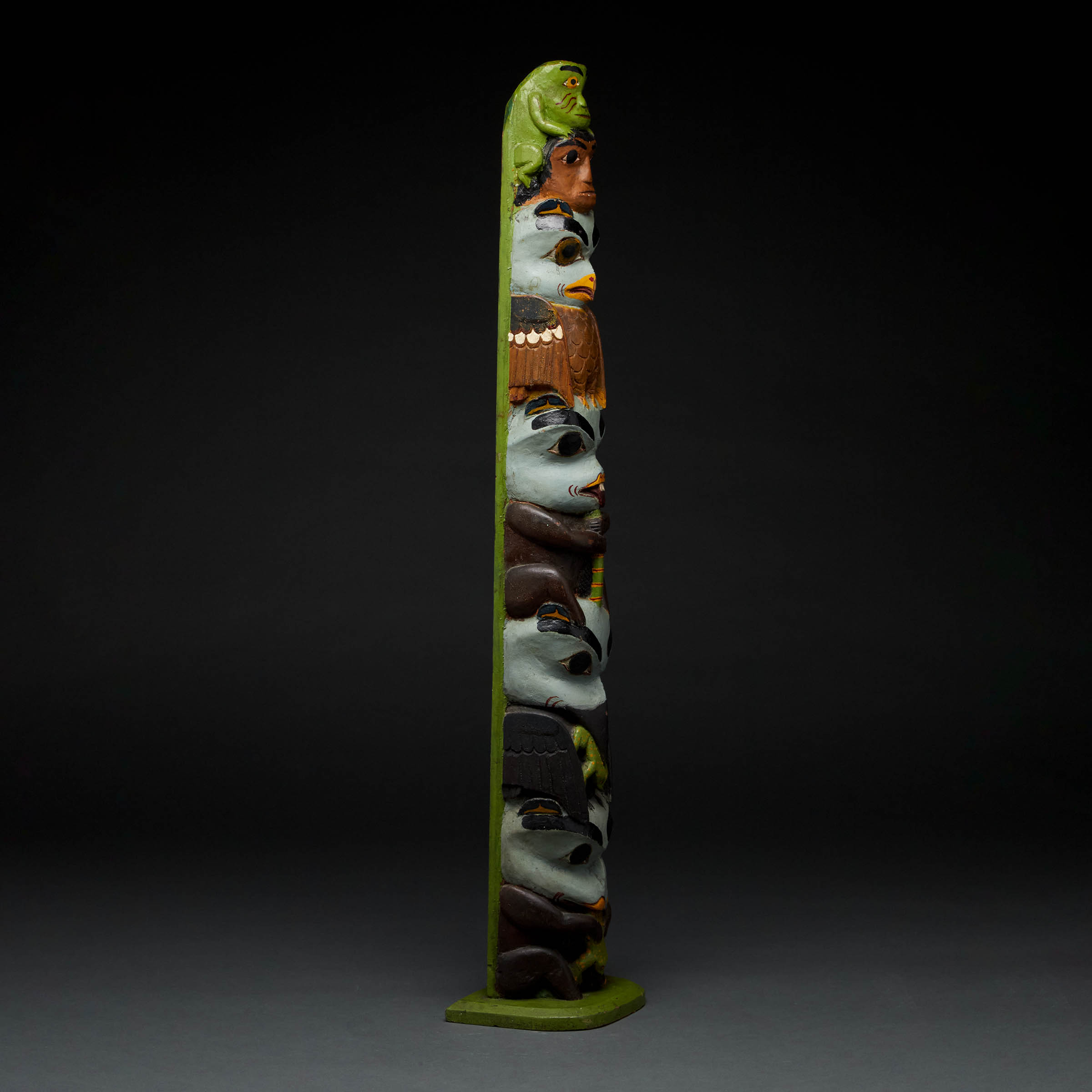
Provenance:
Private Collection, New York, USA
Note:
One of the most distinctive Haida artists of the first quarter of the 20th century, little information is readily available about Mark Spence. The artist's carving style, painted embellishments, and unusual colour pallet have often led to his work being incorrectly identified as that of 20th century Tsimshian carvers, whose style exhibits a greater affinity with Spence's work than that of his fellow Haida artists.
Born in New Massit (New Masset, BC) in the town of Stlinglennos, or "way up inlet", his Haida name was Kwin Kwoyah, or "Wealthy nose", derived from the fact that his ancestors were heavily tattooed across the bridge of the nose—an indication of great wealth.
At a young age Spence listened to his father speaking with Haida master carver Charles Edenshaw, and was determined to follow in his footsteps, carving both monumental and model totem poles. Notably many of Spence's remarkable carvings were made during prolonged residence at the Crease Clinic at Essondale mental hospital, in Coquitlam, BC, and at the Provincial Mental Hospital located in Colquitz, near Victoria, BC.
Mildred Valley Thornton, Potlatch People: Indian Lives and Legends of British Columbia (Surrey: Hancock House Publishers, 2003), 74-75.
The present lot is one of six model totem poles in the current auction from an important upstate New York collection. Poles in this collection are united by their rarity, large scale, age, and original unrestored surfaces.
The collection was acquired privately from collectors and dealers over thirty years of focused pursuit. Acquisitions were driven by a passion for hand made objects and their connection to the land, a life-long interest in First Nations traditions, and meaningful ties of friendship and family the collector has with Canada. The six exceptional model totem poles in the collection represent a meaningful cross-section of the golden age of wooden model totem pole carving in the late 19th and early 20th centuries.