


Lot 183
Kwon Young-Woo (1926-2013)
Additional Images
Provenance:
S.P. Family Collection, Toronto, ON
Note:
Kwon Young-Woo balances tradition and modernism in his expressive works on paper. Using kanji, Korean mulberry paper as the basis of his practice, Kwon’s work focuses on materiality and the medium’s connection to Korean culture and history. A member of the first class to graduate from Seoul National University in Fine Arts in 1951, Kwon gained recognition in the 1960s as he began exhibiting works in the Dansaekhwa style, also referred to as the Korean monochrome movement.
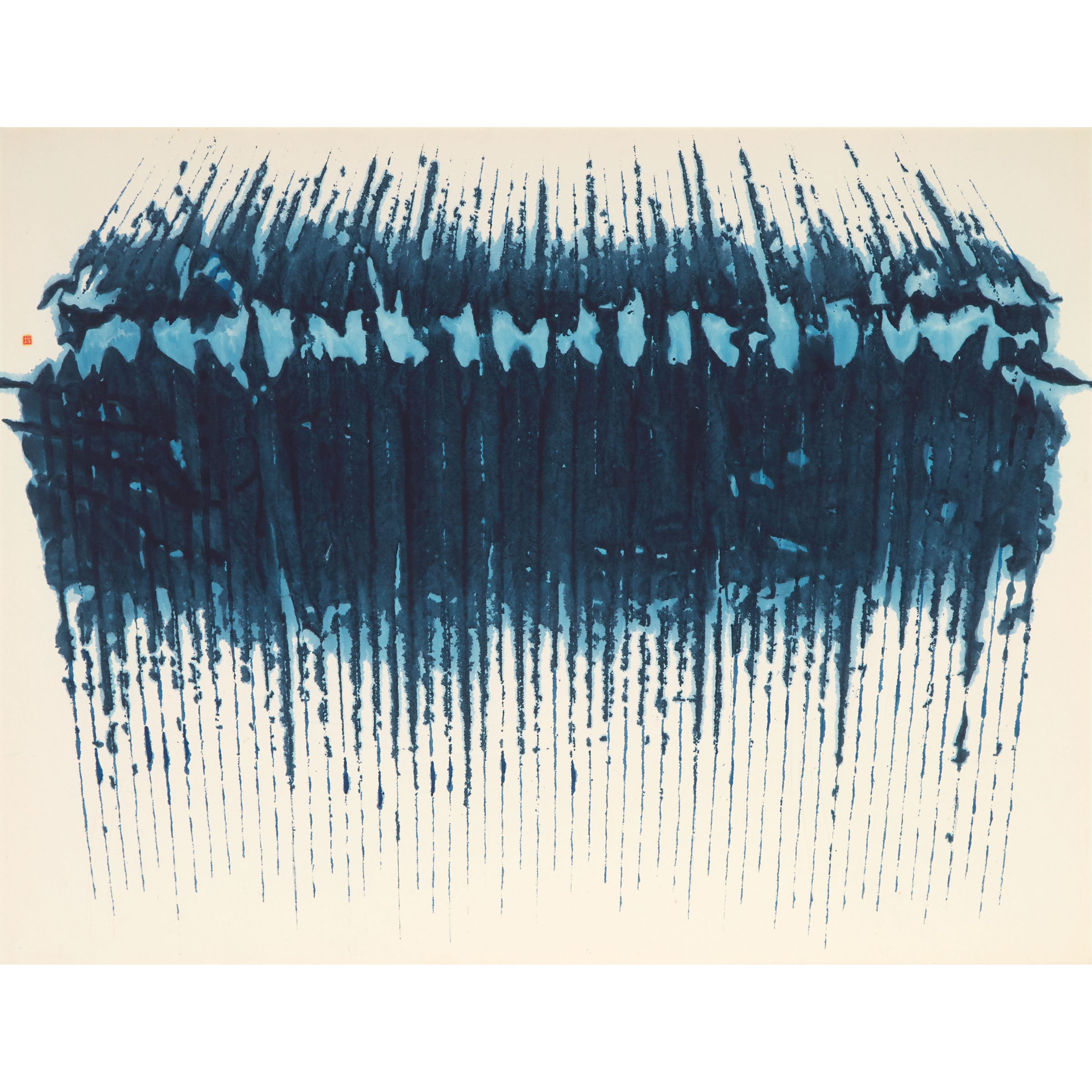
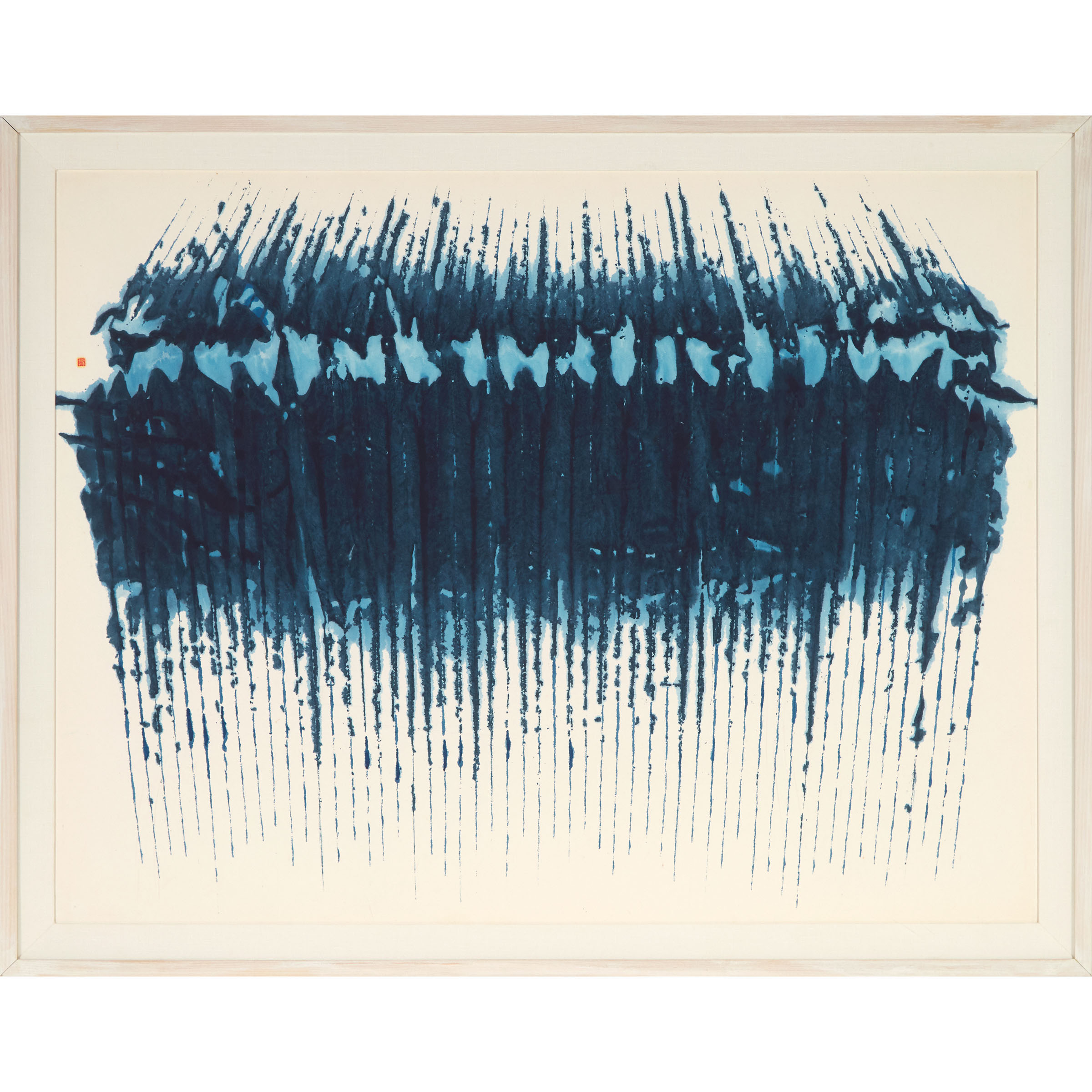
Kwon’s monochromatic works, such as Untitled, ca. 1980, primarily use ink, further recalling the historied calligraphy practice in Korean and Asian art. The monochromatic inks absorb and amplify the imperfections of the paper, thus creating a three-dimensionality that can be likened to scarring, a visceral concept for many Koreans who recently experienced the horrors of the Korean War (1950-1953) and the resulting splintering of cultural identity. As writer and Professor of Critical Studies, John Yau, notes, “It seems to me that Young-Woo wounds the paper, as well as registers both its durability and its irreparable damage. The cuts cannot be “healed” without scarring. When pale blue ink bleeds through the mulberry paper, around a puncture, the association with wounds is deepened. In some of the works it is hard not to connect the paper to the human body, the blank surface on which the everyday world has left its mark.”[1] This thread would run throughout his career and in his later works; Kwon would further manipulate the medium by cutting and removing sections of the paper - going beyond the physical damage of trauma and referencing the sometimes irreparable damage to the psyche.
In Untitled, ca. 1980, the viewer can map the gentle creasing of the paper throughout the work highlighting the delicate, corporal nature of kanji. The organic character of the medium is further enhanced by Kwon’s careful application of indigo, creating the ideal environment for the ink to follow the peaks and valleys of the paper - ultimately delineating the life cycle or experience of a culture and material.
[1] John Yau, Abstractions That Record the Scars of Trauma, Hyperallergic, 19 April 2022, https://hyperallergic.com/724214/abstractions-that-record-the-scars-of-trauma/