



Karoo Ashevak ᑲᔪ ᐊᓴᕙ (1940-1974)
DRUM DANCER, CA. 1973
signed in syllabics; accompanied by the original The Spirit of the Land exhibition catalogue from Koffler Gallery; also accompanied by the original invoice from Inuit Gallery of Vancouver
19.75 x 12.5 x 10.5 in — 50.2 x 31.8 x 26.7 cm
May 28, 2026
Estimate $50,000-$70,000
Realised: $104,450
One of the most distinctive talents in circumpolar art, Karoo Ashevak’s body of work has had an outsized impact for a career that lasted only five years. His untimely death in a fire at the age of 34 brought an abrupt end to a surge of creative output that continues to draw interest and admiration from both Canadian and international art collectors.
Born in the Canadian high north of Taloyoak (Spence Bay), Karoo developed a style that fused his unique vision of dreams, spirituality, and shamanism with the distinctive raw material available to him in Taloyoak. Karoo chose the material for his sculptures carefully. The artist benefited from a relative abundance of time-cured whalebone left in deposits on the land by 19th century whalers, and also in ancient middens and dwelling sites long pre-dating Europeans arrival in the Arctic.[1]
A work of exceptional balance and proportion, Drum Dancer is among the great sculptures by Karoo. The arching body of the figure captured in the confines of the whalebone evokes the swaying motion of the dancer. The face of the figure is realized with exceptional clarity distinctive to a handful of works from Karoo’s mature period. Drum Dander epitomizes the wild and exuberant presence so associated with Karoo’s creations, and for which the artist himself is remembered by those who knew him. [2]
Acquired by dedicated collector and influential advocate of Inuit art Dr. Norman Epstein, in 1983 from the Inuit Gallery of Vancouver, Drum Dancer was from the outset a key work in his important collection. Although Dr. Epstein owned at least four sculptures by Karoo over his more than sixty years collecting, Drum Dancer was the one work by the artist which Dr. Epstein kept close since its initial acquisition. An exception was made only in 1986, when the work was lent for the small but influential Inuit art exhibition at the Koffler Gallery, Toronto, The Spirit of the Land. Drum Dancer was published on the cover of the catalogue for the exhibition.
[1] Pamela Harris, Karoo Ashevak Spirits (New York: American Indian Arts Center, 1973), unpaged.
[2] Ibid; Jean Blodgett, Karoo Ashevak (Winnipeg: The Winnipeg Art Gallery, 1977), unpaged; Personal correspondence of the author with former residents of Taloyoak
About the Collector
Among the first generation of passionate Canadian collectors of Inuit sculpture, Dr. Norman Epstein acquired his first artwork from the Canadian Guild of Crafts Shop in Montreal in 1956. He would go on to purchase important Inuit artwork guided by pioneering figures in the Canadian art scene including Avrom Isaacs, Harold Seidelman, and M.F. (Budd) Feheley. Dr. Epstein however remained true to his own sensibilities and personal preferences, building a varied collection around themes such as mothers and children, miniature ivories, and depictions of bears. Notably his collection was almost solely composed of sculpture, preferring the medium’s “tactility” and “spiritual warmth” over Inuit graphics.
Exhibiting artworks at his offices for the enjoyment of his patients, Dr. Epstein also actively lent to several provincial and national exhibitions. Part of a firm conviction for Dr. Epstein about the cultural value of his chosen collecting field, he stated plainly in a 1990 interview with Inuit Art Quarterly, “Inuit art is a Canadian heritage”.
By the 1990s, Dr. Epstein was making fewer changes to his collection. While often shared with the public, the collection was also deeply personal for him, treasured through its many iterations over 60 years. Dr. Epstein notes of his sculptures at the close of the article, “I love them so much, which may be a sickness for which there is no cure”.
Related Items
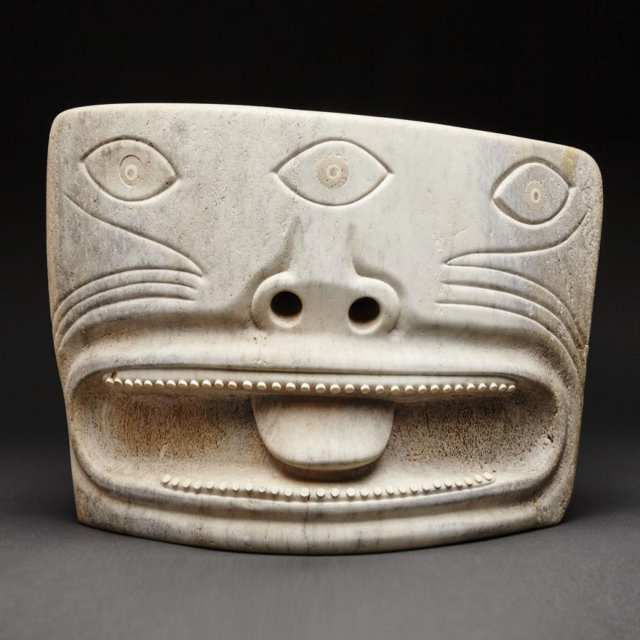
KAROO ASHEVAK (1940-1974)
SPIRIT FACES (TOOTH PULL)
14" x 19" x 6" — 35.6 x 48.3 x 15.2 cm.
November 22, 2016
Estimate $35,000-$45,000
Realised: $132,000
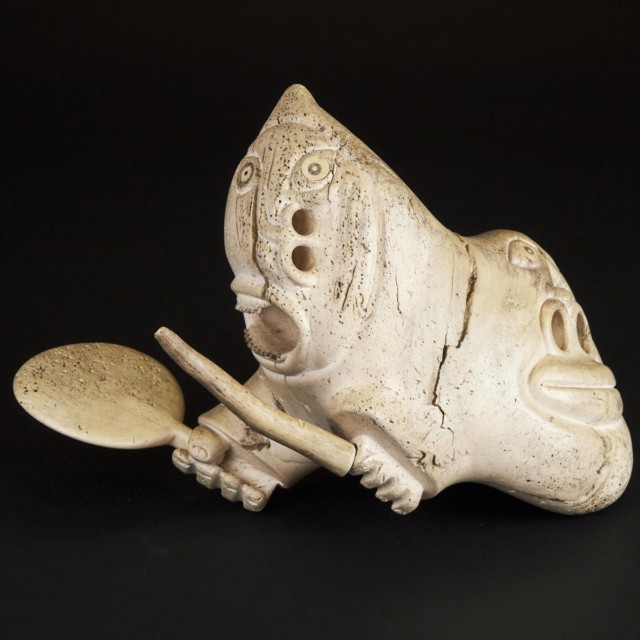
Karoo Ashevak ᑲᕈ ᐊᓴᕙ (1940-1974)
DRUM DANCE, CIRCA 1974
signed in syllabics; accompanied by: original invoice and receipt from Maynard’s Auctioneers; original gallery tombstones; a “Canada Eskimo Art” tag inscribed “Karoo Ashevak / Spence Bay / 225 / Spirit”
12 x 10 x 16 in — 30.5 x 25.4 x 40.6 cm
November 30, 2023
Estimate $30,000-$50,000
Realised: $34,350
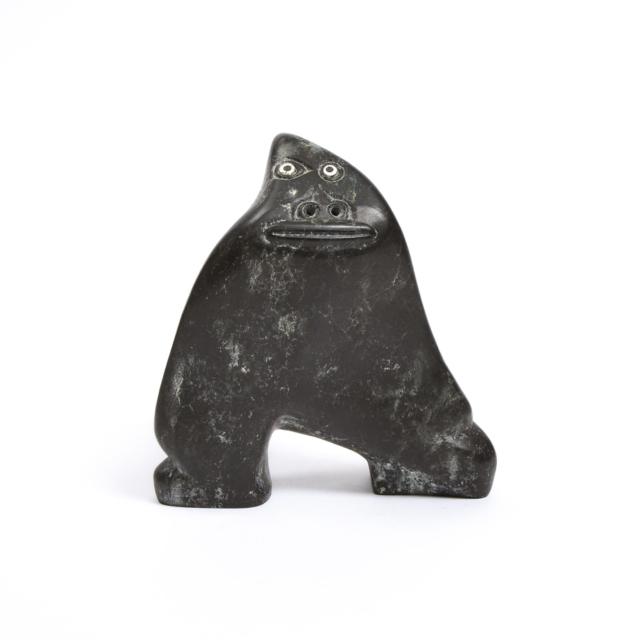
Karoo Ashevak ᑲᕈ ᐊᓴᕙ (1940-1974)
SPIRIT, CA. 1974
signed in syllabics; accompanied by "Canadian Eskimo Art" tag inscribed "Ashevak / Spence Bay /Spirit"
7.75 x 7 x 3.75 in — 20.3 x 17.8 x 9.5 cm
December 02, 2022
Estimate $10,000-$15,000
Realised: $33,600
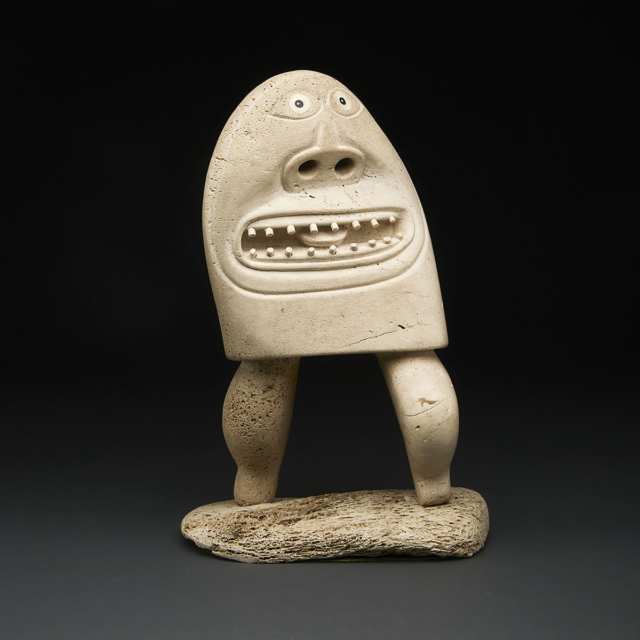
KAROO ASHEVAK (1940-1974)
SHAMAN WITH OPPOSING FACES
c. 1973
15 x 10 x 7 in — 40.6 x 25.4 x 19.1 cm
May 29, 2018
Estimate $30,000-$40,000
Realised: $90,000
Inuit, First Nations & Métis Art
Waddington’s is internationally recognized as one of the leading authorities in the sale of Inuit and First Nations art. No other auction house has been as intrinsically linked to the development of the market for art by Canada's Indigenous people. From our first landmark auction in 1978 of the William Eccles Collection to our development of the free online resource Katilvik in 2006, Waddington’s has offered thousands of works, set record prices, and helped to build a robust international market.
Meet the Specialist
Duncan McLean
President, Senior Specialist
Palmer Jarvis
Senior Specialist

Elizabeth Gagnon
Consignment Specialist