


Lot 3
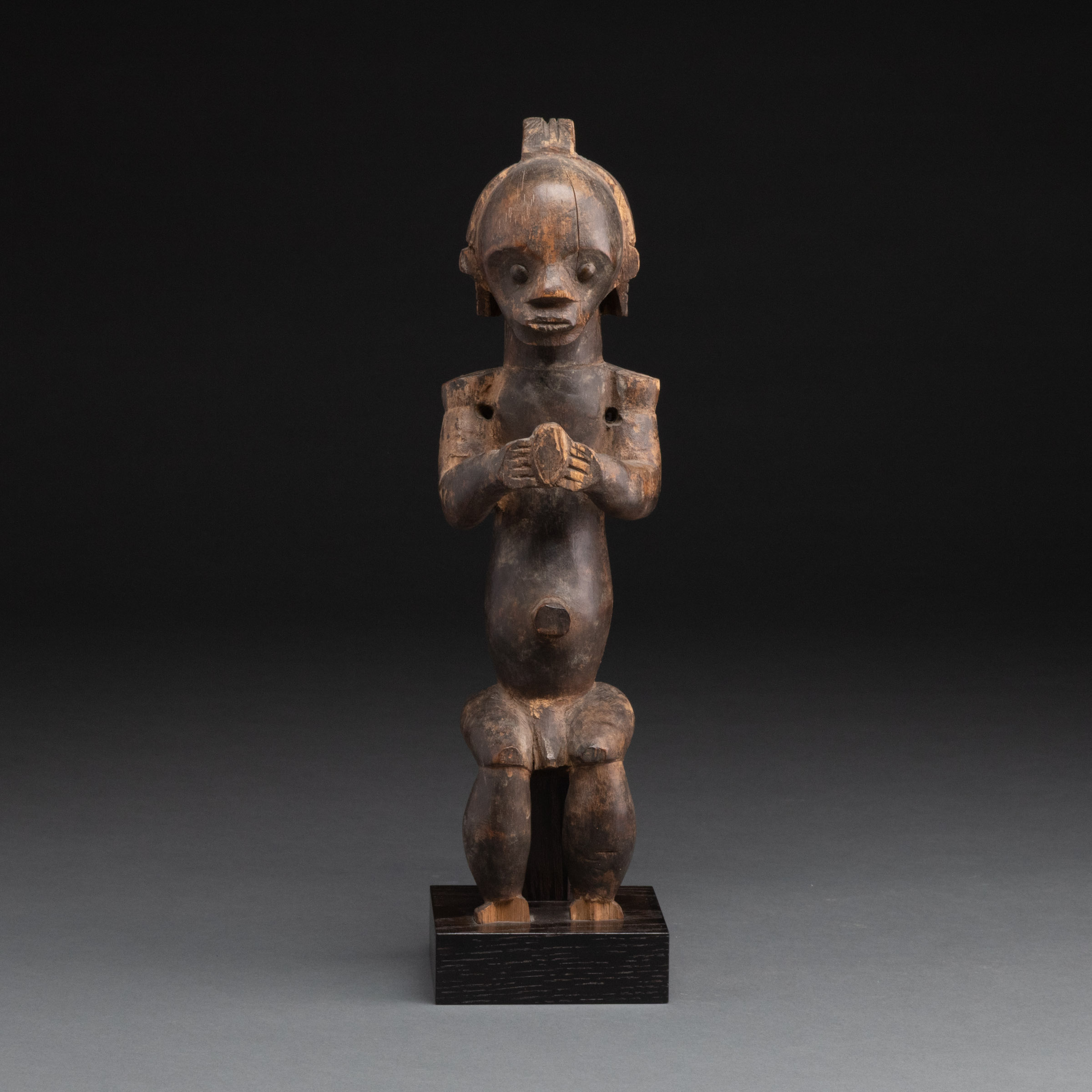
Fang Male Eyema Byeri (Reliquary) Figure, Gabon, Central Africa, 19th/early 20th century
Lot 3 Details
Fang Male Eyema Byeri (Reliquary) Figure, Gabon, Central Africa, 19th/early 20th century
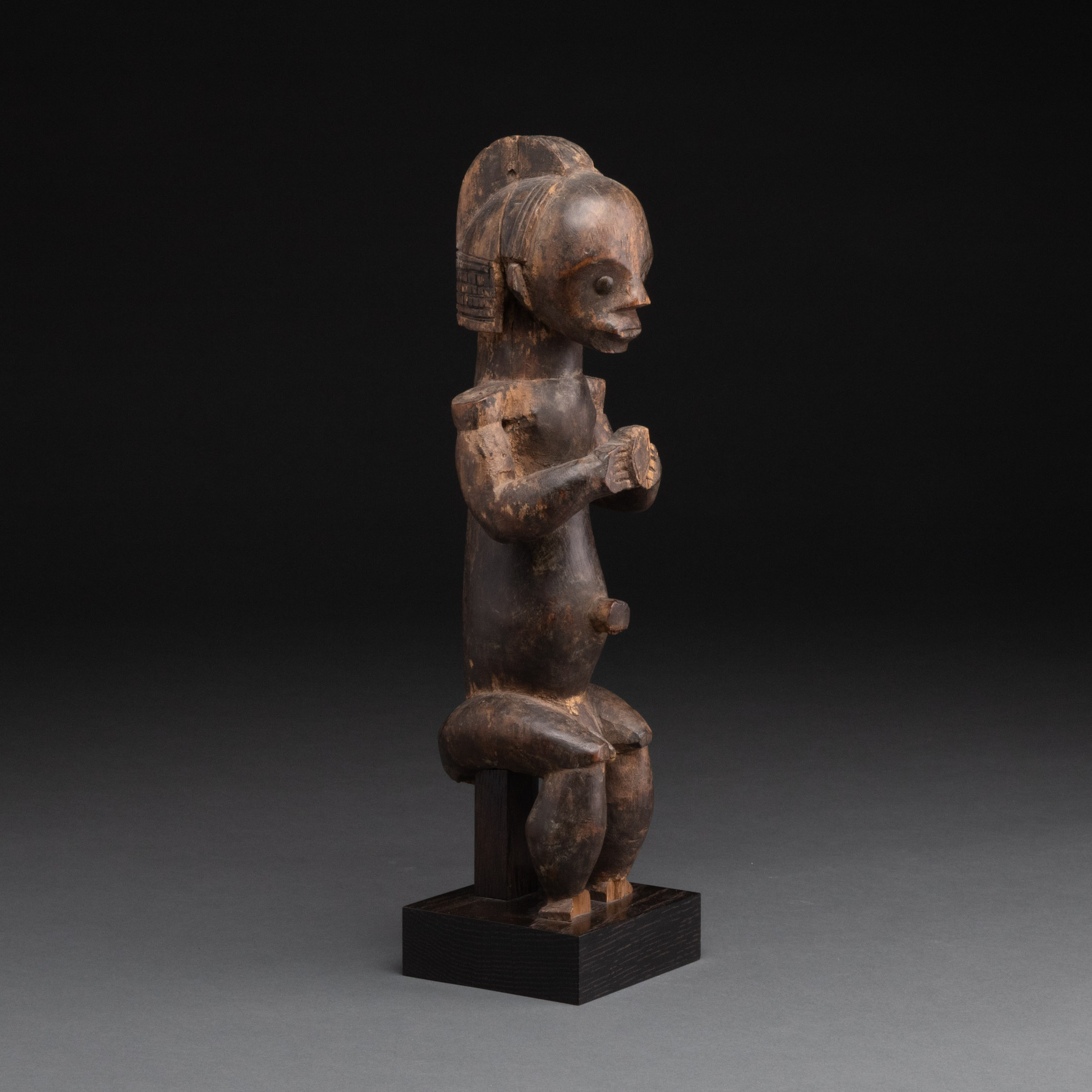
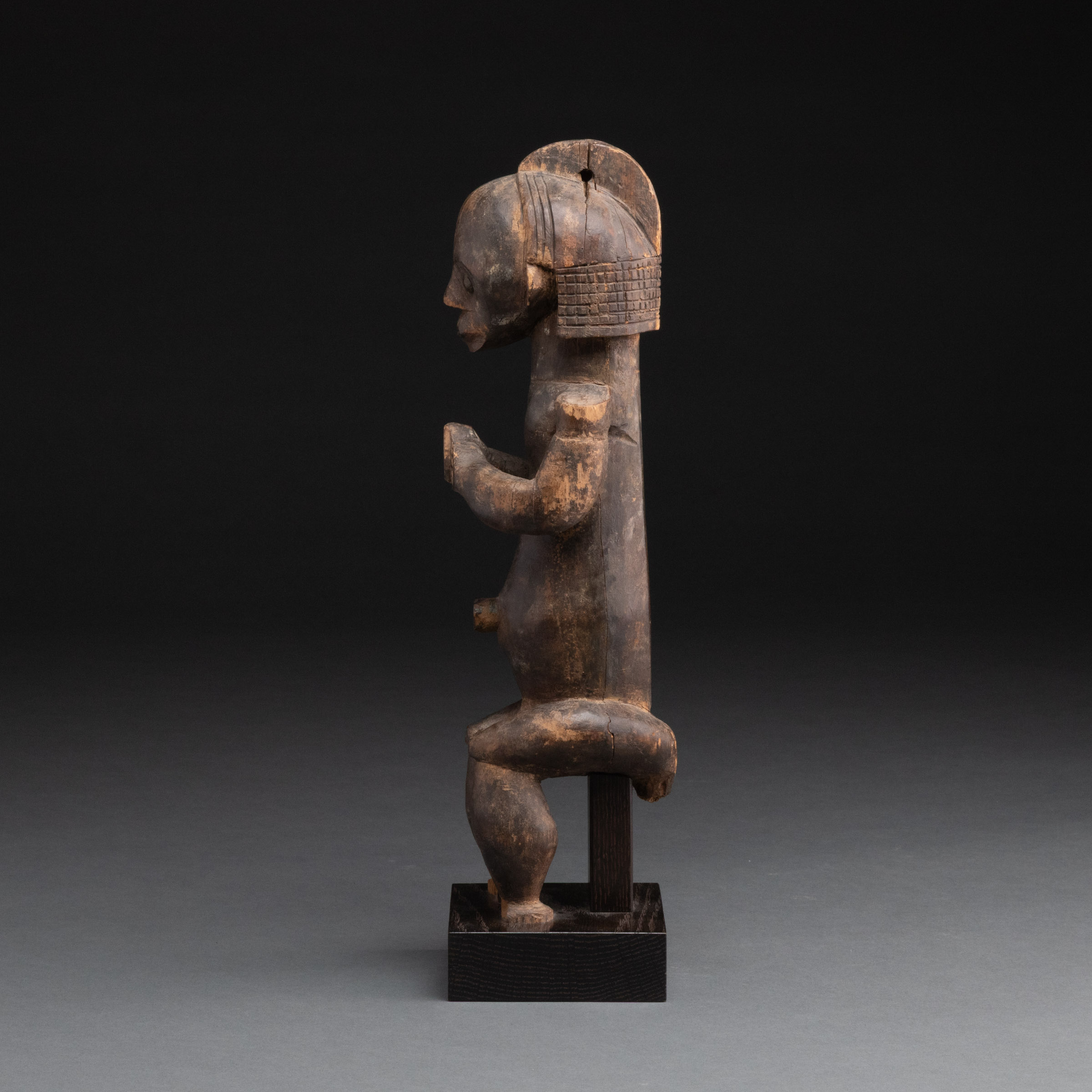
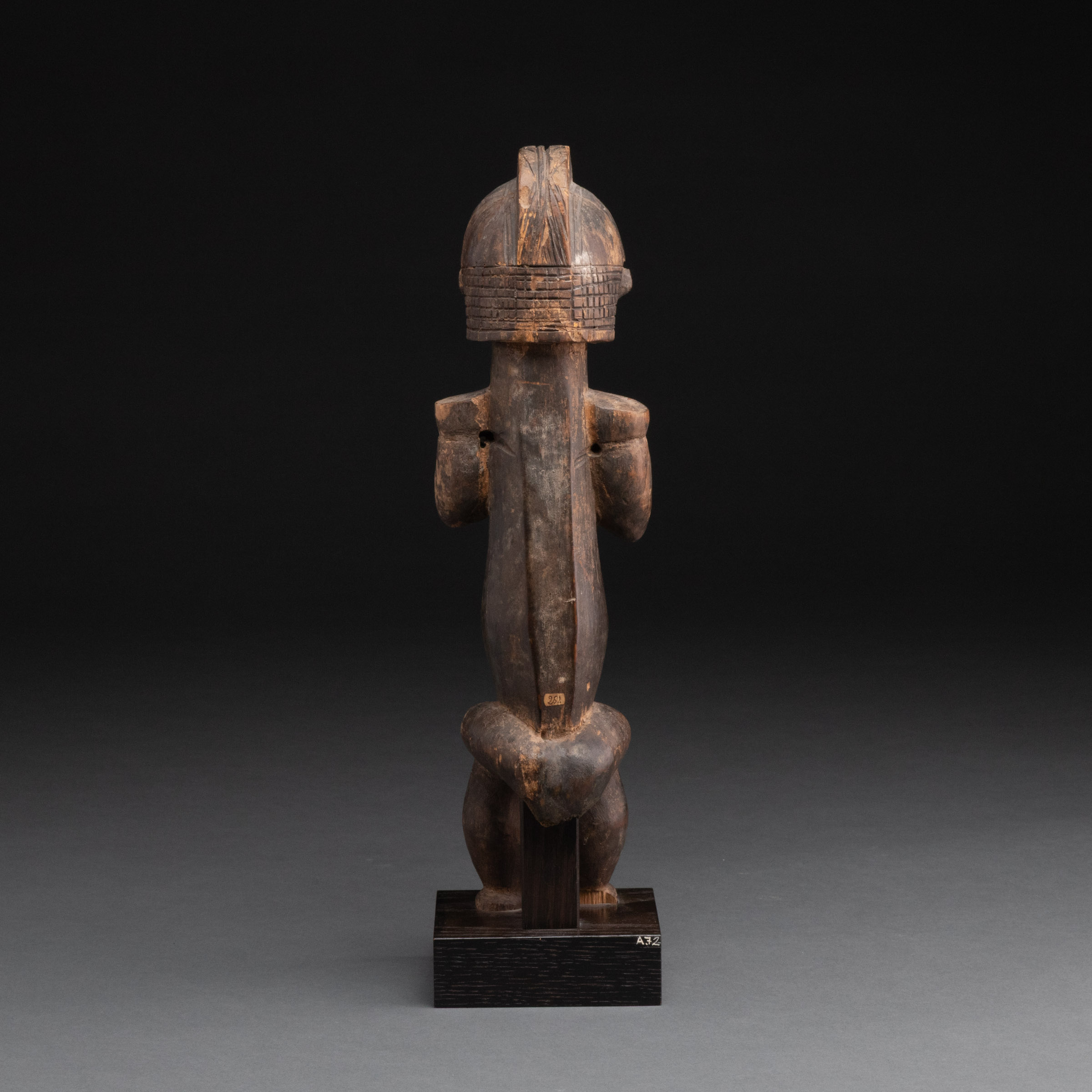
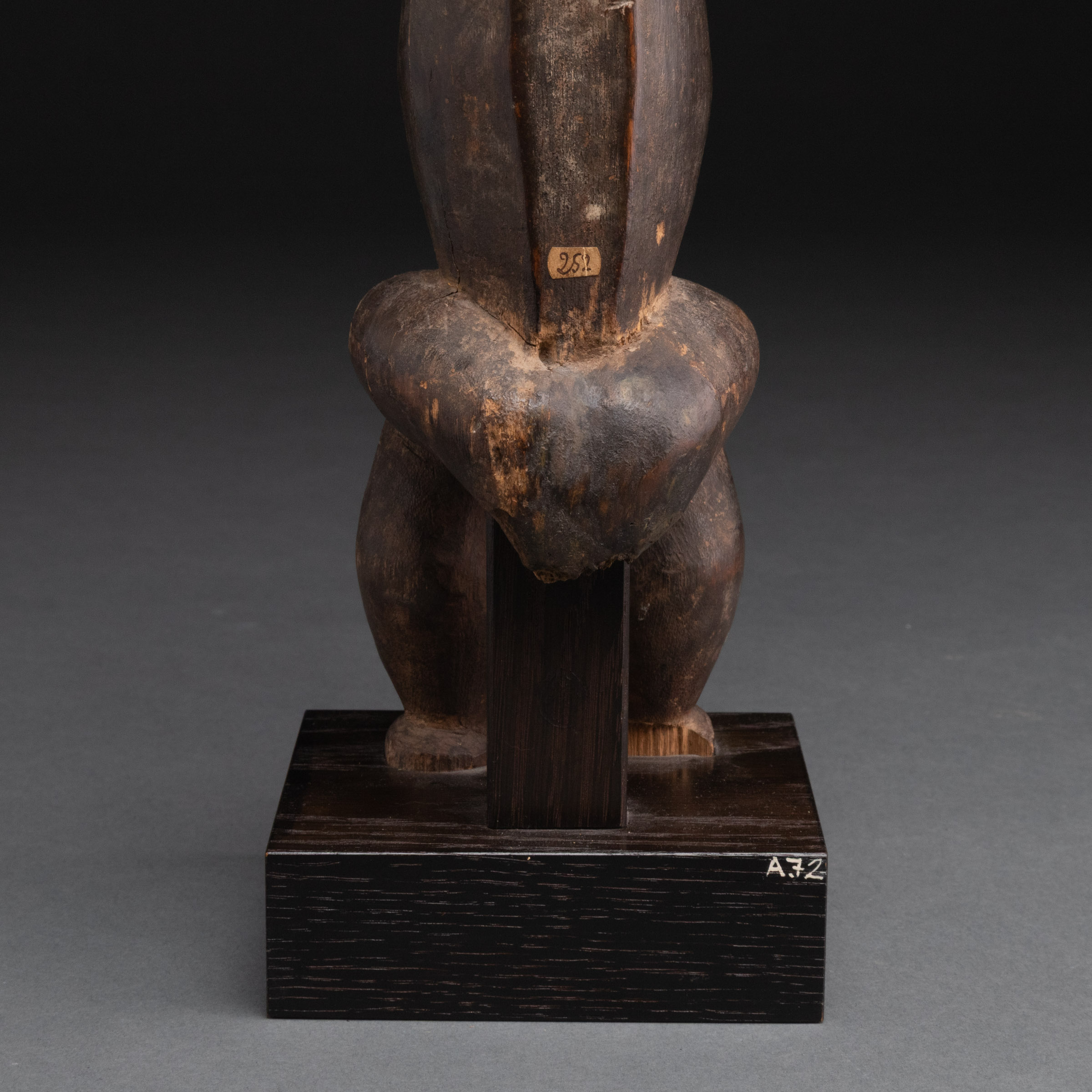
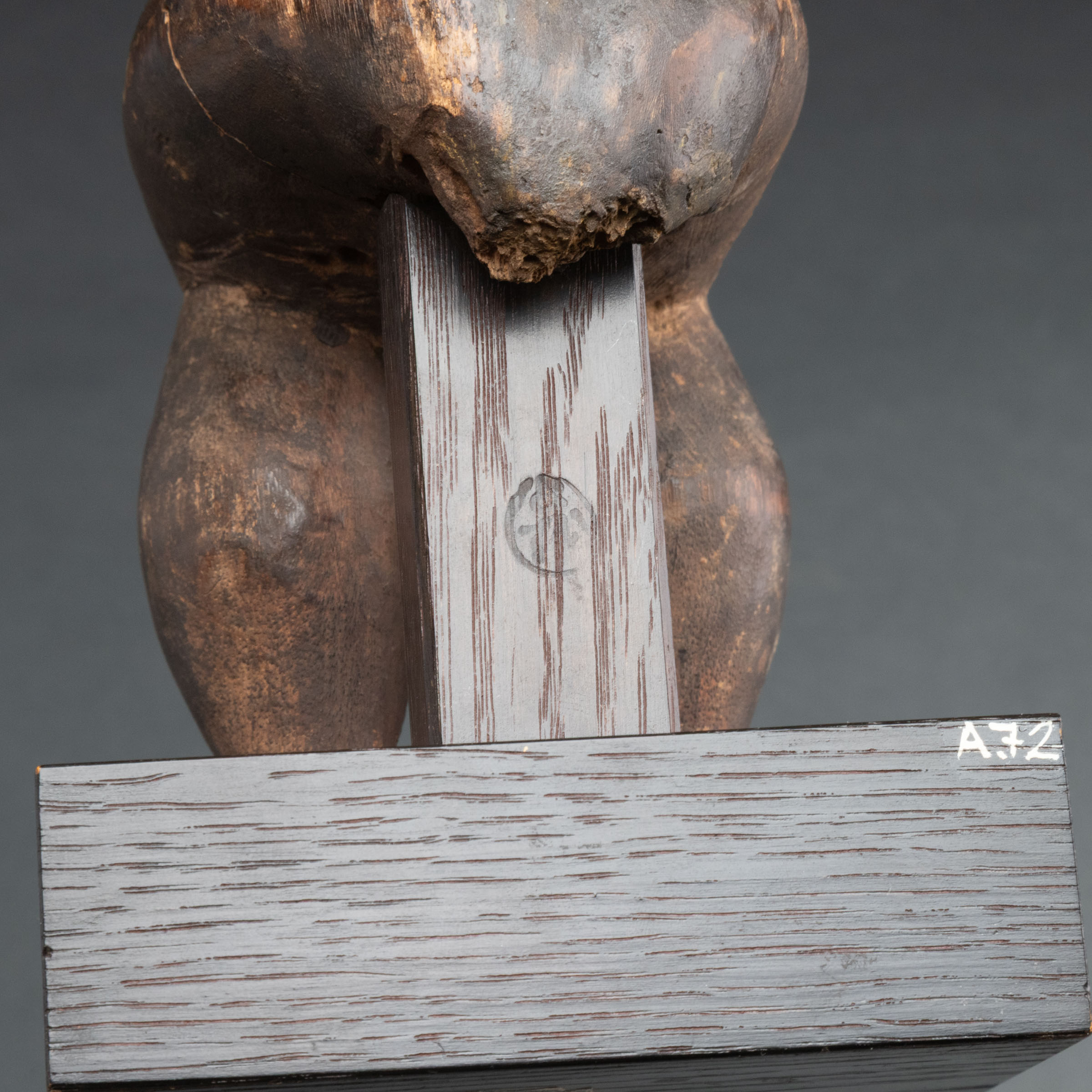
carved wood with natural pigment depicting a seated male figure with elongated torso, incised coiffure, inset metal tack eyes, outstretched arms holding a cup or implement, with protruding navel, on a ebonized oak mount by Japanese wood artist Kichizo Inagaki (1876-1951), signed with pyrography artist chop to the back of the stand; accompanied by a copy of the purchase receipt
14.75 x 4.25 x 4 in — 37.5 x 10.8 x 10.2 cm
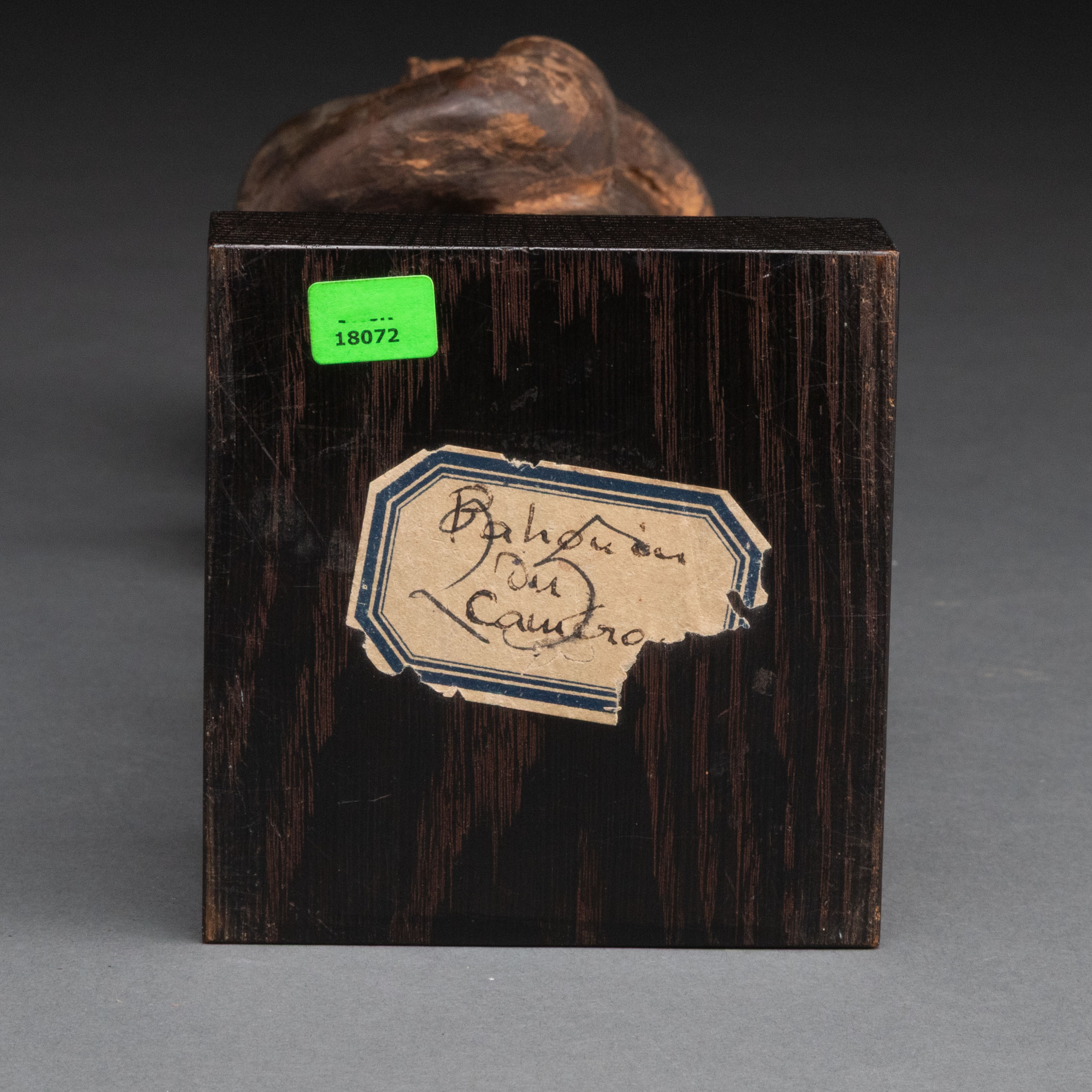
Including old white label attached to the underside of the stand, marked in black ink 252 and in white to the base A.72.
Estimate $20,000-$30,000
Additional Images

Provenance:
Josef Mueller, Solothurn, Switzerland
Christie, Manson & Woods Ltd., London, "African Art from the Collection of the late Josef Mueller of Solothurn, Switzerland", June 13, 1978, Lot 131
Note:
Veneration of the relics of a family’s illustrious dead has long been widespread in Gabon. Among the Fang peoples such ritual was known as byeri, and was essential to seeking out the aid and protection of ancestors, as well as encouraging their general beneficence.
The skulls of several generations of ancestors of a lineage were kept in cylindrical bark containers and were guarded by a wooden anthropomorphic figure (eyema byeri) placed on top. The byeri was consulted before important undertakings, which might include hunting, travel, marriage and matters of fertility, political alliance, disputes and war.
Provenance
The present sculpture is one of a number of Fang figures collected by pioneering collector of African art and the 20th century avant-garde, Joseph Mueller (1887–1977). Although styles of Fang figures in Mueller’s collection varied considerably, the present example with its overall reductive abstraction, distinctly defined metallic eyes, placid expression, angular body and strong columnar neck, seems to have a particular resonance with figures found in Mueller’s 20th century art acquisitions. Perhaps most notable is the relation of the present figure to bodies depicted in the work of Joseph Fernand Henri Léger (1881-1955), an artist who Mueller collected, and whose works were displayed in a well known photograph of the collector in the ca. 1960s.[1]
The mount for the present figure, as on some other important Fang figures collected by Mueller, was crafted by the important and much emulated Japanese wood artist Kichizô Inagaki (1876-1951), active in Paris in the 1910s-1930s.
Joseph Mueller (1887–1977) was a collector keen to follow his own path. He made a name for himself at just 19 years of age when he bought Ferdinand Hodler’s then-controversial painting Die Liebe, which had scandalized Zurich for its stylized depiction of intertwined nude figures.
Remarkably independent of thought, Mueller did not collect in discrete categories, adding African sculpture, masks and other objects to his holdings of work by Cézanne, Kandinsky, Fernand Leger, Renoir and Bonnard. This eclectic collection, in the words of Werner Muensterberger, expressed the “ultimate indivisibility of authentic art.” Indeed, Mueller continued this strategy in their display as well, with photographs of his home showing paintings by Joan Miró hung alongside Bembe masks and clubs from the Marquesas Islands. For him, geography or chronology were less important than the interplay of form and imagination.
Mueller visited Africa but once, travelling along the Ubangi River in 1923. He did not acquire any works on that trip, rather assembling his mighty collection from Parisian dealers, including Ernst Ascher, Charles Ratton, Antony Moris and Pierre Vérité. Post-war, Swiss dealer Emil Storrer became another trusted source. Mueller was meticulous, recording his purchases in small black notebooks, which have provided subsequent generations with a fulsome picture of his collecting practices.
[1] Louis Perrois, et al., Ancestral Art of Gabon: From the Collections of the Barbier-Mueller Museum, (Geneva: Musée Barbier-Mueller, 1985), 12-13.