


Lot 4
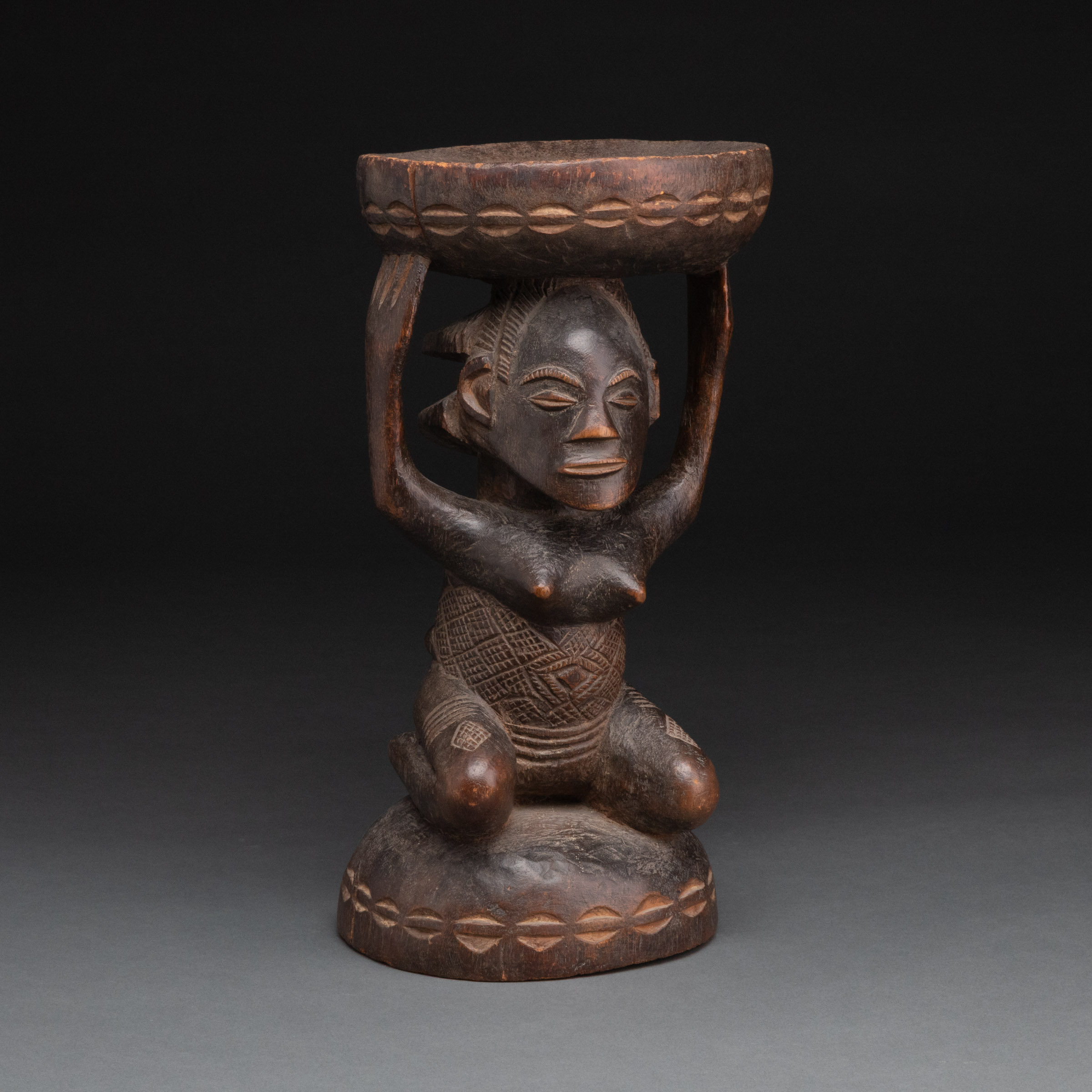
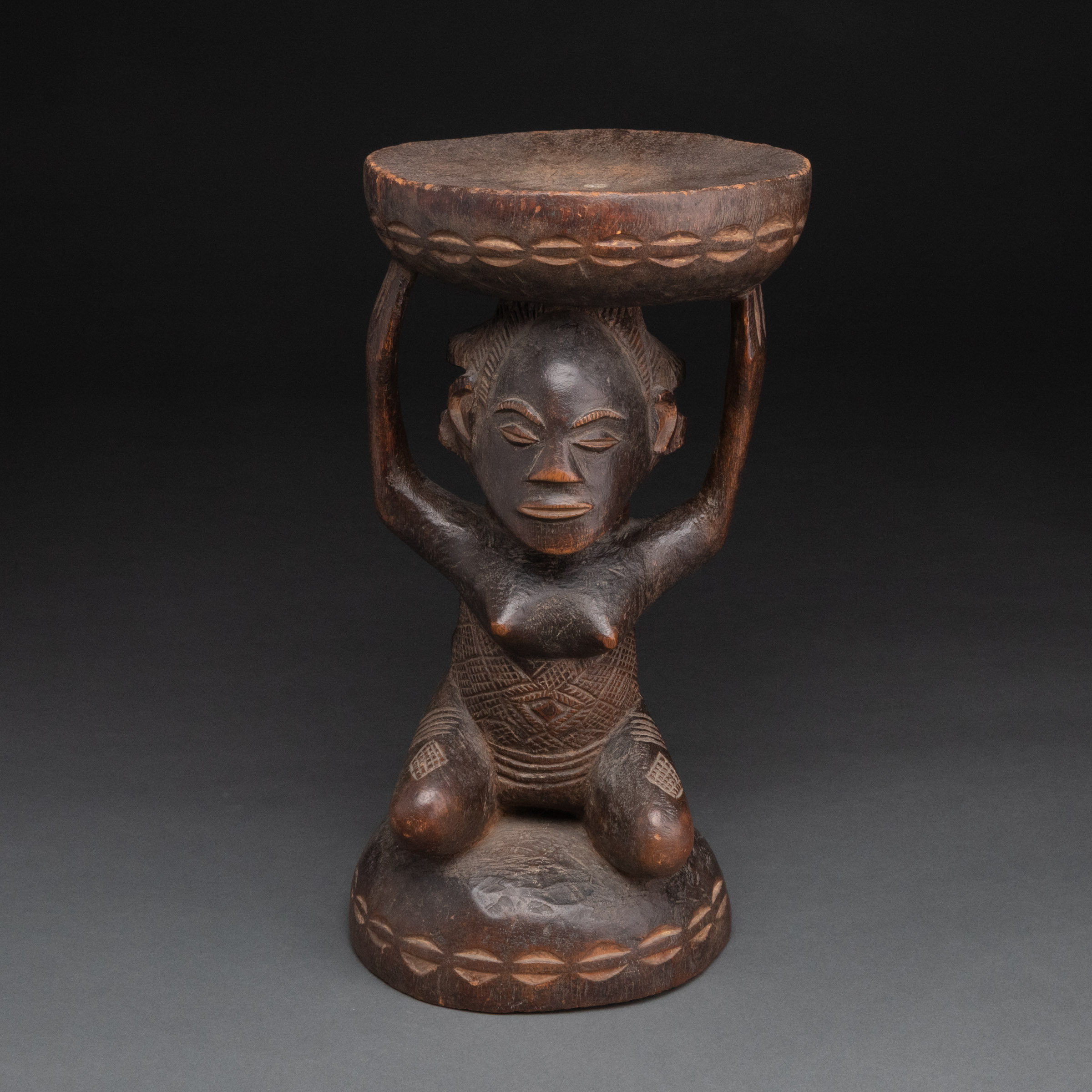
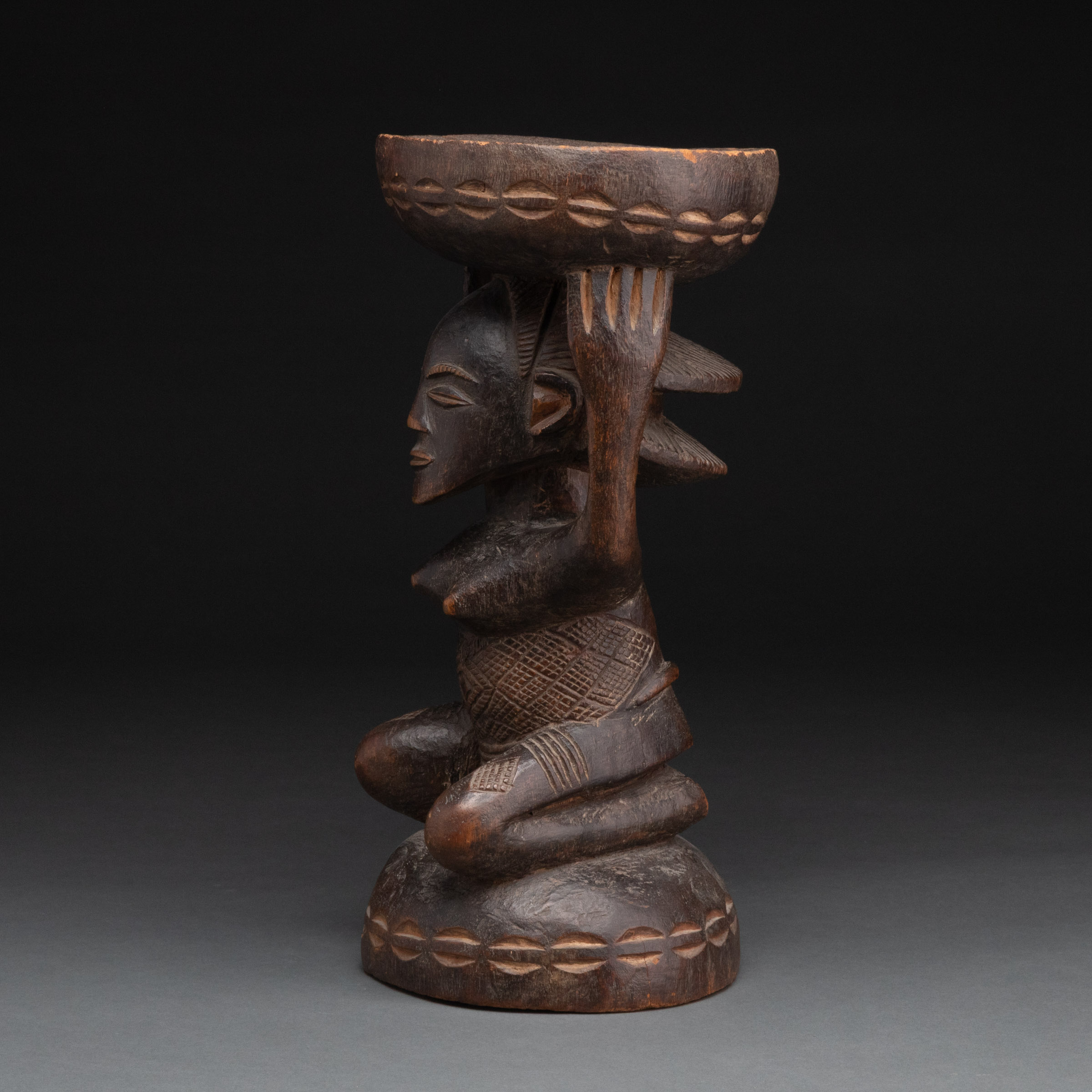
Luba Female Caryatid Stool, Democratic Republic of Congo, Central Africa, 19th/early 20th century
Lot 4 Details
Luba Female Caryatid Stool, Democratic Republic of Congo, Central Africa, 19th/early 20th century
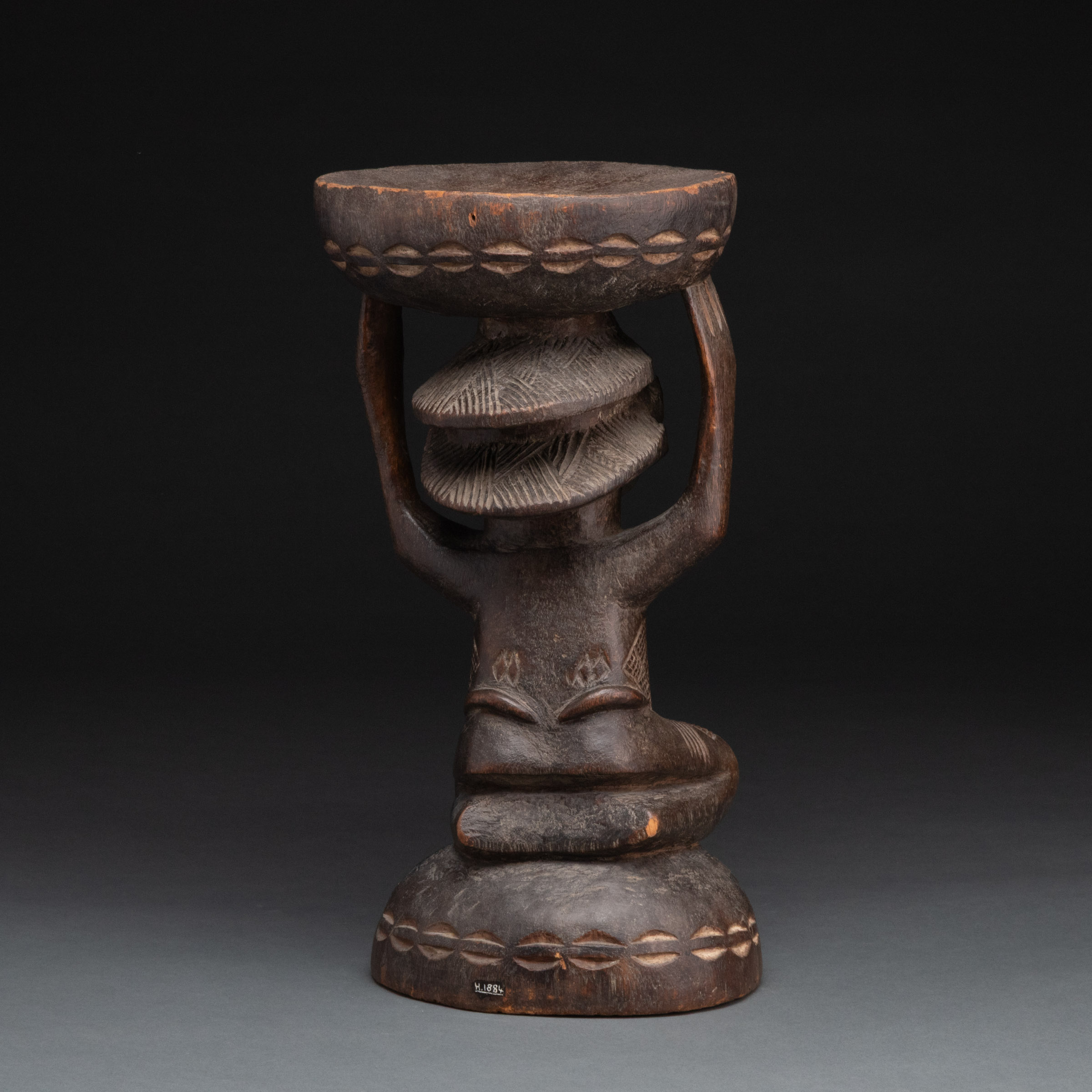
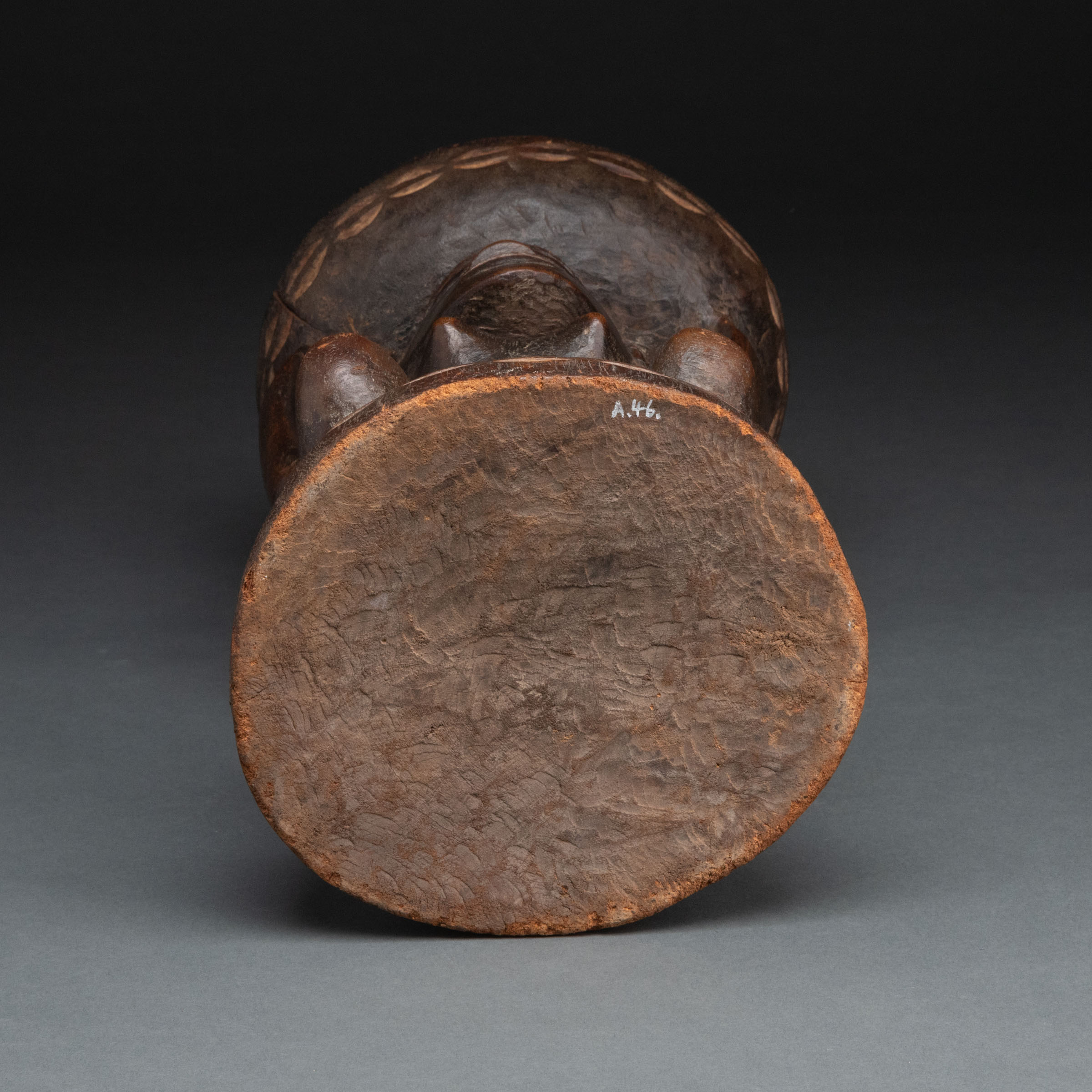
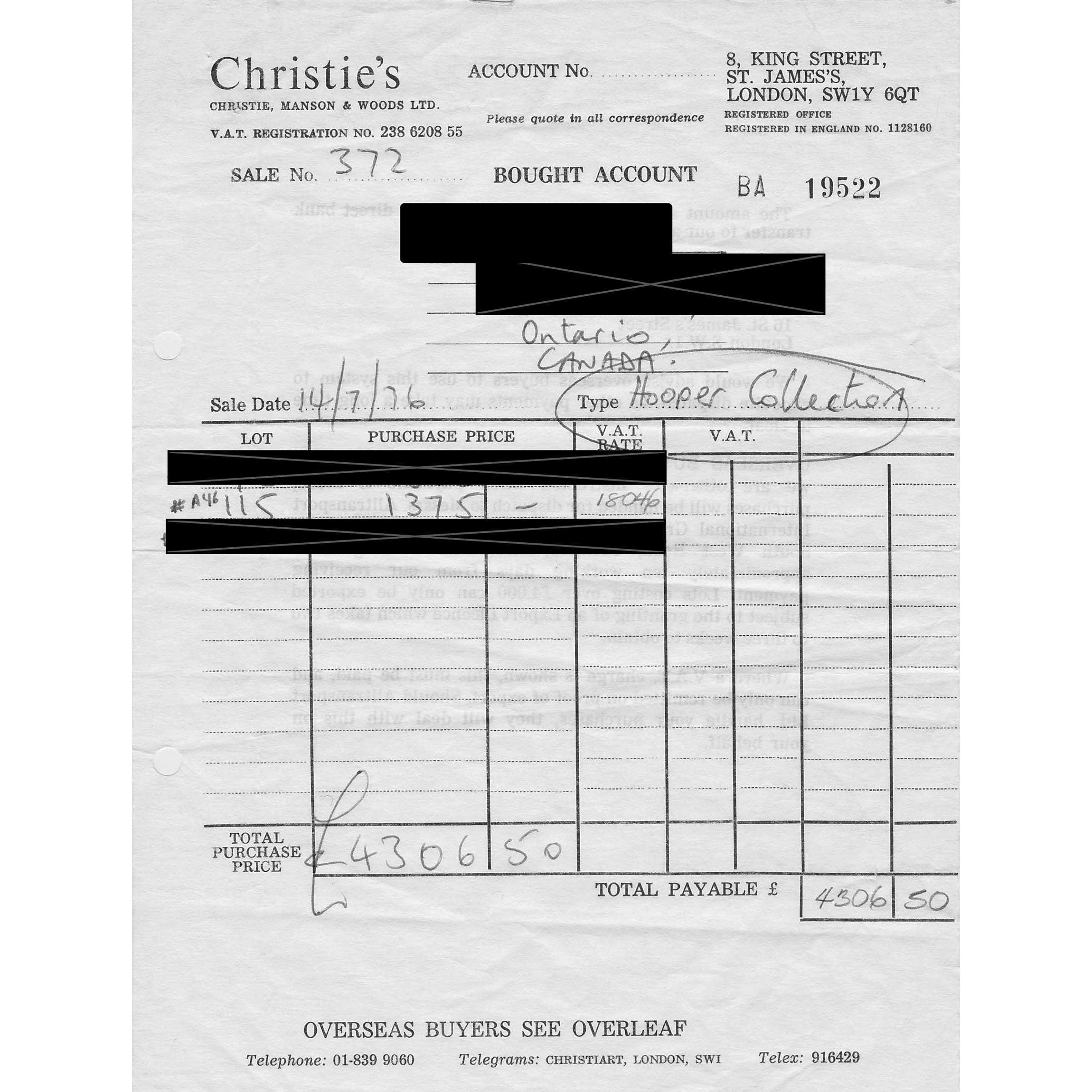
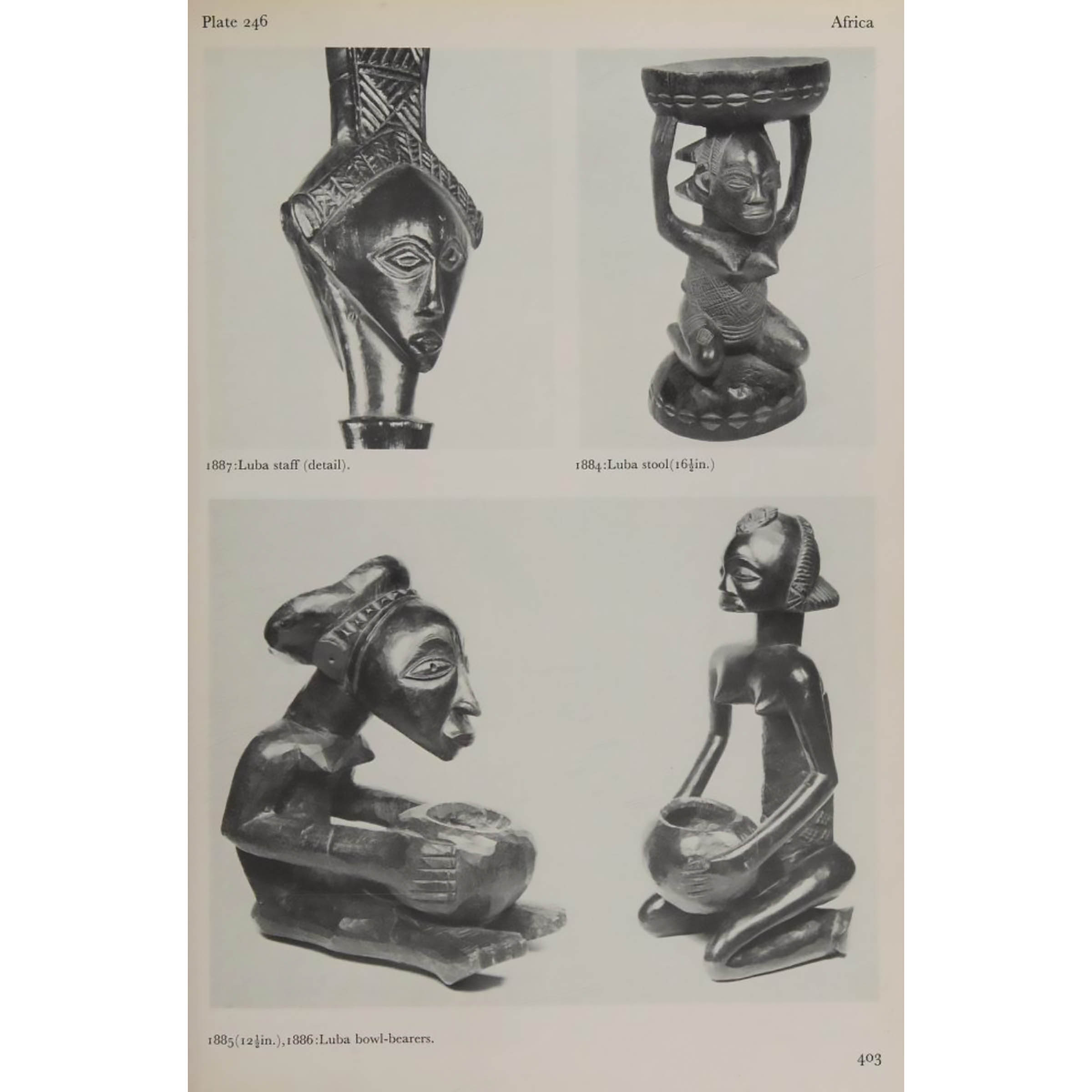
carved wood with dark brown patina and white natural pigment in the carved cowrie shell design to the top and bottom rims, depicting a kneeling female figure with raised arms holding the seat; accompanied by a copy of the purchase receipt
height 16.75 in — 42.5 cm, diameter 8 in — 20.3 cm
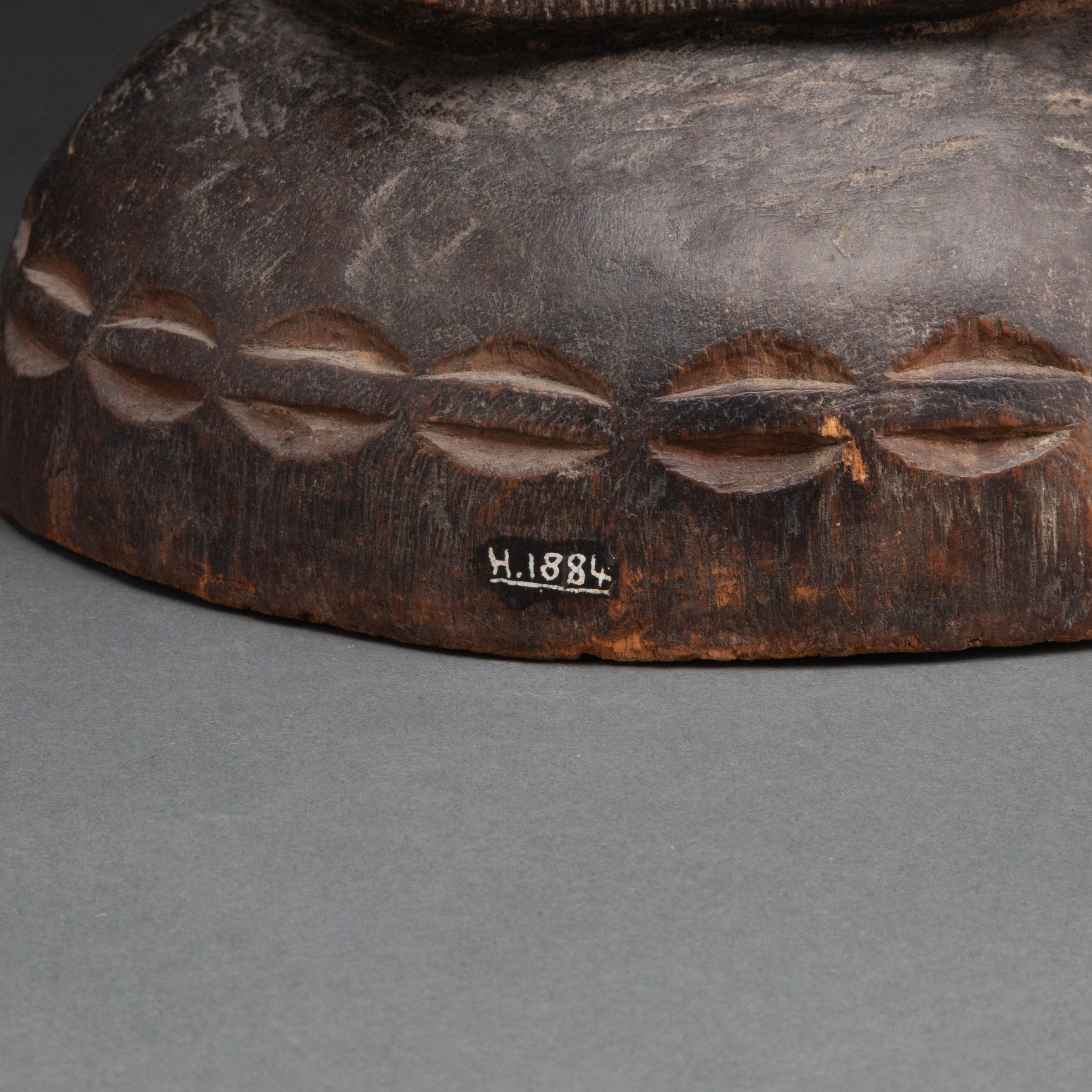
Marked in white ink to the back H.1884 and to the base A.46.
Estimate $20,000-$30,000
Additional Images
Provenance:
Collected by Captain Fritz Crowe, British Consul General at Lourenco Marques, who died in 1904
James Thomas Hooper, Arundel, UK
Christie, Manson & Woods Ltd., London, "African Art from the James Hooper Collection", July 14, 1976, Lot 115
Private Collection, New York
Loudmer-Poulain, Paris, "Art Primitifs", June 19-20, 1980, lot 311
Literature:
James Thomas Hooper and Cottie A. Burland, "The Art of Primitive Peoples", London, 1953, pl. 64(a);
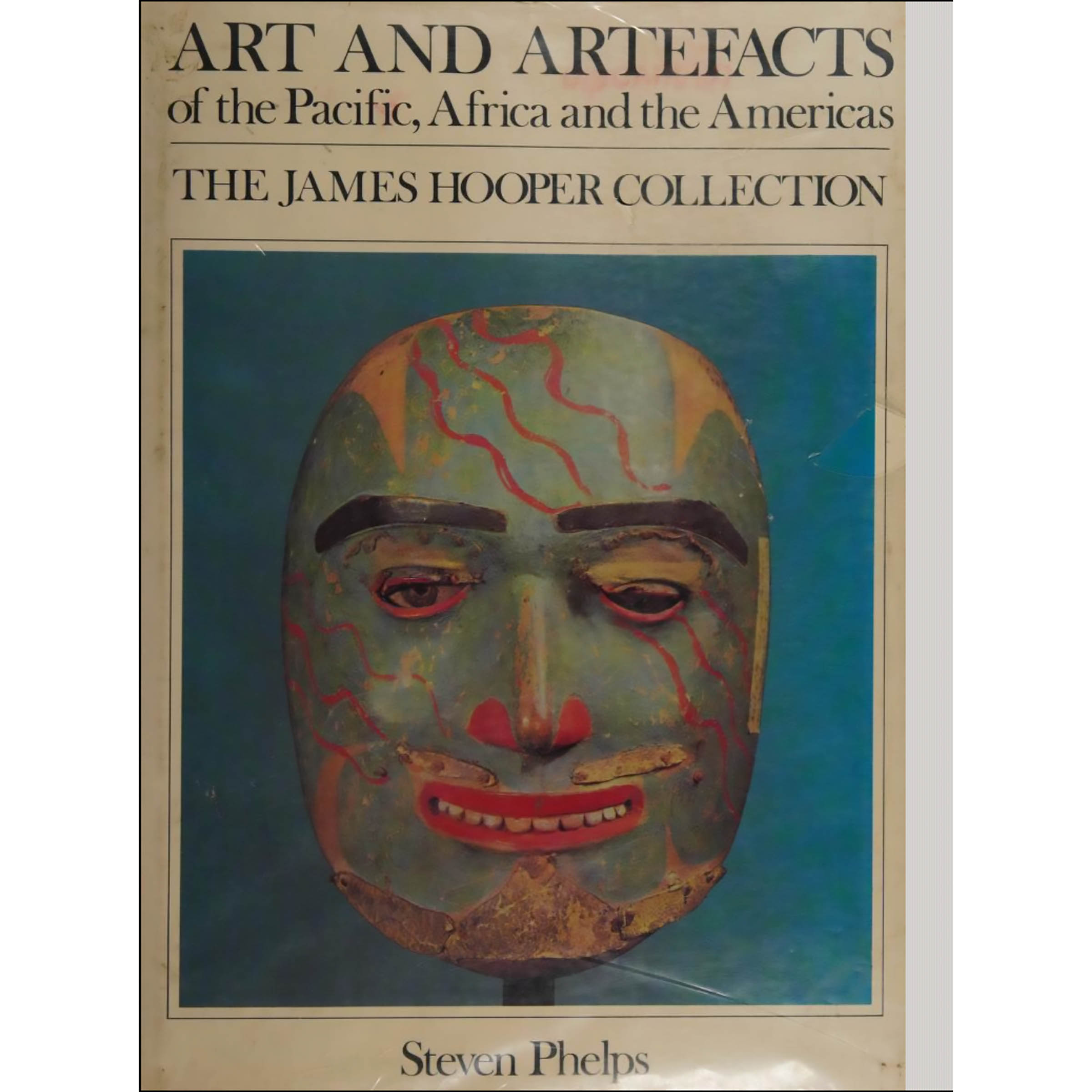
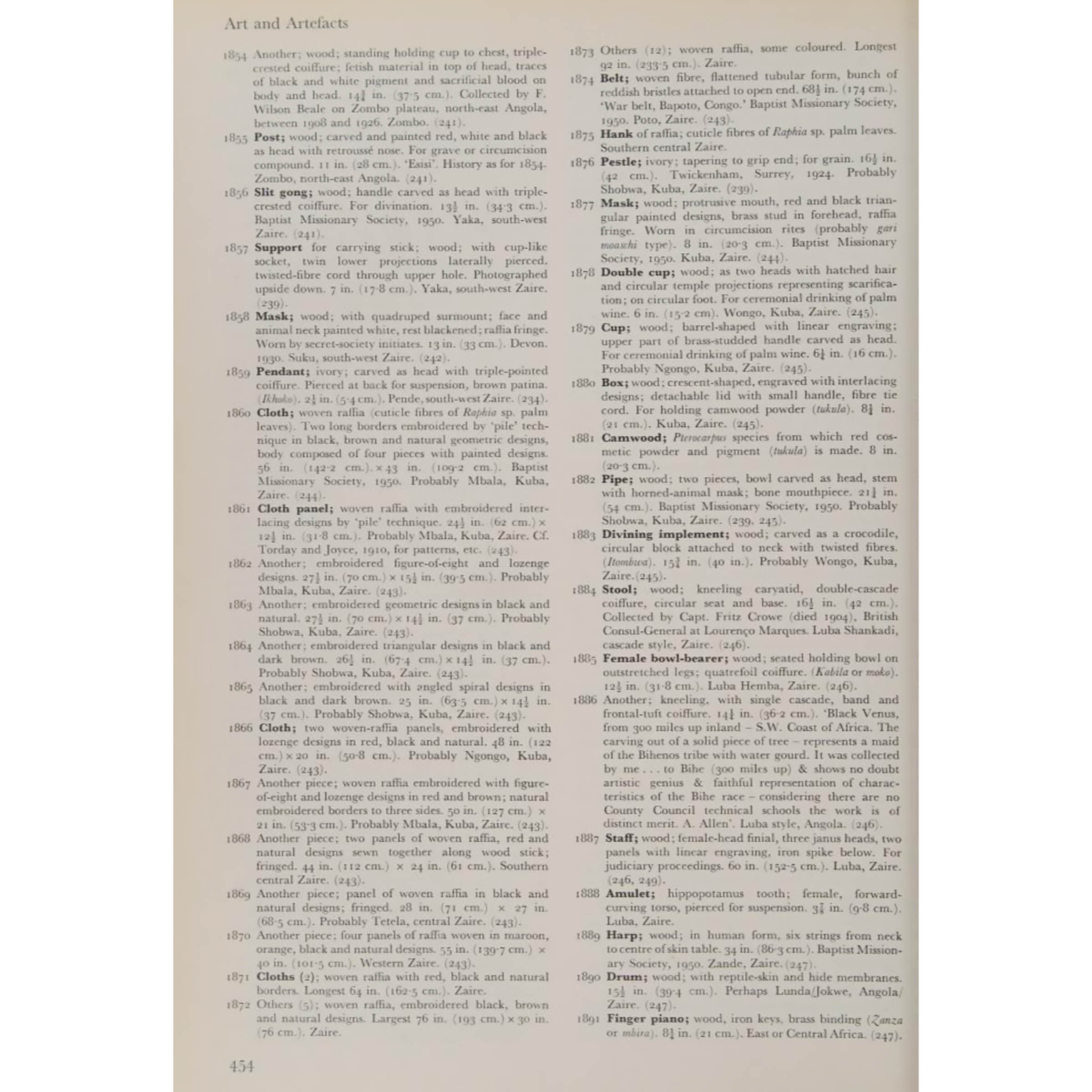
Steven Phelps, "Art and Artifacts of the Pacific, Africa and the Americas: The James Hooper Collection", London, 1976, p. 403, pl. 403, pl. 246, no. 1884
Note:
According to Mary Nooter Roberts and Allen Roberts in their text for the Luba volume of the 2007 series on arts of Africa, Visions of Africa, the Luba people were historically a cluster of "overlapping clan and lineage groupings that were consolidated as kingdoms and important chiefdoms from around the seventeenth century", noting further that "Luba political strength lay in an aura of prestige derived from spiritual power and reflected in material and performance arts. Indeed, the arts played a crucial role in Luba political expansion, as kings conferred objects and the ritual practices associated with them to extend their influence into outlying areas."[1]
Female caryatid stools were part of each Luba King's treasury, were powerful icons of status and nobility, and used as thrones by Kings on important occasions. Symbolic of their leadership, the female figures represented referenced the matrilineal dynastic succession which they observed.
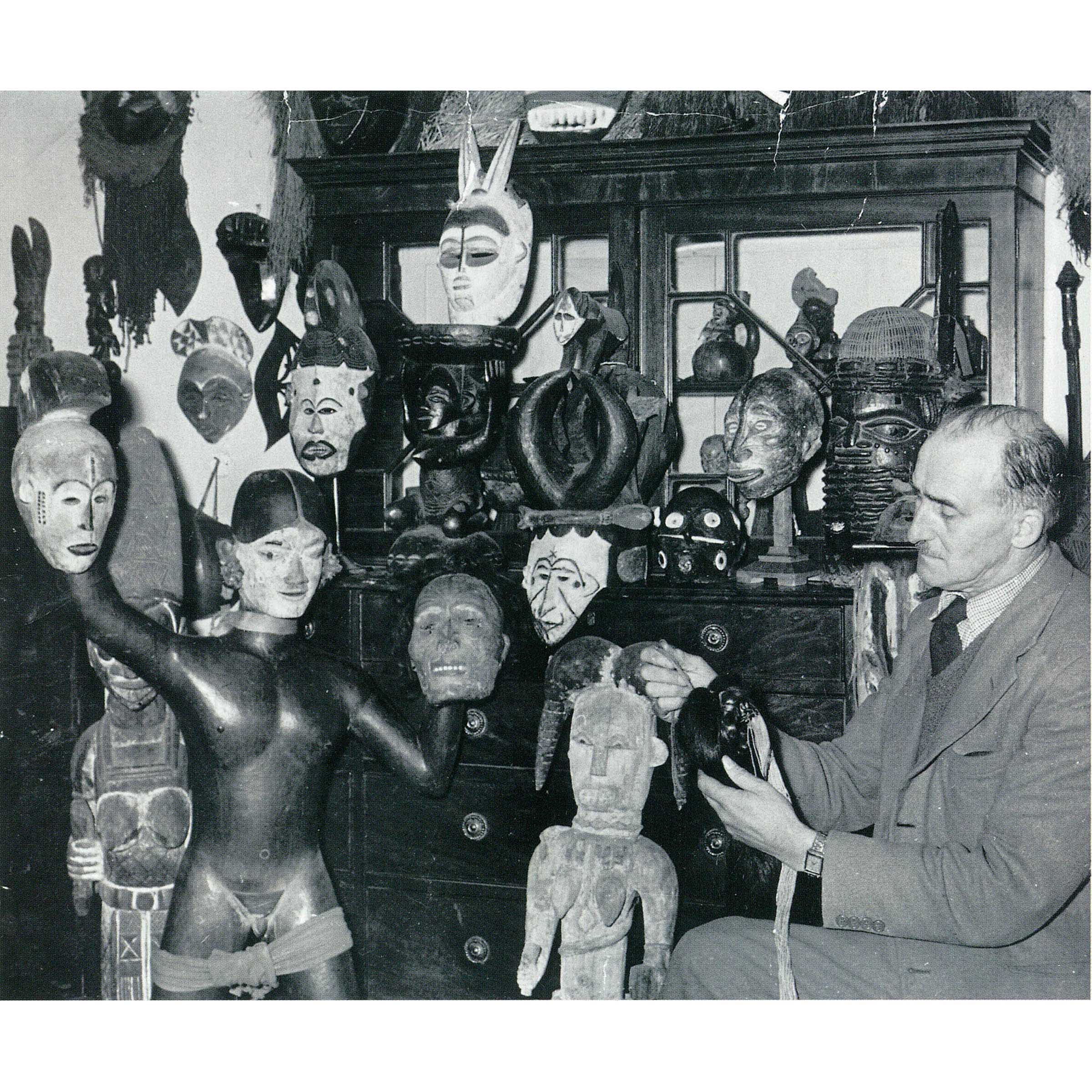
The present example comes from the collection of James Thomas Hooper (1897–1971), and appears to be the stool pictured to the right of Hooper in the iconic and much published ca. 1958 portrait of the collector.[2]
Hooper assembled one of the legendary private collections of African, Oceanic, Inuit, and First Nations art. Based in Arundel, England, items that bear the Hooper provenance remain noteworthy decades after the dispersal of his collection.
His collecting journey began in 1912, when gifted a spear by his father. Working for the Thames Conservancy board gave Hooper the means to begin acquiring works from flea markets, antique shops, auction houses, dealers, and house sales in an era when exceptional pieces could be purchased for modest sums. After retirement, Hooper opened the Totems Museum in Arundel, and authored The Art of Primitive Peoples with Cottie Arthur Burland. Between 1976 and 1982, at least six auctions of Hooper’s collection were required to disperse his extensive holdings.
Several of the strongest African works in the present auction passed through Hooper's hands. Taken together, these works present a small but meaningful cross-section of a collection.
[1] Mary Nooter Roberts, and Allen Roberts, Visions of Africa: Luba (Milan: Five Continents Editions, 2019), 7-9.
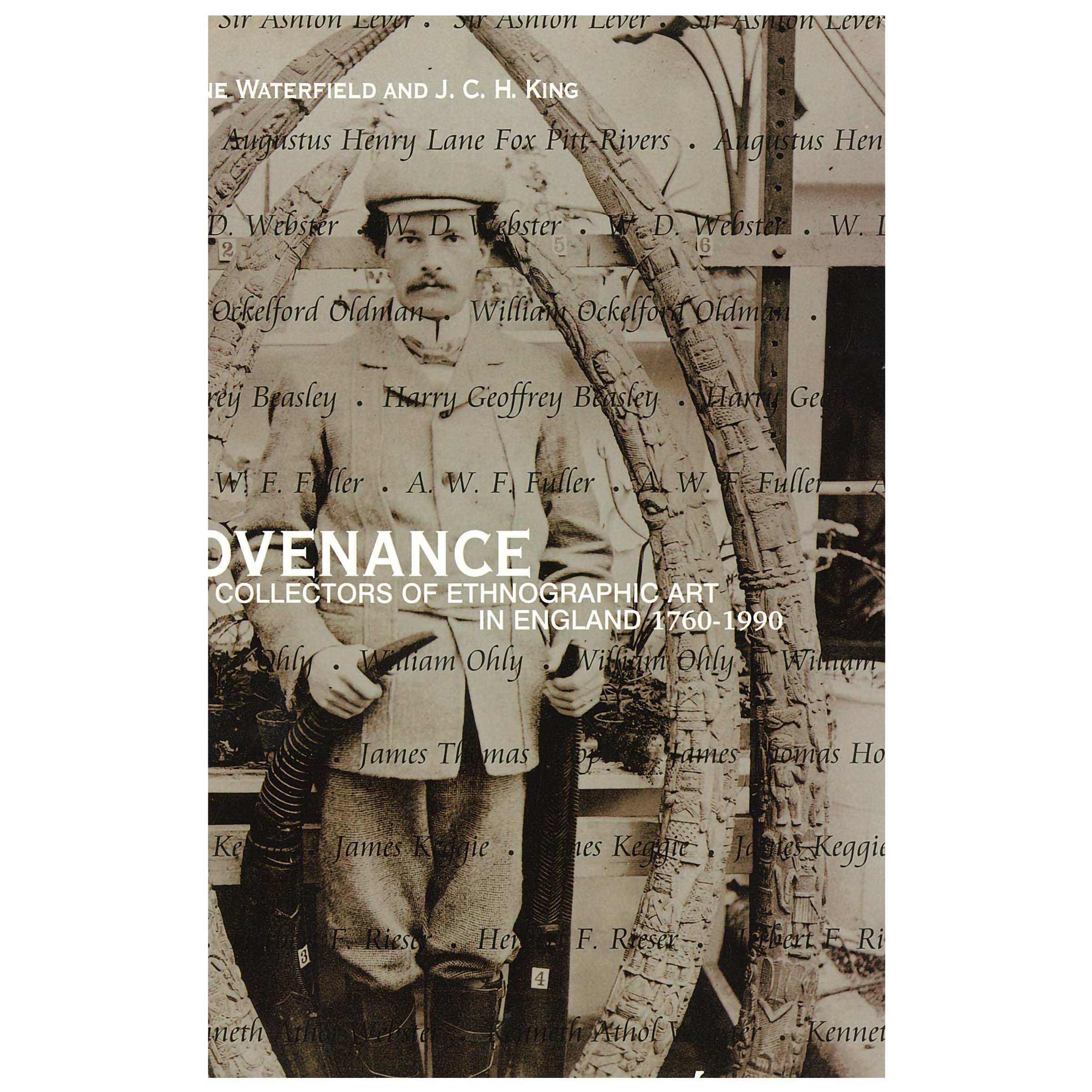
[2] Hermione Waterfield and J.C.H. King, Provenance: Twelve collectors of ethnographic art in England 1760-1990 (London: Paul Holberton Publishing, 2009), 117.