


Lot 16
Unidentified Artist, Likely Ojibwe, Bodéwadmi (Potawatomi), or Odawa
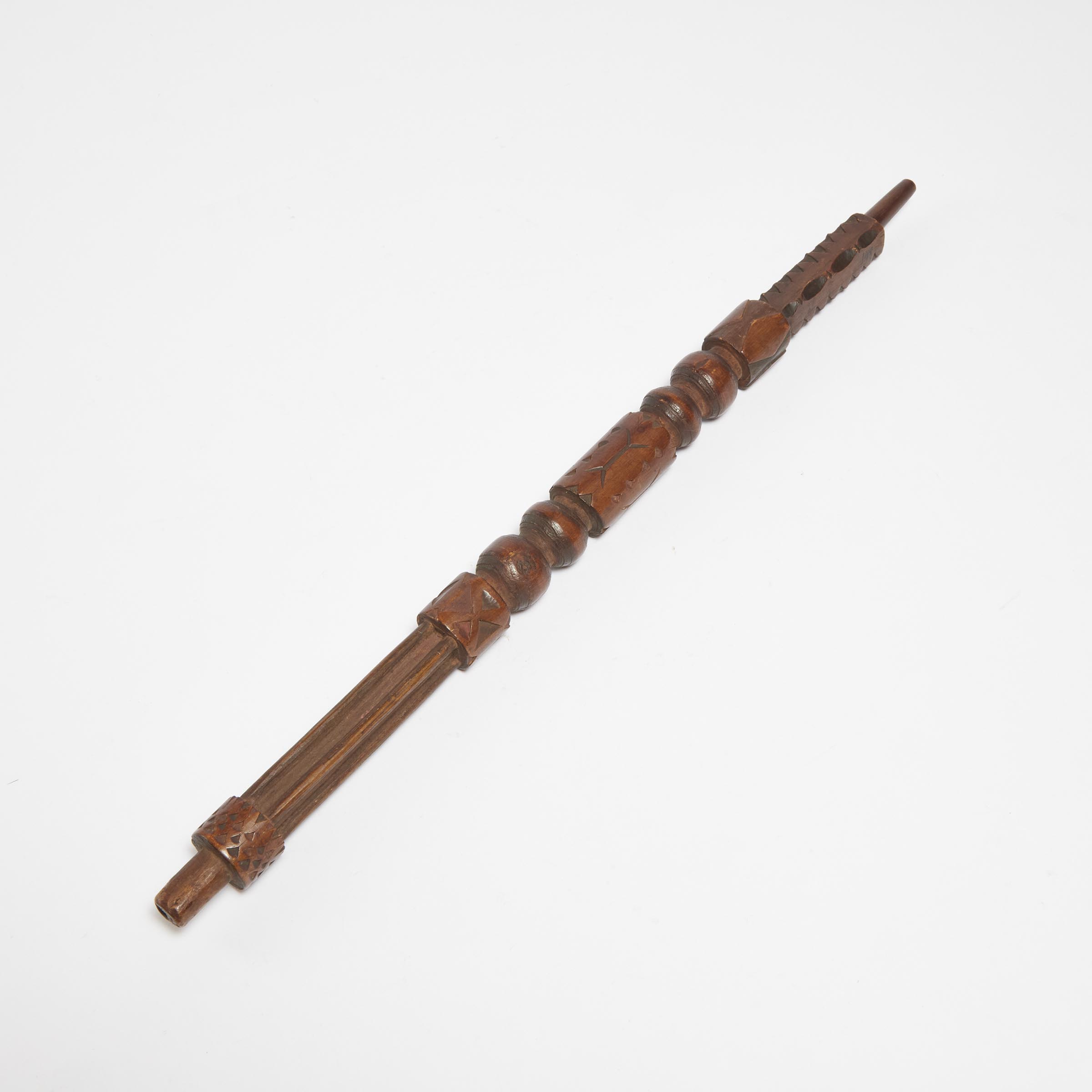
Lot 16 Details
Unidentified Artist, Likely Ojibwe, Bodéwadmi (Potawatomi), or Odawa
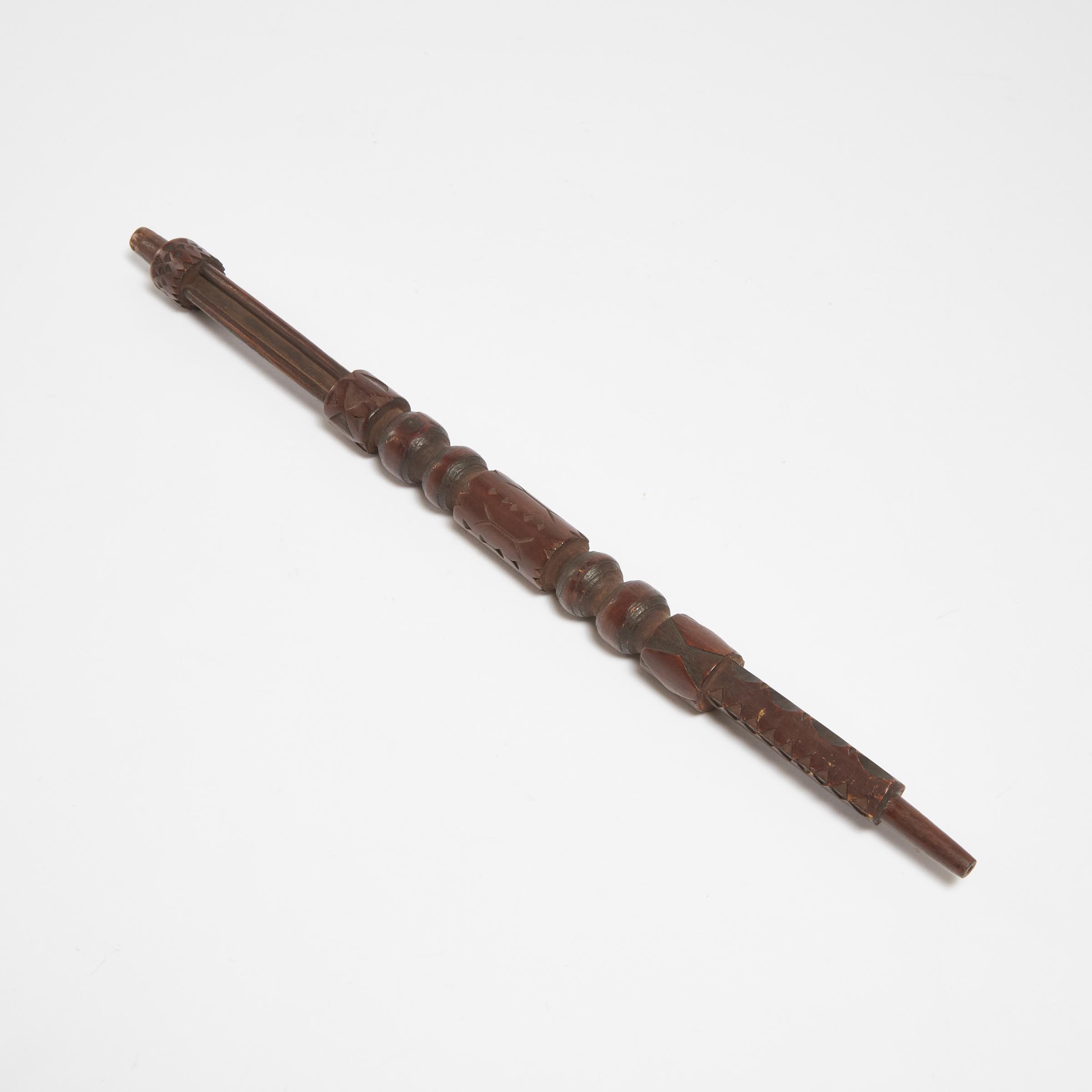
PIPE STEM WITH CHIP-CARVED, AND INCISED DESIGNS, SECOND HALF OF THE 19TH CENTURY
wood
old collection number inscribed in pen and ink reads "148"
17.25 x 1 in — 43.8 x 2.5 cm
Estimate $500-$700
Additional Images
Provenance:
Private Collection, Brossard, QC
Private Collection, Quebec
Note:
Unusually elaborate, this Great Lakes pipe stem features a large number of carved motifs which culminate on the proximal end of the stem in alternating scalloped and chip carved designs. Motifs on the stem closely relate in size and configuration to designs found on commercially made canes and other objects of touristic production from Bkejwanong (Walpole Island) in the later 19th and early 20th centuries.
Objects made for sale and trade on Bkejwanong were well known in neighbouring parts of Ontario and Michigan in the early 20th century, where locals and visiting tourists would travel to fairs held on the island. There they could purchase bows, model war clubs, pipe stems, canes, woven mats, and other objects made for Euro-American consumption. Many of the wares sold at the fairs were beautifully embellished with traditional Great Lakes motifs. Poorly documented, and often misidentified, one such cane is published in the British Museum’s 1982 publication, Thunderbird and Lightning, where it has been misattributed to the Haudenosaunee (Iroquois).
J.C.H. King, Thunderbird and Lightening: Indian Life in Northeastern North American 1600 - 1900 (London: British Museum Publications Ltd., 1982)