


Lot 2
Unidentified Western First Nations Artist
Additional Images
Provenance:
Private Collection, Toronto, ON
Note:
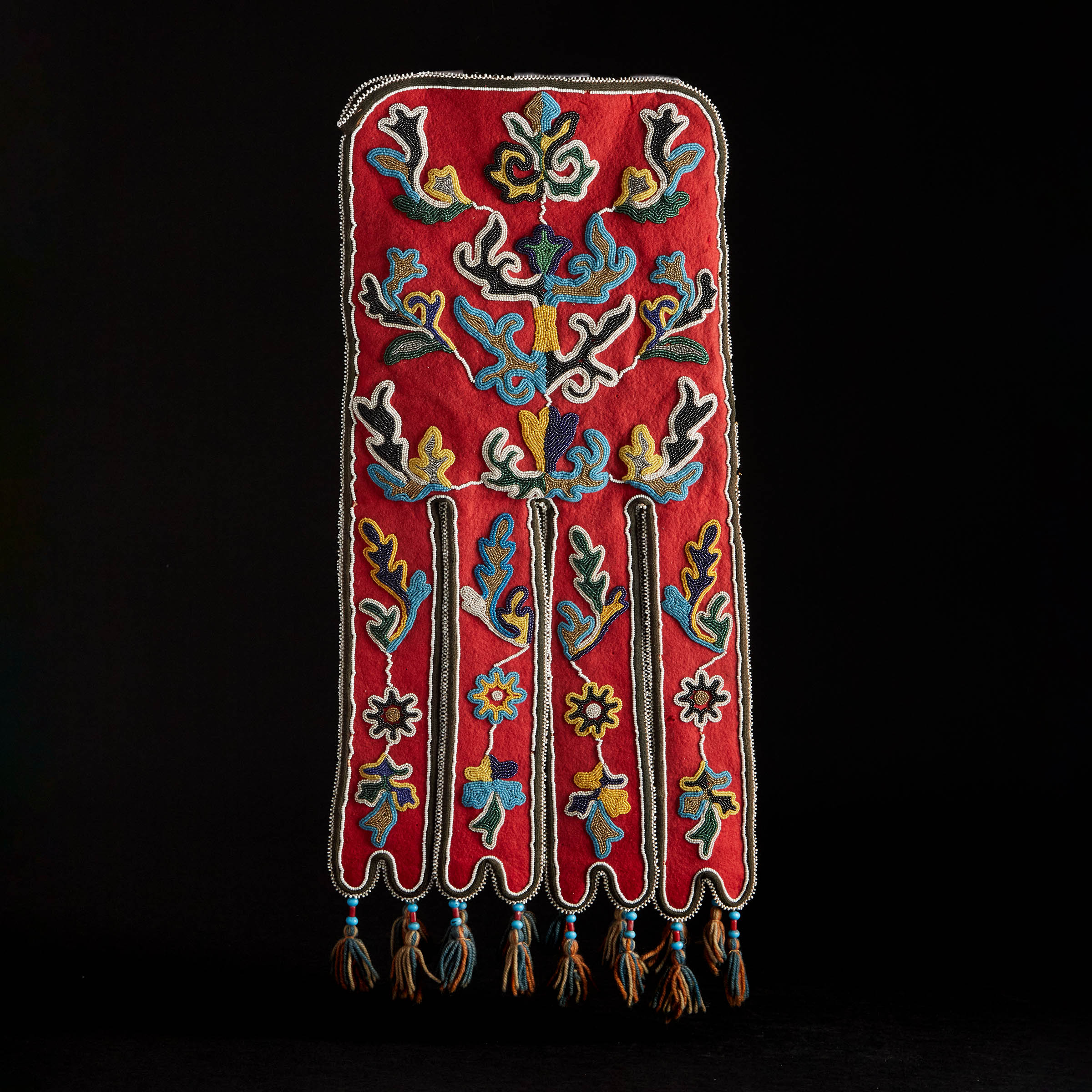
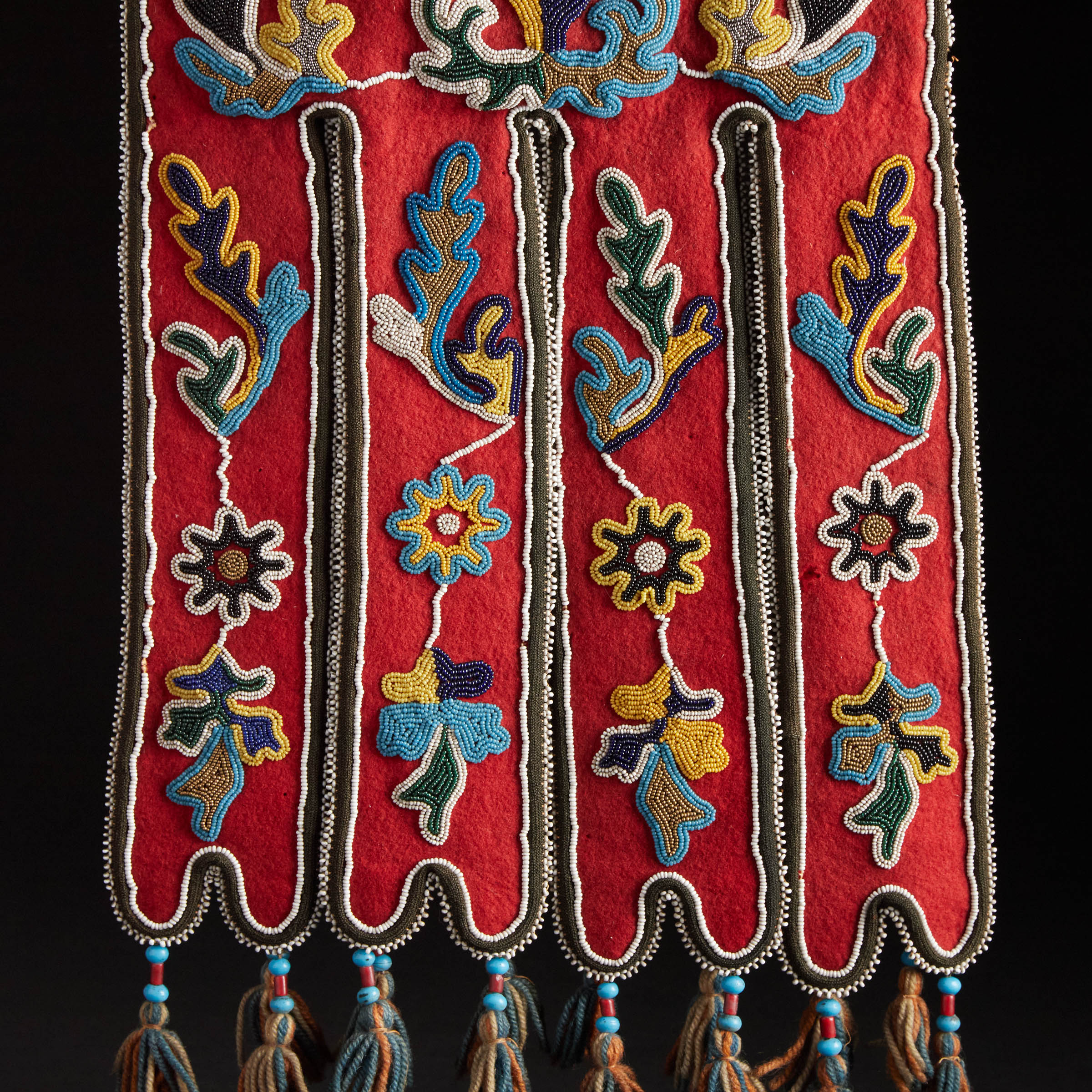
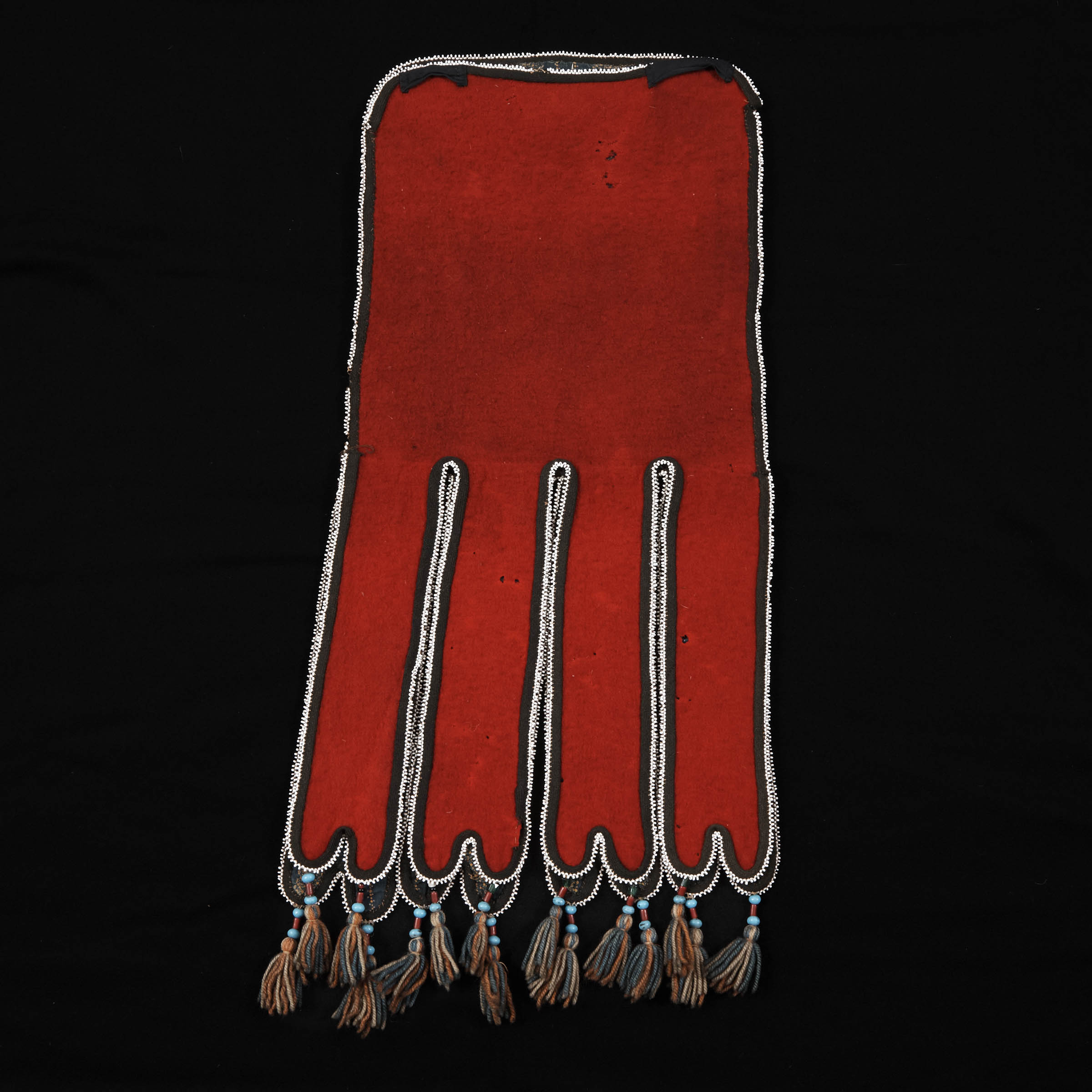
An enigmatic and richly varied form, so-called “octopus bags" were typically used for carrying implements of fire making, or pipes. Sometimes referred to simply as “fire bags" by early sources, their modern name is derived from their eight tentacle-like hanging bi-lobed tabs, which are distinctive to the type.
Typically made of dark blue, black, or brilliant red broadcloth as with the present example, octopus bags as a class of object exhibit remarkably elaborate forms of beadwork decoration. Ill-understood and underdocumented for objects of their significance, little is known about the age of many examples, nor about the path of their historical distribution. As late as 1990, it has been noted that only 139 examples could be associated with a location and period of acquisition.
Geographic areas associated with the bags are Southern and Northern Manitoba, Northern Saskatchewan and Alberta, interior British Columbia, and as far east as Ontario. The earliest group of documented bags are those associated with 1840s Southern Manitoba, and most prominently with the Red River Métis, who have sometimes been referred to as “the people of the flower beadwork”. The prominent distribution of the bags in Western Canada has been broadly linked with the westward expansion of the fur trade in the 19th century, however the subject is one waiting to be illuminated by further scholarship.
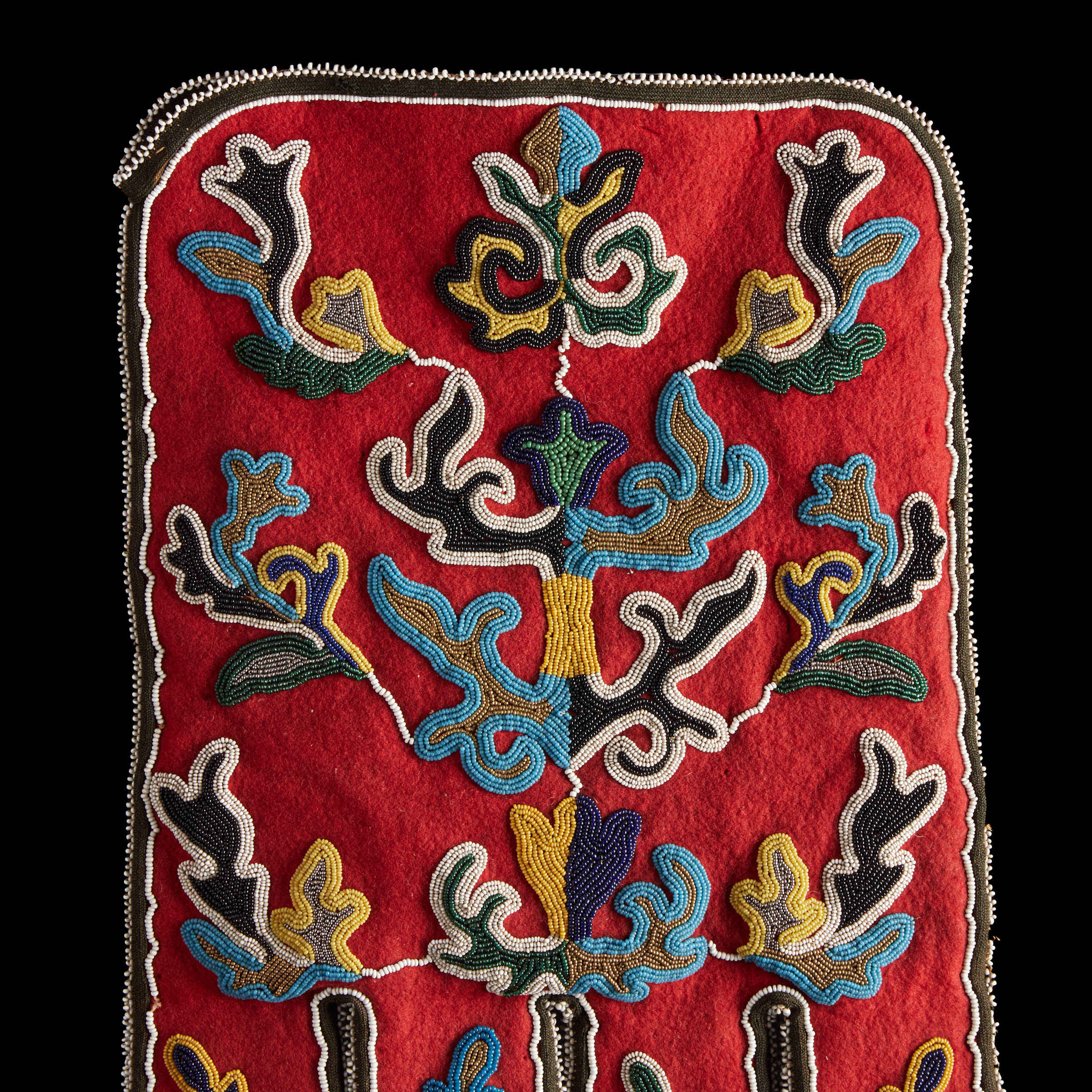
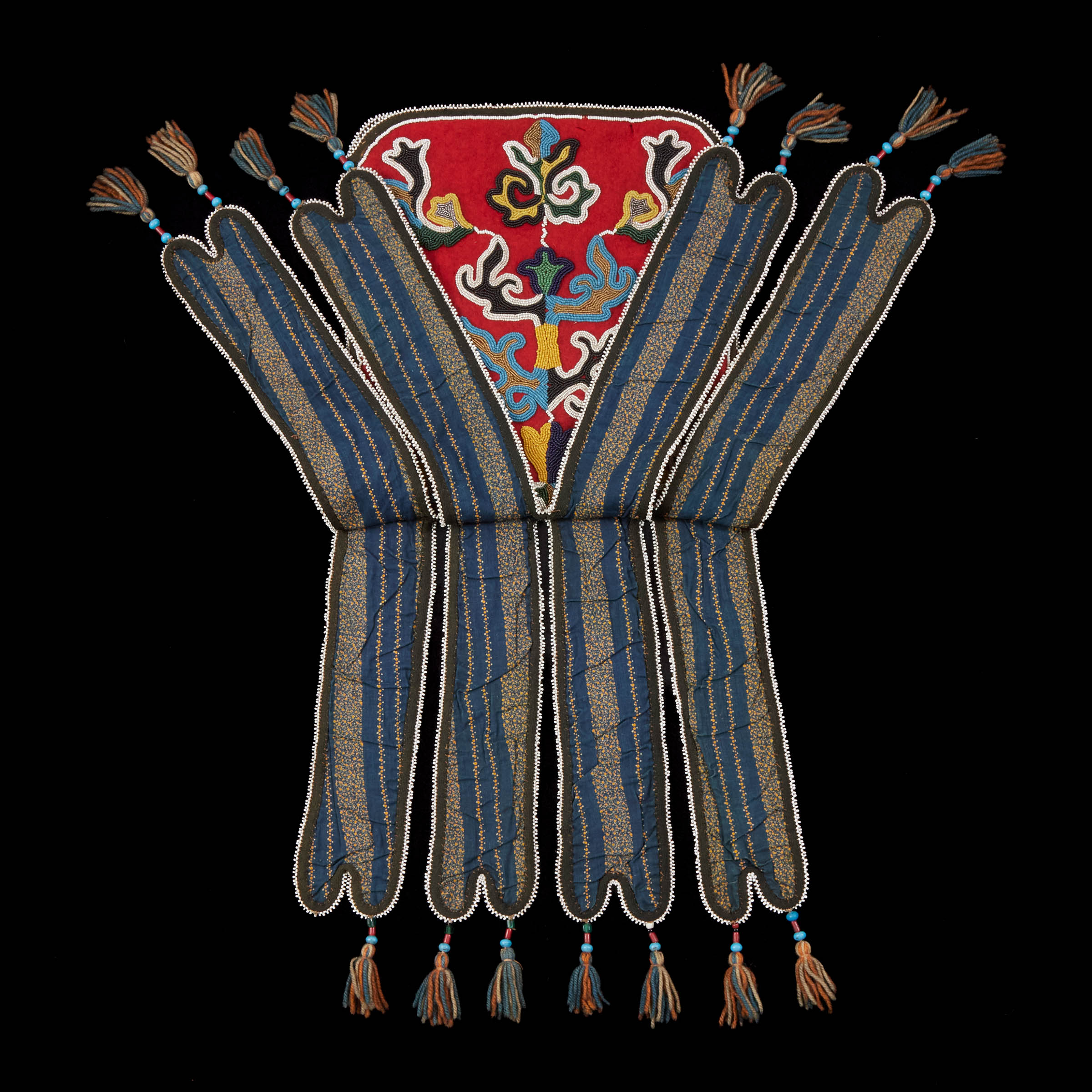
The present example is an exceptionally large and skillfully executed bag. Sprays of tightly arranged and vibrantly coloured abstract floral or foliate beadwork reveal the skill of the maker’s hand, and the eye of a master colourist. Notable also is the placement of the cotton trade cloth on the interior face of the bag’s bi-lobed tabs. The placement ensures that dotted stripes on the cotton sit within the bounds of each tab, echoing the bag’s most recognizable feature. Such details would be unlikely to have been fully visible when in use, instead apparent only amidst the swishing motion of the tabs during sudden movements by the wearer, or else a matter of pride for the maker.
Ted J. Brasser, “Firebags of the Fur Trade”, Eye of the Angel: Selections from the Derby Collection (Massachusetts: White Starr Press, 1990), 35-39.