


Lot 25
Louis-Philippe Hébert, RCA (1850-1917)
Lot 25 Details
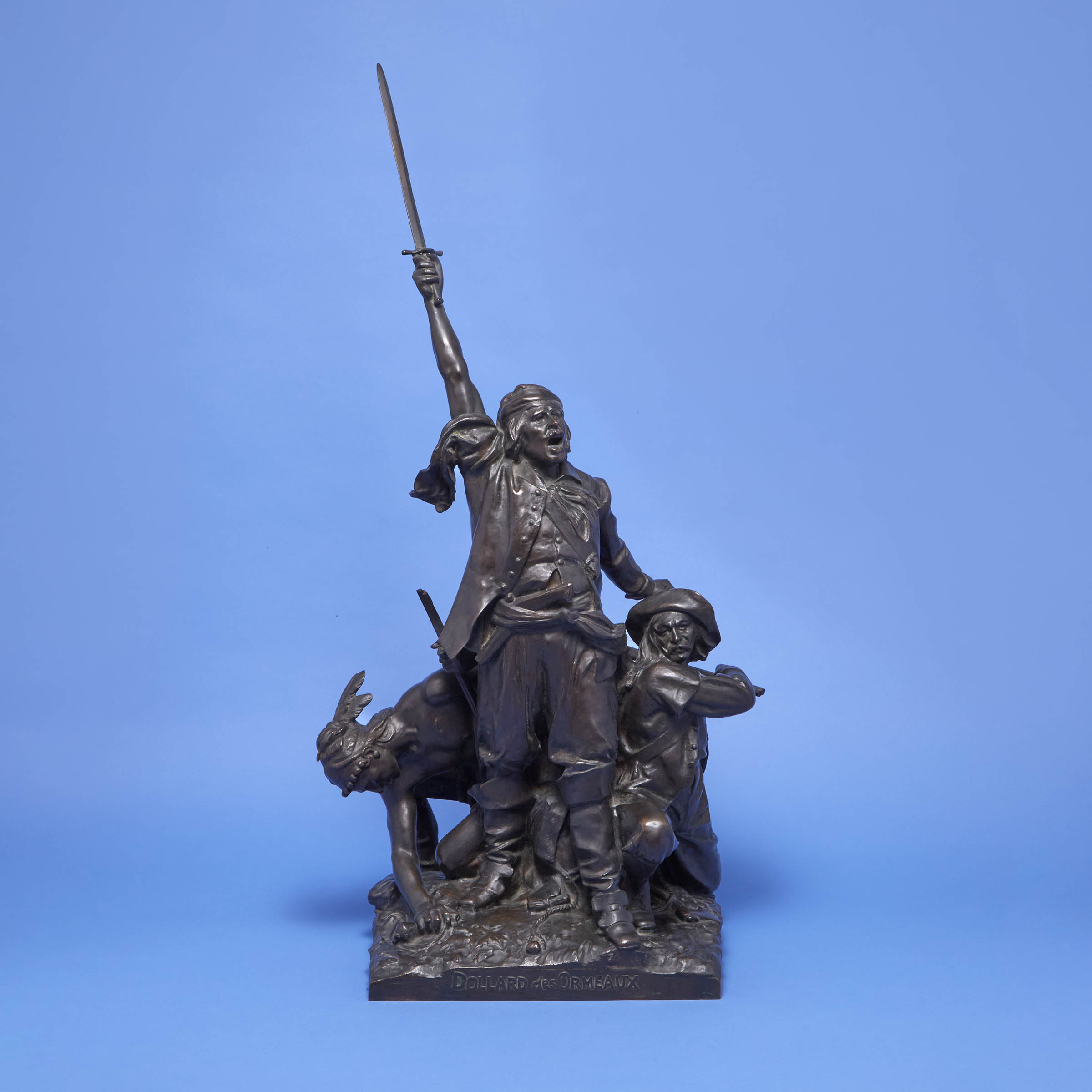
Louis-Philippe Hébert, RCA (1850-1917), Canadian
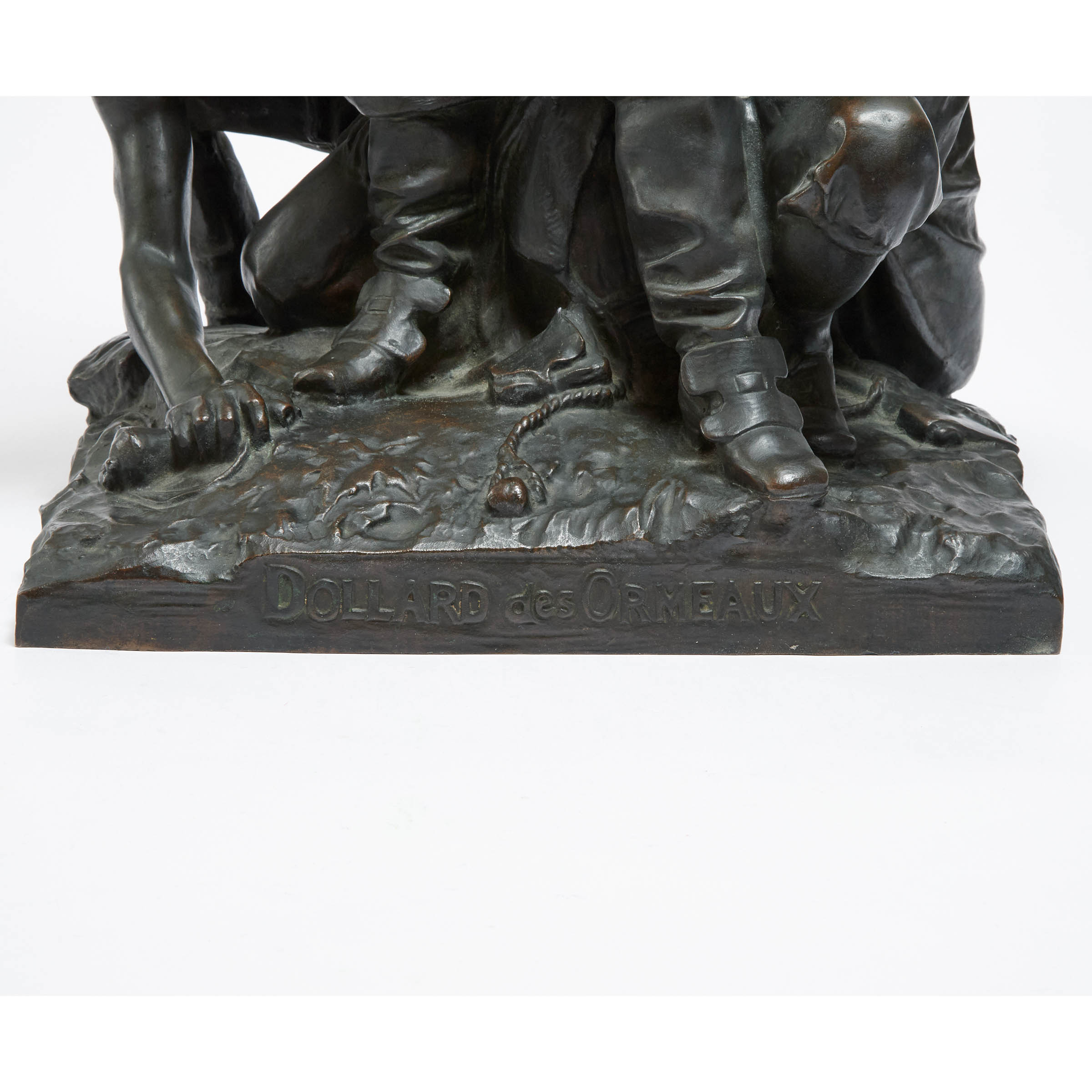
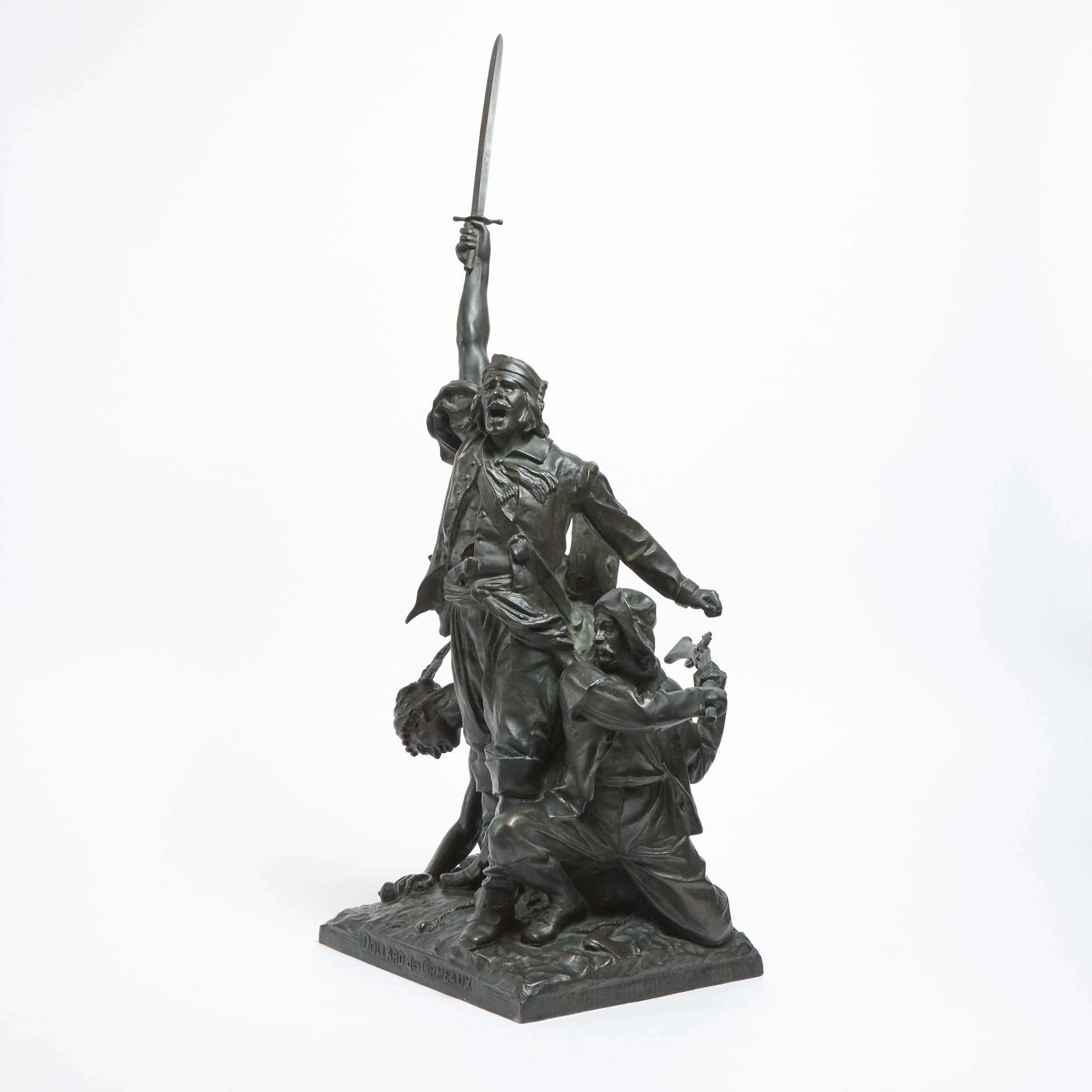
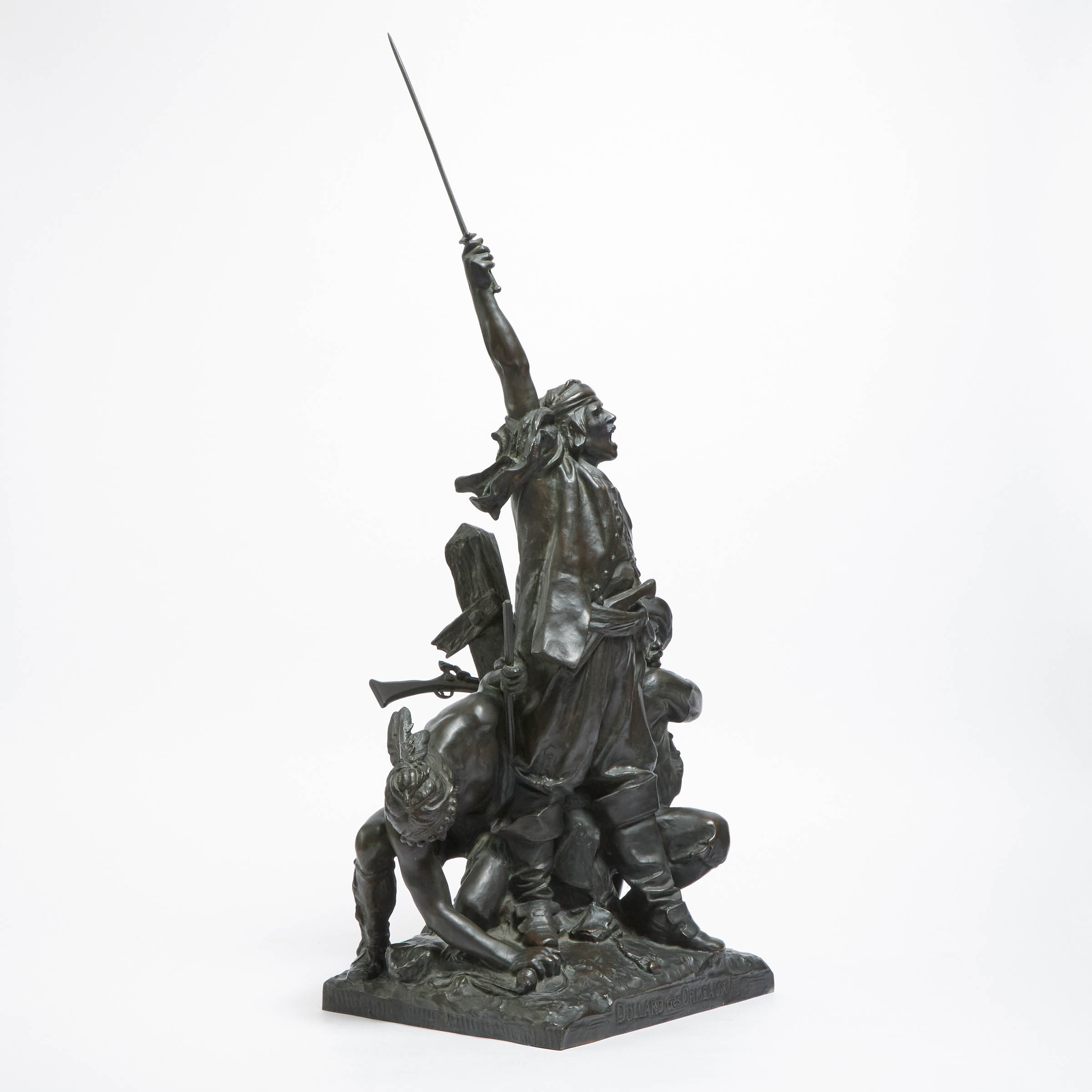
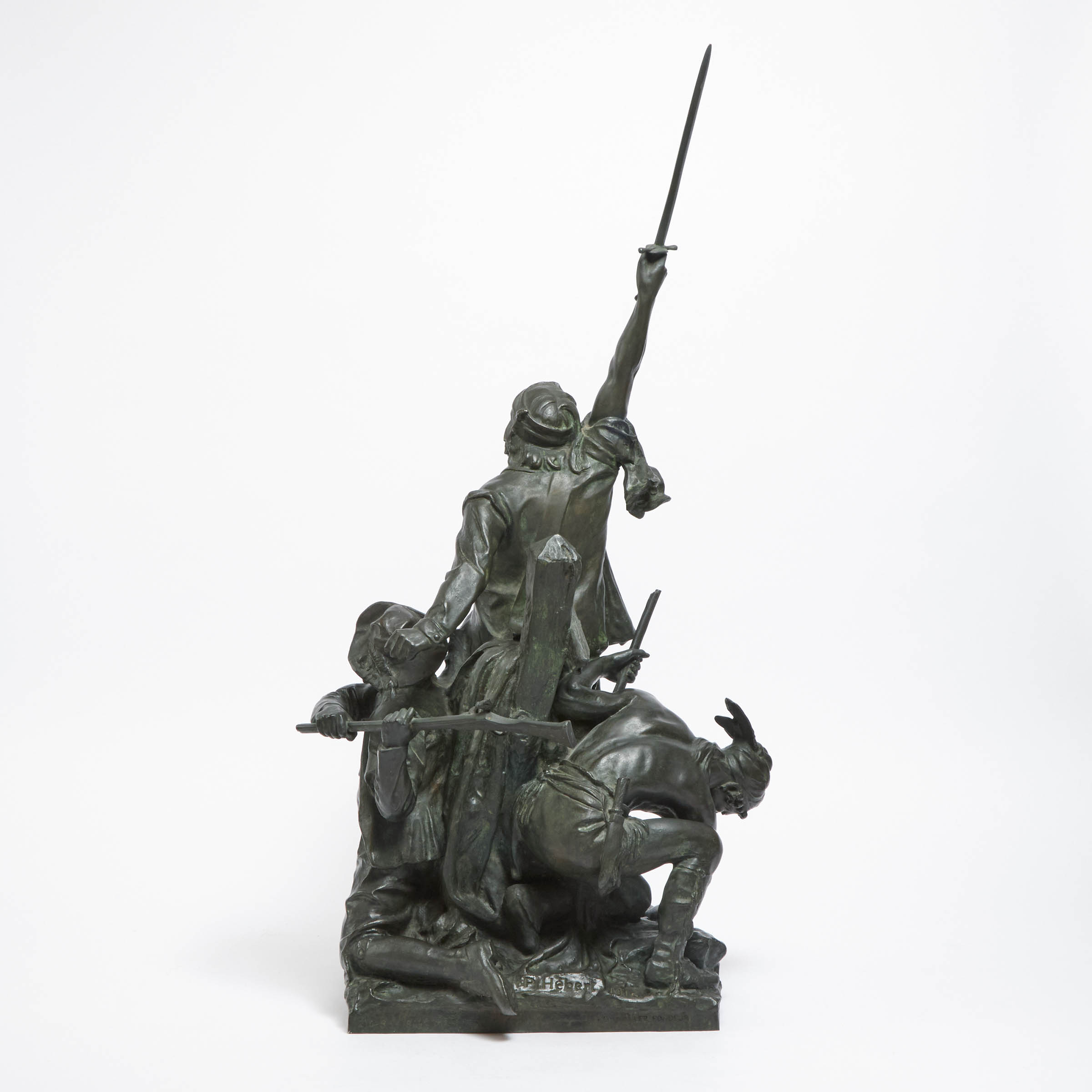
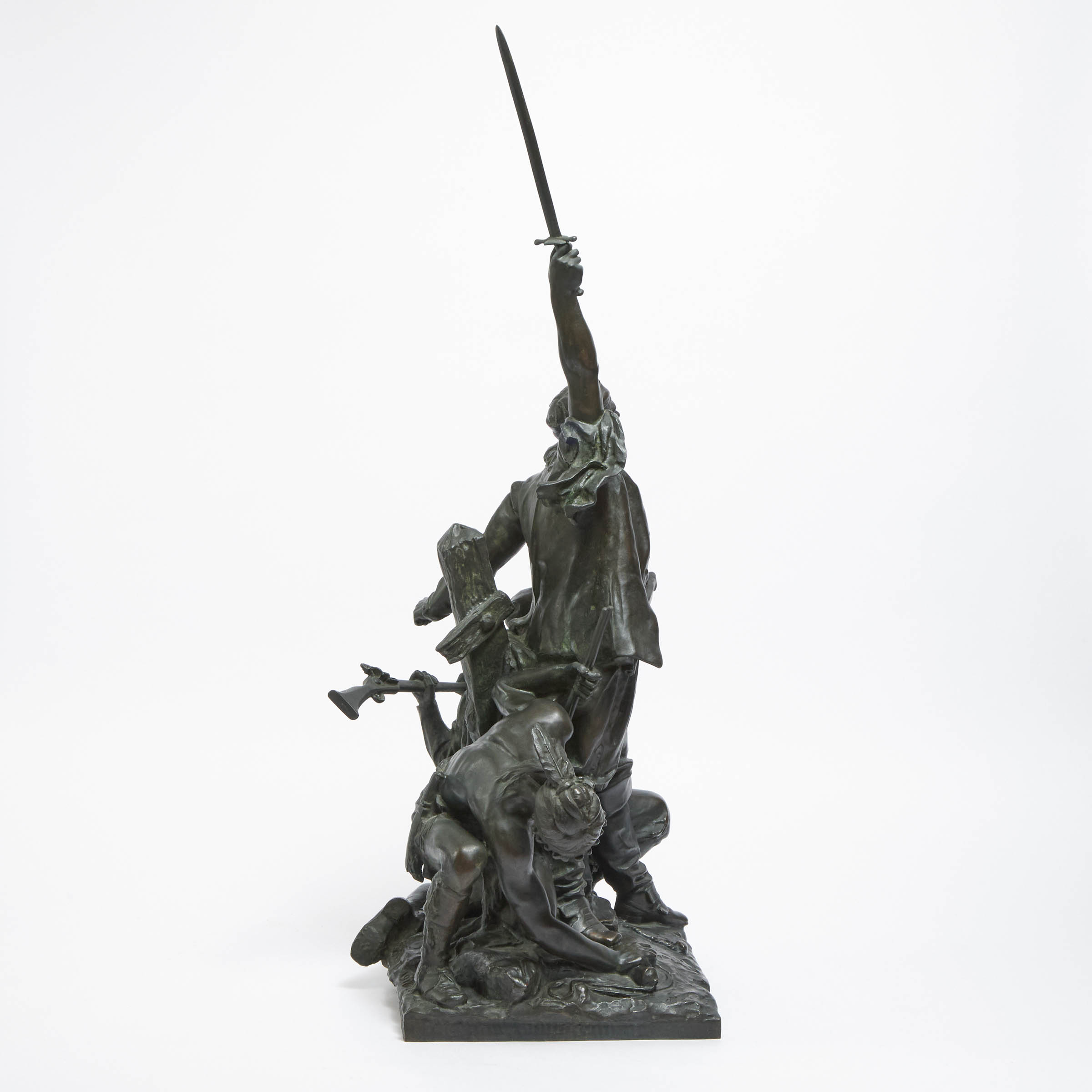
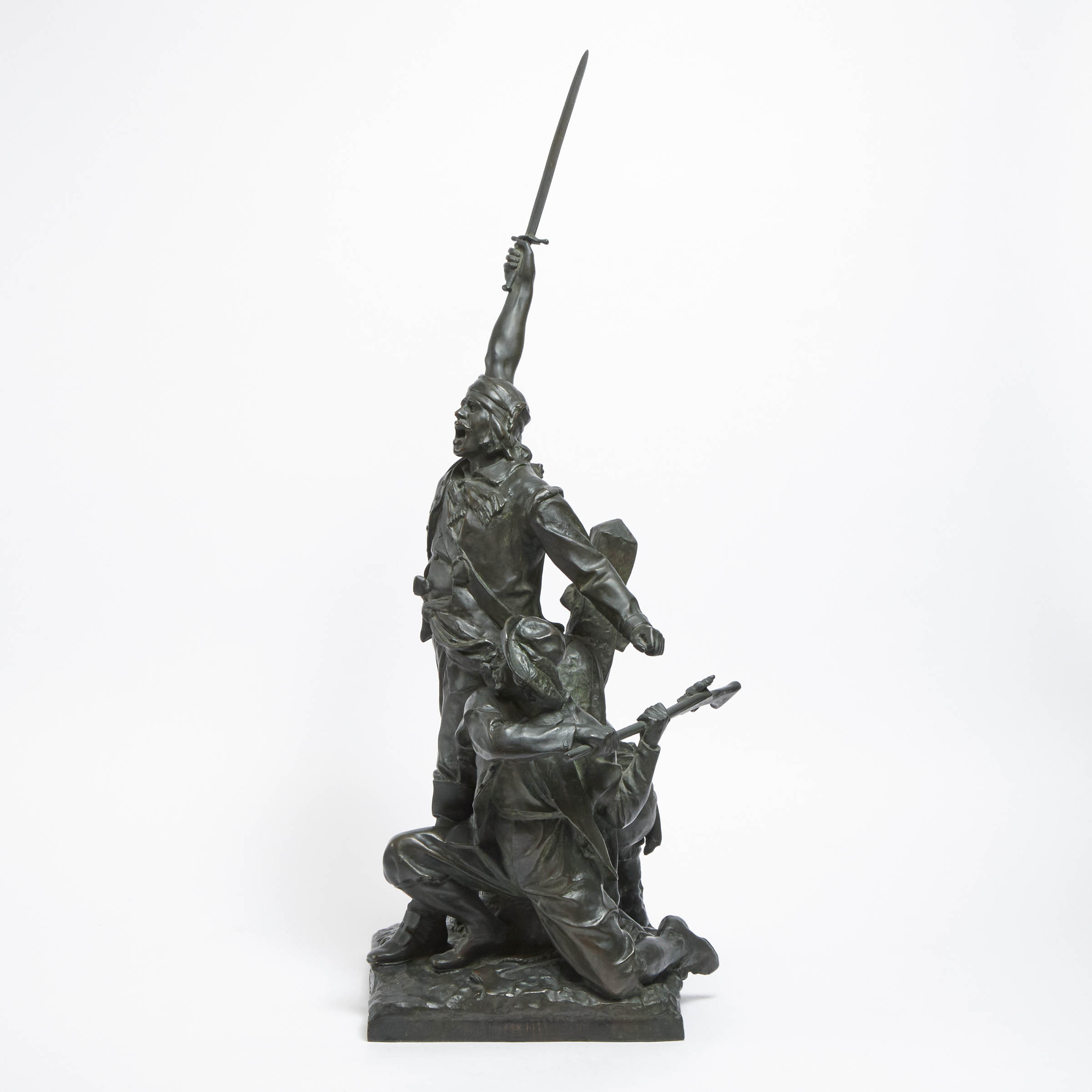
DOLLARD DES ORMEAUX, 1916
patinated bronze
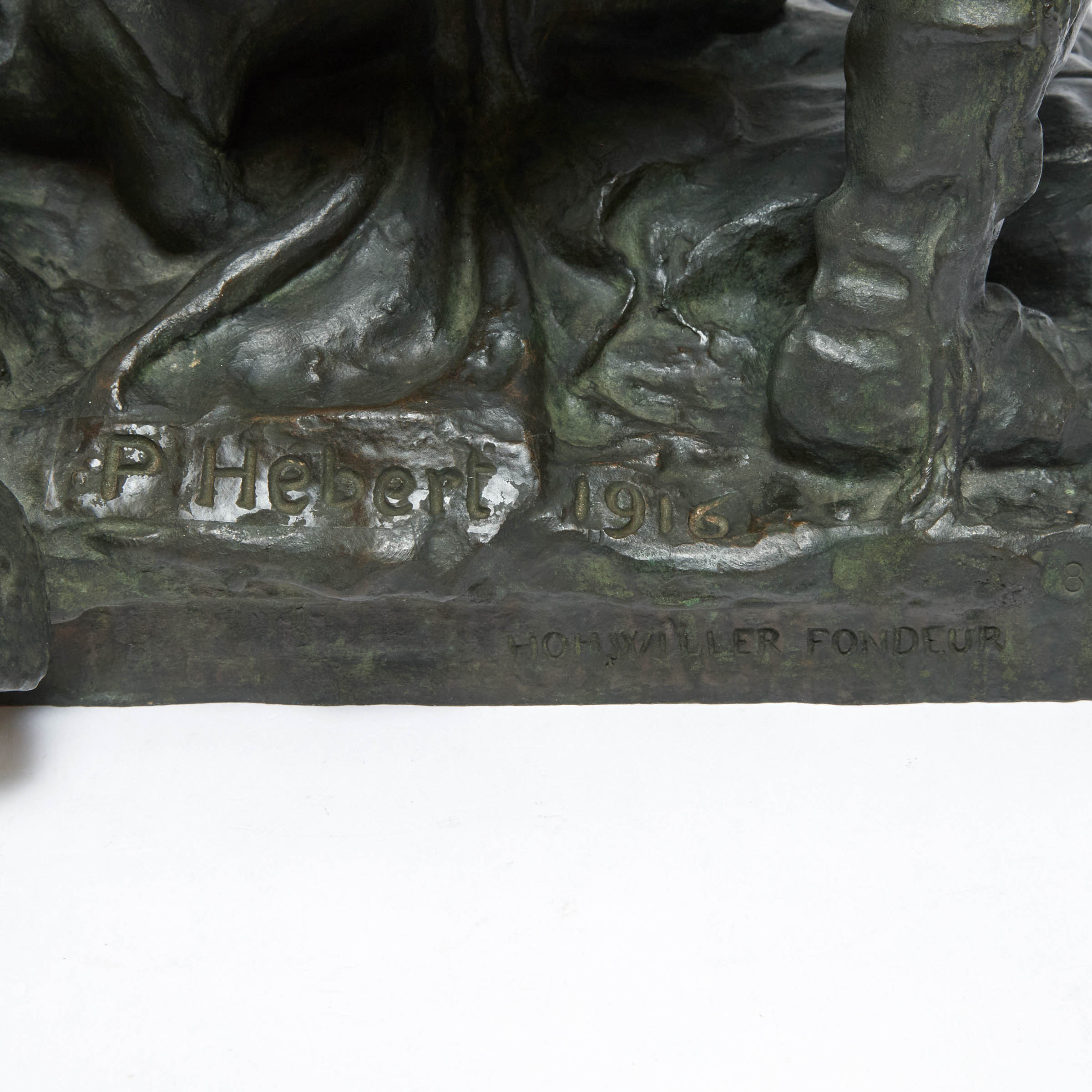
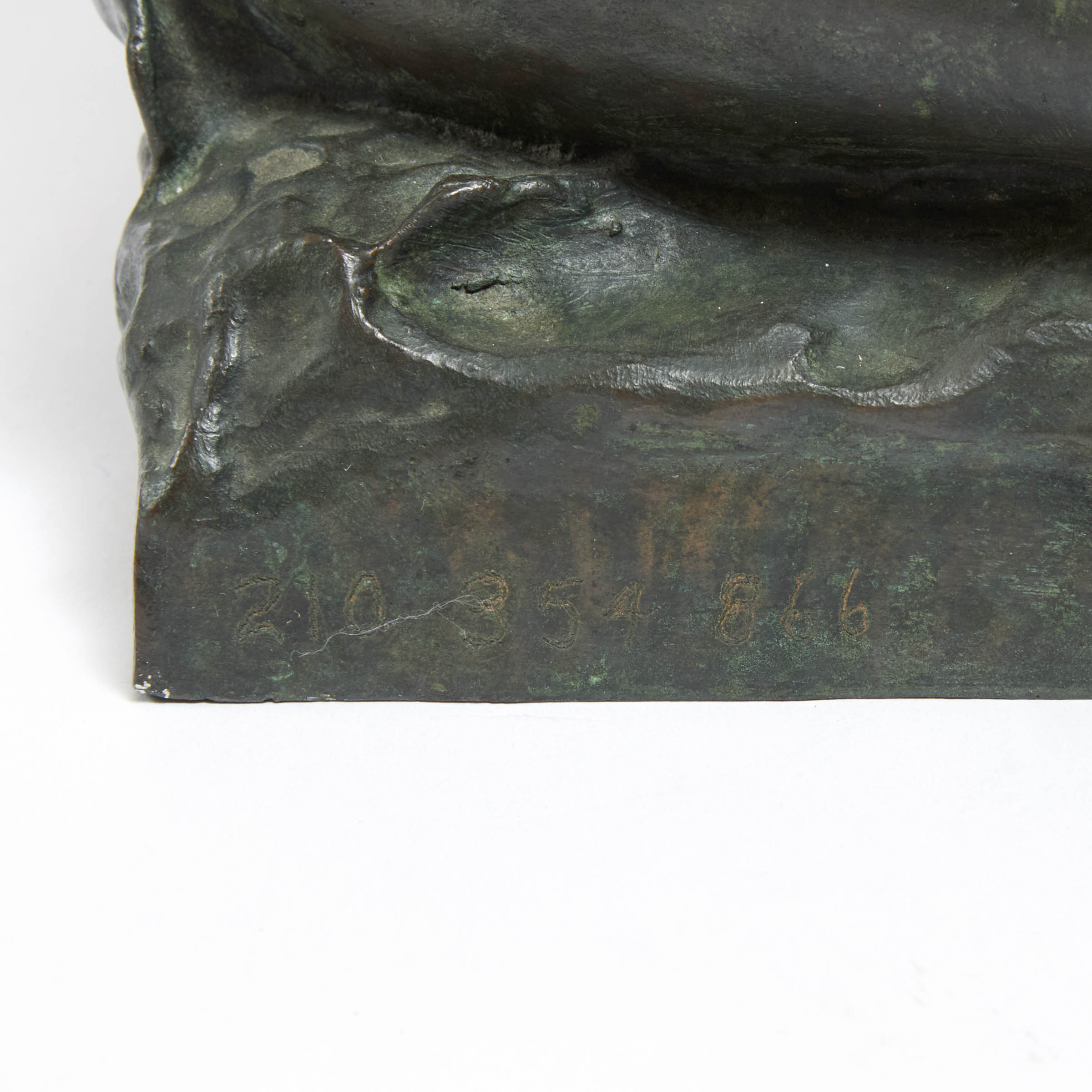
signed, titled, dated, and numbered "8", with foundry mark "Hohwiller Fondeur" stamped to base, incised
36 x 19 x 13.5 in — 91.4 x 48.3 x 34.3 cm
Estimate $10,000-$15,000
Additional Images
Provenance:
Collection of Patrick Martin Wickham, Quebec, commissioned in 1916
Private Collection, Toronto, ON, by descent from the above
Literature:
Daniel Drouin, Louis-Philippe Hébert, (Quebec: Musée du Québec et Musée des Beaux-Arts, Montréal, 2001), 295-296.
Note:
Portraits of notable French-Canadian figures are a recurring and defining theme in Louis-Philippe Hébert’s work. The artist sought not only to record history but to interpret it through his own artistic perspective in an effort to commemorate often overlooked historical figures and events. Many of the figures found in his sculptures had been forgotten and later rediscovered by 19th-century historians and writers. Hébert refrained from depicting religious subjects, instead drawing his inspiration from pivotal historical moments of the 17th-18th centuries under the French regime.
This work portrays the French-Canadian historical figure Adam Dollard des Ormeaux (1635-1660) during the Battle of Long Sault in 1660. Hébert presents Dollard des Ormeaux in a commanding, heroic pose at the centre of the composition with his sword towards the sky, conveying both resolve and a moment of victory. The work draws inspiration from Louis Fréchette’s poem, La légende d’un people, 1887, in which Dollard des Ormeaux is shown as unwavering in the face of impossible odds:
“But Daulac [Dollard] was brave and quick to respond,
Without retreating a step, solid as a rock,
The weak garrison stood firm under the shock.”[1]
Executed in 1916, Dollard des Ormeaux was commissioned by Patrick Martin Wickham, an insurance executive and mayor of St. Lambert, who developed a close personal friendship with the artist. Wickham later requested that the artist produce smaller versions of select sculptures originally created for the National Assembly Building. This work is one of the bronzes produced specifically for the Wickham collection and has remained in the family until now.
[1] Daniel Drouin, Louis-Philippe Hébert, (Quebec: Musée du Québec et Musée des Beaux-Arts, Montréal, 2001), 298.