


Lot 27
William Hodd McElcheran, RCA (1927-1999)
Additional Images
Provenance:
Private Collection, Toronto, ON
Note:
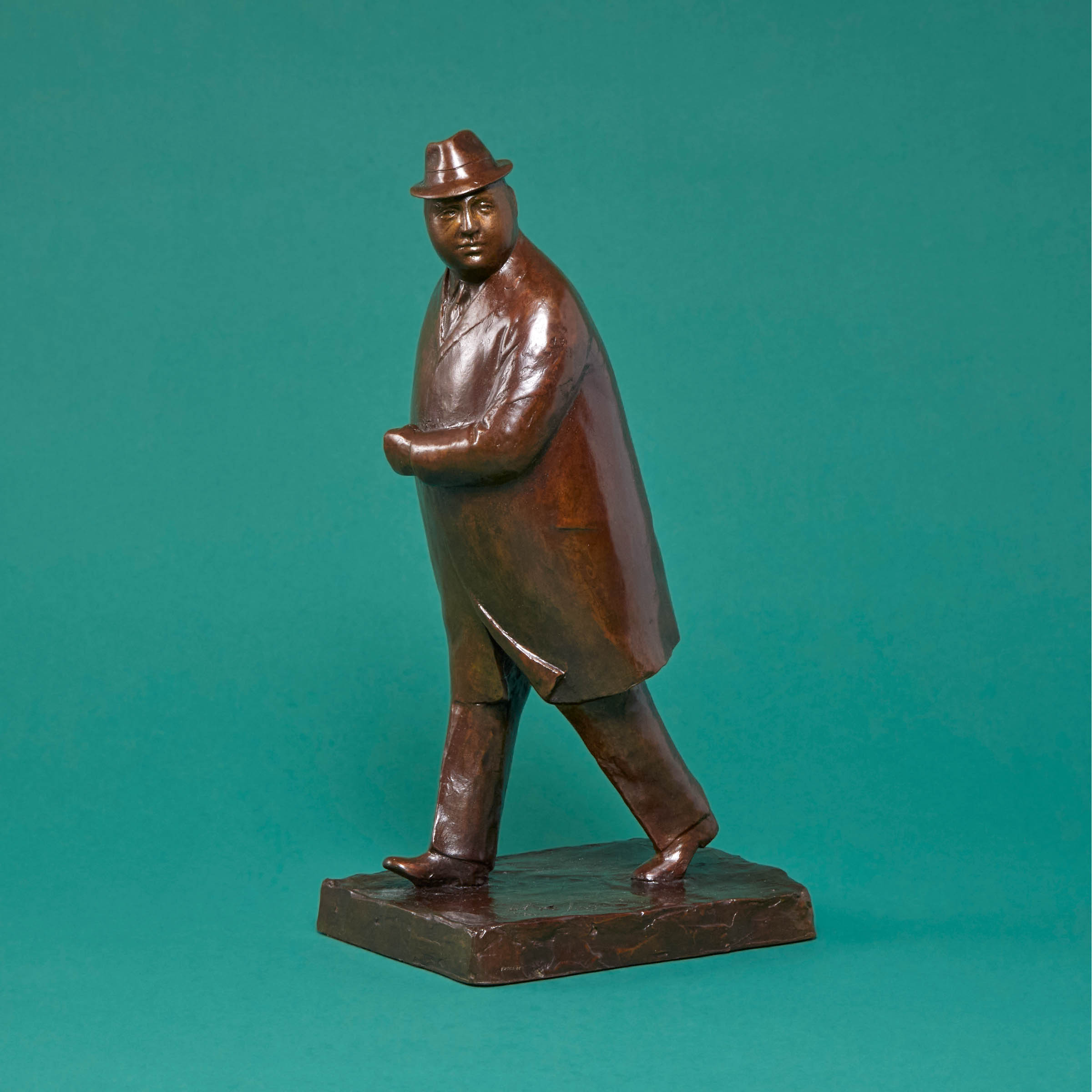
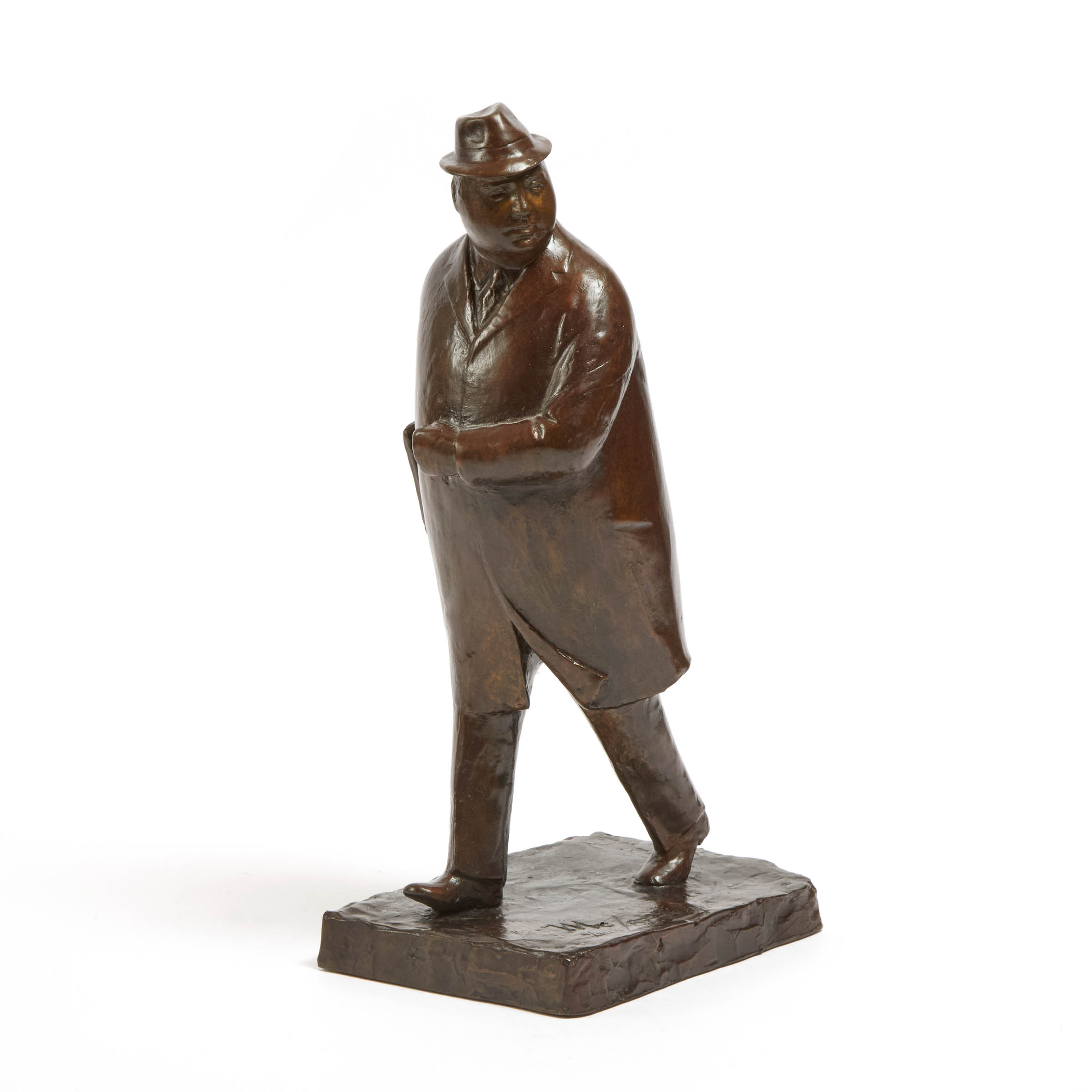
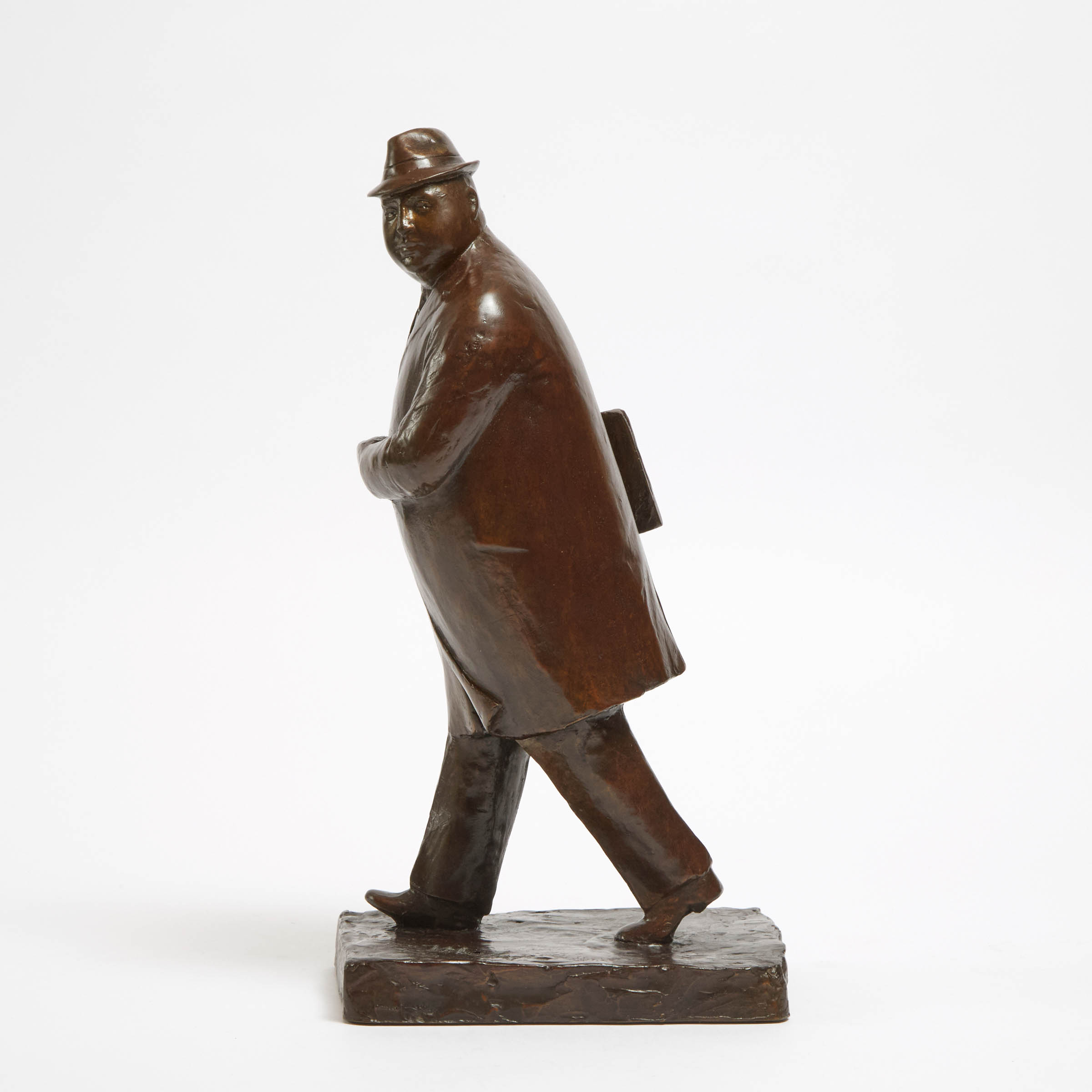
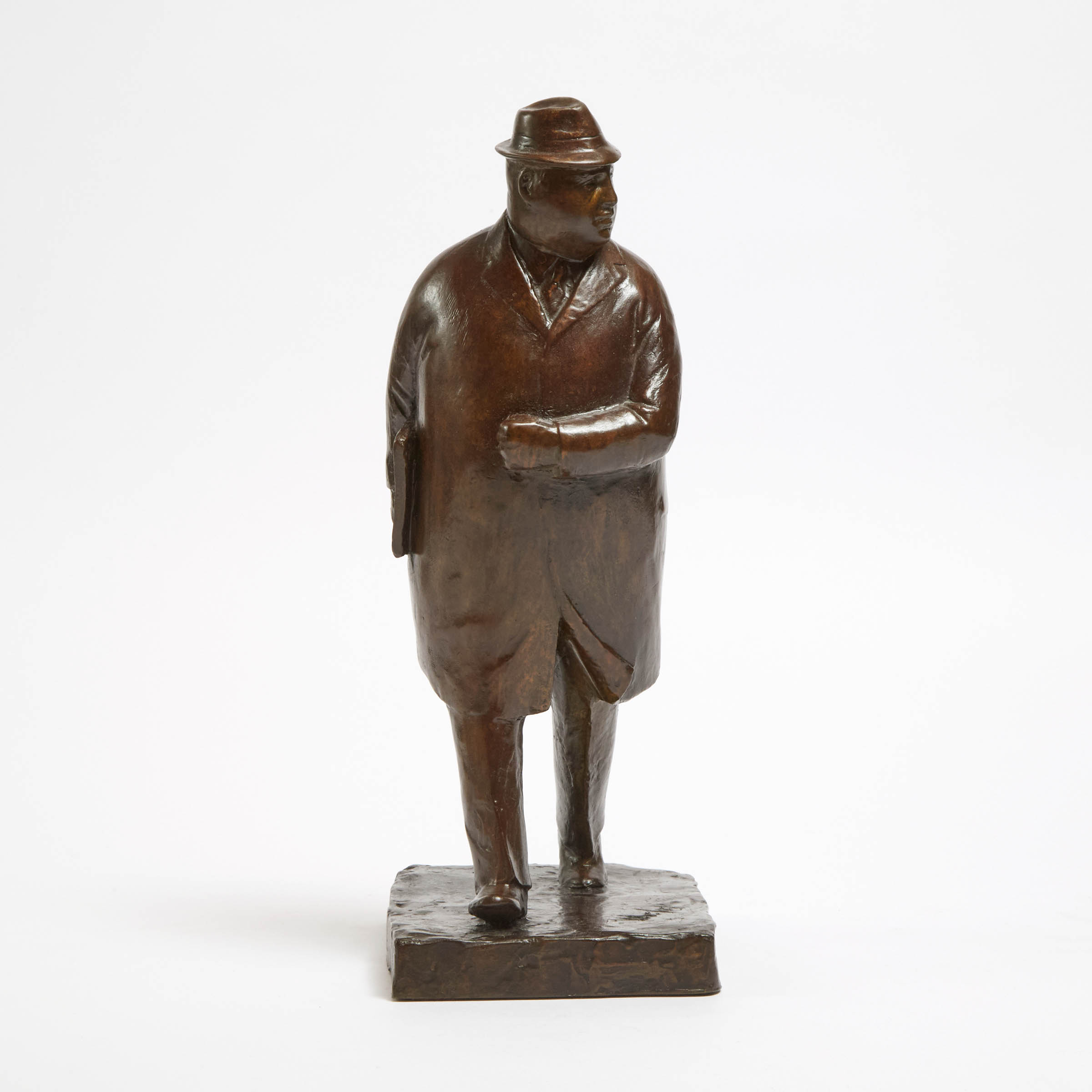
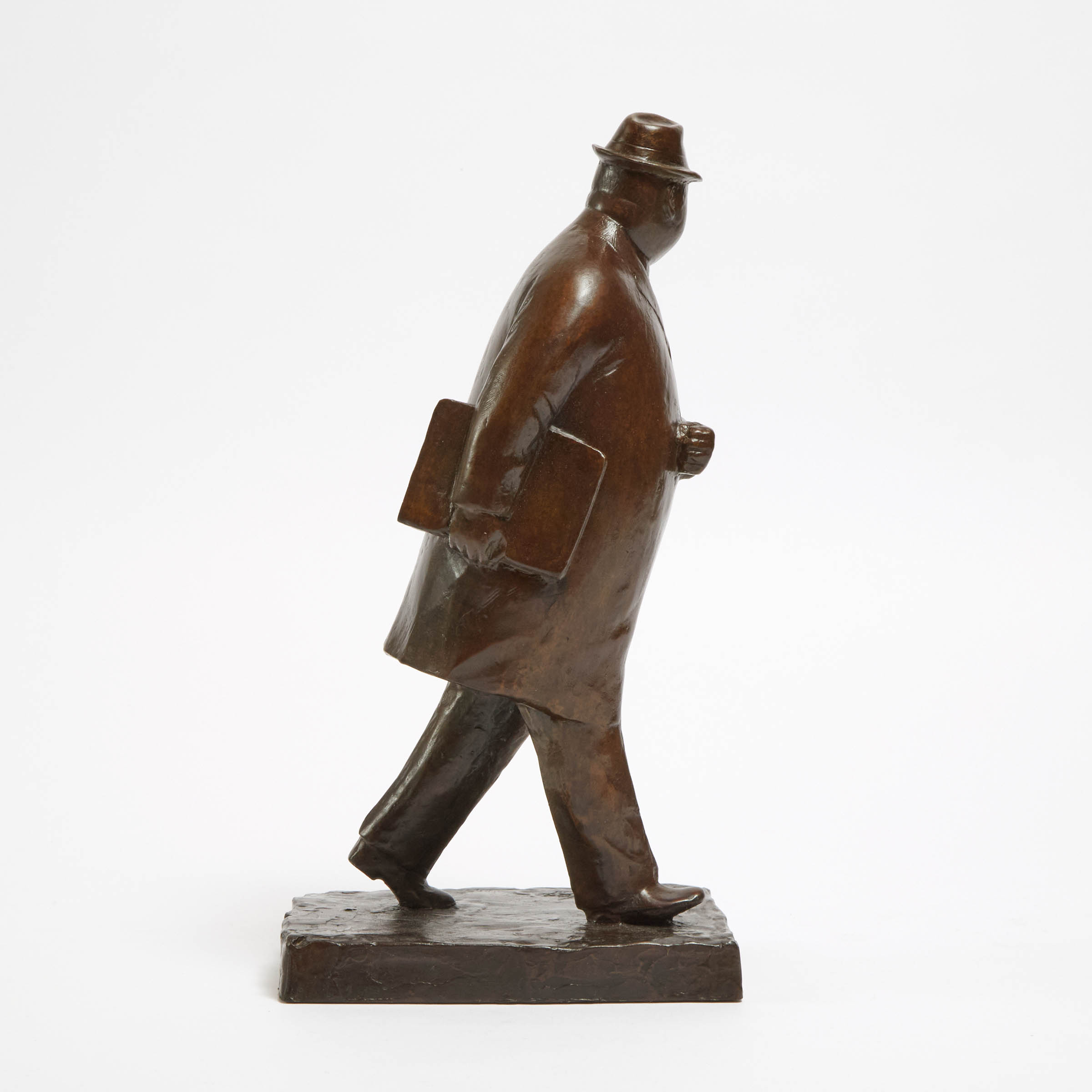
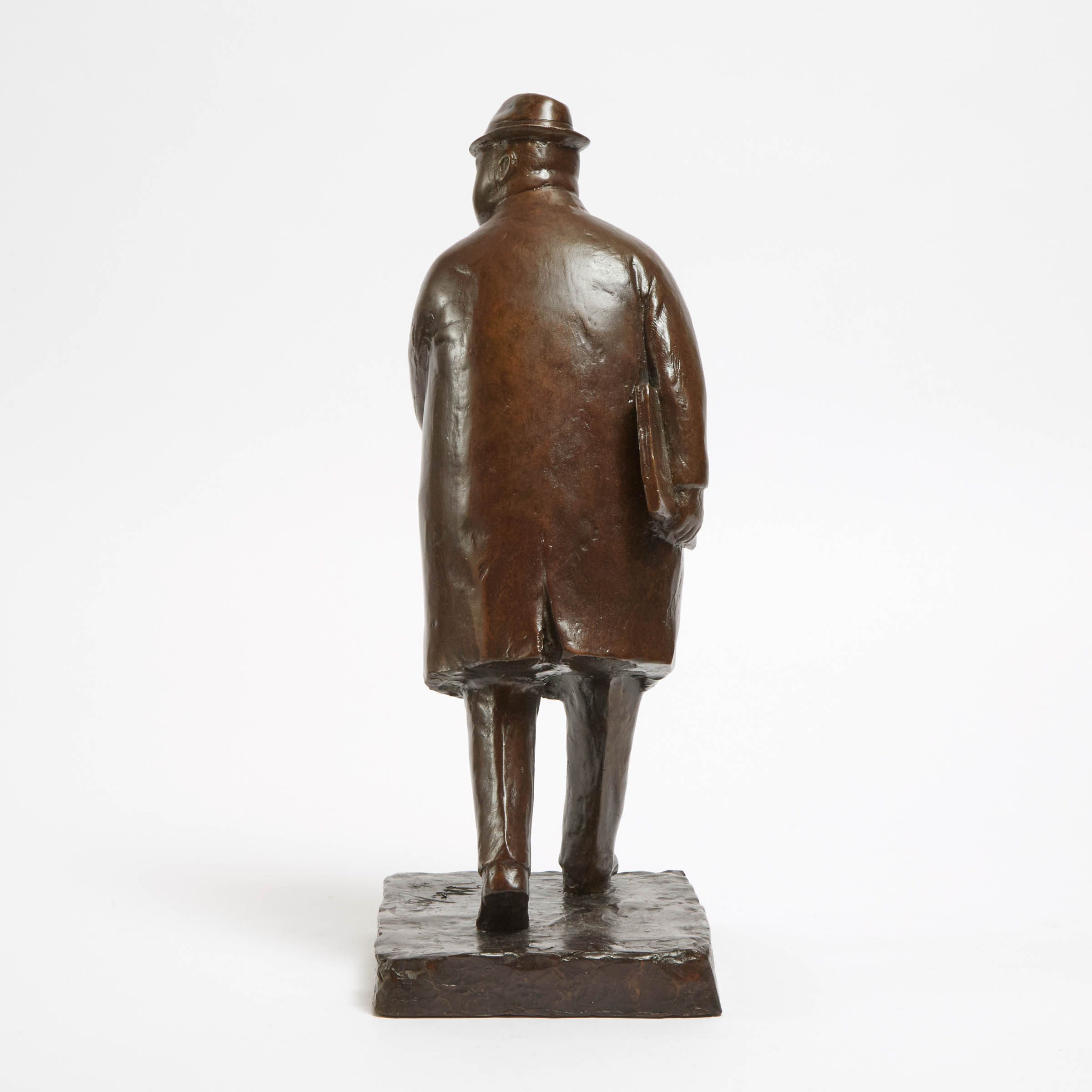
Walking Businessman is part of William McElcheran’s larger body of work, using the businessman as a universal symbol. Author David P. Silcox notes that McElcheran creates an "everyman", with figures that are symbolic rather than individual. Initially amusing, upon reflection they come to evoke deeper sentiments, carrying a sense of irony, as well as a compassionate, understanding view of life.[1]
In an interview with Dr. Inge Lindemann, conducted in Italy in 1990, McElcheran elaborates on the figure of the businessman:
Lindemann: How did you come to the image of the businessman?
McElcheran: There was this period in my work where I became very deeply involved with Catholicism. During that period, I was using skinny figures to express the thin equals of spirituals - later, the fat businessmen as a corporal expression for loneliness. When I was working with religious sculptures, I was always trying to relate my treatment of the subject matter, particularly the treatment of the passion, to contemporary life. There I had this figure of an Everyman with a blank look on his face expressing a sort of impotence. I was trying to relate this idea of the Passion of Christ to contemporary life: how responsible are we for the sufferings of Christ? I was showing in my Everyman, who developed into my businessman, this grey character, who was witnessing it and even trying to figure out what was happening. But I lost my Catholic faith, and with it a part of my art which was connected with this symbolizing of the spiritual. And so what I'm really doing now is trying to find a classical image. My businessman replaces the classical hero. All the classical artists were dealing with the heroic and how they could find images for this that were larger than life. I, on the other hand, am trying to find my image for the anti-ideal, my anti-hero. So the whole idea of my businessman is that he is exactly that sort of Everyman, the ubiquitous non-hero.
[1] Gerhard Finckh and David P. Silcox, William Mac , Hôcherl-Verlag, Munich, 1991, p. 26-28.