


A great Burgundy can begin a lifelong conversation.
One bottle leads to another vintage, a neighbouring vineyard, a different grower’s interpretation of the same hillside. For collectors, this is Burgundy’s enduring invitation: the deeper your understanding becomes, the more there is to discover. Its collectability begins with exceptional wines from finite parcels of land, shaped by people, weather and time.
 Burgundy’s wine story reaches back to Roman times.
Medieval Benedictine and Cistercian monks subsequently cultivated vineyards and observed differences between sites over generations. Their work helped establish an understanding that still animates collecting today: a short distance along a slope can change the character of a wine. Two grapes became the region’s principal interpreters. Pinot Noir can offer perfume, delicacy and remarkable depth; Chardonnay ranges from taut citrus freshness to layered richness. Both have deep roots in Burgundy, where their sensitivity to place helped establish benchmarks for winemakers worldwide.
The ownership map requires a little historical untangling.
The French Revolution brought the confiscation and sale of Church and aristocratic estates. Napoleon’s Civil Code of 1804 reinforced equal inheritance among children, contributing to further subdivision across generations. Today, several growers may own portions of one vineyard, while a single domaine, or estate, may hold small parcels across numerous villages. The producer’s name matters as much as the vineyard’s reputation.
Here, terroir becomes wonderfully specific.
Geology, soil, slope and exposure interact with local climate and the grower’s decisions. Burgundy’s named vineyard sites, or climats, embody this relationship. Those of the Côte de Nuits and Côte de Beaune received UNESCO World Heritage recognition in 2015, honouring a culture built around the individuality of place. For collectors, that individuality meets a powerful constraint: limited supply. A celebrated vineyard cannot simply expand to satisfy demand, and each vintage is a finite edition. As bottles are opened, surviving examples become fewer. Exceptional quality, producer reputation and the capacity to develop in bottle give scarcity meaning; careful storage helps preserve it.
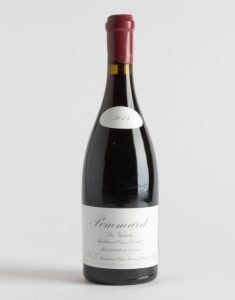
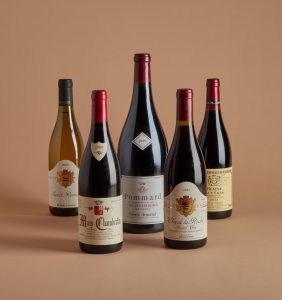
Waddington’s November Fine Wine auction brings these ideas into focus through three particularly compelling collector highlights. Domaine Leroy’s Pommard Les Vignots 2015, lot 479, appeared in Sotheby’s dedicated Marvellous Leroy Collection sale, whose catalogue recorded production of just 2,425 bottles. It illustrates how a producer’s reputation can make even a village-level Burgundy an object of serious collector attention.
Domaine Armand Rousseau’s Mazy-Chambertin 2009, lot 17, combines a celebrated Gevrey-Chambertin estate with a grand cru vineyard and substantial bottle age. Christie’s has offered this exact wine and vintage. Hubert Lignier’s Clos de la Roche 1991, also documented in Christie’s sales, offers a different attraction: the opportunity to acquire a grand cru with more than three decades of history. For such mature bottles, provenance and condition are central to their appeal.
Starting a collection can be equally rewarding.
Louis Jadot’s Beaune Premier Cru Aux Cras, Domaine Gagey, 2014 offers a way to explore a named vineyard with the benefit of bottle age.
Hubert Lignier’s Saint-Romain Blanc 2020 introduces Chardonnay from an appellation beyond Burgundy’s most expensive addresses. Subject to auction estimates, both deserve consideration as foundations for a collection built around learning and enjoyment.
Discernment remains essential at every level. Study ownership and storage history, inspect condition reports, and consider drinking maturity alongside price. International auction appearances demonstrate an established market presence; they do not promise future returns. A thoughtful collection reflects personal taste as well as informed judgement.
There is also pleasure to enjoy now.
Well-stored examples of Comte Armand’s Pommard Clos des Epeneaux 2009 and Jadot’s Aux Cras 2014 are appealing candidates for the table, allowing collectors to explore the textures and complexity that time can bring. Opening a mature bottle can deepen our understanding of the younger wines we choose to cellar.
Burgundy rewards curiosity long before it rewards expertise. Whether you are adding a treasured bottle to an established cellar or choosing your first, the invitation is the same: discover a place, follow its story, and leave room for the pleasure of pulling the cork. With November’s offering, that pleasure need not always wait.
Our thanks to Robin Morgan, our Spirits and Wine consultant, for this essay.
About the Auction
Bidding available November 23 – December 1, 2026.
Honouring a decade-long tradition of fine wine excellence, our November auction features over 800 curated lots from the world’s benchmark regions. From Classified Bordeaux and rare Burgundy to cult Napa reds, festive Champagnes, a nine-vintage Ornellaia vertical, and the monumental 1985 Sassicaia, this auction presents an unrivaled selection to savour now or cellar for generations.
For more information please contact us at [email protected]
Related News
August 12, 2026

July 8, 2026
May 22, 2026
May 6, 2026
April 14, 2026

April 12, 2026
February 19, 2026
February 10, 2026
Meet the Specialists

Joann Maplesden
Senior Specialist

Devin Hatfield
Specialist