



A highly decorative Japanese technique that flourished during the Meiji era (1868–1912), Shibayama inlay remains sought-after by collectors today. With several examples included in our April auction of Asian Art, we invite you to explore this impressive technique with us.
The name “Shibayama” is said to originate from the Shibayama area of present-day Chiba prefecture. The technique was created by Ōnoki Senzō, a haberdasher. He named the style he pioneered after his hometown, Shibayama, and would go on to adopt it as his surname, going down in history as Shibayama Senzō.
WHAT DEFINES SHIBAYAMA?
Shibayama pieces are known for sculptural inlay combined with three-dimensional decoration. Materials like mother-of-pearl, coral, ivory, tortoiseshell, and semi-precious stones are set into ivory, wood, or lacquer grounds, but are not inlaid flush – instead, elements protrude in high relief. The combination of these two elements sets Shibayama apart from earlier Japanese techniques, and results in a textural, jewel-like surface.
Typical motifs are naturalistic, depicting flora and fauna, landscapes, or figures in courtly or pastoral settings. These subjects are by no means unique to Shibayama, being emblematic of Japanese decorative art as a whole. What sets Shibayama apart is its high degree of realism, specific craftsmanship, and the appliqué-style of raised surfaces. Common items in this genre were cabinets, display and jewellery cases, writing boxes, table screens, panels, vases, and presentation pieces.
SHIBAYAMA ON THE WORLD STAGE
It is important to note that Shibayama is also heavily influenced by Western tastes. After Japan opened to international trade in the mid-19th century, workshops began catering to foreign aesthetic sensibilities. Though rooted in Japanese tradition, art from this time is often more elaborate and showy than domestic wares. This period, known as the Meiji era (1868–1912), saw Japan and its arts emerge on the world stage. For the first time, Shibayama objects were presented at international events including the 1873 Vienna World’s Fair and the 1876 Centennial Exposition, delighting collectors. Japanese workshops ramped up production to meet these foreign demands, ushering in a great age of export wares.
COLLECTOR’S NOTES
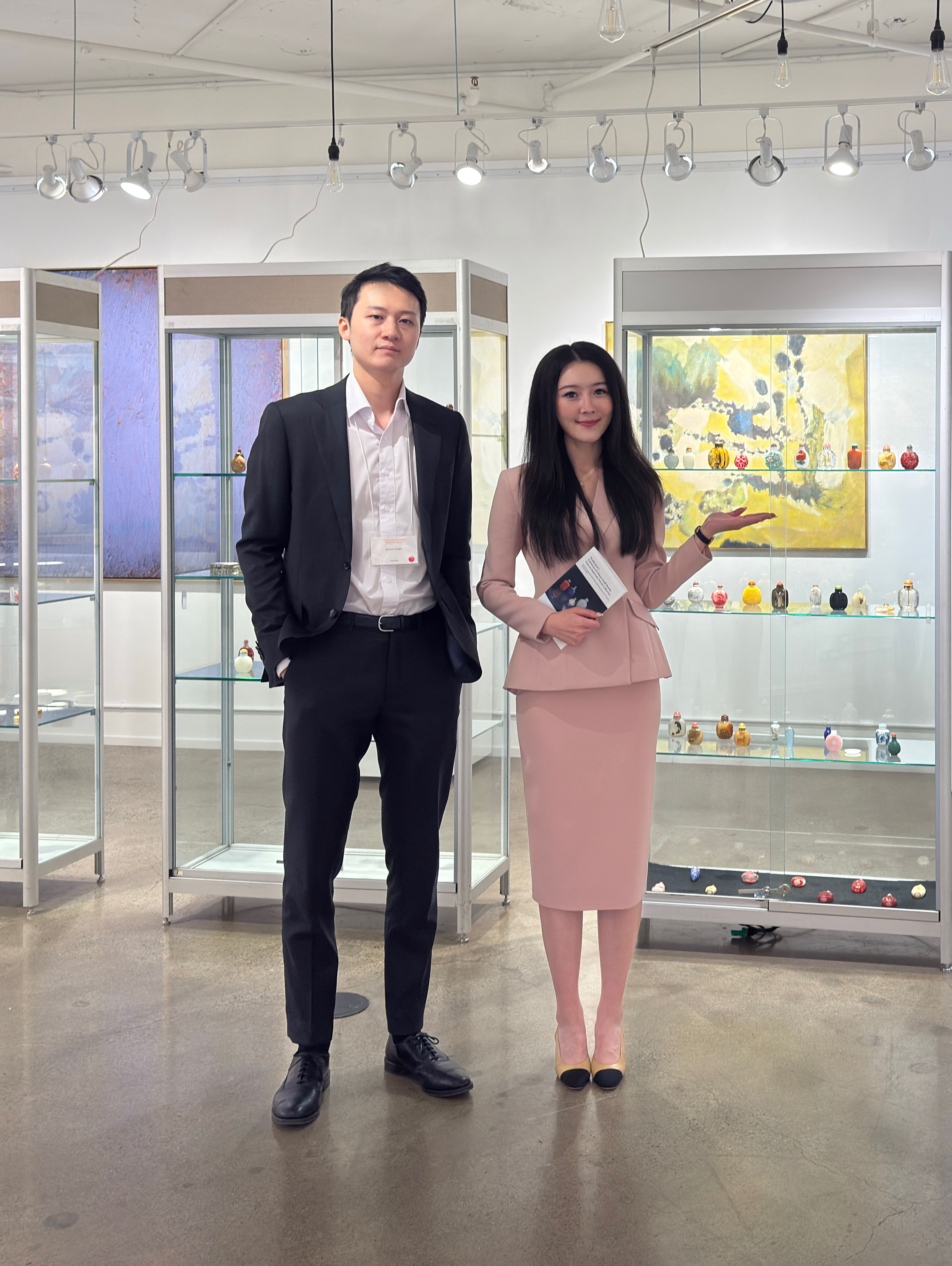
Those new to collecting Shibayama should note that pieces actually signed “Shibayama” are relatively uncommon, and the signature does not necessarily indicate a single maker. Historically, multiple members of the Shibayama family and their followers, including Shibayama Senzo, Shibayama Muneichi, and Shibayama Muneaki, used the same name, so a “Shibayama” signature may refer to Senzo himself, a later family member, or the workshop working the Shibayama tradition. Many fine Shibayama-style works are signed by other artists or remain unsigned altogether, reflecting the collaborative and stylically influential nature of the genre. As Austin Yuen, a specialist in our Asian Arts department, explains, “Shibayama” has also become a term used much like “Kleenex,” where the brand name has been universalised to signify a type of product; in this sense, it refers both to a decorative genre and to artists working under the Shibayama name.
As with all popular decorative art forms, the quality of Shibayama varies widely. Compositions should showcase a range of materials and be finely rendered. Look for inlay that remains intact, with minimal gaps or filler around the edges. When in doubt, get in touch with a reputable specialist – like our team at Waddington’s!
ABOUT THE AUCTION
On view at our Toronto location:
Sunday, April 12 from 12:00 pm to 4:00 pm
Monday, April 13 from 10:00 am to 5:00 pm
Tuesday, April 14 from 10:00 am to 5:00 pm
Featuring property from a Toronto estate collection, highlights from our April 2026 auction of Asian Art include early ceramics such as a Song dynasty Qingbai incense burner, Longquan wares, and Sancai figures; Ming jade carvings of horses, and panels with Ming and Qing jade inlays; porcelains including a Qianlong blue and white altar vase, a Daoguang famille rose gu vase, and a Kangxi ‘lotus’ jar; Buddhist bronzes including Tibetan gilt examples and a 19th-century Burmese Jambhupati; Chinese paintings; Japanese Shibayama-inlaid masterpieces; a Hattori Tadasaburo cloisonné vase; NBTHK-certified swords; and prints.
Please contact us for more information.
Related News
April 22, 2026

January 14, 2026
November 27, 2025
November 23, 2025
August 14, 2025
August 10, 2025
March 26, 2025
July 24, 2024
Meet the Specialists

Amelia Zhu
Senior Specialist / Business Development

Austin Yuen
Specialist