



Imperial porcelain refers to ceramics produced specifically for the Chinese imperial court, whether for use within the palace, religious ceremonies, diplomatic gifts, or other official purposes. This important distinction separates imperial wares from the vast quantity of porcelain produced for domestic and international trade, which was made by many of the same workshops but was not commissioned for or controlled by the court.
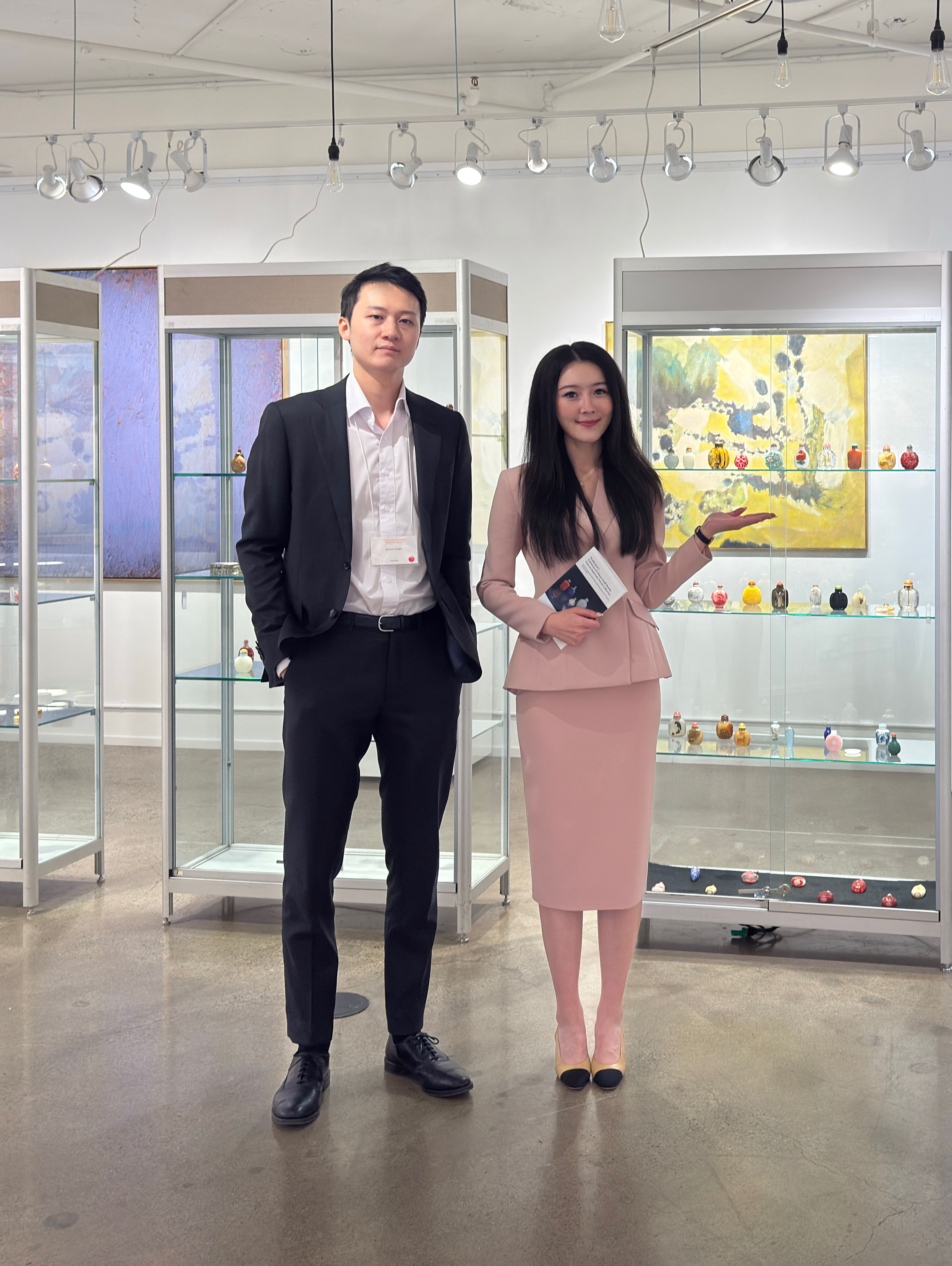
The origins of Chinese porcelain date back a long time. Austin Yuen, a Specialist in our Asian Art department, notes that “primitive forms of porcelain began in the Tang dynasty (618–907), while the earliest porcelain that resembles what we define as porcelain today is widely accepted to have emerged during the Yuan dynasty (1279–1368). The artform truly blossomed under the Ming dynasty (1368-1644).” The Hongwu Emperor (r. 1368-1398) was the first ruler of the Ming dynasty, defeating the Mongol-led Yuan dynasty to reinstate native Han Chinese rule. Hongwu established strict regulations on ceramic production and use, and created a highly organised system of manufacture that spanned several Chinese provinces that would continue throughout the Ming period.
The true centre of production for imperial porcelain was Jingdezhen, in the Jiangxi province in the southeast of China. Though Jingdezhen began as a collection of ceramic villages, it continued to grow in significance. Jingdezhen was granted an imperial kiln in 1369. The site was chosen for its abundance of kaolin, the soft clay that forms the base for the white porcelain that is now revered around the world.
IMPERIAL PATRONAGE
The Ming dynasty effectively oversaw the entire porcelain industry. While porcelain was produced in enormous quantities for domestic and international markets, the Ming court exerted particularly strict control over imperial wares. Over the course of Hongwu’s reign, production, design, usage, and distribution were all brought under imperial control. Hongwu decreed that all vessels on imperial altars should be made of porcelain rather than metal, and Ming royals began using ceramics in decor, religious capacities, gifts, and more. Imperial patronage meant artisans elevated their craft to new heights, introducing new motifs, techniques and styles.
Under the reigns of the Yongle Emperor (r. 1402- 1424) and the Xuande Emperor (r. 1425–1435), production standards were elevated even further. The period is often considered the high water mark of imperial porcelain. Thinner clay bodies, shinier glazes, new designs and colours, plus increased conformity typified the period. Quality control was paramount, so any ware that didn’t live up to imperial standards was discarded or destroyed.
BRINGING PORCELAIN TO THE WORLD
Though some Chinese porcelain had entered European markets prior to the Ming reign, trade began to increase in the early 15th century. Admiral Zheng He, under the direction of the Yongle Emperor and the Xuande Emperor, took seven voyages across the South China Sea, the Indian Ocean and beyond. His mission served diplomatic, military and commercial purposes, fostering state-controlled trade networks that extended as far as the Swahili coast of Africa. A considerable amount of porcelain was included on these voyages.
Export was further expanded in the 16th century, when Portuguese traders established routes to Asia. Demand was high for these wares, which showcased the beauty and skill of Chinese artisans, and by extension, the cultural power of the imperial court.
When most people think of Chinese porcelain, they think of blue and white designs. Though invented in the previous reign, under the Yuan dynasty (1271-1368), blue and white porcelain quickly became the most widely produced style in the Jingdezhen kilns, and by extension, the most widely copied and exported. For imperial wares, the blue pigment, cobalt, used to paint these famous designs often came from Persia or Iran, brought to China along the Silk Road. These traders also brought their own tastes and designs, which fostered a cross-cultural exchange that would influence Chinese artforms.
DECLINE AND RENEWAL
By the late Ming, economic decline led to a decrease in the production of imperial porcelain. The period was marked by a broader and more colourful palette, however, inspired by Western styles as well as imperial tastes.
By the early 17th century, production at the imperial kilns had declined significantly. The early Qing dynasty (1644-1912) was marked by political upheaval and disruption, and as such, it would be decades before the kilns at Jingdezhen would be the focus of renewed patronage under the Kangxi Emperor (r. 1662–1722). Rebuilt and reorganized, Jingdezhen reemerged as the centre of imperial porcelain production.
The Kangxi period is considered one of the most important eras in the history of Chinese porcelain, marking a major shift from the Ming tradition into the highly sophisticated production of the Qing dynasty. If the Ming dynasty was characterised by groundbreaking advancements in ceramic production, the Qing dynasty is remembered for its artistic accomplishments, and is often referred to as the “Golden Age of Porcelain.”
Like the Ming era, Qing dynasty ceramics were marked by an exchange of ideas between East and West. The Kangxi Emperor went so far as to invite European artisans to work in palace workshops. One result was the rise of falangcai or “foreign colours”, a style of enameling on porcelain, copper and glass that was influenced by European techniques.
INTO THE QING ERA
Kangxi, along with the Yongzheng Emperor (r. 1722–1735) and the Qianlong Emperor (r. 1735-1796), were considered the “Three Great Qing Emperors.” Collectively, the years of their patronage are regarded as the pinnacle of Qing porcelain, with each emperor encouraging different forms of innovation and refinement.
Kangxi’s era is known for its revival of the Jingdezhen kilns, encouraging experimentation and the revival of earlier Ming forms alongside new decorative techniques, including the celebrated famille verte. The shorter reign of Yongzheng is renowned for its refinement and restraint, with exceptional attention paid to the purity of glazes, delicate forms, and sophisticated monochrome wares – to read more, we invite you to explore our article on famille rose. Under Qianlong, imperial porcelain reached new heights of technical virtuosity and elaborate decoration, with artisans producing increasingly complex objects that combined traditional Chinese motifs with influences from Europe and the wider world.
After Qianlong’s death, imperial patronage declined as the dynasty began to decline, faced with political upheaval, war, rebellions, and economic instability. Under successive emperors, ceramics were still highly prized and produced to high standards, but without an enthusiastic emperor eager for new triumphs, the late Qing dynasty saw fewer major advancements and less experimentation. The imperial kilns at Jingdezhen were repeatedly disrupted, and following the fall of the Qing dynasty in 1912, the centuries-old tradition of porcelain made specifically for the imperial court came to an end.
ABOUT THE AUCTION:
Online from August 6-20, 2026, our Asian Art auction features imperial Chinese porcelain, led by a pair of Daoguang mark and period wucai ‘dragon and phoenix’ bowls, a Neolithic jade cong and other jade carvings spanning the Neolithic to Qing dynasty, a collection of blue and white wares, Neolithic to Tang dynasty pottery figures and vessels, Song dynasty ceramics, Chinese paintings, scholars’ objects, Republican and early PRC historical material, Satsuma wares, Japanese woodblock prints, Himalayan and South Asian sculpture, and other works of art.
Please contact us for more information.
Related News
April 22, 2026
March 27, 2026

January 14, 2026
November 27, 2025
November 23, 2025
August 14, 2025
August 10, 2025
March 26, 2025
Meet the Specialists

Amelia Zhu
Senior Specialist / Business Development

Austin Yuen
Specialist